
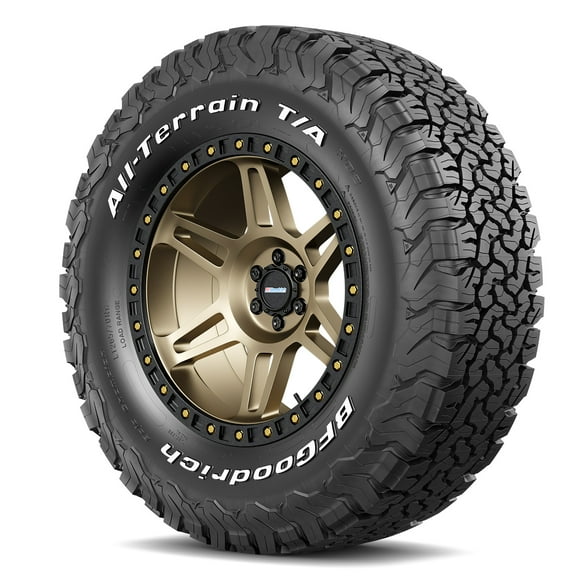
For most truck and SUV owners in the United States, the BFGoodrich All-Terrain T/A KO3 is the best all-around 35-inch all-terrain tire. It offers a strong mix of highway manners, wet-weather traction, winter capability, sidewall protection, and trail performance.
That said, the best tire depends on your truck, load, climate, and driving style. A Falken Wildpeak A/T4W may be better for snow and wet roads. A Toyo Open Country A/T III is a strong choice for quiet highway travel and long-distance use. If you spend more time on rocks and rough trails, the Mickey Thompson Baja Boss A/T deserves a close look.
This guide focuses on tire choices available in the U.S. market, especially common sizes such as 35x12.50R17, 35x12.50R18, and 35x12.50R20.
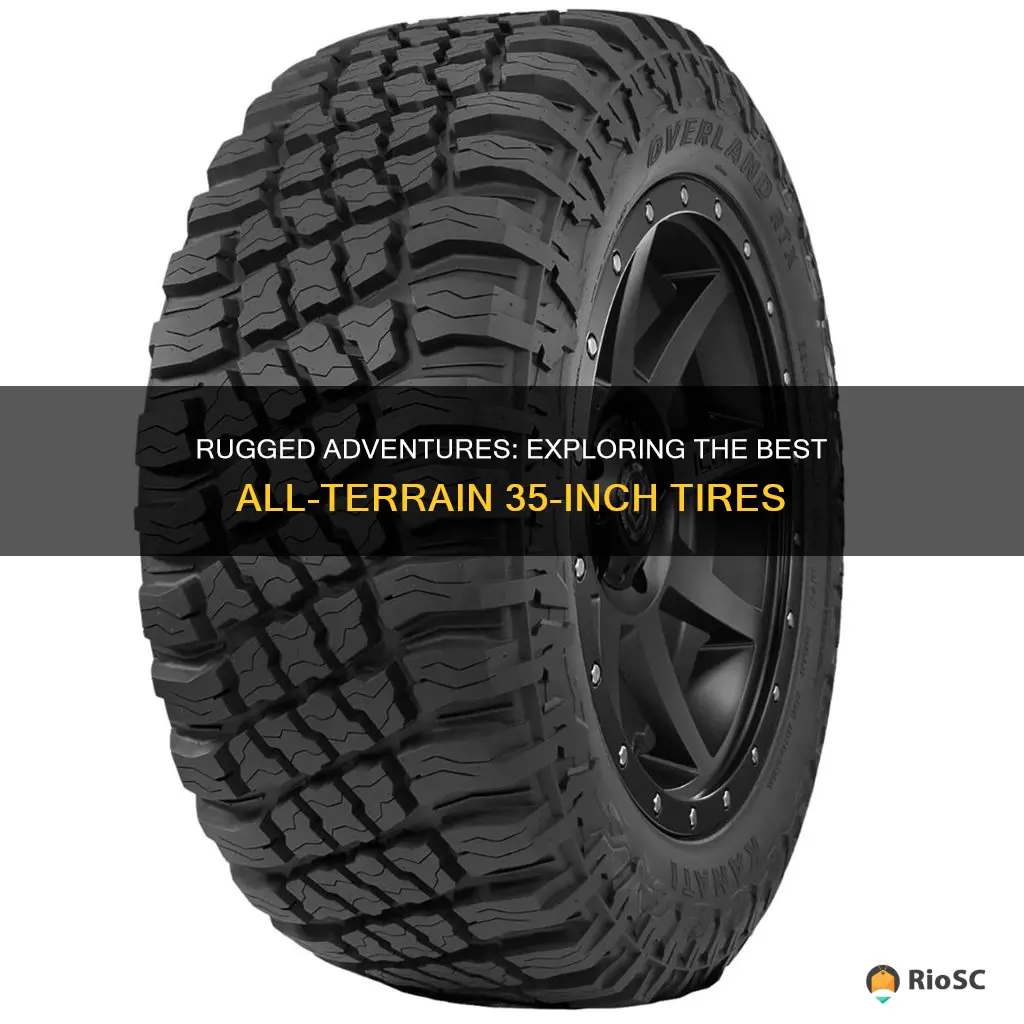
Quick Answer: The Best 35-Inch All-Terrain Tires
The BFGoodrich KO3 is the best balanced choice for most drivers. It is not the quietest, cheapest, or most aggressive tire in the group. Its advantage is that it avoids major weaknesses in several areas at once.
| Tire | Best for | Main strength | Main trade-off |
|---|---|---|---|
| BFGoodrich All-Terrain T/A KO3 | Balanced daily and trail use | Strong all-around performance | Can cost more than some rivals |
| Falken Wildpeak A/T4W | Snow, rain, and loaded trucks | Severe-snow-rated options and stable road manners | Heavy construction can reduce fuel economy |
| Toyo Open Country A/T III | Highway travel and mixed use | Predictable road feel and low noise for its class | Less aggressive in deep mud |
| Mickey Thompson Baja Boss A/T | Rocky trails and harsh terrain | Strong sidewall and off-road design | Usually louder and heavier |
| General Grabber A/TX | Value-focused owners | Good balance of price and capability | Fewer size and load choices in some markets |
| Cooper Discoverer AT3 XLT | Towing and work trucks | Firm casing and useful load capacity | Not as capable in deep mud or extreme rock |
This comparison is a practical analysis of manufacturer specifications, tread designs, intended use, and common fitment factors. It is not a claim that one tire wins every independent test or every driving condition.
The right answer can change if you:
- Drive often on packed snow or ice.
- Carry a slide-in camper or heavy tools.
- Tow near your truck’s maximum rating.
- Air down for rocks and sand.
- Need the lowest possible road noise.
- Use a stock suspension with limited wheel-well clearance.
Why the BFGoodrich KO3 Is the Best Overall Pick
The BFGoodrich All-Terrain T/A KO3 is the strongest general-purpose choice because it is designed for the mixed use that defines an all-terrain tire: paved roads during the week and dirt, gravel, mud, or rocks on the weekend.
Its tread uses interlocking blocks and staggered edges to support traction on loose surfaces. The tire also has a reinforced construction intended to help resist damage from sharp rocks and rough trail surfaces. BFGoodrich offers the KO3 in many light-truck sizes, but the exact load rating and sidewall construction vary by size.
The KO3 is a good fit for drivers who want:
- A tire for daily commuting and weekend trails.
- Better gravel and dirt traction than a highway tire.
- Reasonable wet-road behavior.
- A durable sidewall for moderate off-road use.
- A familiar tire with broad U.S. availability.
The KO3 is not automatically the best choice for every truck. A large 35-inch tire can weigh substantially more than the original tire. That added weight can affect braking, acceleration, steering response, fuel use, suspension wear, and transmission behavior.
Also, “35 inch” is a nominal size. A tire marked 35x12.50R17 may not measure exactly 35 inches when mounted and inflated. Tread depth, wheel width, inflation pressure, and manufacturing design all affect the final dimensions.
Best alternative for snow and wet roads: Falken Wildpeak A/T4W
The Falken Wildpeak A/T4W is a strong choice for drivers in areas such as Colorado, Montana, Wyoming, Utah, the upper Midwest, and New England. Many available sizes carry the Three-Peak Mountain Snowflake symbol, also called the severe-snow-service rating.
That symbol means the tire met a defined snow-traction performance test. It does not mean the tire performs like a dedicated winter tire on ice. Dedicated winter tires still use softer compounds and specialized tread designs for very cold conditions.
The A/T4W also has a sturdy casing and a tread pattern suited to gravel, dirt, and snow. Its main drawback is weight. A heavy all-terrain tire can make a half-ton pickup feel less lively and may reduce fuel economy.
Best for mostly highway driving: Toyo Open Country A/T III
The Toyo Open Country A/T III is a sensible choice when your truck spends most of its time on pavement but still needs dependable performance on dirt roads, gravel, and light trails.
It is often favored for:
- Long highway trips.
- Towing and regular hauling.
- A stable, planted road feel.
- Moderate road noise.
- Drivers who do not need a mud-terrain-style tread.
The Toyo is less suited to drivers who regularly face deep mud, sharp rocks, or very loose sand. Its more road-oriented balance is a benefit on pavement but not an advantage in every off-road setting.
Best for aggressive trail use: Mickey Thompson Baja Boss A/T
The Mickey Thompson Baja Boss A/T is aimed at owners who want more off-road bias without moving to a full mud-terrain tire. Its tread and sidewall design focus on rocky terrain, loose dirt, and trail durability.
It may suit a Jeep, Ford F-150, Chevrolet Silverado, Ram 1500, or similar truck that spends real time off pavement. The compromise is a heavier and potentially louder tire, plus the possibility of faster wear if alignment and rotation are neglected.
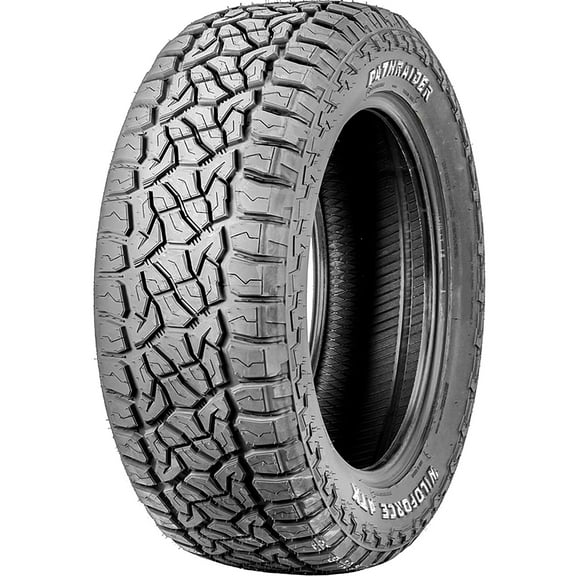
How to Choose the Right 35-Inch All-Terrain Tire
Start with the surface you drive on most. The tire should match your primary use, not your most exciting occasional trip.
Choose based on your main driving condition
Mostly pavement:
Choose a road-friendly all-terrain tire such as the Toyo Open Country A/T III or a similar highway-biased design. Look for a stable tread pattern, reasonable weight, and a load rating that suits your truck.
Mixed pavement and trails:
The BFGoodrich KO3 is a strong starting point. It offers a broad balance instead of specializing in only one surface.
Snow and cold weather:
Look for the Three-Peak Mountain Snowflake symbol. The Falken Wildpeak A/T4W is one option, but compare the exact size and compound. A severe-snow rating is helpful, but it does not replace winter tires on ice.
Rocky trails:
Prioritize sidewall construction, puncture resistance, and the ability to run lower pressure when appropriate. The Mickey Thompson Baja Boss A/T or another reinforced all-terrain design may be a better fit.
Heavy towing or hauling:
Pay close attention to the tire’s load index and load range. Do not choose a tire only because it has a higher load range. The truck’s axle ratings, wheel ratings, and manufacturer-recommended pressures still control the safe limit.
Understand load range and load index
Load range is a letter, such as C, D, or E, that describes the tire’s construction and maximum inflation category. The load index is a separate number that states the maximum load for that specific tire under stated conditions.
For example, two tires may both be marked 35x12.50R17 but have different load indexes. The heavier tire may support more load, but it can also create more unsprung weight and a firmer ride.
Before buying, compare:
- The original tire’s load index.
- The replacement tire’s load index.
- The truck manufacturer’s front and rear axle ratings.
- The wheel’s maximum load rating.
- The tire maker’s load-and-inflation table.
Never use the maximum number printed on the tire sidewall as your normal pressure without checking the vehicle manufacturer’s guidance.

Will 35-Inch Tires Fit a Stock Truck?
A 35-inch tire may not fit a stock truck without rubbing. Fitment depends on more than tire diameter.
Important variables include:
- Wheel width.
- Wheel offset.
- Backspacing.
- Steering angle.
- Suspension height.
- Fender liner shape.
- Bump-stop clearance.
- Front and rear axle design.
- Tire brand and measured section width.
A 35x12.50R17 tire is often around 12.5 inches wide, but the exact width varies. Two tires with the same size marking can have different actual section widths and tread profiles.
A truck may clear the tire while driving straight but rub during a full-lock turn or when the suspension compresses. Rubbing can damage the tire, plastic liner, wiring, or suspension parts.
Check these areas before buying
With the vehicle parked on level ground, inspect the available space around:
- The front sway bar.
- Upper control arms.
- Inner fenders.
- Fender edges.
- Brake lines.
- Shock bodies.
- The spare-tire location.
- The rear suspension and wheel well.
A professional tire shop can perform a more useful clearance check with the vehicle on a lift and the suspension loaded. Ask the shop to check full steering lock and suspension compression, not just a straight-ahead fit.
Do not assume a lift kit solves every problem. A lift can create new issues with alignment, driveline angles, steering geometry, and suspension travel.
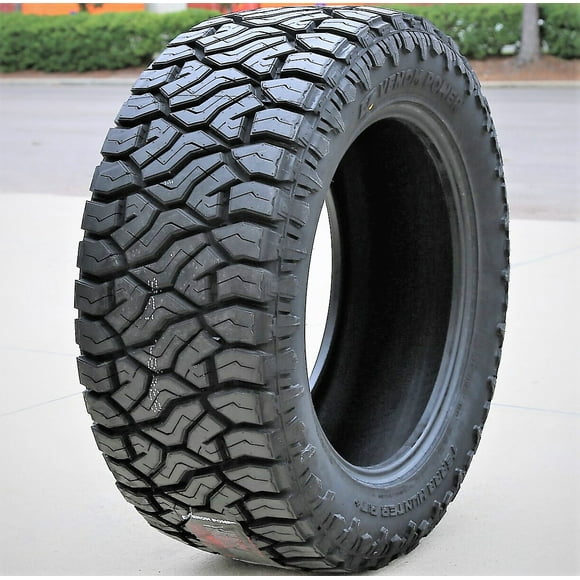
What 35-Inch Tires Do to Speed, Gearing, and Fuel Economy
A larger tire can make the speedometer read slower than the vehicle’s true speed. It can also reduce effective gearing.
Hypothetical speedometer example
Suppose a truck originally uses a tire with a 32-inch measured diameter and the replacement measures 35 inches.
The approximate speedometer correction is:
[
\text{Actual speed} = \text{Displayed speed} \times \frac{35}{32}
]
At a displayed 60 mph:
[
60 \times \frac{35}{32} \approx 65.6\text{ mph}
]
This is only a simplified example. Use the actual measured rolling circumference when possible. Tire pressure, tread wear, and tire design change the result.
A larger tire can also:
- Reduce acceleration.
- Increase transmission downshifts.
- Make hills feel steeper.
- Reduce engine braking.
- Increase clutch or transmission load.
- Lower fuel economy.
- Change the behavior of electronic traction and stability systems.
Some modern trucks can correct tire-size data through approved programming tools. Others may require dealer equipment. Ask the vehicle manufacturer or a qualified technician before changing calibration.
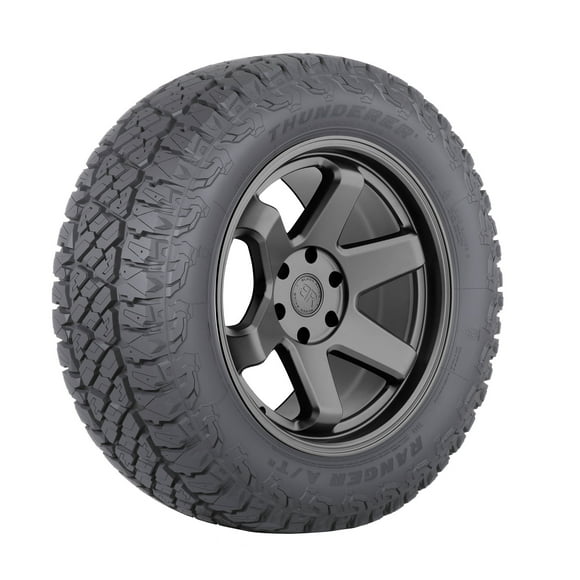
Are 35-Inch All-Terrain Tires Good for Daily Driving?
Yes, but they are not always the best daily-driver choice. A 35-inch all-terrain tire can work well on the street when the truck has enough clearance, suitable gearing, and correct alignment.
The main daily-use disadvantages are weight, noise, steering effort, and cost. Larger tires also contain more rubber and may require more braking force. A heavy tire can make the truck feel slower even when the engine has plenty of power.
For a daily-driven truck, prioritize:
- A moderate tread pattern.
- A balanced tire-and-wheel package.
- A suitable load rating.
- Low road noise.
- Consistent tread wear.
- Easy access to replacement tires.
- A full-size spare that matches the other tires.
Do not select an extremely heavy tire for a truck that rarely leaves the pavement. The extra trail strength may not justify the impact on ride, fuel use, and handling.
Tire Pressure, Rotation, and Alignment
Use the pressure listed on the vehicle’s certification label or owner’s manual as the starting point. This label is usually found on the driver’s doorjamb.
The pressure printed on the tire sidewall is generally the pressure associated with the tire’s maximum rated load. It is not automatically the correct everyday pressure for your truck.
Check pressure when the tires are cold. Inspect them at least monthly and before long trips. A tire that loses pressure repeatedly may have a puncture, bead leak, valve problem, or wheel damage.
Rotation
Rotate the tires according to the vehicle and tire manufacturer’s guidance. Many all-terrain tires use directional or asymmetric tread patterns, so the rotation pattern may be limited.
Uneven wear can point to:
- Incorrect alignment.
- Low or uneven pressure.
- Worn steering or suspension parts.
- Excessive toe.
- Tire imbalance.
- Overloading.
- Infrequent rotation.
If the steering wheel is off-center or the truck pulls after the new tires are installed, have the alignment checked. Do not try to correct a strong pull by changing tire pressure from side to side.
Airing down off-road
Lower pressure can increase the tire’s contact patch on sand, rocks, and loose ground. However, the correct pressure depends on the tire, wheel, vehicle weight, terrain, and speed.
When airing down:
- Use a reliable gauge.
- Drive slowly.
- Avoid sharp turns and sudden steering.
- Do not drive long distances on pavement at trail pressure.
- Reinflate before returning to normal road speed.
A tire can unseat from the wheel if it is run too low or driven aggressively while aired down.

Common Mistakes When Buying 35-Inch Tires
The most common mistake is choosing by appearance alone. An aggressive tread may look capable but can bring more noise, weight, vibration, and uneven wear.
Other frequent mistakes include:
- Assuming every 35-inch tire has the same real dimensions.
- Ignoring wheel offset and backspacing.
- Choosing a tire that exceeds the wheel’s load rating.
- Forgetting the spare tire.
- Failing to check the vehicle’s axle ratings.
- Using the sidewall maximum pressure as normal pressure.
- Skipping alignment after installing a suspension lift.
- Buying four tires when the vehicle requires a matching full-size spare.
- Mixing different tire models on a four-wheel-drive system.
- Ignoring the tire’s production date and condition.
- Assuming a Three-Peak Mountain Snowflake rating makes it an ice tire.
- Removing or disabling safety systems to make a tire fit.
For four-wheel-drive and all-wheel-drive vehicles, consult the owner’s manual before mixing tire sizes or replacing only one or two tires. Differences in rolling circumference can affect driveline components and electronic systems.
Best 35-Inch All-Terrain Tire by Driver Type
Use this short guide if you want a practical starting point:
- Best overall: BFGoodrich All-Terrain T/A KO3.
- Best for snow-focused use: Falken Wildpeak A/T4W in a severe-snow-rated size.
- Best for highway comfort: Toyo Open Country A/T III.
- Best for rocky trails: Mickey Thompson Baja Boss A/T.
- Best value candidate: General Grabber A/TX, if the exact size and load rating fit your truck.
- Best for work and towing: Cooper Discoverer AT3 XLT, when its size, load rating, and availability match the vehicle.
These are category recommendations, not universal rankings. The exact tire size, load index, wheel, vehicle setup, and climate can change the result.
Before ordering, compare the complete specification for the exact tire:
- Size.
- Load index.
- Speed rating.
- Load range.
- Severe-snow rating.
- Maximum permitted wheel width.
- Overall diameter.
- Section width.
- Tread depth.
- Warranty terms.
- Manufacturer’s replacement guidance.

Frequently Asked Questions
Is a 35-inch tire really 35 inches tall?
Not always. “35 inch” is a nominal description. The mounted tire may measure slightly less or more than 35 inches, depending on the brand, wheel width, inflation pressure, tread depth, and load.
Do 35-inch tires reduce gas mileage?
They can. Larger tires are often heavier and have greater rolling resistance. They may also reduce the engine’s effective gearing. The effect varies by tire weight, tread design, vehicle, driving style, and final-drive ratio.
Do I need a lift kit for 35-inch tires?
Not necessarily, but many trucks need suspension, trimming, or wheel-offset changes to prevent rubbing. A lift kit alone does not guarantee safe clearance. The complete wheel-and-tire package must be checked at full steering lock and suspension compression.
Are all-terrain tires safe in snow?
Some perform well in snow, especially models with the Three-Peak Mountain Snowflake symbol. However, all-terrain tires are not the same as dedicated winter tires. Ice, very cold pavement, and packed snow may require a true winter tire.
Should I use E-load-range tires on a half-ton truck?
Only when the vehicle, wheel, and intended load justify them. E-load tires can provide a stronger casing, but they are often heavier and may ride more firmly. Follow the vehicle manufacturer’s axle, wheel, and pressure limits.
Can I put 35-inch tires on stock wheels?
Possibly, but clearance and wheel width must be verified. The same tire size can fit differently depending on wheel offset, backspacing, steering geometry, and suspension travel.
How often should I rotate 35-inch all-terrain tires?
Follow the vehicle and tire manufacturer’s schedule. If the truck carries heavy loads, travels on rough roads, or shows uneven wear, inspect the tires more often and rotate them as needed.
Final Recommendation
For most U.S. truck and SUV owners, choose the BFGoodrich All-Terrain T/A KO3 as the best 35-inch all-terrain tire when you want one set for commuting, highway travel, gravel, and moderate trails.
Choose the Falken Wildpeak A/T4W if snow and wet-weather traction are higher priorities. Choose the Toyo Open Country A/T III for a more road-focused setup. Choose the Mickey Thompson Baja Boss A/T if trail durability and aggressive off-road use matter more than quiet highway driving.
The next step is to confirm the exact tire size, load index, wheel rating, clearance, spare-tire space, and recommended pressure for your specific truck. Check the vehicle owner’s manual and the tire manufacturer’s current specification before placing an order.