

Put refrigerant into the car’s low-pressure A/C service port, not the fuel tank or engine oil.
Knowing where to put freon in a car can save time, money, and a very hot drive home. The correct port is usually under the hood, but the exact location depends on the vehicle, refrigerant type, and A/C system design. This guide explains how to find the port, check the refrigerant, avoid common mistakes, and know when a professional repair is the safer choice.
Where to Put Freon in a Car
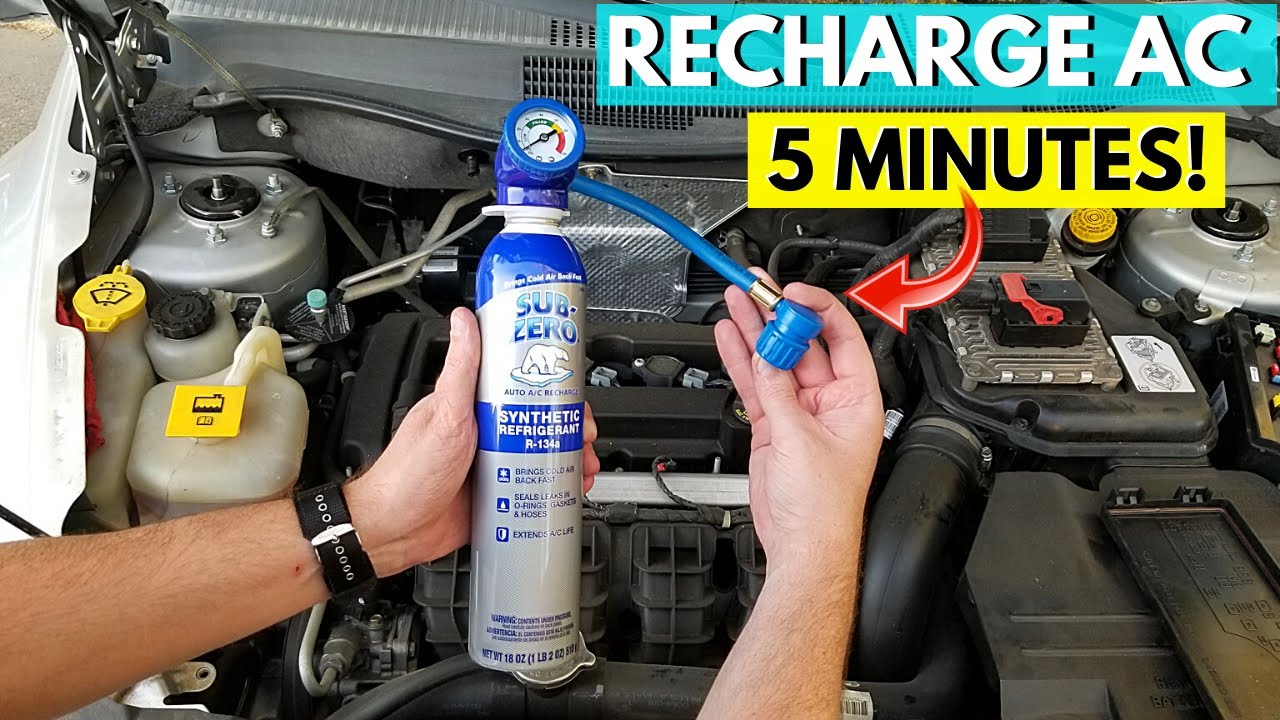
You put refrigerant into the low-pressure service port of the air conditioning system. This port is part of the larger A/C line and is often near the passenger side of the engine bay, close to the firewall or compressor.
The low-pressure port usually has a plastic cap marked with an “L.” It may also have a blue or black cap. The high-pressure port often has an “H” and a different fitting. A recharge hose should connect only to the low-pressure port.
Never add refrigerant to:
• The engine oil fill cap
• The coolant reservoir
• The fuel filler neck
• The high-pressure A/C port
• Any line without a proper service fitting
The phrase “freon” often means automotive refrigerant. Older vehicles may use R-12, many vehicles from the 1990s through the early 2010s use R-134a, and many newer vehicles use R-1234yf. These refrigerants are not interchangeable.
How to Find the Low-Pressure A/C Port
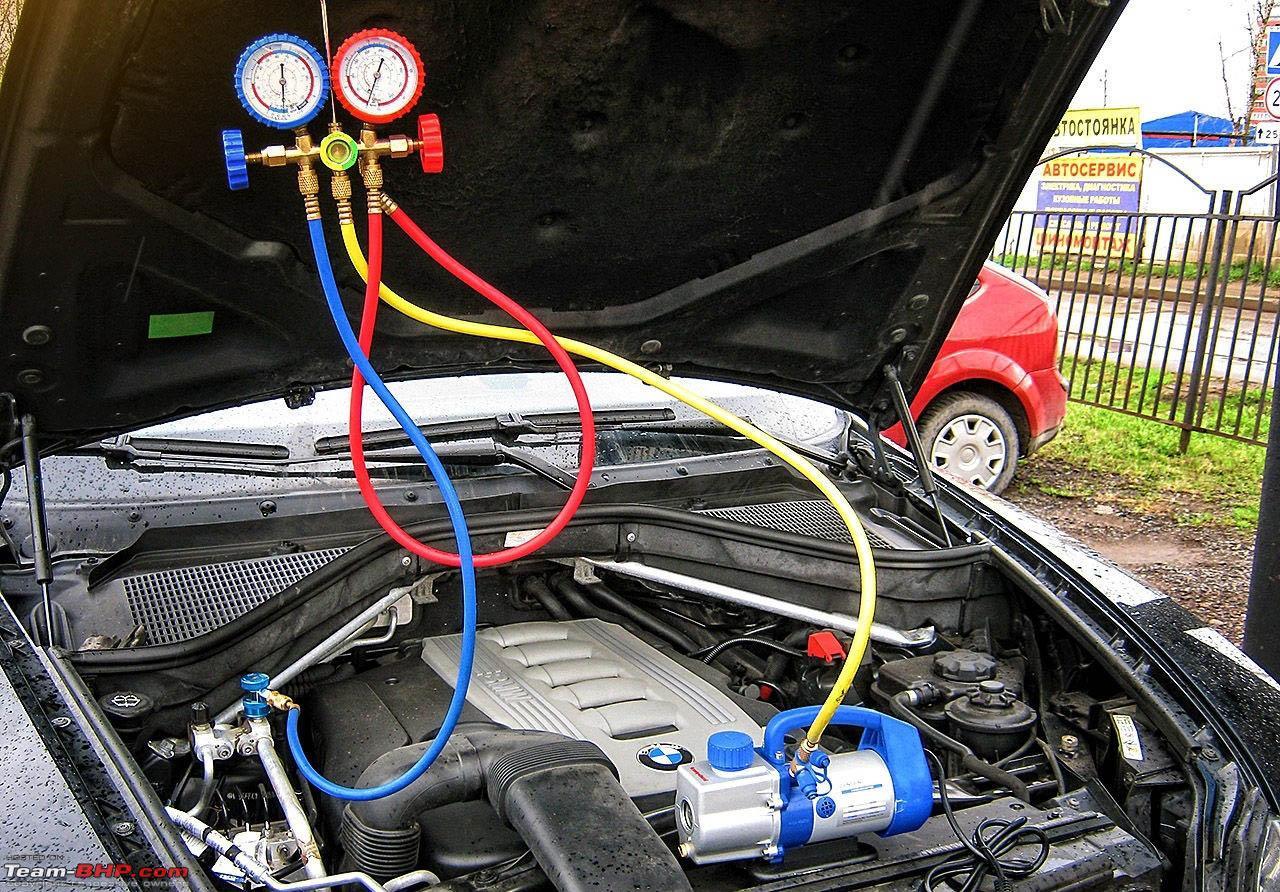
Finding the correct port is the most important part of learning where to put freon in a car. Start by turning off the engine and opening the hood. Look for two aluminum or rubber A/C lines that run between the compressor, condenser, evaporator, and firewall.
The low-pressure line is usually the larger of the two lines. The low-pressure service port is commonly placed on this larger line. It has a quick-connect fitting that matches the connector on a refrigerant recharge hose.
Use these steps:
- Read the A/C label under the hood. It may list the refrigerant type and the correct charge amount.
- Look for service ports with plastic caps.
- Find the port marked “L” or “LOW.”
- Compare the fitting with the recharge hose.
- Confirm that the refrigerant can matches the vehicle’s listed refrigerant.
- Check the vehicle owner’s manual if the port is hard to see.
The ports are designed to prevent some connection errors. Still, do not force a hose onto a fitting. If it does not connect easily, stop and confirm that you have the correct port and hose.
In many cars, the low-pressure port sits near the firewall. In others, it may be close to the compressor or behind a plastic engine cover. A vehicle repair manual can show the exact location when the port is hidden.
How to Tell the Low-Pressure Port From the High-Pressure Port
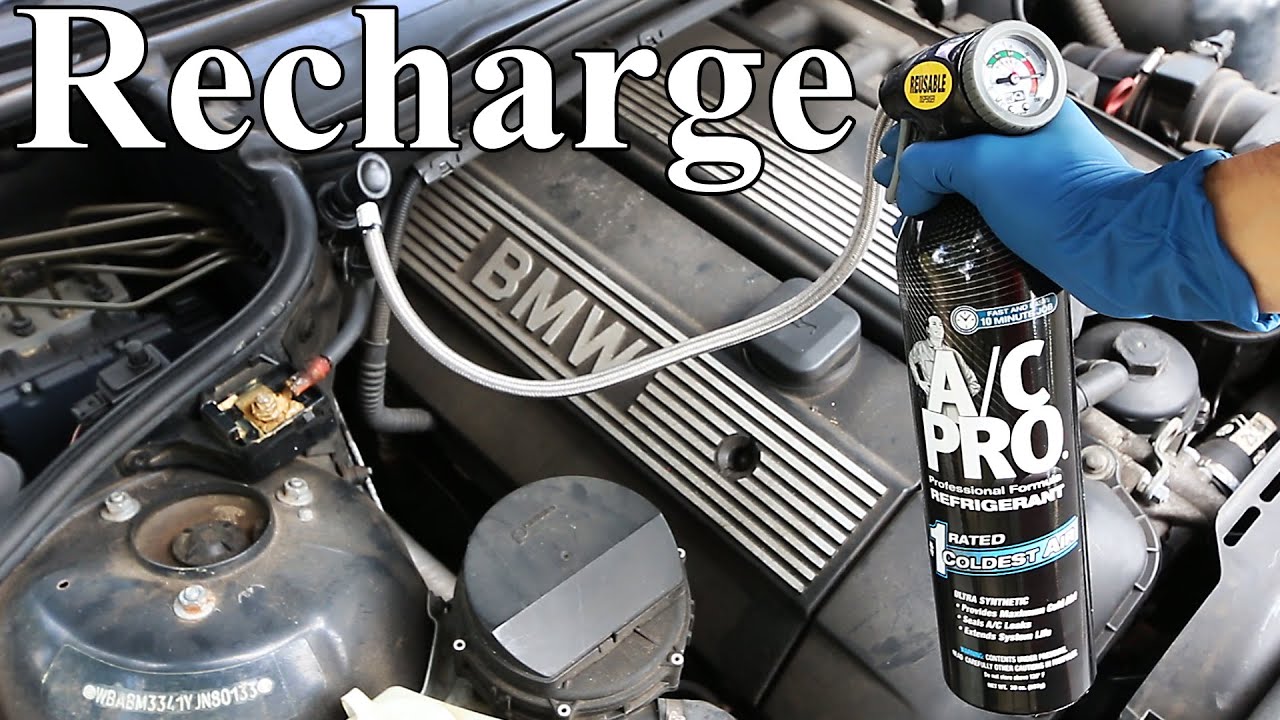
Both A/C service ports may look similar, but they perform different jobs. The low-pressure port carries refrigerant vapor back toward the compressor. The high-pressure port carries hot, pressurized refrigerant toward the condenser.
The low-pressure port is usually:
• On the larger A/C line
• Marked with an “L”
• Designed for a larger quick-connect hose
• Used for adding refrigerant in common DIY recharge kits
The high-pressure port is usually:
• On the smaller A/C line
• Marked with an “H”
• Located near the condenser or front of the engine bay
• Not used with a standard low-side recharge hose
Connecting a recharge can to the high-pressure side can create a dangerous pressure condition. This is one reason professional A/C machines use separate, locked couplers for each side.
A simple rule helps: if the hose does not fit the port without force, do not use it. The right connection should be clear and secure.
What to Check Before Adding Refrigerant
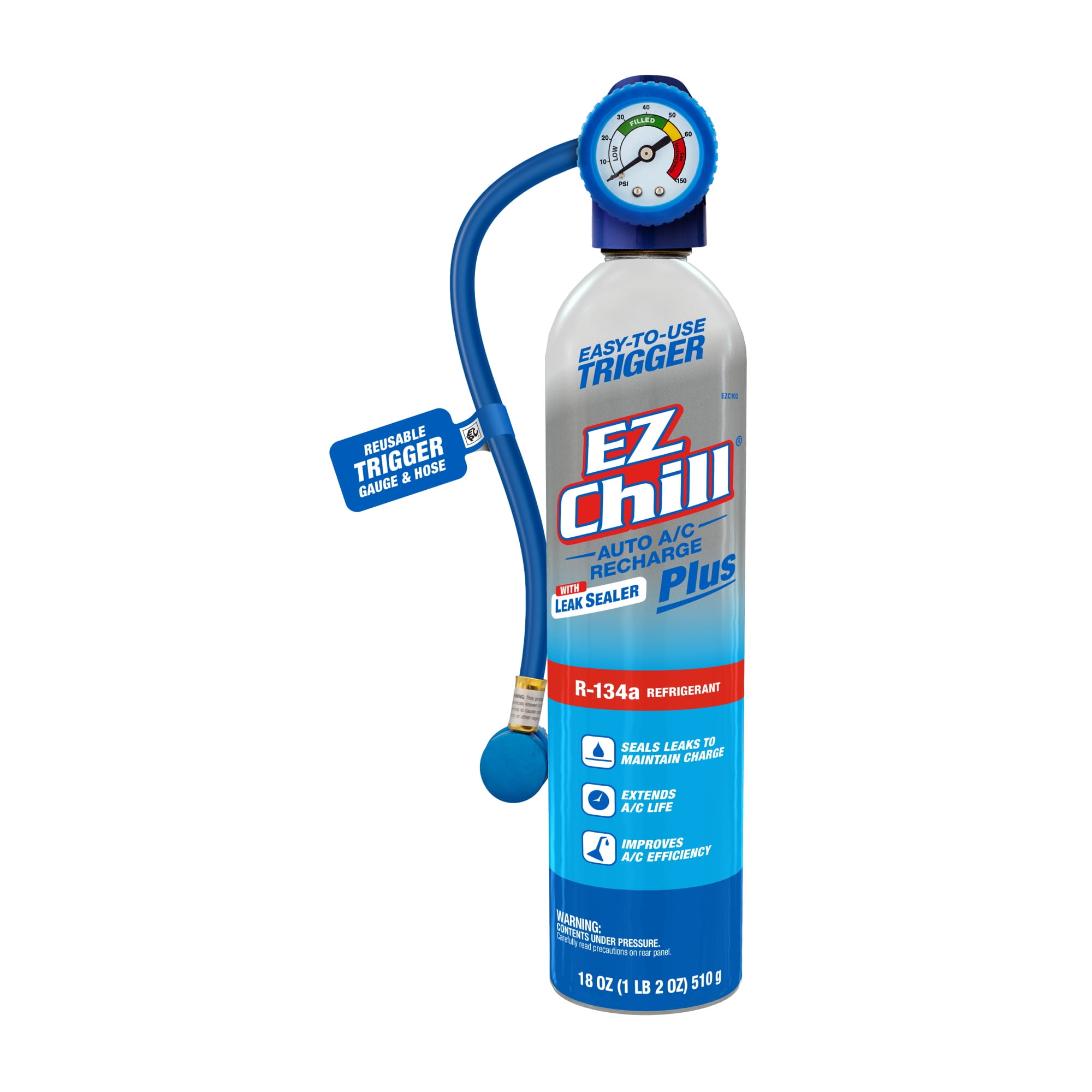
Low refrigerant is only one possible cause of weak cooling. Adding more refrigerant without checking the system can hide a leak or damage the compressor.
Before you recharge the system, check the following:
• Does the A/C clutch engage when the system is turned on?
• Does the blower fan work at all speeds?
• Is the cabin air filter badly blocked?
• Are the condenser fins clogged with dirt or leaves?
• Does the system blow warm air only at idle?
• Do you hear hissing, squealing, or clicking sounds?
• Is there oily residue around an A/C hose or fitting?
Set the controls to maximum cooling, select recirculation, and use the highest blower speed. The engine should be running during a normal pressure check, but keep hands, hair, clothing, and tools away from belts and fans.
If the compressor will not engage, the system may be very low on refrigerant. It could also have an electrical fault, a failed pressure switch, or a bad compressor. A recharge can may not solve the real problem.

How to Add Refrigerant Through the Low-Pressure Port
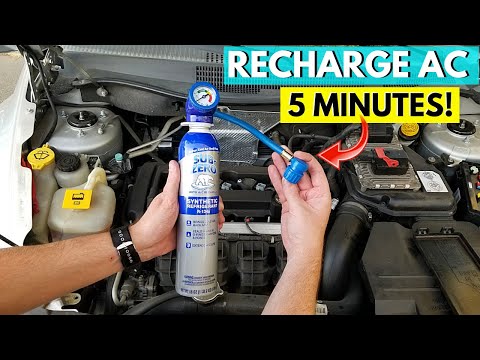
If your vehicle uses the same refrigerant listed on the recharge can, you may be able to add a small amount through the low-pressure port. Follow the product instructions and the vehicle label closely.
Basic steps include:
- Park the car outside or in a well-ventilated area.
- Turn off the engine before connecting the hose.
- Put on safety glasses and protective gloves.
- Locate the low-pressure service port.
- Attach the recharge hose to the port.
- Start the engine and turn the A/C to maximum cooling.
- Read the pressure only as directed by the kit.
- Add refrigerant in short amounts.
- Stop when the system reaches the correct range or the can instructions say to stop.
- Disconnect the hose and replace the service-port cap.
Do not use the can’s pressure gauge as a complete diagnosis. Pressure changes with outdoor temperature, engine speed, airflow, and the amount of refrigerant already in the system. A gauge can show an unusual reading without telling you why it occurred.
The vehicle manufacturer’s specified charge weight is more accurate than a generic pressure range. Professional technicians recover, evacuate, and recharge the system by weight. This method removes air and moisture and delivers the correct amount of refrigerant.
Refrigerant Types: R-134a and R-1234yf
You must use the refrigerant listed on the vehicle label. R-134a and R-1234yf use different fittings and should never be mixed.
R-134a was widely used in older vehicles. R-1234yf is common in newer vehicles because it has a lower global warming impact. R-1234yf is mildly flammable, so it requires proper tools, storage, and handling.
Older R-12 systems are different again. R-12 is no longer a normal DIY option, and converting an older system to another refrigerant requires proper parts and procedures.
Check for a label under the hood or near the radiator support. The label may show:
• Refrigerant type
• Total charge amount
• Oil type
• System pressure information
• Safety warnings
Never guess the refrigerant type from the vehicle’s age alone. Model-year changes can occur during production, and some imported vehicles use different systems than similar models sold in the United States.
Can You Recharge a Car A/C System at Home?
Many drivers can connect a small recharge kit to the correct low-pressure port. However, home charging has limits. It is useful only when the system needs a small amount of the correct refrigerant and has no serious fault.
A DIY recharge may be reasonable when:
• The system still blows somewhat cool air
• The vehicle uses a clearly labeled refrigerant
• The service port is easy to access
• You can follow the kit instructions exactly
• There is no sign of a major leak
Professional service is better when:
• The system is completely empty
• The compressor does not run
• The pressure gauge shows an unusual reading
• The system has been opened for repair
• You suspect a leak
• The vehicle uses R-1234yf and you lack the proper equipment
• You do not know which refrigerant the vehicle uses
In the United States, federal rules prohibit knowingly releasing automotive refrigerant into the atmosphere. Shops that service motor vehicle A/C systems must use approved recovery equipment, and technicians generally need Section 609 certification.
The safest option is often a proper recovery and recharge. A trained technician can use electronic leak detection, ultraviolet dye, nitrogen testing, and accurate refrigerant scales.
Why Your Car A/C May Still Blow Warm Air
Adding refrigerant will not fix every air conditioning problem. The A/C system works like a closed loop. Refrigerant moves through the compressor, condenser, expansion device, and evaporator. A fault in any part can reduce cooling.
Common causes of warm air include:
• A refrigerant leak
• A failed compressor
• A faulty clutch or compressor control valve
• A blocked condenser
• A bad radiator or condenser fan
• A stuck blend door
• A blocked expansion valve
• A failed pressure sensor
• A dirty cabin air filter
• An electrical or fuse problem
If the A/C is cold while driving but warm at a stop, inspect the condenser fan and airflow first. If the air is warm on every setting, the system may have low charge, a control issue, or a compressor fault.
A sweet or chemical smell may point to an evaporator problem, although smells are not a reliable way to identify refrigerant. Refrigerant leaks often leave oily marks because compressor oil travels through the system.
A useful lesson from common A/C repairs is this: a recharge is not a repair if the refrigerant keeps disappearing. If the system needs refrigerant again after a short time, locate and fix the leak.
Common Mistakes to Avoid
Many A/C problems become more expensive because of rushed charging. Avoid these common errors when deciding where to put freon in a car.
• Do not connect the hose to the high-pressure port.
• Do not mix R-134a with R-1234yf.
• Do not use a refrigerant can with an unknown or damaged label.
• Do not overcharge the system.
• Do not vent refrigerant into the air.
• Do not work near an open flame.
• Do not touch liquid refrigerant with bare skin.
• Do not bypass pressure switches.
• Do not keep adding refrigerant when cooling does not improve.
• Do not rely on a color alone to identify the correct port.
Overcharging can raise system pressure and reduce cooling. It can also strain the compressor and create a safety risk. More refrigerant does not always mean colder air.
A common mistake is assuming that a low gauge reading always means the system needs more refrigerant. A restriction, weak compressor, or faulty gauge can produce confusing readings. When the result does not match the expected symptoms, stop and have the system tested.
How Much Does Car A/C Recharge Service Cost?
The cost depends on the refrigerant, vehicle design, leak location, and local labor rates. A small DIY can may cost less than a professional service, but it does not include leak testing or repairs.
A professional A/C service may include:
• Refrigerant recovery
• Vacuum evacuation
• Leak testing
• Refrigerant recharge by weight
• Compressor oil inspection
• Performance testing
• Inspection of fans, hoses, and pressure readings
R-1234yf service often costs more because the refrigerant and equipment are more expensive. A simple recharge may be affordable, while a compressor, evaporator, or condenser repair can cost much more.
Ask for a written estimate before approving major work. A trustworthy shop should explain the measured pressures, refrigerant amount, suspected leak, and recommended repair. Be cautious if someone recommends repeated recharges without searching for the cause of the loss.
When to Call an A/C Professional
Call a qualified technician if the system is empty, leaking, damaged, or using a refrigerant you cannot identify. A professional can recover the refrigerant safely and recharge the system to the manufacturer’s exact specification.
Professional help is especially important when:
• The compressor is noisy
• The A/C clutch will not engage
• The system has no pressure
• A hose or condenser is damaged
• Refrigerant was added by mistake
• The vehicle has R-1234yf
• The A/C system was recently opened
• You smell burning or see smoke
• The system becomes cold and warm in cycles
Do not feel bad about asking for help. Automotive A/C systems contain pressure, chemicals, and moving parts. The right repair can prevent damage that costs far more than a proper diagnosis.
Frequently Asked Questions About Where to Put Freon in a Car
Where do I put freon in my car?
Put the correct refrigerant into the low-pressure A/C service port, usually marked with an “L.” It is often found on the larger A/C line under the hood.
Can I put freon in the high-pressure port?
No. A standard recharge can should not be connected to the high-pressure port. Use only the low-pressure port with the correct hose and refrigerant.
How do I know which refrigerant my car uses?
Check the refrigerant label under the hood or consult the owner’s manual. Common types include R-134a and R-1234yf, but they must not be mixed.
Why is my A/C still warm after adding refrigerant?
The vehicle may have a leak, failed compressor, electrical fault, blocked condenser, or blend-door problem. If cooling does not improve, stop adding refrigerant and have the system diagnosed.
Can I recharge my car A/C without a gauge?
It is not a good idea. A gauge helps show pressure, but even a gauge cannot replace a full diagnosis or a recharge by the manufacturer’s specified weight.
How often should a car A/C system need refrigerant?
A properly sealed A/C system should not need regular refills. If it needs refrigerant often, there is likely a leak or another system fault.
Is it safe to add refrigerant myself?
It can be safe when you use the correct refrigerant, proper hose, eye protection, and manufacturer instructions. Professional service is safer when the system is empty, damaged, or difficult to identify.
Conclusion
The answer to where to put freon in a car is simple: use the low-pressure A/C service port marked “L,” not the high-pressure port or any engine component. Confirm the refrigerant type first, add only the proper amount, and treat warm air as a possible sign of a leak or mechanical fault.
A small recharge may help in limited cases, but repeated recharging is not a real fix. Check the vehicle label, work carefully, and contact a qualified A/C technician when the system is empty or the problem is unclear. Use this guide to make a safe choice, and share your A/C questions or repair experience in the comments.