

In the United States, put the car seat in the rear seat position where you can get the safest, tightest fit. Behind the driver and behind the front passenger can both be safe. Neither side is always safer.
If the car seat fits well in the center rear seat, that spot may offer more space from the doors. But the center is not the best choice if the seat does not fit there, the vehicle manual does not allow the needed installation method, or you cannot reach the harness and buckle well.
For many families, the rear passenger-side position is the most practical. It can make it easier to load a child from the curb when parked on a typical U.S. street. Still, a correct installation matters far more than choosing the driver or passenger side.
This guide explains how to choose the best position for a rear-facing, forward-facing, or booster seat in a U.S. vehicle.
The short answer
Choose the position that meets all of these conditions:
- It is in the back seat.
- The car seat fits the vehicle seat.
- The car seat sits at the correct angle.
- The seat moves no more than 1 inch from side to side or front to back when checked at the belt path.
- The harness or seat belt fits the child correctly.
- You can follow both the car seat manual and the vehicle owner’s manual.
- The position does not block safe access to another child or passenger.
- The seat does not interfere with the driver’s safe seating position.
If two positions work equally well, the center rear seat is often a reasonable choice. If the center does not work, choose the side that gives you the best installation and daily access.

Is behind the driver or behind the passenger safer?
Neither side has a universal safety advantage. Crash forces can come from many directions, so no rule makes the driver-side or passenger-side rear seat safest in every crash.
The most important safety factors are:
- The child rides in the rear seat.
- The child uses the right type of restraint.
- The car seat is installed correctly.
- The harness or belt fits correctly.
- The seat remains correctly installed on every trip.
The National Highway Traffic Safety Administration (NHTSA) recommends that children ride in the back seat until at least age 13. NHTSA also advises parents to keep children rear-facing as long as possible, within the height and weight limits of the car seat.
A side position may seem safer because it lets you see the child through a mirror. That mirror can help you check on the child, but it does not make that seat safer in a crash. Do not turn around while driving to check the child.
Why many parents choose the passenger side
The rear passenger-side position is often easier to use because:
- You may be able to stand on the curb while loading the child.
- You do not need to work beside moving traffic as often.
- The driver can reach the child after parking.
- The child may have an easier path into the vehicle.
These are practical benefits, not proof that the passenger side performs better in a crash.
When the driver-side position may work better
Behind the driver can be the better choice when:
- The car seat fits there more securely.
- The vehicle has more legroom on that side.
- A sibling’s seat needs the passenger side.
- You often park where the passenger side faces traffic.
- The driver needs easier access to the child while parked safely.
- A mobility need makes that side easier to use.
The correct position is the one that your family can use safely and consistently.
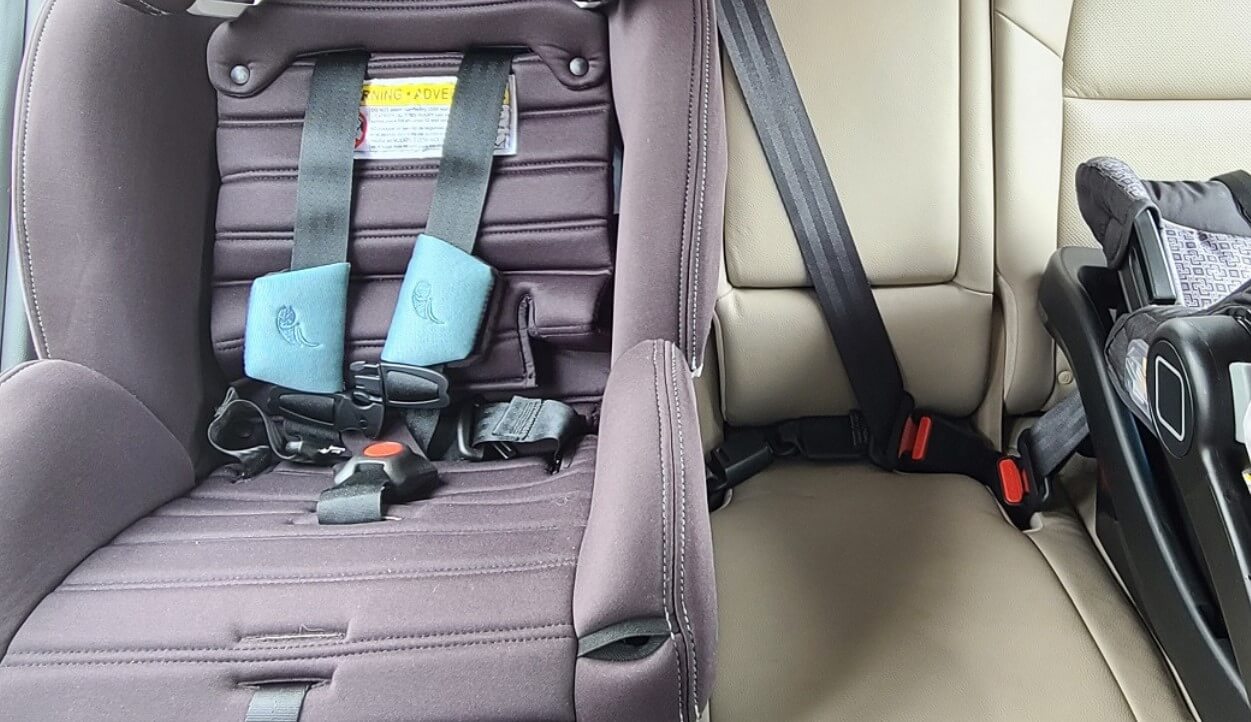
Is the center rear seat the safest place?
The center rear seat can reduce a child’s closeness to the vehicle doors. That may provide an advantage in some side-impact crashes. However, the center is not automatically safest.
A center installation may fail if:
- The seat is too narrow or uneven.
- The car seat touches the front seat.
- The vehicle does not allow a center LATCH installation.
- The seat belt buckle sits in the wrong place.
- The center seat is raised or shaped in a way that prevents a tight fit.
- Another car seat must sit beside it.
- You cannot reach the harness or buckle correctly.
A properly installed side seat is safer than a poorly installed center seat.
Center LATCH can be confusing
LATCH means Lower Anchors and Tethers for Children. It uses built-in vehicle anchors instead of the vehicle seat belt for some parts of the installation.
Do not assume that the inner anchors from the left and right seating positions may be used together in the center. Many vehicles do not allow this. The vehicle manual must specifically permit that center setup.
If the manual does not approve the center LATCH position, install the car seat with the vehicle seat belt if the car seat manufacturer allows it. A seat belt installation can be just as safe as a LATCH installation when done correctly.
How to check the center position
Before choosing the center, check:
- The vehicle owner’s manual.
- The car seat manual.
- The seat belt path shown in the car seat manual.
- The required recline angle.
- Clearance from the front seats.
- Whether the car seat moves less than 1 inch at the belt path.
- Whether the child can be buckled without twisting the harness or belt.
If any part of the installation is unclear, use another seating position or contact a certified child passenger safety technician.
How to choose the right position step by step
Use this process before you make a final choice.
1. Read both manuals
Start with the vehicle owner’s manual and the car seat manual. Look for:
- Approved seating positions
- LATCH locations
- Center-seat limits
- Seat belt installation instructions
- Tether anchor locations
- Rules about touching the front seat
- Rules for a car seat placed next to another seat
The manuals control. Online advice cannot replace instructions for your exact vehicle and car seat.
2. Place the seat in the rear seat
In most cases, avoid the front seat. A front passenger air bag can seriously injure or kill a child, especially a child in a rear-facing seat.
The NHTSA child passenger safety guidance says children should ride in the back seat. Never place a rear-facing car seat in front of an active passenger air bag.
3. Test the center position
Try the center first if it is allowed and practical. Follow the correct installation method.
Check the seat at the belt path, not at the top of the shell. Hold the seat near the path where the seat belt or lower anchors pass through it. Push and pull the seat side to side and front to back.
The seat should move no more than 1 inch in any direction at that point.
4. Test the passenger-side position
If the center does not work, try behind the front passenger seat. Move the front seat as needed, but do not force it against the car seat unless both manuals allow contact.
Make sure the passenger can still sit safely and that the car seat does not interfere with the front seat’s movement.
5. Test the driver-side position
Try behind the driver if it gives a better fit or solves a family-use problem. The driver must still have enough room to sit upright, reach the pedals, and control the vehicle.
Do not move the driver’s seat so far forward that it creates an unsafe driving position.
6. Compare the final choices
Choose the position that offers the best combination of:
- A secure installation
- Correct recline
- Easy harness access
- Safe loading from the curb
- Enough room for the driver
- Space for other passengers
- No conflict with another car seat
Signs the installation works
A good installation usually has these signs:
- The seat stays within 1 inch of movement at the belt path.
- The seat does not tilt or rotate out of position.
- The recline indicator is in the correct range.
- The seat belt or lower-anchor strap is tight.
- The tether is used when required or recommended.
- The child’s harness is flat and snug.
- The seat does not block a needed seat belt or emergency exit.

Rear-facing, forward-facing, and booster seat placement
The best position can change as your child grows, but the basic rule stays the same: use the restraint correctly in the rear seat.
Rear-facing car seat
A rear-facing seat supports the child’s head, neck, and spine during a crash. Keep the child rear-facing until the child reaches the seat’s maximum rear-facing height or weight limit.
The American Academy of Pediatrics recommends rear-facing travel for as long as possible within the limits of the car seat.
For a rear-facing seat:
- Use the recline angle listed in the manual.
- Keep the harness straps at or below the child’s shoulders if the manual says so.
- Do not add padding that did not come with the seat.
- Check that the infant’s head does not slump forward.
- Keep the seat away from an active front air bag.
Forward-facing car seat
A child should move to forward-facing only after reaching the rear-facing limits of the seat. Use the top tether when the vehicle and car seat instructions require or allow it.
A top tether helps limit forward movement of the child restraint. The tether connects to the approved anchor listed in the vehicle manual. Do not attach it to a cargo hook or another unapproved piece of hardware.
Booster seat
A booster seat raises the child so the vehicle lap and shoulder belt fit correctly. A booster is not attached in the same way as a harnessed car seat unless the specific booster includes an approved attachment system.
The lap belt should lie low across the upper thighs, not the stomach. The shoulder belt should cross the chest and shoulder, not the neck or face.
Keep using a booster until the vehicle belt fits the child without it. Many children need a booster until they are about 4 feet 9 inches tall, but size and belt fit matter more than age alone.
Do not use a seat belt alone too soon
A child may appear tall enough for the adult belt but still need a booster. A simple five-part check can help:
- The child’s back rests against the vehicle seat.
- The child’s knees bend at the edge of the seat.
- The lap belt lies low on the upper thighs.
- The shoulder belt crosses the chest and shoulder.
- The child can stay in that position for the whole ride.
If any answer is no, continue using a booster.

What matters more than choosing a side?
Correct installation matters more than the side of the vehicle. A technically allowed seating position can still be unsafe if the seat is loose, angled wrong, or used with the wrong harness setting.
Seat belt versus LATCH
Both methods can provide a safe installation when the car seat and vehicle allow them. Use one installation method at a time unless the car seat manufacturer clearly allows both together.
Do not switch to LATCH just because it sounds safer. LATCH may have weight limits, and those limits can vary by vehicle and car seat. Check both manuals.
Front-seat contact
Some car seats may touch the back of the front vehicle seat. Others require space. Some vehicles have special rules for this issue.
Follow the exact instructions. Do not assume that a small gap is always required or that contact is always safe.
The top tether
For a forward-facing harnessed seat, use the top tether according to the manuals. The tether anchor may be on the vehicle seatback, floor, ceiling, rear shelf, or another approved location.
The correct anchor is not always the one that looks closest. Confirm it in the vehicle manual.
Three-across installations
If you have more than one child, the center may not be the best location. Car seats can affect one another even when each seat seems tight by itself.
Check that:
- Each seat is installed independently.
- One seat does not loosen another.
- Buckles remain reachable.
- No seat rests on another seat.
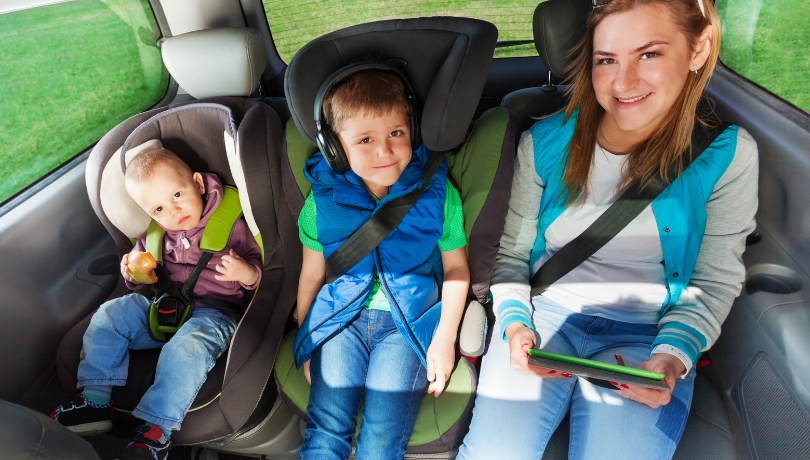
- Each child has the correct restraint.
- All doors close and latch fully.
A certified technician can help with difficult three-across setups.

Common mistakes to avoid
Avoid these frequent errors when choosing a car seat position.
Choosing the passenger side because it is always safer
The passenger side may be easier for curb access. It is not automatically safer in every crash.
Using the center LATCH anchors without checking
Inner anchors may not be approved for the center seat. Read the vehicle manual before using them.
Installing the seat too loosely
Check movement at the belt path. Do not judge tightness by pushing on the top of the car seat.
Letting the harness stay loose
The harness should pass the pinch test described in the car seat manual. Remove bulky coats before buckling the child. Place blankets over the buckled harness if needed.
Adding aftermarket inserts
Extra head supports, padding, strap covers, and mirrors may change how the seat performs. Use only items included with the seat or approved by the manufacturer.
Reclining the front seat against a rear-facing seat
Some vehicles and car seats allow this. Others do not. Check both manuals before allowing contact.
Putting a rear-facing seat in front of an active air bag
This is a serious danger. Move the child restraint to the rear seat.
Using an expired, damaged, or recalled seat
Check the seat label for its expiration date. You can search for recalls through the NHTSA recall database. Do not use a seat after a moderate or severe crash unless the manufacturer says it may still be used.
Relying only on a visual check
A seat can look secure and still move too much. Test the installation and have it checked when possible.
When should you get professional help?
Get help from a certified child passenger safety technician when:
- You cannot get the seat tight.
- You are unsure which LATCH anchors to use.
- The center seat has no clear belt path.
- You have a three-across arrangement.
- The child’s head slumps or the seat angle looks wrong.
- The vehicle manual and car seat manual seem to conflict.
- The seat was involved in a crash.
- You are using a special-needs car seat or medical equipment.
The National Highway Traffic Safety Administration technician search can help you find inspection resources in the United States. Availability can vary by state and location, so contact the site before visiting.
When an in-person check is not available, call the car seat manufacturer or vehicle manufacturer. Have the exact model names and model numbers ready.
Quick decision guide
| Situation | Best starting choice |
|---|---|
| The center allows a secure installation | Try the center first |
| The center does not fit well | Use the best-fitting side position |
| You load beside a busy road | Use the side that lets you load from the curb |
| You have one child and no center installation | Passenger side is often practical |
| The driver needs more room | Try the passenger side or center |
| You have several car seats | Test all positions together |
| Center LATCH is unclear | Use the seat belt or another approved position |
| A rear-facing seat is involved | Use the rear seat only |
| A forward-facing harnessed seat is involved | Use the top tether as directed |
| No position gives a tight fit | Stop and seek technician help |
This table is a starting point, not a substitute for the manuals. The final choice depends on the exact vehicle and car seat models.
Frequently asked questions
Is the driver-side car seat safer in a crash?
No. There is no universal rule that makes the driver-side rear seat safer. A correct installation and proper child restraint are more important than choosing the driver or passenger side.
Is the passenger-side rear seat the best place for a baby?
It is often convenient because you may load the baby from the curb. But the passenger side is not automatically safer. Use it only if the car seat fits correctly there.
Should I always use the middle seat?
No. Use the middle only when the car seat fits securely and the vehicle allows that installation. A tight side installation is better than a loose center installation.
Can I use LATCH in the center?
Only if the vehicle manual and car seat manual allow that center installation. Do not join inner anchors from neighboring seating positions unless the vehicle specifically approves it.
Can a rear-facing car seat touch the front seat?
Sometimes. The answer depends on the vehicle and car seat instructions. Follow both manuals. Never move the front seat into an unsafe driving position to make room.
Where should two car seats go?
Use the positions that provide secure installations and safe access. The center and one side may work, or both side positions may work better. Test each seat separately and then test them together.
When can my child sit in the front seat?
U.S. guidance generally recommends that children ride in the back seat until at least age 13. State laws may differ, and the vehicle manual may include additional air-bag warnings.
Final recommendation
Start with the center rear seat if it allows a proper installation. If it does not, try behind the passenger and then behind the driver. Choose the position where the car seat is tight, correctly angled, easy to buckle, and compatible with your vehicle and family needs.
For many U.S. families, behind the passenger is the most convenient choice. Convenience is useful only when the installation remains correct. When in doubt, read both manuals and have the setup checked by a certified child passenger safety technician.