
Introduction
Yes, some junkyards in the United States sell whole cars, but many do not. A yard may sell a complete vehicle as a drivable car, project car, parts car, or salvage vehicle. The answer depends on the yard’s business model, the car’s condition, its title, and state rules.
A junkyard is not the same as a normal used-car dealer. Most vehicles are sold as-is, with no repair promise, short return period, or warranty. Before you pay, ask whether the car has a title, whether it can be registered, and whether the yard is allowed to sell complete vehicles to the public.

What Does “Whole Car” Mean at a Junkyard?
“Whole car” can mean several different things. Ask the yard to define the term before you make a trip.
A junkyard may use “whole car” to describe:
- A complete vehicle that still has most major parts.
- A running car that starts and moves under its own power.
- A non-running project car.
- A parts car sold with its engine, transmission, or body still installed.
- A salvage vehicle that may need inspection before it can return to the road.
- A vehicle sold only for scrap value, not for driving.
A complete car is not always road-ready. It may have no battery, flat tires, missing keys, bad brakes, damaged wiring, or a seized engine. A vehicle can look whole while still being unsafe or impossible to register.
The key question is not only, “Does the junkyard sell whole cars?” Ask this instead:
“Can I buy this exact vehicle with a transferable title, and can I legally register it in my state?”
Why Would a Junkyard Sell a Complete Vehicle?
Junkyards buy vehicles for more than scrap metal. A car may have enough value as a complete unit to sell before the yard dismantles it.
Common reasons include:
- The vehicle still runs.
- The body has useful parts.
- The model is in demand for repairs.
- The car is useful as a low-cost project.
- The yard bought it at an auction with a title.
- Dismantling it would bring less money than selling it whole.
- The vehicle is too old or damaged for a normal dealer but still useful to a buyer.
Some yards act as full-service salvage yards. They may buy wrecked cars, remove parts, and sell complete vehicles. Other yards are self-service yards. They let customers remove parts from cars, but they may not sell the car as a complete unit.
A yard that mainly crushes vehicles may refuse whole-car sales. Its license, insurance, zoning, or environmental rules may limit what it can sell.
What Types of Junkyards Sell Whole Cars?
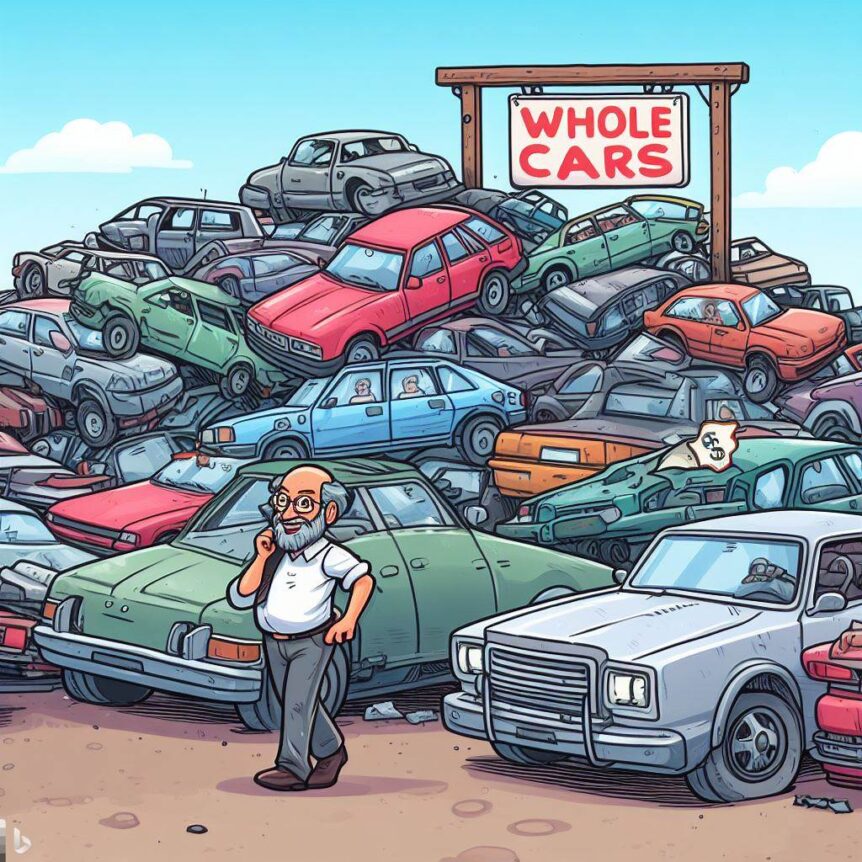
The type of yard often gives you the fastest clue.
| Yard type | Likelihood of selling a whole car | What to expect |
|---|---|---|
| Full-service salvage yard | Often | Staff remove parts and may sell complete vehicles |
| Self-service auto recycler | Sometimes | Cars may be for parts, not road use |
| Scrap-metal yard | Rarely | Focus is usually crushing and recycling |
| Auto salvage auction | Commonly | Vehicles often have salvage or other special titles |
| Used-car dealer with salvage inventory | Sometimes | More paperwork, but rules may be clearer |
| Private seller connected to a yard | Possible | Verify ownership and title carefully |
Salvage auctions are different from ordinary junkyards. Companies such as Copart and IAA sell damaged vehicles through auctions. Many buyers need an account, a broker, or a business license, depending on the state and the vehicle.
A car at a salvage auction may be a better fit for a rebuild project, but it can also bring more risk. Photos may not show hidden frame, flood, fire, or electrical damage. Auction fees can also add a large amount to the final bid.
How to Find a Junkyard That Sells Complete Cars
Call before you visit. A short call can save hours and prevent a wasted trip.
Use clear wording:
“Do you sell complete vehicles to the public, or do you only sell parts and scrap?”
Then ask:
- Does the vehicle run?
- Is the engine present and complete?
- Is the transmission present?
- Does it have a title?
- What type of title does it have?
- Is the title in the yard’s name?
- Can I inspect the vehicle before buying?
- Can I bring a mechanic or scan tool?
- Can I tow it from the yard?
- Is the sale final?
Search terms that may help include:
- “salvage yard complete cars for sale”
- “junkyard project cars”
- “whole cars for sale salvage yard”
- “running cars at auto recycler”
- “parts cars with title near me”
Check the yard’s website and social pages, but treat online listings as leads. Inventory changes quickly. A listed vehicle may already be sold, stripped, crushed, or moved to auction.
How to Check a Whole Car Before Buying
Inspect the car as if it were a repair project, not a normal used car. A low price does not remove the cost of towing, parts, labor, taxes, fees, and inspection.
1. Confirm the identity
Match the vehicle identification number, or VIN, on the car to the paperwork. The VIN is usually found on the dashboard near the windshield, the driver-side door area, or the vehicle frame.
Do not buy a car if the VIN plate looks altered, missing, or damaged. Ask the seller to explain any mismatch. Walk away if the story is unclear.
2. Check the title
Look at the actual title before paying. Do not rely on a promise that the title will arrive later.
Check:
- The VIN.
- The owner or business name.
- The title brand.
- Any lien release.
- The seller’s authority to transfer the title.
- The buyer and seller sections.
- Odometer information, when required.
Title brands vary by state. Common brands include salvage, rebuilt, flood, fire, and junk. A junk title may mean the vehicle cannot return to the road without special steps, or may never be road-legal in that state.
The U.S. Department of Justice’s National Motor Vehicle Title Information System, known as NMVTIS, can help buyers review title brands and certain vehicle history records. Use an approved NMVTIS data provider and compare the report with the physical VIN and title.
3. Look for serious damage
Check the frame rails, roof, pillars, floor, and suspension points. Uneven gaps, heavy welds, buckled metal, and fresh undercoating can hide crash repairs.
Look for signs of flood damage:
- Mud or silt under carpets.
- Corrosion on electrical connectors.
- A musty smell.
- Water lines in the trunk or doors.
- Mismatched interior parts.
- Rust in places that should stay dry.
Flood damage can cause problems months after purchase. A clean-looking interior does not prove that the car is safe.
4. Check the powertrain
If the yard allows it, inspect the oil, coolant, belts, wiring, and fluid leaks. Ask whether the engine can turn by hand or whether the car can be started.
Do not start a vehicle with exposed wiring, leaking fuel, a damaged fuel line, or major fluid loss. Ask a mechanic to inspect it if the condition is uncertain.
5. Check brakes, tires, and steering
A car that starts is not automatically safe to drive. Inspect the brake lines, tires, steering parts, suspension, and wheel bearings.
Plan to tow the vehicle unless the yard confirms that it is safe and legal to drive. A junkyard may sell a running car that has no current registration, insurance, inspection, or road equipment.
What Paperwork Do You Need?
The paperwork depends on the vehicle and your state. At minimum, try to obtain:
- A properly assigned title.
- A bill of sale.
- The VIN.
- An odometer disclosure when required.
- Lien-release paperwork, if relevant.
- Any salvage or rebuilt documents.
- Receipts for taxes and fees.
State departments of motor vehicles set their own rules. A salvage vehicle often needs repairs, inspections, photographs, receipts, or a rebuilt title before registration. Some states restrict who may rebuild or inspect a salvage vehicle.
Visit your state DMV website before buying. Search for terms such as salvage title inspection, rebuilt vehicle registration, and junk title. Do not assume that a title from another state will receive the same brand in your state.
A junkyard may sell a vehicle for off-road use, parts, or export. That does not mean the vehicle can be registered for public roads.
How Much Does a Whole Car From a Junkyard Cost?
The sticker price is only one part of the cost. A simple estimate can prevent a cheap car from becoming an expensive project.
Use this calculation:
Total cost = purchase price + tax and fees + towing + parts + labor + inspection + registration
Hypothetical example
Suppose you buy a non-running project car for $1,200:
| Cost | Example amount |
|---|---|
| Vehicle price | $1,200 |
| Sales tax and fees | $120 |
| Local towing | $250 |
| Battery and basic service | $300 |
| Brake repairs | $700 |
| Tires | $500 |
| Inspection and registration | $200 |
| Estimated total | $3,270 |
This is only an example. Actual costs depend on the car, location, damage, and repair work.
A complete parts car may be worth buying even if it never returns to the road. A road project needs a stricter budget. Compare the expected repair cost with the price of a running car that already has a clean title and current safety equipment.
Should You Buy a Whole Car or Individual Parts?
Buy the whole car when you need many parts from the same vehicle or want a project. Buy individual parts when you need one known item and want less risk.
| Your goal | Usually better choice |
|---|---|
| Replace one mirror or door | Buy the individual part |
| Restore an older car | Consider a complete donor car |
| Build a track or off-road project | A whole car may help |
| Get cheap daily transportation | Compare with a normal used car |
| Avoid title work | Buy parts, not a salvage vehicle |
| Need a guaranteed road car | Use a licensed used-car seller instead |
A donor car can save time, but it also creates storage, towing, and disposal problems. Some parts may not fit even when the year and model look the same. Check the exact trim, engine, transmission, body style, and option package.
Common Problems and Red Flags
Walk away when the seller will not show the VIN or title. Other warning signs include:
- The price is far below similar vehicles with no clear reason.
- The seller says the title is “somewhere else.”
- The VIN on the car does not match the paperwork.
- The vehicle has a junk title, but the seller calls it road-ready.
- The seller refuses an inspection.
- The seller asks for cash before showing ownership documents.
- The car has flood signs or altered wiring.
- The yard will not give a written bill of sale.
- The seller pressures you to buy immediately.
- The vehicle has a lien that has not been released.
Never remove parts or enter restricted areas without permission. Wear eye protection, gloves, and sturdy shoes. Do not work beneath a vehicle supported only by a jack. A junkyard car may have unstable parts, sharp metal, broken glass, leaking fuel, or other hazards.

Junkyard Whole Cars: Key Takeaways
- Yes, some U.S. junkyards sell whole cars.
- A whole car may be running, non-running, complete, salvage, or parts-only.
- Call first and ask about title type, condition, inspection, and sale rules.
- Check the VIN and title before paying.
- Use NMVTIS and your state DMV as part of the paperwork check.
- Budget for towing, repairs, fees, inspections, and registration.
- Treat every junkyard vehicle as an as-is purchase unless a written agreement says otherwise.
- Do not assume that a complete or running car is legal or safe to drive.
Frequently Asked Questions
Can I buy a running car from a junkyard?
Yes, some yards sell running cars. However, the car may still lack registration, insurance, a current inspection, or a roadworthy brake and tire system. Have it inspected and plan to tow it unless you confirm that driving it is legal and safe.
Do junkyards sell cars with titles?
Some do, and some sell only parts or scrap. The title may be clean, salvage, rebuilt, junk, or another state-specific brand. Ask to see the title before you pay and verify the VIN.
Can I register a junkyard car?
Sometimes. Registration depends on the title brand, the vehicle’s condition, and your state’s inspection rules. A vehicle with a junk title may have limited use or may not qualify for normal registration.
Are junkyard cars cheaper than used cars?
The purchase price is often lower, but the total cost may not be. Repairs, towing, title work, inspections, taxes, and parts can exceed the price difference. Compare the full project cost with a running car that already has a usable title.
Can I finance a whole car from a junkyard?
Usually not through standard auto financing. Many lenders avoid vehicles with salvage or rebuilt titles, and a junkyard may sell only for cash. Ask the yard about payment rules before you inspect the vehicle.
What should I do before buying one?
Get the VIN, inspect the title, check the vehicle history, inspect the car, estimate repair costs, confirm your state’s DMV rules, and arrange safe transport. If the seller will not provide basic paperwork, do not buy the vehicle.
Conclusion
Junkyards can sell whole cars, but the term covers many conditions. One car may be a usable project with a transferable title. Another may be a stripped parts car that cannot legally return to the road.
The safest next step is simple: call the yard, ask for the VIN and title status, and check your state’s rules before you spend money. Treat the purchase as a repair and paperwork project, not as a normal used-car sale.