

Remove most fabric seat stains with a vacuum, mild cleaner, soft brush, and careful drying.
Learning how to clean car interior stains from fabric seats is easier when you match the method to the stain. With years of hands-on cleaning experience, I have found that gentle products, light moisture, and patience work better than harsh scrubbing. This guide explains how to lift common stains without spreading them, fading the fabric, or leaving a musty smell.
What to Do Before Cleaning Fabric Car Seats
Before you learn how to clean car interior stains from fabric seats, check the seat material and the stain type. Most cloth seats have synthetic fibers, such as polyester or nylon, but some include blends, foam padding, or protective coatings. Too much water can soak into the foam and cause odors, slow drying, or even mildew.
Start by checking your vehicle owner’s manual. Some manuals list approved cleaners or warn against certain chemicals. Then test every product on a hidden area, such as the lower side of the seat.
Gather these supplies:
• A vacuum with a crevice tool
• Two or three clean microfiber cloths
• A soft upholstery brush or soft toothbrush
• A spray bottle
• Warm water
• Mild dish soap or a fabric-safe upholstery cleaner
• White vinegar for odor support, if suitable for the fabric
• Baking soda for dry odor treatment
• A fan or open windows for drying
• Nitrile gloves
Avoid colored towels. Dye from a towel can transfer to light upholstery. Also, avoid soaking the seat. Think of the fabric like a sponge with a hidden foam core: clean the surface without flooding the inside.
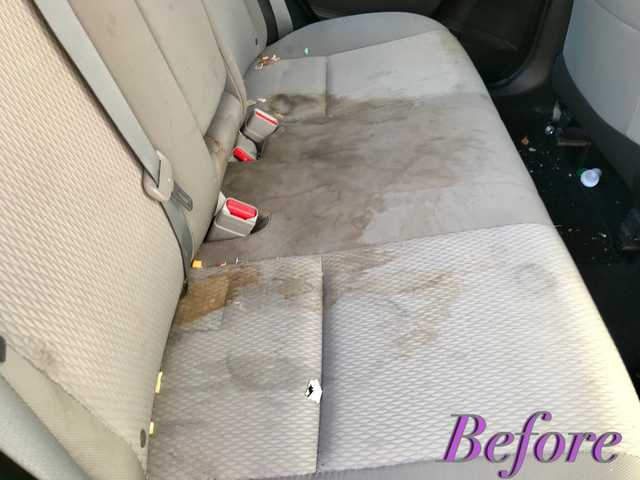
How to Clean Car Interior Stains From Fabric Seats Step by Step
The safest general method uses four stages: vacuum, blot, clean, and dry. This process works for many fresh food, drink, dirt, and body oil stains.
1. Remove loose dirt
Vacuum the whole seat first. Use the crevice tool around seams, seat belt openings, and the gap between the seat back and cushion. Loose grit can act like sandpaper when you scrub.
2. Blot fresh spills
Press a clean, dry microfiber cloth onto the spill. Lift the cloth straight up and repeat with a dry section. Do not rub in circles, because rubbing pushes liquid deeper and spreads the stain.
For a large spill, place several layers of clean cloth over the spot and press gently. Replace wet cloths as needed.
3. Mix a mild cleaner
For general stains, add about one teaspoon of mild dish soap to two cups of warm water. Use only a small amount of soap. Too much creates residue, and that sticky residue can attract new dirt.
You can also use a pH-neutral upholstery cleaner made for automotive fabric. Follow the product label, especially if it gives a specific dilution ratio.
4. Apply the cleaner lightly
Spray the solution onto a cloth or soft brush instead of soaking the seat. Work from the outside of the stain toward the center. This helps prevent a dark ring around the cleaned area.
Use short, gentle strokes. Let the cleaner sit for a few minutes if the label allows it, but do not let the seat become wet enough to drip.
5. Rinse away residue
Dampen a fresh microfiber cloth with plain water. Wring it out well, then dab the cleaned area. Repeat with another damp cloth if soap remains.
This step matters. Cleaner left in the fibers can make the seat feel stiff and attract more dust.
6. Dry the seat fully
Press a dry towel over the area. Then open the doors or windows and run a fan toward the seat. Do not use high heat from a hair dryer, because heat can set some stains, damage adhesives, or create uneven fading.
A slightly damp seat may need several hours to dry. Do not use the car until the fabric feels fully dry.

How to Remove Common Stains From Cloth Car Seats
Different stains need different treatments. A water-based drink stain is not the same as grease, ink, or vomit. Choosing the right approach is a key part of how to clean car interior stains from fabric seats safely.
Coffee, soda, juice, and sports drinks
Blot the spill as soon as possible. Mix mild soap with warm water and apply it with a cloth. Work in small areas, then wipe with a clean damp cloth.
Sugary drinks often leave a sticky film. Rinse the area more than once with a barely damp cloth, but avoid soaking the cushion. If sugar remains, the seat may feel clean at first but become dark and tacky later.
Milk and other dairy spills
Milk can leave protein, fat, and odor behind. Blot the liquid, then use a fabric-safe upholstery cleaner that is suitable for protein stains. Avoid hot water, which may make protein-based residue harder to remove.
Dry the area quickly and completely. If a sour smell remains, the spill may have reached the foam. In that case, surface cleaning may not solve the problem, and professional extraction may be needed.
Grease, butter, and oily food
First remove solid food with a dull spoon or plastic card. Sprinkle a small amount of baking soda or cornstarch on the oily spot for 15 to 30 minutes, then vacuum it.
Next, use a small amount of mild dish soap diluted in warm water. Dish soap can cut grease, but too much can leave a residue. Rinse lightly and dry the area well.
Mud and dirt
Let wet mud dry before vacuuming. Removing it while wet can push soil deeper into the weave.
Once dry, vacuum slowly. For any remaining mark, use a soft brush and mild upholstery cleaner. Clean the whole seat panel lightly if a strong water mark remains, since treating only one small area can create a visible clean patch.
Ink and makeup
Ink and makeup can be difficult because some contain strong dyes and oils. Blot fresh ink with a clean cloth, then use a fabric-safe spot cleaner after testing it in a hidden place.
Do not pour rubbing alcohol directly onto the seat. It may affect dye, coatings, or synthetic fibers. If the mark remains after one or two careful attempts, a professional detailer may have a better chance of removing it without damage.
Blood
Use cold water, not hot water. Blot with a cool, damp cloth and use a small amount of mild soap if needed. Hot water can set protein stains.
Never mix cleaning products. In particular, do not combine bleach with ammonia or other cleaners. Bleach is usually too harsh for vehicle upholstery and may permanently remove the fabric color.
Vomit and pet accidents
Remove solid material with paper towels or a plastic scraper. Blot liquid without rubbing, then use an enzyme-based cleaner labeled for upholstery and follow its instructions.
Enzyme cleaners need time to work, but they should not leave the fabric soaked. If odor continues, the contamination may be inside the foam. Professional extraction or cushion replacement may be the most reliable solution.
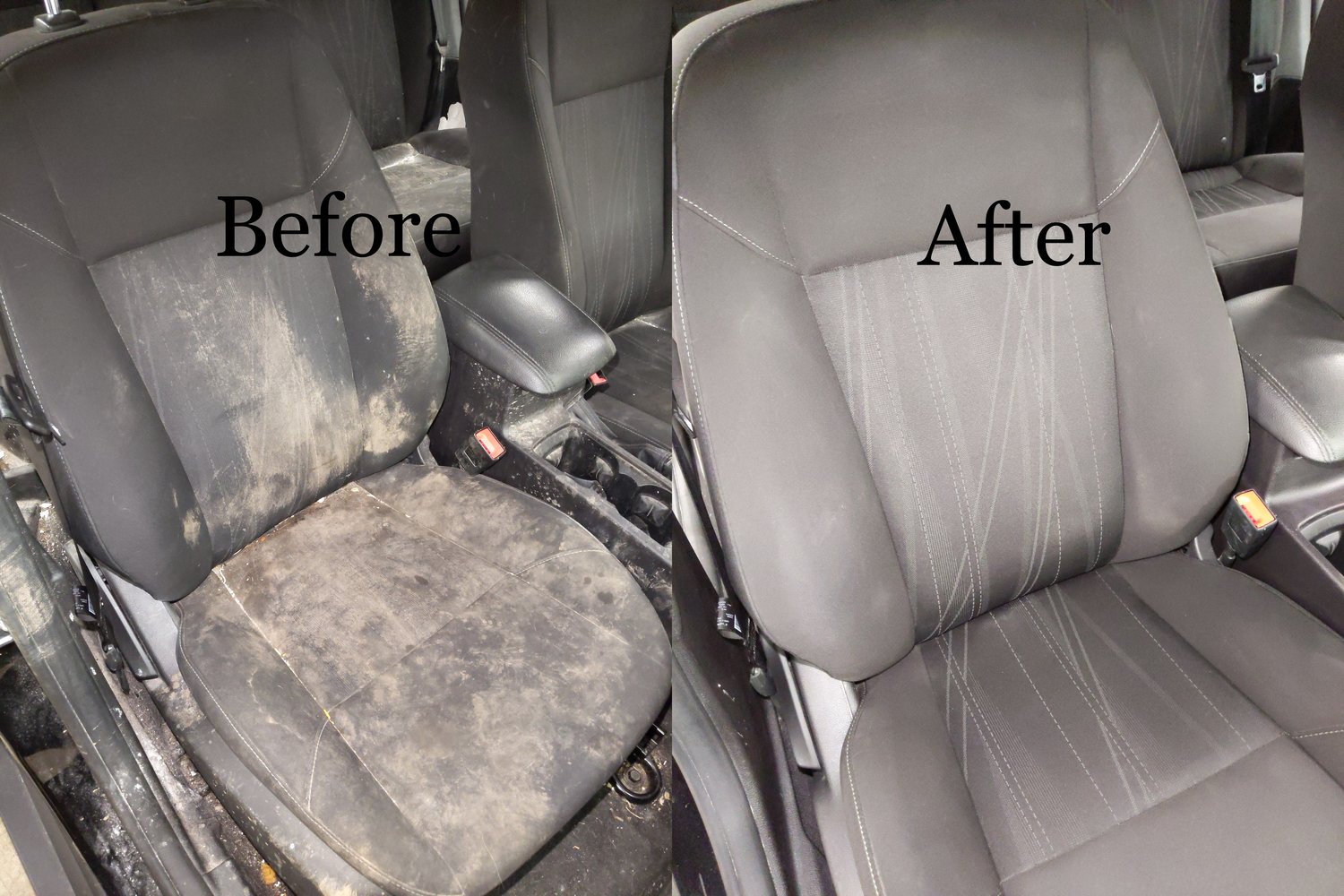
How to Remove Stains Without Leaving Water Rings
Water rings often appear when one small area gets wet while the surrounding fabric stays dry. They are caused by uneven drying, dissolved dirt moving to the edge, or cleaner residue.
To prevent rings, use very little liquid and feather the cleaning area outward. Instead of cleaning a one-inch spot, lightly clean the full fabric section from seam to seam. This creates a more even finish.
If a ring already appears, lightly dampen the entire panel with a clean, well-wrung cloth. Do not flood it. Blot evenly, then dry the panel with airflow.
In my own detailing work, one of the most common mistakes was treating a tiny mark too aggressively. The stain disappeared, but the new clean circle looked worse than the original spot. Gentle blending usually gives a better result.
How to Remove Odors From Fabric Car Seats
Cleaning removes the source of many odors, but smell can remain if liquid has reached the foam. Start by vacuuming the seat and cleaning the visible stain. Then use an upholstery-safe enzyme cleaner for organic odors, such as food, sweat, pet waste, or milk.
For light odors, sprinkle baking soda over dry fabric. Leave it for several hours or overnight, then vacuum it thoroughly. Baking soda can absorb some odors, but it does not replace cleaning. It will not remove deep contamination on its own.
For musty smells, improve airflow and inspect for hidden moisture. Check under floor mats and around door seals too. A persistent odor may indicate wet padding, mold growth, or a leak that needs professional attention.
Never spray perfume over a bad smell. That only combines two odors and can make the problem harder to diagnose.

Cleaning Products to Avoid on Cloth Car Seats
Some household products are too strong for automotive upholstery. They can bleach the fabric, weaken fibers, dissolve adhesive, or leave a sticky film.
Avoid these products unless your vehicle maker or a trained professional specifically recommends them:
• Chlorine bleach
• Strong bathroom cleaners
• Ammonia-based glass cleaners
• Acetone and nail polish remover
• Undiluted rubbing alcohol
• Abrasive powders
• Heavy laundry detergent
• High-pressure steam used too close to the fabric
• Large amounts of water
Do not mix vinegar with bleach, ammonia, or commercial cleaners. Chemical mixtures can create dangerous fumes. Vinegar may help with mild odor in some cases, but it is not a universal stain remover and its smell can linger.
A commercial upholstery cleaner is not automatically safer. Read the label and look for directions that mention fabric, upholstery, colorfastness, and automotive use.
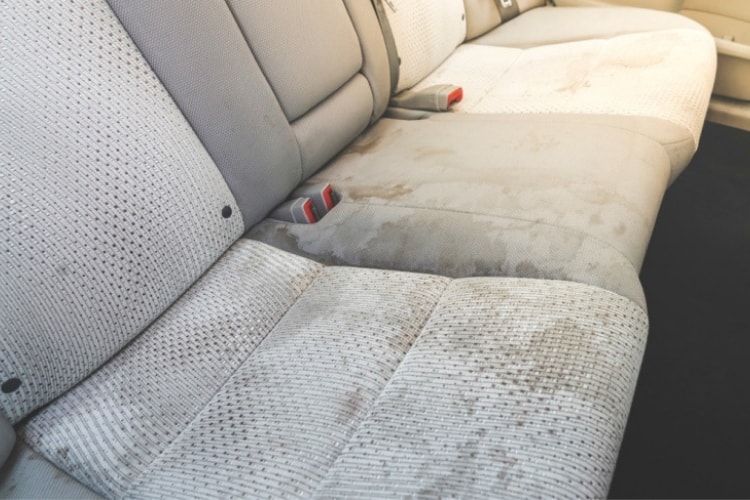
Common Mistakes When Cleaning Car Seat Stains
Knowing what not to do is just as important as knowing how to clean car interior stains from fabric seats. Many damaged seats result from too much pressure, too much water, or the wrong product.
Scrubbing too hard
Hard scrubbing can push the stain into the weave and make the fibers look fuzzy. Use a soft brush and light pressure instead.
Using too much cleaner
More cleaner does not mean better cleaning. Excess product can soak into the foam and leave a residue that attracts dirt.
Cleaning only the visible dot
A small spot may spread below the surface. Clean gently from the outer edge inward, then blend the area into the surrounding panel.
Skipping the test patch
A product may be safe on one fabric but harmful on another. Always test first, especially on dark, bright, or older upholstery.
Closing the car too soon
A damp seat trapped inside a closed car can develop a sour or musty odor. Use airflow until the fabric and padding feel dry.
Using heat to speed up drying
High heat can set some stains and may affect adhesives or synthetic fibers. Air movement is safer than intense heat.

When to Use a Professional Detailer
Home cleaning works well for fresh, surface-level stains. Professional help makes more sense when the stain is old, widespread, or deep in the foam.
Consider professional upholstery extraction when:
• The seat remains wet or smells sour after drying
• A large amount of milk, vomit, urine, or pet waste soaked in
• Mold or mildew is visible
• Dye has transferred from clothing
• The stain covers most of the seat
• The fabric has faded or changed texture
• You need to protect a valuable or heavily used vehicle
A detailer may use a hot-water extractor, specialized enzyme products, compressed air, or fabric-safe agitation. Even professional cleaning has limits. Permanent dye, bleach damage, burns, and fiber loss may not be fully repairable.
Ask the detailer what products and equipment they use. A trustworthy professional should inspect the fabric first and explain the risk of color change or water damage.
How to Keep Fabric Car Seats Cleaner
Prevention reduces the need for deep cleaning. A few simple habits can protect cloth seats from stains and odors.
• Vacuum seats every few weeks, or more often if you carry pets or children.
• Clean spills right away before they dry.
• Keep paper towels and a clean microfiber cloth in the car.
• Use a washable pet cover for animal passengers.
• Avoid eating greasy food over the seats.
• Shake sand and dirt from bags before placing them inside.
• Apply only a fabric protectant labeled for automotive upholstery.
• Do not leave wet clothing, towels, or umbrellas on the seat.
• Keep windows and doors open briefly after wet cleaning.
A fabric protectant can help liquid bead for a short time, but it does not make a seat stain-proof. Reapply it only as directed. Too much protectant may change the feel of the fabric or create residue.

Frequently Asked Questions About How to Clean Car Interior Stains From Fabric Seats
What is the best cleaner for fabric car seats?
A mild soap solution or a fabric-safe automotive upholstery cleaner is usually a good starting point. Test the cleaner on a hidden area, use very little liquid, and rinse away residue with a clean damp cloth.
Can I use vinegar to clean cloth car seats?
Diluted white vinegar may help with some light odors, but it is not the best choice for every stain. Test it first, avoid mixing it with other cleaners, and never soak the seat.
How do I clean a dried stain from a fabric car seat?
Vacuum the area, lightly dampen it with a suitable cleaner, and let the product work according to its label. Gently brush or blot the stain, then rinse away residue and dry the seat completely.
Can I use a steam cleaner on fabric car seats?
Steam can help with some upholstery, but too much heat or moisture may damage adhesives, coatings, or foam. Use a machine made for upholstery and follow the vehicle and equipment instructions.
How can I remove a bad smell from a cloth car seat?
First remove the material causing the odor, then use an upholstery-safe enzyme cleaner for organic spills. Dry the seat fully, because trapped moisture often causes the smell to return.
Will baking soda remove stains from car seats?
Baking soda can absorb some surface oils and mild odors, but it is not a complete stain remover. Apply it only to dry fabric, vacuum it well, and use a suitable cleaner for the actual stain.
How long does a fabric car seat take to dry?
A lightly dampened seat may dry in a few hours with open windows and good airflow. A deeply cleaned seat can take longer, so do not close the car or use the seat until it is completely dry.
Conclusion
The safest way to clean car interior stains from fabric seats is to vacuum first, blot instead of rub, use a mild cleaner, rinse away residue, and dry the fabric fully. Match the treatment to the stain, test every product, and avoid bleach, harsh chemicals, and excess water.
Fresh action makes the biggest difference. Keep a microfiber cloth and a fabric-safe cleaner in your car so small spills do not become permanent marks. Try these steps on your next stain, and share your results or explore more car care guides for a cleaner, fresher interior.