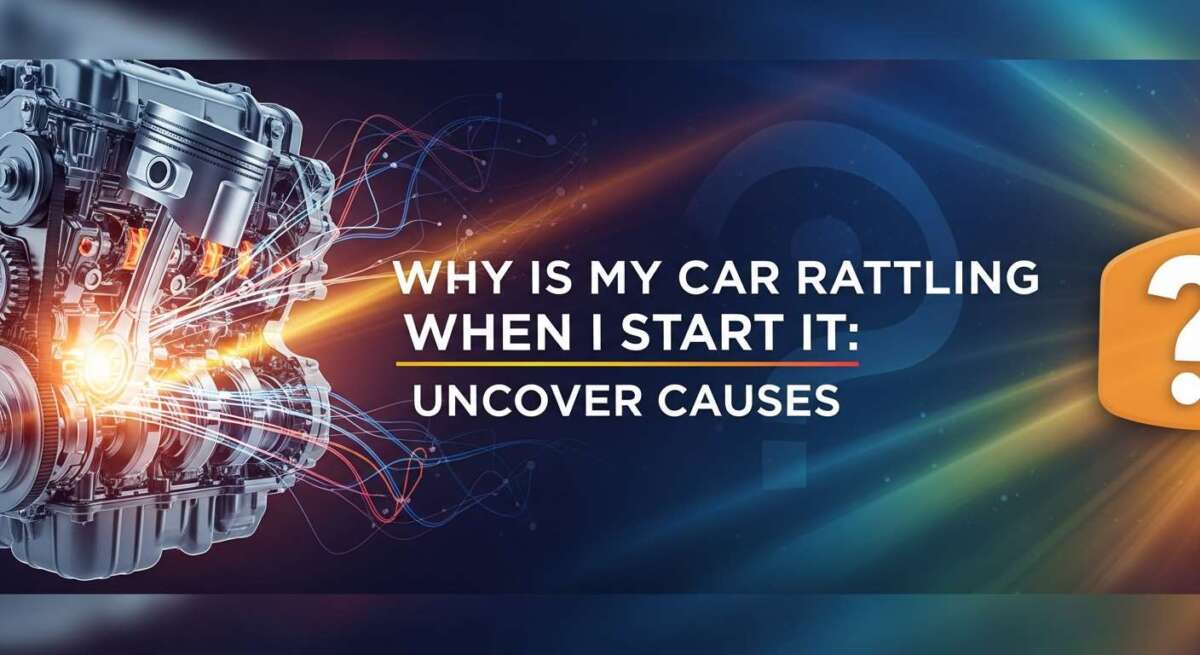
Why is My Car Rattling When I Start It: Uncover Causes
Meta title (suggested): Why Is My Car Rattling When I Start It? Causes, Fixes & Costs
Meta description (suggested): Car rattles when starting? Learn the common causes — heat shields, catalytic converters, lifters, timing chains, mounts — how to diagnose, DIY fixes, costs, and when to call a mechanic.
URL slug (suggested): car-rattling-when-starting-causes-fixes-costs
Why Is My Car Rattling When I Start It? Causes, Diagnosis & Fixes
Intro
You turn the key expecting the familiar idle — instead you hear clank, rattle, clatter. A rattling sound when starting your car is one of the most unsettling noises you can hear, but often it’s an inexpensive, quick fix. This guide walks you through the most common causes of a car rattling at startup, how to diagnose the source, cheap fixes you can try at home, signs of serious problems, and cost ranges so you know when to head to a shop.
Safety first
- Never touch the exhaust or components right after driving — they get extremely hot. Let the car cool for at least an hour.
- Keep hands, hair and clothing away from spinning belts and fans when the engine is running.
- Always set the parking brake and use wheel chocks when working under or around a vehicle.
How to diagnose a rattling sound
Think like a detective: listen, look, and feel.
- Location test
- Lean out the driver’s door while a helper starts the car: is the noise coming from the back/under the car (exhaust) or under the hood (engine)?
- Timing test
- Does the noise only occur on cold starts and go away in seconds or minutes? Or is it continuous?
- Movement test
- With the hood open, have a helper start the engine briefly while you watch for excessive engine movement (engine mounts) or wobbling pulleys (belts).
- Tap test (exhaust)
- When the car is cool, gently tap the muffler or catalytic converter with a rubber mallet. Rattling sounds inside indicate a broken catalytic core or loose internal parts.
Most common causes (and what they sound like)
A. Exhaust system (very common)
- Loose heat shield: thin metal plate that vibrates against piping. Sound: high-pitched metallic buzz or tinny rattle on startup and at idle. Fix: often secured with a hose clamp or replacement bolt. Cost: $5–$100 (DIY to shop labor).
- Broken/failing catalytic converter: internal ceramic honeycomb breaks and rattles like rocks in a can. Sound: deeper “rocks in a tin” rattle, especially at idle. Fix: replacement catalytic converter. Cost: $500–$2,500 depending on vehicle and parts (aftermarket vs OEM).
- Broken muffler hangers or loose muffler: causes heavy thud or clanking when the exhaust swings. Fix: replace rubber hangers or weld/repair bracket. Cost: $50–$300.
B. Engine internals (can be serious)
- Hydraulic lifter tick: lifters may click for a few seconds on cold start until oil pressure builds. Sound: quick high-frequency ticking that usually disappears within seconds. Fix: oil change, correct viscosity oil, or lifter/service if persistent. Cost: $0–$300 (oil) to $200–$1,000+ for lifter repair.
- Piston slap: common in older engines on cold start; metal expansion reduces noise once warm. Sound: hollow rattling or slapping on cold start that fades with warmth. Often not immediately catastrophic but indicates wear. Repair ranges widely.
- Timing chain/tensioner failure: loose timing chain slaps against guides. Sound: distinct “slap-slap” or loud rattle on startup. This is urgent — failure can destroy the engine. Fix: timing chain, guides and tensioner replacement. Cost: $1,000–$4,000+ depending on engine.
C. Mounts, belts and pulleys
- Worn engine mounts: engine shifts violently on startup, causing clunks or bangs. Fix: replace mounts. Cost: $200–$700.
- Belt tensioner or pulley bearing failure: whining, chirping or rattling while engine runs. Fix: replace pulley/tensioner and sometimes belt. Cost: $75–$300.
D. Oil and lubrication issues (easy to check)
- Low or thick oil causes lifter ticks and poor lubrication on cold start. Always check oil level and use the manufacturer-recommended viscosity. Fix: top-up or change oil. Cost: inexpensive.
Step-by-step troubleshooting plan
Tools you may need: flashlight, rubber mallet, jack stands or ramps, gloves, hose clamps, basic sockets.
- Check oil
- Pull the dipstick. Is oil low, very dark or sludgy? Add the correct oil and test again — many noisy cold-start issues go away after addressing oil.
- Cold-start listening
- Start the car cold, listen from the front and back to localize the sound. Note if it fades in 5–60 seconds or persists.
- Visual inspection (car cool)
- Inspect exhaust hangers, look for loose/broken heat shields, rusted bolts, dangling parts, or broken rubbers.
- Tap test (exhaust)
- Gently tap muffler and catalytic converter. If you hear loose pieces inside the converter, it needs replacing.
- Engine check
- With the help of a friend, watch engine movement when starting. Excessive rock suggests mount failure. Persistent lifter ticking after oil change suggests internal servicing.
DIY fixes you can try
- Tighten or clamp loose heat shields with a large hose clamp.
- Replace broken exhaust hangers (rubber loops) — inexpensive and often simple.
- Top up or change engine oil with correct viscosity.
- Replace belt tensioner/pulley if you can access it and have basic mechanical skills.
When to call a professional — don’t delay
- You hear timing chain rattle, loud knock, or metallic clanging from inside the engine.
- Check Engine Light is flashing or accompanies the noise.
- The noise gets louder with throttle or while driving.
- You detect metal shavings in the oil or severe vibration.
Estimated repair cost ranges (approximate)
- Tighten/secure heat shield: $0–$100
- Replace exhaust hanger/rubber: $50–$200
- Replace muffler or small exhaust repairs: $150–$600
- Catalytic converter replacement: $500–$2,500+
- Oil change (fix for lifter ticks): $30–$150
- Replace engine mounts: $200–$700
- Timing chain/tensioner/guide job: $1,000–$4,000+
Prevention tips
- Change oil on schedule using the recommended oil grade and viscosity.
- Wash the underbody in winter to remove road salt and slow rust.
- Inspect the exhaust and mounts periodically.
- Listen to your car regularly (turn down the radio) so you catch noises early.
Conclusion
A rattling sound at startup can be as minor as a loose heat shield or as serious as a failing timing chain. Start with basic checks — oil level, location and timing of the noise, and a quick visual inspection. Many causes are affordable DIY fixes, but don’t ignore sounds that suggest internal engine damage. Quick diagnosis and action often prevent expensive repairs.
Frequently Asked Questions (SEO-friendly short answers)
Q: Why does the rattling stop after a few minutes?
A: Heat causes metal parts to expand and oil pressure to build, closing gaps and reducing vibration; that’s why many cold-start rattles disappear once the engine warms.
Q: Is it safe to drive if my car rattles when starting?
A: It depends. Loose heat shields or hangers are usually safe but annoying. A loud knock, timing chain noise, or grinding means you should stop driving and get it checked.
Q: Can low oil cause rattling on startup?
A: Yes. Low or old oil leads to poor lubrication at startup, causing lifter ticks or other metal-on-metal noises.
Q: What does a failing catalytic converter sound like?
A: Like rocks shaking in a metal can — a deeper rattling at idle or startup.
Q: How much to fix a loose heat shield?
A: DIY with a clamp can cost under $10; a shop repair could run $50–$100 depending on labor.
Image alt text suggestions
- “Mechanic tapping catalytic converter to diagnose rattling”
- “Loose heat shield under car causing metallic rattle”
- “Checking engine mounts while starting car”
SEO & content tips for publishing
- Target keywords: car rattling when starting, rattling when cold start, heat shield rattle, catalytic converter rattling, timing chain rattle, engine lifter tick.
- Use the main keyword in the page title, H1, URL slug and first paragraph, and repeat naturally in subheadings.
- Add structured FAQ schema using the Q&A pairs above for better chances at rich snippets.
- Include an internal link to related content (e.g., “how to check engine oil” or “how long for car engine to cool down”) and an authoritative external link for catalytic converter replacement costs or timing chain repair guides.
If you want, I can:
- Produce a shortened social media blurb and meta tags for you.
- Generate FAQ schema (JSON-LD) ready to paste into the page.
- Rewrite the article in HTML or WordPress-ready blocks for direct publishing.