

An Ohio car title is an official state document showing ownership, vehicle details, liens, and title status.
If you are buying, selling, or registering a vehicle, knowing what does a car title look like Ohio helps you spot missing information, errors, and possible fraud. Ohio titles can be issued as paper certificates or electronic records, but both contain the same core ownership data. This guide explains each section in plain language and shows what to check before signing or paying.
What Does a Car Title Look Like in Ohio?
An Ohio car title is a government-issued certificate that proves who legally owns a vehicle. The paper version is usually a formal document with the words “Ohio Certificate of Title” near the top, along with state identification, security features, and areas for vehicle and owner information.
The exact layout may change as the Ohio Bureau of Motor Vehicles updates its forms. For that reason, do not judge a title only by color, font, or one design feature. Focus on the information, document security, signatures, and the title record held by the Ohio BMV.
A typical Ohio title includes:
• Ohio Certificate of Title wording
• A title number
• The vehicle identification number, or VIN
• Year, make, model, and body type
• Vehicle color, when listed
• The owner’s legal name and address
• Odometer information
• Lien information
• Title issue date
• Brand information, such as salvage or rebuilt
• Assignment areas for a sale or transfer
An Ohio title is not the same as a vehicle registration, license plate, insurance card, or bill of sale. The title proves ownership. Registration allows the vehicle to operate legally on Ohio roads.
Main Parts of an Ohio Vehicle Title
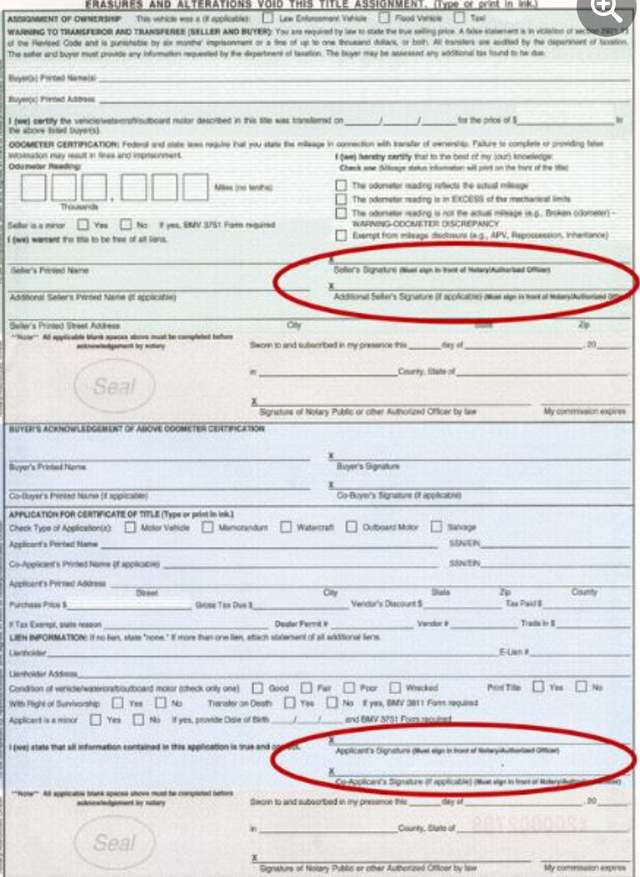
Learning the sections is the best way to understand what does a car title look like Ohio. Think of the title as the vehicle’s legal identity card. Each field connects the car to its owner and history.
Vehicle identification section
This section identifies the car itself. It should match the vehicle in front of you and the seller’s paperwork.
Check these details carefully:
• VIN
• Year
• Make
• Model
• Body type
• Color, if included
• Vehicle weight or classification, when applicable
The VIN is the most important field. It is usually a 17-character code on modern vehicles. Compare the title VIN with the VIN found on the dashboard, driver-side doorjamb, and insurance documents.
One wrong letter or number can delay a transfer. It can also signal a clerical error or a serious problem. Pay close attention to characters such as the number 1 and letters I, O, and Q. Those letters are not used in standard modern VINs, but mistakes can still happen when information is copied.
Owner information
The title lists the legal owner or owners. Names should match the seller’s government-issued identification and any required power of attorney.
If two people own the vehicle, the way their names are connected matters. Words such as “and” may require both owners to sign. A title that lists multiple owners should not be signed by only one person unless Ohio rules and the title language allow that action.
Review:
• Full legal name
• Mailing address
• Number of owners
• Spelling of each name
• Any ownership changes or corrections
An address may be old and still be valid, but a name mismatch deserves attention before money changes hands.
Odometer section
The odometer area records the vehicle’s mileage at a transfer. Ohio titles may include an odometer disclosure statement or a related mileage section, depending on the title form and vehicle details.
Look for:
• Mileage shown at the time of transfer
• Whether the mileage is actual
• Whether the odometer reading exceeds its mechanical limits
• Whether the mileage is not actual
Federal law generally requires mileage disclosure for most vehicles less than 20 years old. Some vehicles, such as certain heavy trucks or older vehicles, may follow different rules.
Never accept a blank mileage field when a disclosure is required. Do not rely on a seller’s promise to “fill it in later.” Blank title fields can create ownership disputes and may make the title unusable.
Lien section
A lien means a lender or another party has a legal claim against the vehicle. The lienholder may be a bank, credit union, finance company, or other approved entity.
An Ohio title may show:
• Lienholder name
• Lienholder address
• Lien date
• Lien release information
A lien release usually confirms that the loan has been paid. The exact process may involve the lender, an electronic lien record, or a paper release, depending on how the lien was recorded.
If a lien appears on the title, do not assume the seller can transfer clear ownership without extra steps. Contact the lienholder or an Ohio county clerk of courts title office before completing the deal.
Title brand section
A title brand warns about a vehicle’s past or condition. Possible terms may include salvage, rebuilt salvage, flood, odometer discrepancy, or other state-recognized brand information.
A branded title does not always mean the vehicle is unsafe. However, it can affect:
• Insurance coverage
• Financing
• Resale value
• Registration requirements
• Safety inspections
• Buyer interest
A clean-looking paper does not mean the car has a clean history. The brand field and a vehicle history report both matter.
How to Read an Ohio Title Assignment
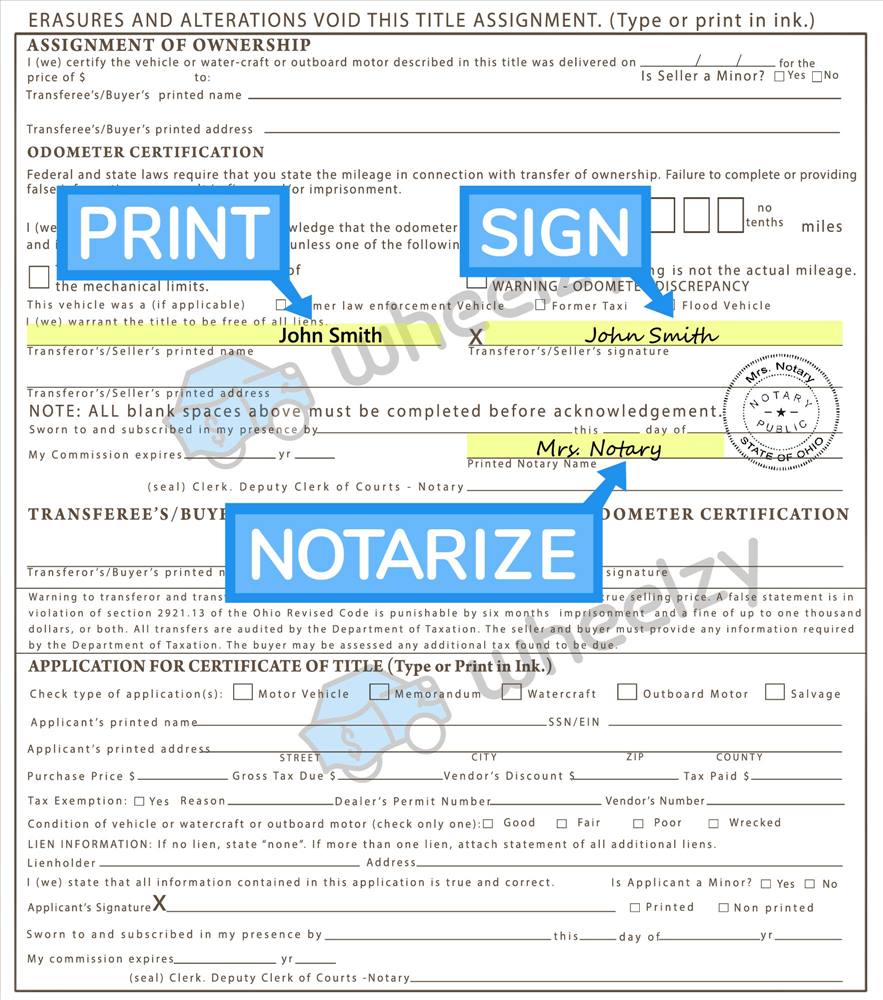
The assignment section is where the current owner transfers the vehicle to a buyer. It must be completed with care because an error can force you to visit a title office or obtain a corrected document.
The seller usually enters or confirms:
• Buyer’s full legal name
• Buyer’s address
• Sale price
• Sale date
• Odometer reading
• Seller’s signature
• Buyer’s signature, when required
• Any required lien or notary information
Use permanent ink and write clearly. Do not erase, cross out, use correction fluid, or leave spaces that someone could alter later.
The buyer’s name should be written exactly as it should appear on the new title. If you buy the car with another person, ask the title office how both names should be listed before signing.
A seller should not sign an Ohio title and give it to a buyer with major sections blank. That practice is often called an open title. It can create tax, ownership, and fraud problems.
From reviewing title transfers, one mistake appears again and again: people sign the wrong line or write the buyer’s name incorrectly. A few extra minutes spent reading every field can prevent days of frustration.

Paper Titles and Electronic Titles in Ohio
Ohio supports electronic title records in some situations. An electronic title does not look like a paper certificate because the ownership record is stored in the state’s system.
This can happen when:
• A lender holds an electronic lien
• A title office records ownership electronically
• A dealership completes an electronic transaction
• The owner chooses an electronic title option
If a lender has a lien, the lender may control the electronic title record until the loan is paid. After the lien is released, the owner may be able to request a paper title through an Ohio title office.
This means a seller may not always have a paper document in hand. That alone does not prove a problem. The safer step is to verify the title record with an official Ohio county clerk of courts title office or the Ohio BMV.
An electronic record still needs correct:
• VIN
• Owner name
• Lien status
• Vehicle description
• Title status
Ask how the transfer will be completed before paying for the car. The process can differ for private sales, dealership purchases, inherited vehicles, and vehicles with liens.
Ohio Title Colors, Security Features, and Authenticity
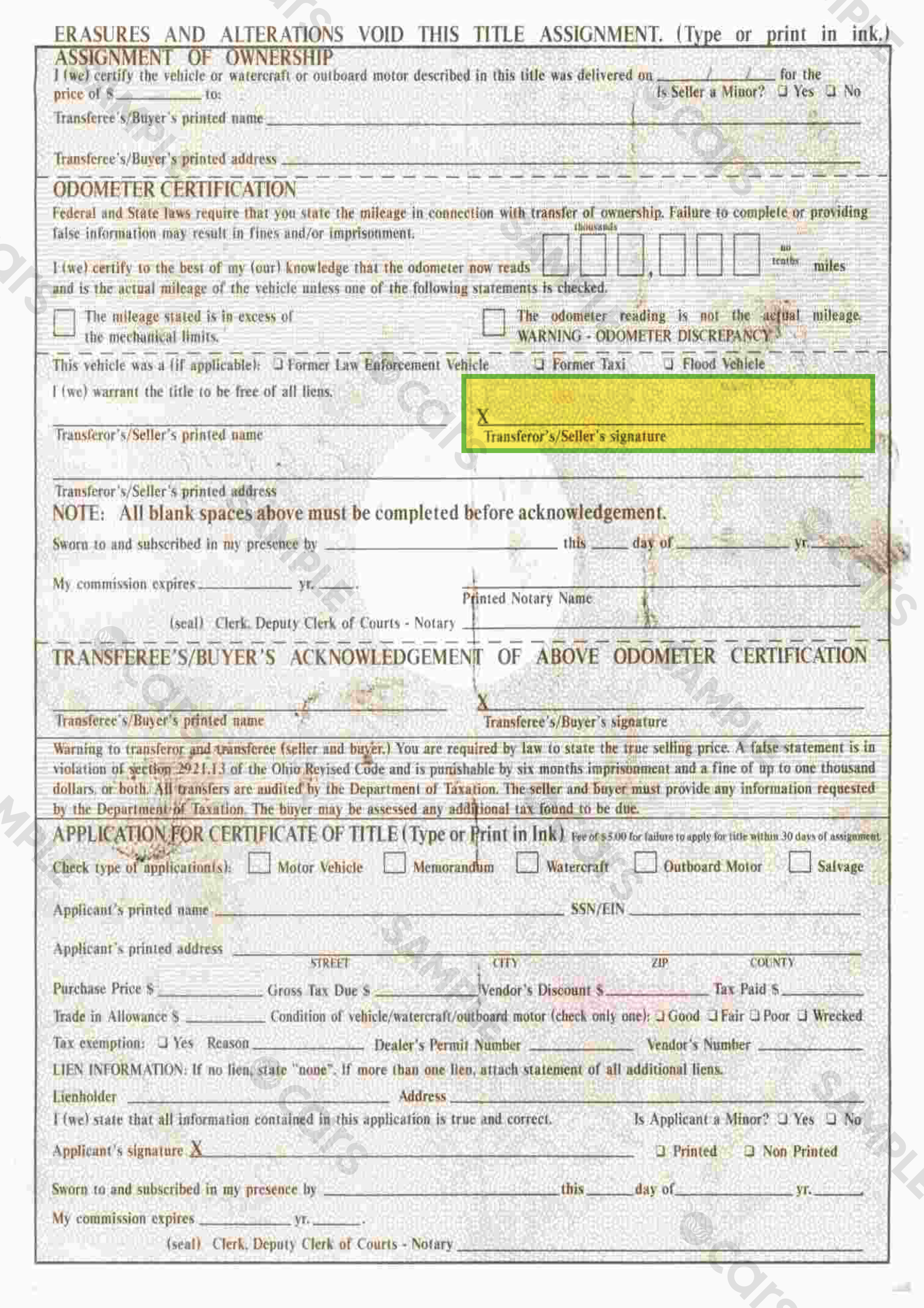
Many people search what does a car title look like Ohio because they expect a specific paper color. Color alone is not a reliable test. Ohio forms may change, and lighting or scanned copies can make colors look different.
A genuine title should have professional printing and consistent information. It may include security features that are difficult to copy, but those features should not be the only basis for deciding whether a title is valid.
Watch for warning signs such as:
• Blurry or uneven printing
• Different fonts in the same field
• Spelling errors
• VIN differences
• Scratched-out names
• Whiteout or correction fluid
• Missing signatures
• Unusual paper
• Blank assignment areas
• A seller refusing an official title check
• A title from another state that does not match the seller’s story
A title can look real and still be stolen, altered, or tied to a different vehicle. Verification is stronger than visual inspection.
For a private sale, compare the title with the vehicle, seller identification, bill of sale, insurance record, and vehicle history report. If anything conflicts, pause the transaction.
How to Verify an Ohio Car Title Before Buying
You can reduce risk by using a simple title-check process. Do not let a low price rush you past these steps.
1. Match the VIN
Compare every VIN digit on the title with the VIN on the vehicle. Check more than one location on the car.
2. Confirm the seller’s identity
Ask to see a valid photo ID. The name should match the legal owner shown on the title or be supported by proper documentation.
3. Check for liens
Look for a lienholder name. If one appears, ask for a valid lien release or confirm the payoff and transfer process with the lender.
4. Review the title brand
Read every brand and warning. Ask direct questions about salvage repairs, flooding, odometer issues, or major damage.
5. Inspect the assignment
Make sure the sale price, date, mileage, buyer name, and signatures are complete and accurate.
6. Verify the record
Contact an official Ohio title office before final payment if the document seems unusual. You can also ask about title requirements through official Ohio BMV resources.
7. Keep supporting documents
Save the bill of sale, payment record, seller messages, inspection report, and copies of the title paperwork.
A vehicle history report can add useful information, but it is not a replacement for an official title record. Reports can have delays or missing data, so use them as one part of the review.
Common Ohio Title Problems and Their Solutions
Title problems are common enough that buyers should expect questions, not perfection. The key is to solve the issue before the sale is complete.
Lost title
The owner may need to request a duplicate title through an Ohio county clerk of courts title office. Do not buy a vehicle based only on a promise that the replacement is coming.
Wrong name or address
A minor address issue may be fixable, but a name error can require a correction process. Ask the title office what documents are needed.
Missing lien release
The lender must usually confirm that the loan is paid. A receipt from the seller may not be enough to remove the lien from the state record.
Signed title with no buyer
This is an open title and creates risk. The seller should complete the transfer properly instead of passing along a partially signed certificate.
Odometer mismatch
A mismatch can result from a simple entry mistake, a replacement instrument cluster, or possible mileage fraud. Investigate it before buying.
Out-of-state title
An out-of-state vehicle may require an Ohio inspection or VIN verification and additional paperwork. Requirements can vary by vehicle and situation.
Salvage or rebuilt title
Ohio may require inspections and special documents before a rebuilt salvage vehicle can receive a different title status. Confirm the process before assuming the car can be registered normally.
The safest rule is simple: if the title problem is unclear, take the paperwork to an official title office before paying.
Ohio Car Title vs. Registration
A title and registration serve different purposes.
The title shows ownership. Registration connects the vehicle to its plates, taxes, and legal operation on public roads.
Here is the basic difference:
• Title: Shows who owns the vehicle
• Registration: Shows the vehicle is registered for road use
• License plate: Displays the vehicle’s registration identification
• Bill of sale: Records the sale terms
• Insurance card: Proves required insurance coverage
You may need all of these documents, but they do different jobs. A registration card cannot replace a title when ownership changes.
This distinction is especially important when buying from a private seller. Seeing current plates or a valid registration does not prove the seller has clear ownership.
What to Bring to an Ohio Title Office
When transferring ownership, bring the documents that match your situation. Requirements may differ for a private sale, gift, inheritance, dealership purchase, or financed vehicle.
Common items include:
• Original Ohio title or electronic title information
• Valid government-issued identification
• Completed assignment section
• Lien release, when needed
• Odometer disclosure
• Bill of sale, when useful or required
• Power of attorney, if someone acts for the owner
• Proof of insurance, when required for registration
• VIN inspection or out-of-state inspection documents
• Payment for title fees and taxes
Ohio title offices are operated through county clerk of courts offices. Call the office before visiting because local procedures, appointment rules, and document requirements may change.
Do not sign a title until you understand every line. If you are unsure, ask the clerk to explain the process before writing anything.
Practical Tips for Buyers and Sellers
A title transfer should feel boring. Boring is good. It means the VIN matches, the names are clear, the lien is released, and every required field is complete.
Use these habits:
• Meet at a safe location, preferably near a title office
• Inspect the car before signing paperwork
• Compare the VIN in several places
• Check the seller’s identification
• Avoid cash-only pressure
• Get a written bill of sale
• Photograph the title and vehicle at the time of sale
• Do not accept a photocopy as proof of ownership
• Do not buy a car with an open title
• Confirm the lien status before making full payment
• Keep records of every message and payment
A real-world example is a buyer who sees a low price and skips the title check. The car may run well, yet a lien or brand can turn that bargain into a costly legal problem. A clean mechanical inspection cannot fix an ownership problem.
Frequently Asked Questions About What Does a Car Title Look Like Ohio
What does a car title look like in Ohio?
An Ohio car title is a formal certificate labeled “Ohio Certificate of Title.” It includes the VIN, vehicle details, owner information, odometer data, lien information, title status, and transfer sections.
Is an Ohio car title the same as registration?
No. The title proves ownership, while registration allows the vehicle to be driven legally on Ohio roads. A vehicle can have registration paperwork without that document replacing the title.
Can an Ohio car title be electronic?
Yes, Ohio may maintain some title records electronically, especially when a lender has an electronic lien. The owner may not always receive a paper certificate until the lien is released or a paper title is requested.
How can I tell if an Ohio title is real?
Match the title VIN with the VIN on the vehicle, check the owner’s identity, review liens and brands, and verify the record through an official Ohio title office. Paper appearance alone cannot prove authenticity.
What does a lien mean on an Ohio title?
A lien means a lender or other party has a legal claim against the vehicle. The lien normally must be released or properly handled before the buyer receives clear ownership.
Can I buy a car with a missing Ohio title?
You should be cautious. The legal owner may need to obtain a duplicate title before completing the sale, and buying without proper ownership paperwork can create major transfer problems.
Does a clean Ohio title guarantee a good car?
No. A clean title does not guarantee that the vehicle has never had serious damage or mechanical problems. Use a professional inspection and vehicle history check along with the title review.
Conclusion
An Ohio car title is more than a piece of paper. It is the legal record that links a vehicle to its owner, VIN, mileage, lien status, and title history. When learning what does a car title look like Ohio, focus less on color and more on accurate information, complete signatures, title brands, and official verification.
Before buying, match the VIN, confirm the seller, check for liens, review the assignment, and resolve every question before payment. Use official Ohio BMV and county title office resources for the latest requirements, and share your title questions or experience in the comments.