

Yes, a baseless car seat can be safe in the United States if the car seat is approved for baseless use, installed exactly as the manufacturer directs, and fits the vehicle and child correctly.
Many infant car seats can attach to a separate base. Some can also be installed without that base by using the vehicle’s seat belt. However, not every infant carrier allows this. A base can make daily installation faster and may reduce user error, but it is not always required for safe travel.
In the U.S., the key question is not whether a car seat has a base. The key question is whether the specific seat, child, vehicle seat, and installation method work together as approved.
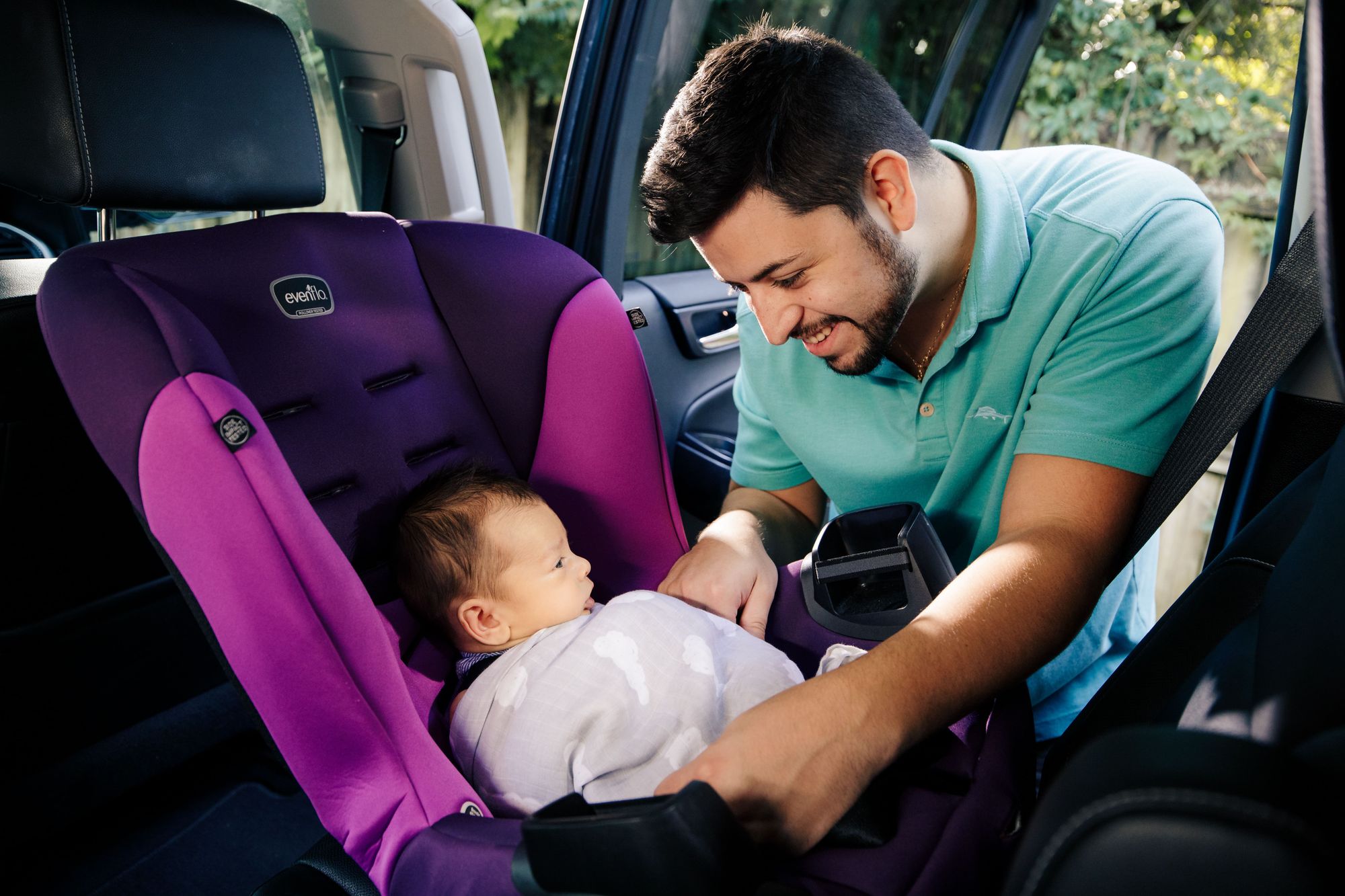
What Does “Baseless Car Seat” Mean?
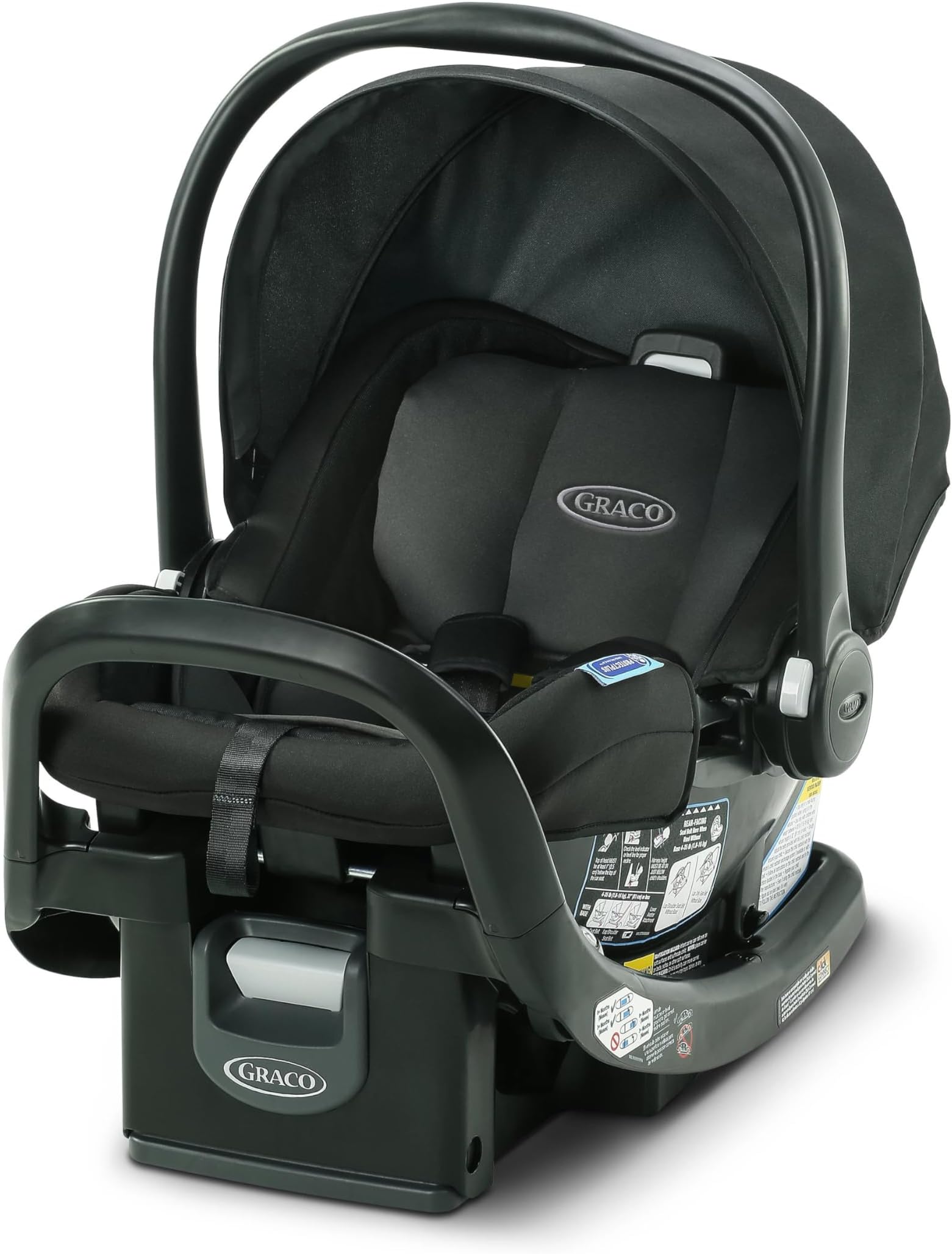
A baseless car seat usually means an infant carrier installed directly in a vehicle without its detachable base. The carrier may be secured with the vehicle’s lap-and-shoulder belt.
This is different from a convertible car seat or all-in-one seat. Those seats are normally installed directly in the vehicle and do not use a removable infant base.
A baseless installation may be useful when:
- You are riding in a taxi or rideshare.
- You are traveling by air.
- You are using a grandparent’s or caregiver’s vehicle.
- You need to move the baby between cars.
- You do not want to buy a second base.
Some infant seats include a built-in belt lock-off. This feature holds the seat belt tight during installation. Other seats require the belt to be routed in a specific way and locked by the vehicle’s seat belt system.
The owner’s manual controls. Product photos, retailer descriptions, and online comments do not replace the manual for your exact model.
When Is a Baseless Infant Car Seat Safe?
A baseless infant car seat is generally safe when all of these conditions are met:
- The manufacturer allows baseless installation.
- The seat is installed with the correct vehicle belt path.
- The vehicle seat belt locks the car seat tightly.
- The carrier is at the correct recline angle.
- The child fits the seat’s height and weight limits.
- The harness is adjusted correctly.
- The seat is used rear-facing.
- The seat does not move more than 1 inch from side to side or front to back at the belt path.
The National Highway Traffic Safety Administration recommends checking movement at the belt path, not at the top of the carrier. A small amount of movement at the top can be normal because the seat pivots around its attachment point.
A car seat that moves more than 1 inch at the belt path needs to be reinstalled. Do not judge safety by whether the seat “looks tight” from across the vehicle.
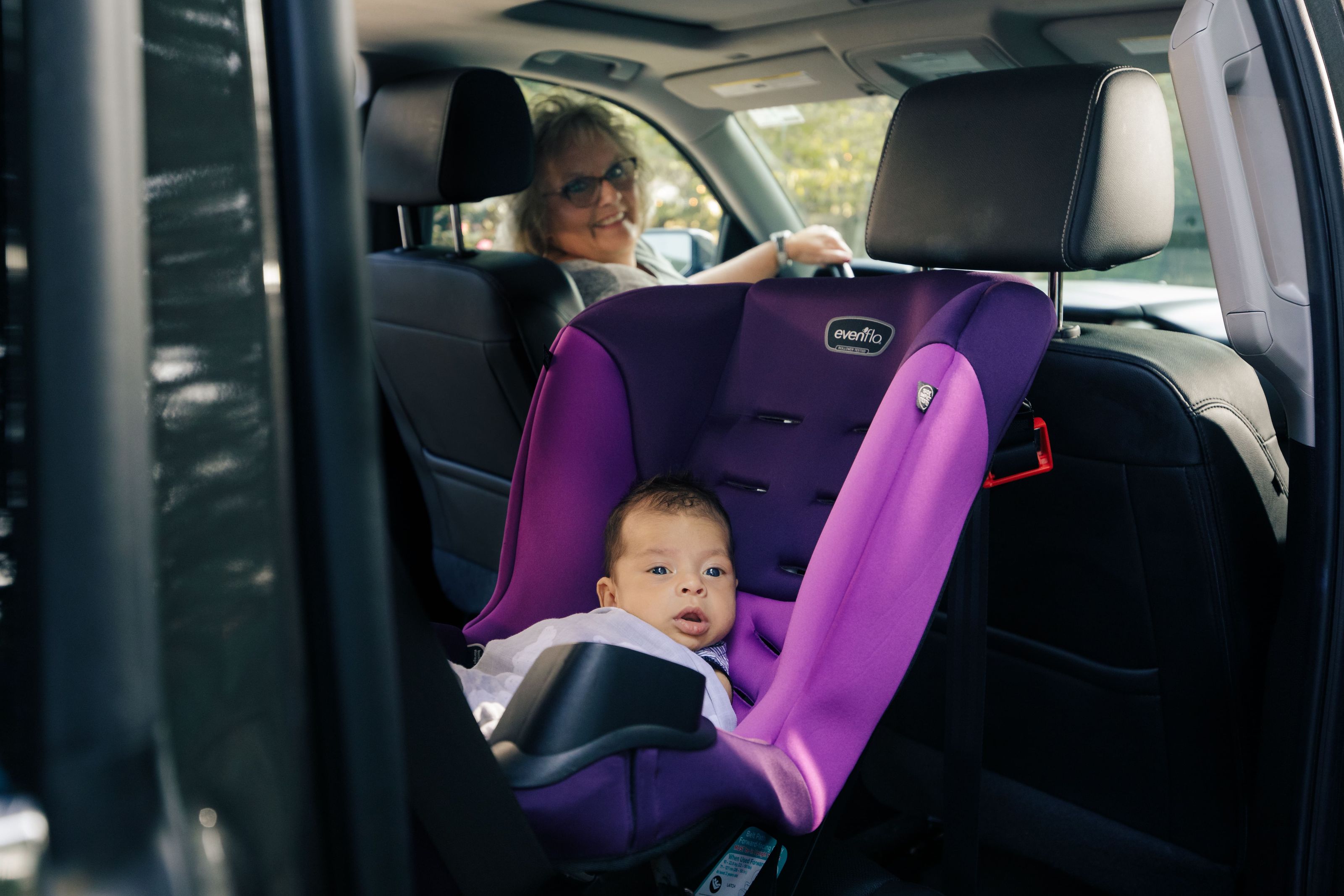
How to Install an Infant Car Seat Without Its Base
Follow the manual for your model first. The steps below describe the common process, but belt paths and lock-off features differ.
1. Place the carrier rear-facing
Put the infant carrier on an approved vehicle seating position. Never place a rear-facing car seat in front of an active passenger air bag.
The safest seating position depends on the vehicle, the car seat, and the ability to install the seat correctly. The center position is not automatically safest if the seat does not fit well there.
2. Set the recline angle
Use the carrier’s angle indicator or adjustment guide. A newborn needs a suitable recline to help keep the head from falling forward.
A head that repeatedly drops toward the chest can affect a young baby’s airway. Do not add towels, aftermarket cushions, head supports, or padding unless the car seat manufacturer supplied and approved them.
3. Route the seat belt through the baseless belt path
Most infant carriers use a belt path marked on the shell. In many models, the lap portion of the belt crosses the carrier near the child’s feet.
Some seats use a standard belt path. Others use a European belt path, which routes the shoulder belt around the back of the carrier. Use the method shown in the manual. Do not create your own belt route.
4. Lock the vehicle seat belt
Modern U.S. vehicle belts usually have a way to lock a car seat in place. Depending on the vehicle, you may:
- Pull the shoulder belt all the way out and let it retract.
- Use a switchable retractor.
- Use a built-in car seat lock-off.
- Use a locking clip if the manual and vehicle instructions require one.
Do not use a locking clip unless you know where it belongs. It is different from a metal belt guide or a child restraint tether.
5. Remove slack
Press down on the carrier near the belt path while pulling the shoulder belt tight. Keep the belt flat and untwisted.
If the car seat has a lock-off, close it only after removing the slack required by the manual. A lock-off that is not fully closed may not hold the belt correctly.
6. Check movement
Hold the car seat at the belt path and pull it side to side and front to back. It should move less than 1 inch in either direction.
Do not test movement by pulling hard on the canopy, handle, or top of the carrier.
7. Check the harness
Place the child’s back flat against the seat. The harness should lie flat and pass through the correct slots for rear-facing use.
For a rear-facing infant, the harness straps usually need to come from slots at or below the child’s shoulders. The chest clip should sit at armpit level.
The harness should be snug enough that you cannot pinch extra webbing at the child’s shoulder. Bulky coats should not go under the harness.
8. Check the carrier handle position
Handle rules vary by model. Some infant seats allow the handle to remain up while driving. Others require a different position.
Follow the owner’s manual rather than copying the position used in another car seat.
9. Recheck after driving
After a short trip, inspect the installation. Look for a loose belt, a changed recline angle, or movement at the belt path.
If the installation still feels uncertain, contact a certified child passenger safety technician. The NHTSA provides a directory of child passenger safety resources through its car seat guidance pages.

Base Versus Baseless Installation: Which Is Safer?
Neither method is automatically safer in every vehicle. The safer method is the one that is approved for the seat and installed correctly every time.
| Factor | With the base | Without the base |
|---|---|---|
| Daily convenience | Usually easier | May take more time |
| Transfer between cars | Needs a base in each car or a new installation | Carrier can move between vehicles |
| Installation errors | Fewer steps for many users | Belt routing can be easier to get wrong |
| Travel by taxi or rideshare | Base may be unavailable | Often more practical |
| Fit in a vehicle | Base can affect recline and space | May fit differently |
| Cost | Extra bases may cost more | No second base needed |
| Air travel | Base is usually not used on the plane | Often easier when approved |
A base may be more convenient because it stays installed. That does not mean the base creates a stronger restraint in every real-world installation.
The biggest safety risk is often misuse: a loose installation, incorrect belt routing, a loose harness, or a car seat that does not fit the child. A correctly installed baseless seat is preferable to a poorly installed seat attached to a base.
What U.S. Safety Standards Actually Tell You
Federal Motor Vehicle Safety Standard 213 sets performance requirements for child restraint systems sold for use in motor vehicles in the United States. It establishes test and labeling requirements, but passing the standard does not mean every installation will be correct in every vehicle.
The standard also does not mean that all car seats can be installed without bases. The manufacturer decides which installation methods are approved for each model.
The NHTSA child passenger safety guidance recommends using the car seat according to its instructions and registering the seat so the manufacturer can contact you about recalls.
The American Academy of Pediatrics guidance recommends rear-facing travel for infants and toddlers until they reach the highest height or weight allowed by the car seat manufacturer. State laws may set minimum requirements, but a law is not always the same as best-practice guidance.
A federal safety standard is a baseline. It does not remove the need to read the manual or confirm the installation.

When Should You Avoid a Baseless Installation?
Do not install an infant seat without its base when:
- The manual says the carrier must be used with the base.
- You cannot identify the correct belt path.
- The vehicle belt will not lock or stay tight.
- The seat moves more than 1 inch at the belt path.
- The seat cannot reach the correct recline angle.
- The vehicle seating position has an incompatible belt or air bag setup.
- The carrier, harness, or shell is damaged.
- The seat is expired or has an unknown history.
- The child exceeds the seat’s rear-facing height or weight limit.
- The carrier is being used as a routine sleep space outside the vehicle.
Some infant seats are designed only for use with their bases in vehicles. A carrier may still click onto a stroller, but stroller compatibility does not prove that baseless vehicle installation is approved.
If the manual is missing, download the correct version from the manufacturer. Confirm the model name, model number, and date of manufacture before using another manual.
Can You Use a Baseless Car Seat in a Taxi or Rideshare?
Often, yes, but plan for a manual installation. A baseless infant seat can be practical in taxis and rideshare vehicles because you may not have access to a compatible base.
Before the trip:
- Confirm that your seat permits baseless use.
- Practice the installation in your own vehicle.
- Learn how the seat belt locks.
- Bring the manual or save a copy on your phone.
- Leave extra time for installation.
- Check the seat before the vehicle moves.
Rideshare and taxi rules vary by state and city. Some locations exempt taxis from child restraint laws, while others have different requirements for rideshare services. An exemption may affect the legal duty of the driver, but it does not make an unrestrained child safer.
A parent or caregiver should verify the law in the state where the ride occurs. The safest practical choice is to use an approved child restraint whenever possible.
Can You Use a Baseless Car Seat on an Airplane?
Some infant car seats can be used on a U.S. aircraft without their base if they are approved for aircraft use.
Look for the aircraft approval statement on the restraint label or in the manual. The Federal Aviation Administration generally recommends using an approved child restraint system rather than holding a child on an adult’s lap during flight.
On an airplane:
- Use the aircraft lap belt as directed.
- Do not use the car seat in an exit row.
- Follow the airline crew’s instructions.
- Check the seat width before travel.
- Do not use a car seat with a powered or inflatable feature unless the airline permits it.
- Do not assume that a base approved for a vehicle is approved for aircraft use.
A car seat may be approved for use in a motor vehicle but too wide for a particular aircraft seat. Contact the airline before flying if the seat dimensions are unclear.
The FAA’s child safety restraint information explains how to identify approved restraints and use them during flight.
Common Baseless Car Seat Mistakes
Using the wrong belt path
The most serious mistake is routing the belt around the carrier in a way the manual does not show. A belt that looks tight may still hold the seat incorrectly during a crash.
Assuming every seat belt locks
Some belts lock when the shoulder belt is pulled fully out. Others need a different method. Check the vehicle manual if you are unsure.
Using both LATCH and the seat belt without approval
Do not attach the base with LATCH and the seat belt together unless the manufacturer specifically permits that combination. For a baseless installation, LATCH is usually not an option because the carrier itself may not have lower-anchor connectors.
Adding aftermarket padding
Extra inserts can change the child’s position or harness fit. Use only inserts and accessories approved for that exact model.
Leaving the child in the carrier for long periods
A carrier is a restraint for travel. It is not a safe replacement for a crib or flat sleep surface. Once you arrive, move the baby to a firm, flat sleep space as soon as practical.
Using a thick coat under the harness
A thick coat can compress in a crash and leave the harness too loose. Dress the child in thin layers and place a blanket over the secured harness if needed.
Ignoring the manual’s handle rule
The handle can affect how the carrier performs in a crash. Use only the handle position listed for vehicle travel.
Buying a used seat with no history
Avoid a used seat if you cannot confirm that it has:
- Never been in a crash.
- No missing parts.
- No visible damage.
- No open recall.
- No expired date.
- A known manufacturer and model.
- Complete labels and instructions.

How to Tell If Your Baseless Installation Is Correct
Use this short check before driving:
- The seat faces the rear of the vehicle.
- The seat is in an approved seating position.
- The angle indicator is in the correct range.
- The belt follows the marked belt path.
- The belt is flat and tight.
- The belt is locked or secured by the approved lock-off.
- The seat moves less than 1 inch at the belt path.
- The harness is snug.
- The chest clip is at armpit level.
- The child’s head is not slumped forward.
- The carrier handle is in the required position.
- No unapproved accessories are under the child or harness.
If any item fails, stop and correct the installation before driving.
A certified child passenger safety technician can check the setup in person. Inspection sites may include hospitals, fire stations, police departments, health agencies, and community events. Availability and fees vary.
Frequently Asked Questions
Is a car seat base safer than installing the car seat with a seat belt?
Not automatically. A base can make installation simpler, but a seat belt installation can be safe when the manufacturer permits it and the seat is installed correctly. The safer option is the one that produces a secure, approved installation every time.
Can I use a baseless infant car seat in any car?
No. The car seat must allow baseless installation, and the vehicle must have a compatible seat belt and seating position. Check both the car seat manual and the vehicle manual.
Does a baseless car seat need LATCH?
Usually not. Many baseless infant carriers are installed with the vehicle seat belt. LATCH is commonly used with a compatible base, but the exact system depends on the car seat design and manufacturer instructions.
Can I use a baseless car seat in the middle rear seat?
Sometimes. The center seat may lack a suitable belt, may have a lap-only belt, or may not provide enough room for a correct installation. Use the center only if both manuals allow it and the seat passes the movement test.
Is it safe to let a baby sleep in the infant carrier at home?
The carrier should not be used as a routine sleep surface. Move the baby to a firm, flat, separate sleep space when practical, especially after arriving home.
What should I do if the seat still feels loose?
Read the installation section again, confirm the belt path, and check how the vehicle belt locks. If the seat still moves more than 1 inch at the belt path, do not drive with it installed that way. Ask a certified child passenger safety technician for help.
Bottom Line: Are Baseless Car Seats Safe?
Baseless car seats can be safe in the United States when the specific infant carrier allows this method and the seat is installed correctly with the vehicle belt.
A base is mainly a convenience and installation tool. It does not make every setup safer by itself. The deciding factors are correct approval, belt routing, recline angle, harness fit, child fit, vehicle compatibility, and a firm installation.
Before your next trip, read the car seat manual, practice the baseless installation, and have it checked if you are unsure. Use the NHTSA car seat inspection resources to find qualified help in the United States.