
For most truck owners in the United States, the BFGoodrich All-Terrain T/A KO3 is the best all-around all-terrain tire. It offers strong off-road traction, a tough construction, winter-rated options, and good road manners for daily driving.
That said, it is not the best tire for every truck. The right choice depends on your truck’s weight, load needs, climate, towing use, road noise tolerance, and how often you leave paved roads.
For many drivers, the Falken Wildpeak A/T4W is the better pick for snow and wet roads. The Toyo Open Country A/T III is a strong choice for a quiet, balanced ride. The General Grabber A/TX can make sense for drivers who want a rugged tire at a competitive price.
This guide explains how to choose the best all-terrain tire for a truck in the United States.
Quick answer: Which all-terrain truck tire is best?
The best tire depends on the job:
| Best for | Recommended tire | Why it stands out |
|---|---|---|
| Best overall balance | BFGoodrich All-Terrain T/A KO3 | Strong off-road design, durable casing, and broad truck fitment |
| Snow and winter roads | Falken Wildpeak A/T4W | Available with the Three-Peak Mountain Snowflake rating and strong all-weather focus |
| Quiet daily driving | Toyo Open Country A/T III | Balanced road comfort with useful off-road grip |
| Heavy-duty use | BFGoodrich All-Terrain T/A KO3 or Falken Wildpeak A/T4W in the correct LT load range | Many sizes are built for heavier loads and work use |
| Value-focused purchase | General Grabber A/TX | Good mix of highway, gravel, mud, and trail capability |
| Mostly highway miles | Michelin Defender LTX M/S 2 | Better road comfort and fuel efficiency, but less aggressive off-road traction |
These are category recommendations, not universal rankings. Tire performance can change with size, load range, inflation pressure, truck weight, alignment, and road conditions.
The tire must also match the size and load information on the vehicle placard. A tire that fits the wheel may still be wrong for the truck’s axle load or towing needs.
What makes a good all-terrain tire for a truck?
A good all-terrain tire balances four traits: road control, off-road traction, durability, and predictable wear.
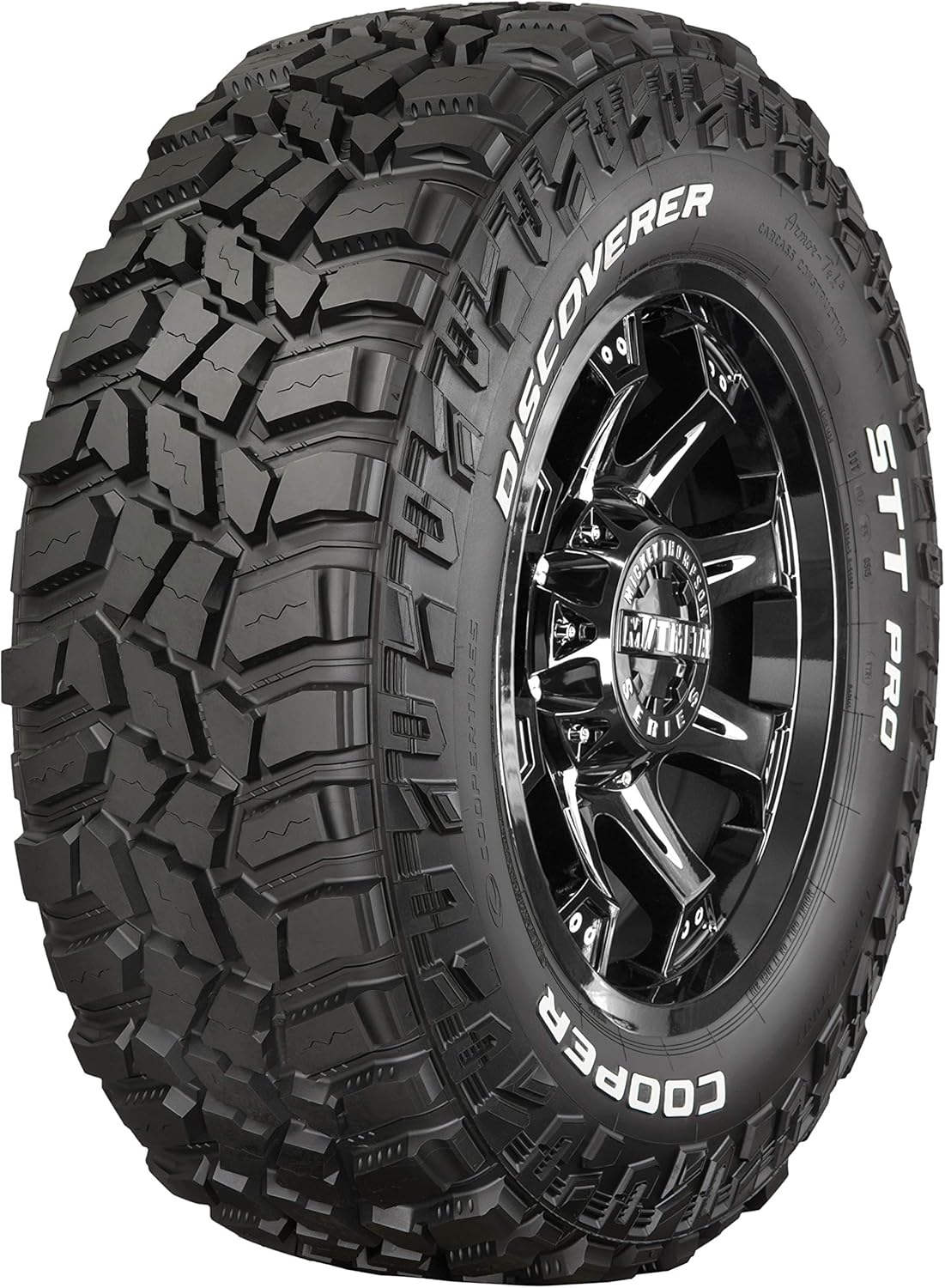
All-terrain tires use tread blocks and grooves that are more open than those on highway tires. This helps the tread grip gravel, dirt, sand, and mild mud. They also use stronger sidewalls and tougher tread compounds than many standard highway tires.
The trade-off is simple. More off-road hardware often means more noise, more rolling resistance, and less smooth handling on pavement.
Look for these features:
- Open tread design: Helps clear loose dirt, gravel, and light mud.
- Strong sidewall construction: Reduces the risk of damage from rocks and sharp trail edges.
- Stone ejectors: Help limit gravel from lodging between tread blocks.
- Severe-snow rating: The Three-Peak Mountain Snowflake, or 3PMSF, shows that the tire passed a defined snow-traction test. It does not make the tire a dedicated winter tire.
- Correct load range: Ensures the tire can support the truck’s required load.
- Wet-road channels: Help move water away from the contact patch.
- Road-focused tread spacing: Reduces noise and improves steering feel during daily use.
An all-terrain tire is not the same as a mud-terrain tire. Mud-terrain tires usually have larger gaps and stronger off-road bite, but they can be louder and less comfortable on highways.

Best overall: BFGoodrich All-Terrain T/A KO3
The BFGoodrich All-Terrain T/A KO3 is the strongest general recommendation for truck owners who want one tire for commuting, towing, gravel roads, camping, and moderate trails.
BFGoodrich designed the KO3 as the successor to the widely used KO2. Its published features include a tougher tread compound, interlocking tread blocks, and sidewall protection intended for rocks and rough surfaces. Select sizes carry the 3PMSF severe-snow symbol.
The KO3 fits best when you:
- Drive on pavement most days.
- Use gravel roads or trails on weekends.
- Want a rugged appearance.
- Need a tire available in truck and heavy-duty sizes.
- Prefer durability over the quietest possible ride.
Its limits matter, too. It may produce more tread noise than a highway tire. Some sizes can also feel firm, especially when used at high pressure or with a light truck. The tire is not a substitute for a dedicated winter tire in areas with frequent ice, packed snow, or very low temperatures.
Before buying, check the exact KO3 size. Not every size has the same load range, speed rating, or winter marking.
Best for snow and mixed weather: Falken Wildpeak A/T4W
The Falken Wildpeak A/T4W is a strong choice for truck owners who face snow, rain, gravel, and changing weather throughout the year.
Falken lists the A/T4W as an all-terrain tire with 3PMSF-rated sizes. Its design includes aggressive shoulder blocks, deep grooves, and sidewall protection. Many versions are available in LT sizes for pickup trucks used for work or towing.
Choose the A/T4W when you:
- Drive in snowy parts of the northern United States.
- Need a tire for both pavement and rough roads.
- Tow or haul within the truck’s rated limits.
- Want a firm, durable tire with a strong off-road bias.
- Prefer a winter-rated all-terrain tire.
The A/T4W can be heavier than a highway tire. Extra weight may reduce fuel economy and make steering feel less light. A heavy LT tire can also ride harshly on an unloaded half-ton pickup.
A 3PMSF rating is useful, but it does not measure ice braking in the same way as a dedicated winter tire. Drivers in severe winter climates should still consider winter tires.
Best for a balanced ride: Toyo Open Country A/T III
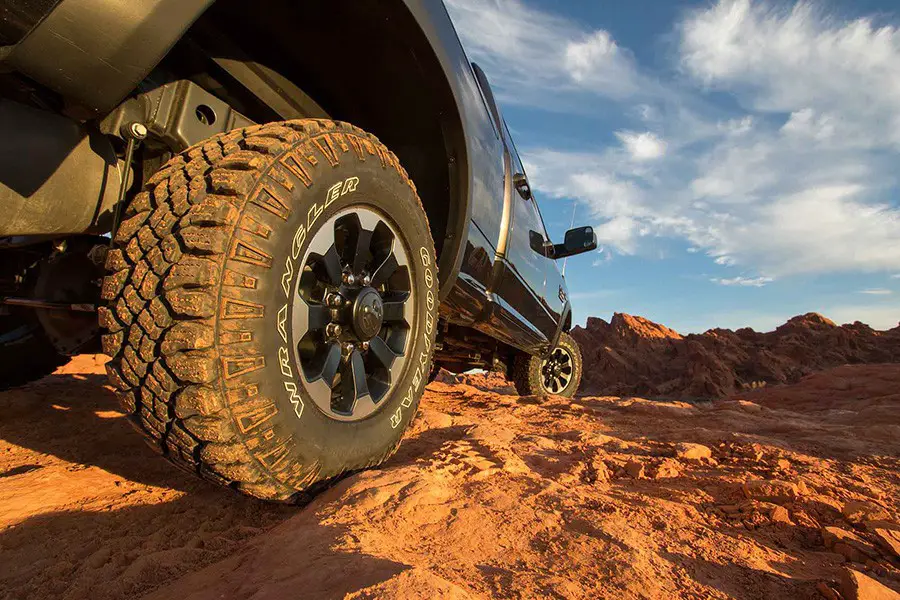
The Toyo Open Country A/T III is a good fit for drivers who want all-terrain traction without making the truck feel like a trail-only vehicle.
Toyo lists features such as a cut- and chip-resistant compound, stone ejectors, and a tread design made for wet roads, snow, gravel, and light off-road travel. Many sizes carry the 3PMSF marking.
The Open Country A/T III is worth considering when:
- Your truck is a daily driver.
- You want moderate road noise.
- You drive on dirt roads but rarely tackle deep mud.
- Wet-road control matters.
- You want a less aggressive look than some competitors provide.
Its main limitation is the same one found in many road-friendly all-terrain tires: it is not the first choice for deep mud, sharp rocks, or severe off-road work. For those conditions, a more aggressive tire with stronger sidewall protection may be a better fit.
Best value-oriented option: General Grabber A/TX
The General Grabber A/TX provides a useful middle ground for truck owners who want a rugged all-terrain tire without choosing the most aggressive or expensive option.
The tire is designed for pavement, gravel, dirt, and light trail use. General offers selected sizes with the 3PMSF rating. Its sidewall design also supports drivers who spend time on uneven roads.
The Grabber A/TX may fit your needs if you:
- Use a half-ton truck for work and recreation.
- Drive on gravel or farm roads often.
- Want useful snow performance in supported sizes.
- Care about initial purchase cost.
- Do not need a specialized mud tire.
Check the exact warranty, size, and load-range details before comparing prices. A lower purchase price can disappear if the tire wears quickly because of poor alignment, incorrect pressure, or an overloaded truck.

How to choose the correct truck tire size and load range
The correct tire is not simply the one with the largest size that fits the wheel well.
Start with the vehicle certification label. In most U.S. trucks, the label is on the driver-side doorjamb. It lists the original tire size, cold inflation pressure, and gross axle weight information.
Then compare the replacement tire’s:
- Tire size
- Load index
- Load range
- Speed rating
- Maximum inflation pressure
- 3PMSF status, if winter traction matters
- Approved wheel width
P-metric versus LT tires
P-metric tires are often used on half-ton pickups and SUVs. They generally provide a smoother ride and may weigh less.
LT tires are built for light trucks and often have stronger casings. They can be useful for towing, hauling, construction work, and rough roads. However, LT tires may be heavier, louder, and firmer.
Do not move from a P-metric tire to an LT tire without checking the truck’s required load capacity and the tire maker’s fitment information. The change can affect ride, handling, braking, and fuel use.
Load range is not the same as load index
Load range uses letters such as C, D, and E. It describes the tire’s construction and pressure class.
Load index is a numerical rating that states how much weight one tire can carry under specified conditions.
Both details matter. A tire with a higher load range is not automatically better for a lightly loaded truck. It may create a harsher ride if the suspension and tire pressure are not suited to it.
All-terrain tire comparison by truck use
Use this table as a starting point, then confirm the exact tire size and rating for your truck.
| Truck use | Tire type to favor | Key trade-off |
|---|---|---|
| Daily commuting | Road-focused all-terrain | Less trail grip than an aggressive tire |
| Towing a travel trailer | Correct LT size with suitable load index | More weight and possible ride firmness |
| Gravel and farm roads | Durable all-terrain with sidewall protection | More noise than a highway tire |
| Deep mud | Mud-terrain or aggressive all-terrain | Reduced highway comfort |
| Snowy highways | 3PMSF all-terrain or winter tire | 3PMSF tires still have limits on ice |
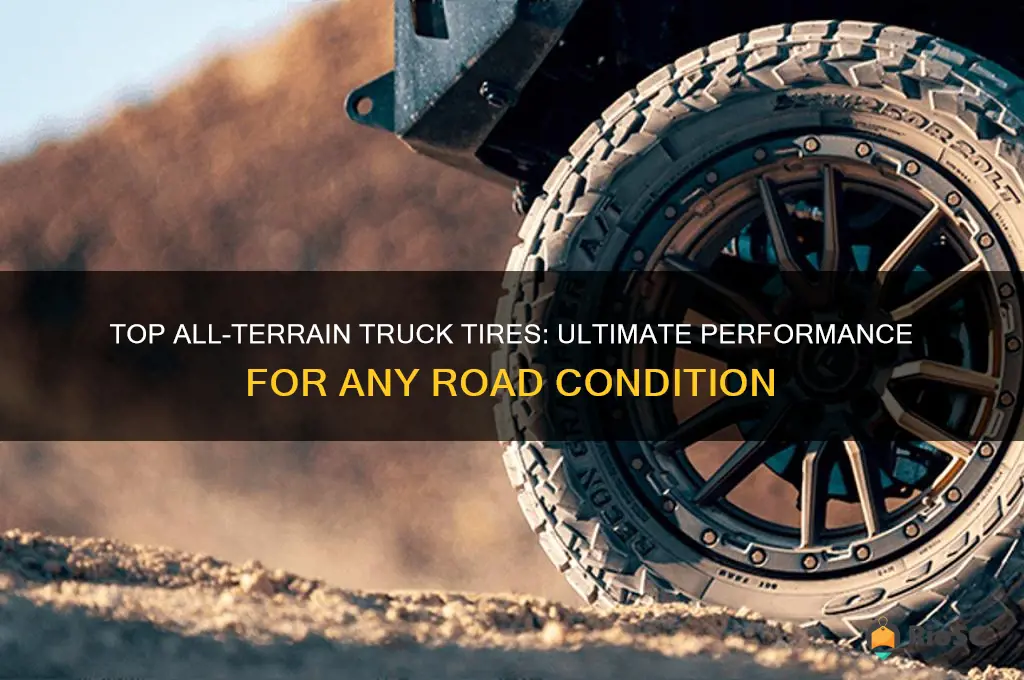
| Desert trails and rocks | Strong sidewall and cut-resistant tread | Higher cost and rolling resistance |
| Mostly interstate driving | Highway tire or mild all-terrain | Less off-road ability |
Towing capacity is controlled by the truck, not the tire alone. Tires must support the actual load, but installing a higher-rated tire does not increase the truck’s legal or mechanical towing capacity.
For a loaded truck, set tire pressure according to the vehicle maker’s guidance and the load. Do not use the maximum pressure molded on the sidewall as the normal setting unless the vehicle or tire maker specifies it.
Are all-terrain tires good in snow?
All-terrain tires can work well in light and moderate snow, especially when they carry the 3PMSF symbol and have adequate tread depth.
The 3PMSF symbol shows that the tire met a snow-traction requirement in a standardized test. It does not mean the tire performs like a dedicated winter tire on ice or hard-packed snow.
For better winter control:
- Choose a 3PMSF-rated tire.
- Replace tires before tread becomes too shallow.
- Check pressure when the tires are cold.
- Use four matching tires when possible.
- Slow down before turns and hills.
- Leave more stopping distance.
- Consider dedicated winter tires in severe snow and ice regions.
Four-wheel drive or all-wheel drive can help a truck accelerate on snow. It does not shorten braking distance on an icy road.

How long do all-terrain truck tires last?
There is no reliable mileage number for every truck and driver. Service life depends on tread compound, alignment, pressure, load, temperature, road surface, rotation habits, and driving style.
A tire used on highways may last much longer than the same model used on sharp rocks, construction sites, or heavy towing routes. Frequent hard acceleration and braking can also reduce tread life.
Inspect your tires regularly for:
- Uneven shoulder wear
- Cupping or scalloped tread
- Cracks between tread blocks
- Cuts or bulges in the sidewall
- Exposed cords
- Objects in the tread
- Low tread depth
The U.S. National Highway Traffic Safety Administration recommends replacing tires when the tread reaches 2/32 of an inch. Many drivers replace all-terrain tires sooner when wet or snow traction starts to decline.
Rotate tires according to the vehicle and tire maker’s schedule. If wear is uneven, check alignment and suspension parts instead of simply rotating the tires more often.
Common mistakes when buying all-terrain tires
The most common mistake is choosing a tire by appearance rather than by use.
A very aggressive tread may look suitable for a lifted truck, yet perform poorly for a driver who spends nearly every day on wet pavement. A heavy LT tire may be durable but unnecessary for a lightly loaded commuter truck.
Avoid these errors:
- Buying the largest tire that fits. Larger tires can rub, affect steering, change speedometer readings, and reduce drivetrain clearance.
- Ignoring load requirements. Confirm the tire can support the truck’s axle loads.
- Assuming 3PMSF means ice performance. It does not.
- Mixing different tire models. Different tread designs can change handling and traction.
- Using sidewall maximum pressure as the normal pressure. Follow the vehicle placard unless a qualified tire professional gives a load-based adjustment.
- Skipping alignment after uneven wear. A new tire cannot correct worn suspension parts.
- Ignoring tire age. Check the DOT date code and inspect older tires, even if tread remains.
- Expecting a tire to fix a traction problem caused by driving too fast. Speed, load, and road conditions still control safety.
For damage, vibration, repeated air loss, or uncertain fitment, have the truck inspected by a qualified tire technician.

Best all-terrain tire for different truck types
Half-ton trucks
For a Ford F-150, Chevrolet Silverado 1500, GMC Sierra 1500, Ram 1500, Toyota Tundra, or Nissan Titan, a road-friendly all-terrain tire often provides the best balance.
The KO3, Wildpeak A/T4W, and Open Country A/T III can all make sense when offered in the correct size and load rating. If the truck is mostly unloaded, compare tire weight and ride comfort before choosing an LT model.
Heavy-duty trucks
For a Ford F-250, Chevrolet Silverado 2500HD, GMC Sierra 2500HD, or Ram 2500, load capacity becomes more important.
Choose a tire that meets the truck’s original load requirements and your real axle loads. A heavy-duty tire may be appropriate for towing and work, but the correct tire pressure and wheel rating still matter.
Midsize trucks
For a Toyota Tacoma, Ford Ranger, Chevrolet Colorado, GMC Canyon, Jeep Gladiator, or Nissan Frontier, avoid assuming that a larger tire is automatically an upgrade.
Larger tires can reduce clearance and place more stress on brakes, steering, and suspension parts. Confirm fitment with the vehicle maker, tire manufacturer, and wheel specifications.
Frequently asked questions
Is BFGoodrich KO3 better than Falken Wildpeak A/T4W?
Neither is best in every condition. The KO3 is a strong all-around pick for rugged use and broad truck applications. The Wildpeak A/T4W may be more attractive for drivers who place extra value on snow capability and a 3PMSF-rated option.
Compare the exact size, load range, price, warranty, and local road conditions before deciding.
Are all-terrain tires worth it for a truck used mostly on pavement?
They can be worth it if you regularly drive on gravel, dirt, snow, or rough roads. If the truck stays on pavement, a highway tire may offer lower noise, better fuel economy, smoother handling, and longer road-focused performance.
Do all-terrain tires reduce gas mileage?
They can. All-terrain tires often weigh more and have greater rolling resistance than highway tires. The effect depends on the tire size, construction, pressure, truck, speed, and load.
Should I buy LT tires for my half-ton truck?
Not automatically. LT tires can help with towing, hauling, and rough work, but they may ride more firmly and weigh more than P-metric tires. Use the truck maker’s requirements and your actual load to guide the choice.
Can I use different all-terrain tires on the same truck?
It is safest to use four matching tires. Mixing models or tread types can alter braking, steering, and traction. If replacing only two tires, ask a tire professional about the correct placement and compatibility.
Key takeaways
- The BFGoodrich All-Terrain T/A KO3 is the best general all-terrain truck tire for many U.S. drivers.
- The Falken Wildpeak A/T4W is a strong choice for snow, mixed weather, towing, and rough roads.
- The Toyo Open Country A/T III favors a balanced daily-driving experience.
- The General Grabber A/TX is a practical value-oriented option.
- Match the tire to the truck’s size, load index, load range, and real use.
- A 3PMSF symbol helps with snow traction but does not replace a winter tire on ice.
- Check pressure, alignment, tread, tire age, and sidewall damage throughout the tire’s life.
Conclusion
The best all-terrain tire for trucks is the one that matches the truck’s load needs and the driver’s roads.
For a single recommendation, start with the BFGoodrich All-Terrain T/A KO3. Choose the Falken Wildpeak A/T4W when snow and rugged use matter more. Choose the Toyo Open Country A/T III when daily comfort and balanced traction are higher priorities.
Before ordering, read the doorjamb label, confirm the exact tire size and load rating, and compare the tire’s 3PMSF status, weight, warranty, and intended use. That short check can prevent expensive fitment and handling problems.