

Flush loose mud with low pressure, scrub stuck dirt with a safe brush, then dry and inspect the undercarriage.
Mud under your car is more than an eyesore. It can trap water and road salt around brake lines, suspension parts, frame rails, and electrical connectors. This guide explains how to clean mud off car undercarriage safely, using methods that protect delicate parts while giving you a thorough result.
Why Cleaning the Car Undercarriage Matters
The undercarriage is the underside of your vehicle. It includes the frame, floor pans, exhaust system, suspension, steering parts, brake lines, fuel lines, plastic shields, and other components. These parts face mud, sand, salt, and water every time you drive on a wet or dirty road.
Mud acts like a damp blanket. It holds moisture against metal and can speed up rust, especially when mixed with winter road salt. Thick mud can also hide leaking fluids, damaged splash shields, loose fasteners, or torn rubber boots.
Cleaning the underside helps you:
• Reduce trapped moisture and salt
• Spot oil, coolant, or brake fluid leaks
• Keep suspension and steering parts easier to inspect
• Protect the exhaust system and frame from heavy buildup
• Prevent mud from drying into a hard, cement-like layer
A clean undercarriage does not guarantee that rust will never occur. Rust depends on vehicle age, climate, road salt, metal condition, and factory protection. Still, regular cleaning removes one major source of damage.

What You Need Before You Start
You do not need a professional lift to clean light or medium mud from a car undercarriage. A driveway wash area, a hose, and a few basic tools are often enough.
Gather these supplies:
• Garden hose with an adjustable nozzle
• Pressure washer with a wide spray tip, if available
• Vehicle-safe car wash soap
• Large bucket
• Long-handled soft undercarriage brush
• Small nylon detailing brushes
• Plastic scraper for thick, dry mud
• Wheel chocks
• Safety glasses and waterproof gloves
• Clean microfiber towels
• Flashlight or work light
• Jack and properly rated jack stands, only if extra access is needed
Use a dedicated brush for the undercarriage. Small stones and grit can become trapped in its bristles. Using the same brush on painted body panels may cause scratches.
Never crawl under a car supported only by a jack. A jack can lose pressure or shift. Use level ground, wheel chocks, and correctly rated jack stands whenever you lift the vehicle.
How to Clean Mud Off Car Undercarriage Step by Step
The safest method is to loosen the mud first, rinse from a distance, and scrub only where needed. Rushing straight to high pressure can force grit into seals and connectors.
1. Choose the Right Time and Place
Work outside on a level surface with good drainage. Avoid washing mud into a storm drain if the runoff may contain oil, grease, or road salt.
A warm day helps soften dry mud. Do not clean a hot exhaust system. Let the vehicle cool until the exhaust, catalytic converter, and nearby metal parts are safe to touch from a distance.
2. Remove Loose Mud by Hand
Use a plastic scraper or gloved hand to remove thick clumps from the frame, wheel wells, and plastic shields. Do not strike the exhaust, brake lines, fuel lines, wiring, or suspension parts.
For mud packed into a tight space, let water soften it instead of forcing a tool into the gap. Patience protects parts that are costly and difficult to replace.
3. Rinse the Undercarriage
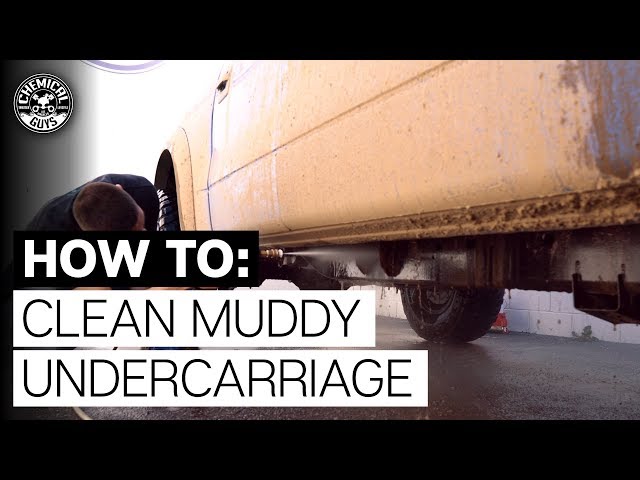
Start with a normal garden hose. Spray from several angles, including behind the front wheels, inside the rear wheel wells, and along the lower frame.
Keep the water moving. Do not aim at one rubber boot or electrical connector for a long time. Rinse from a distance and use a wide spray pattern.
When learning how to clean mud off car undercarriage, remember that the first rinse is for removal, not perfection. Your goal is to flush away loose grit before brushing.
4. Apply Diluted Car Wash Soap
Mix vehicle-safe soap according to the label. Apply it with a long-handled brush or pump sprayer. Focus on frame rails, splash guards, wheel wells, and other areas where mud has dried.
Avoid household degreasers unless the product clearly says it is safe for automotive finishes and rubber. Strong cleaners may damage undercoating, paint, plastic, or protective coatings.
5. Scrub Gently
Use slow strokes rather than hard pressure. A soft brush can remove most softened mud without damaging factory coatings.
Use a smaller nylon brush around:
• Suspension arms
• Spring seats
• Frame seams
• Plastic clips
• Steering components
• The edges of splash shields
Do not scrub brake rotors, brake pads, CV boots, or exposed electrical plugs. These parts need careful rinsing and inspection, not aggressive cleaning.
6. Rinse Until the Water Runs Clear
Rinse from front to back and from top to bottom. This helps carry dirt away instead of moving it into another part of the vehicle.
Turn the steering wheel slightly to each side if the vehicle is safely parked. This can open access to parts of the front wheel wells. Keep your hands clear of moving parts, and never do this while someone is working beneath the car.
7. Dry and Inspect
Allow the vehicle to air dry, then use microfiber towels on reachable areas. A blower can help remove water from seams and brackets, but keep it at low pressure.
Use a flashlight to inspect for:
• Fresh fluid spots
• Missing plastic shields
• Loose fasteners
• Torn CV boots
• Damaged brake lines
• Rust bubbles or flaking metal
• Mud still packed near the frame or suspension
This final check is one of the most valuable parts of how to clean mud off car undercarriage. Cleaning gives you a clear view of problems that mud may have hidden.

Using a Pressure Washer Safely
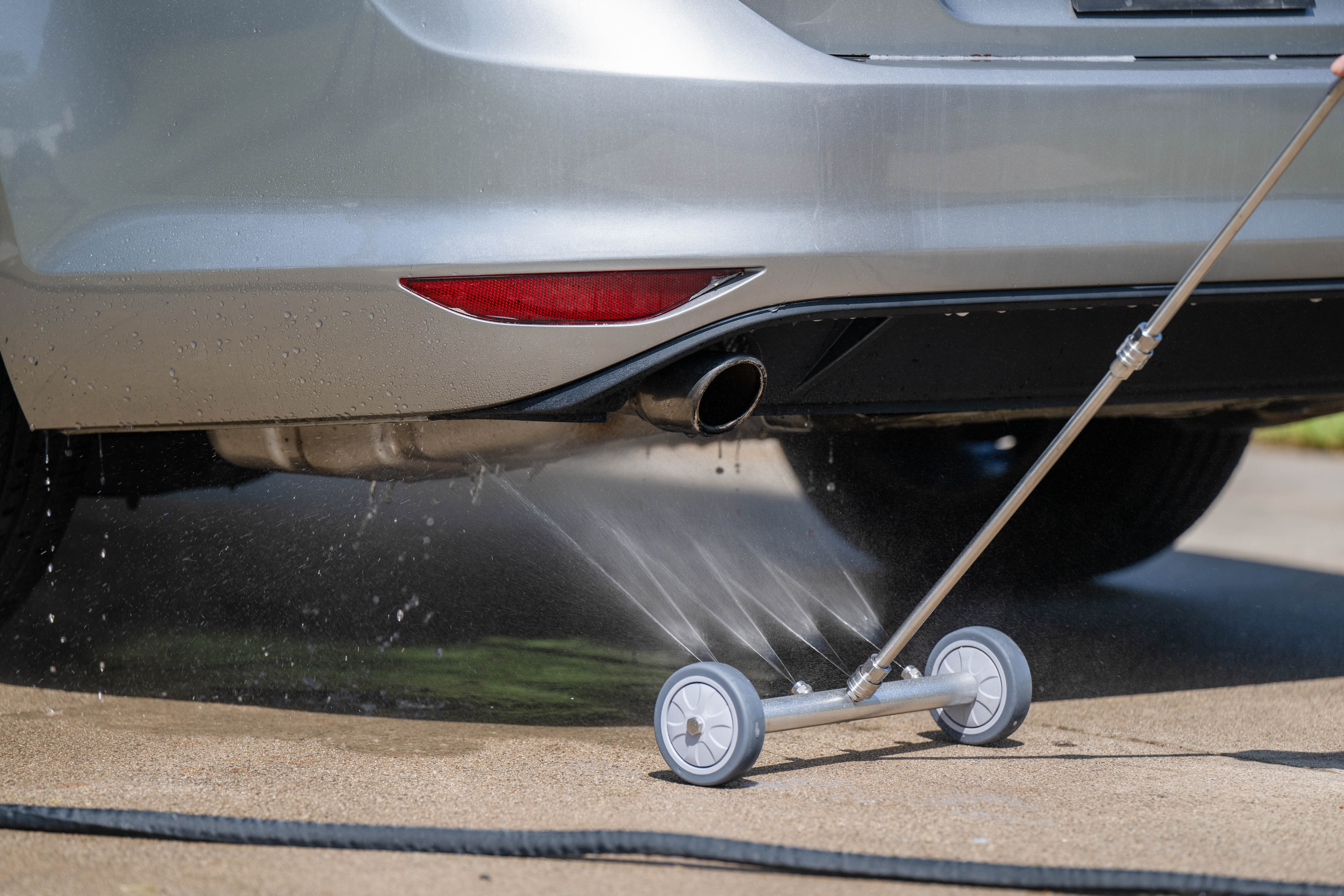
A pressure washer can save time, but it can also cause damage. High pressure may push water past wheel bearing seals, suspension joints, axle boots, electrical connectors, or underbody coatings.
Use these precautions:
• Choose a wide fan tip rather than a narrow jet
• Begin with the lowest useful pressure
• Keep the nozzle at least 12 to 18 inches away
• Keep the spray moving
• Spray at an angle instead of straight into seals
• Avoid direct spray on alternators, fuse boxes, sensors, and connectors
• Do not blast the exhaust when it is hot
• Do not use a zero degree tip under the vehicle
A pressure washer is most useful after a hose rinse has removed loose grit. It should not replace careful inspection.
Many automatic car washes offer an underbody spray. This is convenient after driving through salt or deep mud, but it may not remove thick buildup in hidden areas. Treat it as routine maintenance, not a complete detail.

How to Remove Dried or Heavy Mud
Fresh mud is much easier to remove than mud that has dried for days. Dry deposits can become hard and may contain gravel, clay, and salt.
Use this process:
Soak the area with a garden hose for several minutes.
Apply diluted car soap to the mud.
Wait five to ten minutes, but do not allow the soap to dry.
Break up the softened mud with a plastic scraper.
Rinse with a wide spray pattern.
Repeat the process instead of increasing pressure too quickly.
For thick clay, a soft brush may work better after two or three soak cycles. Avoid metal picks and screwdrivers. They can scratch coatings, cut rubber, and damage wiring.
If mud is packed above a skid plate, remove the plate only if you can support it safely and reinstall every fastener correctly. Some vehicles use special clips that break easily. Replace missing clips rather than leaving the shield loose.

Areas That Need Extra Care
Not every part beneath a car should be treated the same way. The undercarriage contains both tough metal surfaces and delicate components.
Brake Components
Rinsing brake dust and mud from nearby areas is usually fine. Do not apply soap, tire dressing, oil, or rustproofing spray to brake rotors, pads, or calipers.
After washing, drive slowly and apply the brakes several times in a safe area. This helps remove surface moisture from the braking surfaces.
Electrical Parts
Modern vehicles may have oxygen sensors, wheel speed sensors, parking sensors, battery cables, and control modules beneath the body. Avoid direct high pressure on plugs and harnesses.
Light water exposure is normal for most factory connectors. The risk comes from forcing water past seals or using strong chemicals.
Exhaust System
The exhaust can become extremely hot. Let it cool before washing. Sudden cold water on very hot metal is not ideal and can create unnecessary thermal stress.
Surface discoloration is normal. Heavy rust, holes, broken hangers, or a loose catalytic converter need professional inspection.
Rubber Boots and Seals
CV boots, ball joint boots, tie rod boots, and wheel bearing seals protect moving parts. Use gentle water pressure around them.
If you see a split boot or grease spread around the wheel area, cleaning will not fix it. The part should be inspected and repaired.
Undercoating and Paint
Some vehicles have factory underbody paint, wax, rubberized coating, or plastic shields. Harsh solvents and stiff brushes can remove this protection.
Use mild soap and a soft brush. If the coating is peeling, do not simply cover it with a new product. Loose material should be removed and the surface assessed first.
Common Mistakes to Avoid
The wrong method can create more trouble than the mud itself. These mistakes are especially common when someone tries to finish too quickly.
• Using maximum pressure at close range
• Spraying directly into wheel bearing seals
• Washing a hot engine or exhaust system
• Applying engine degreaser to the entire undercarriage
• Scraping with a screwdriver or metal tool
• Working beneath a vehicle held only by a jack
• Leaving mud packed behind splash shields
• Spraying tire shine or oil on brake parts
• Washing oily runoff into a storm drain
• Driving immediately without checking the brakes
A common lesson from underbody cleaning is that more force does not always mean better cleaning. Soaking, softening, and repeating usually works better than attacking one stubborn patch with a sharp water jet.

How Often Should You Clean the Undercarriage?
The right schedule depends on where and how you drive.
Clean the undercarriage:
• After driving through deep mud
• After beach or sandy trail driving
• During winter salt season
• After driving through heavily salted roads
• Before storing an off-road vehicle
• Before inspecting or applying approved rust protection
Drivers in dry areas may need only occasional cleaning. Drivers in regions that use road salt should rinse the underside more often, especially after a major snow or ice event.
A quick rinse after exposure is better than waiting until the mud hardens. However, frequent high-pressure washing is not automatically better. Use gentle water and inspect vulnerable parts instead of blasting the vehicle every day.

Cleaning Before Rust Protection
The undercarriage must be clean and dry before applying any rust inhibitor or protective coating. Trapping mud, salt, or water beneath a coating can hide corrosion and make later repairs harder.
Before applying a product:
Wash away dirt and salt.
Let the vehicle dry fully.
Inspect seams, drain holes, and frame cavities.
Remove loose rust.
Follow the product directions.
Keep the product away from brakes, exhaust openings, belts, and moving joints.
Rustproofing products vary widely. Some are wax based, while others form a rubber-like film or leave a thin oil coating. None should be viewed as a cure for structural rust.
If the frame has deep scaling, holes, or soft spots, seek an inspection from a qualified technician before applying anything.
When to Use a Professional Car Wash or Detailer
Professional cleaning is a good choice when mud has filled frame cavities, skid plates, or areas you cannot safely reach. It is also safer when you lack a level work area or proper lifting equipment.
Ask the service provider:
• What pressure do you use under the vehicle?
• Do you protect electrical parts and wheel bearing seals?
• Do you inspect for leaks or damage?
• How do you handle oily wastewater?
• Can you clean behind skid plates?
A professional shop should explain its process clearly. Be cautious if a service promises to remove rust completely with one wash or sprays a thick coating over dirty metal.
For severe off-road buildup, a shop with a lift can clean and inspect the vehicle at the same time. That added inspection may reveal damage that a driveway wash would miss.
Frequently Asked Questions About How to Clean Mud Off Car Undercarriage
Can I use a pressure washer to clean mud off my car undercarriage?
Yes, but use a wide spray tip, low pressure, and a safe distance of at least 12 to 18 inches. Avoid aiming directly at seals, electrical connectors, wheel bearings, brake parts, and rubber boots.
What is the best soap for cleaning a muddy undercarriage?
Use a mild automotive car wash soap or a product labeled safe for vehicle underbodies. Avoid bleach, strong solvents, and harsh household degreasers because they may damage rubber, coatings, and painted surfaces.
Should I clean the undercarriage after driving through salt?
Yes. Road salt holds moisture and can speed up corrosion on exposed metal. Rinse the undercarriage soon after salt exposure, then allow it to dry and check for damaged coatings or rust.
Can I clean the undercarriage while the car is hot?
Wait until the engine bay and exhaust system have cooled. Spraying cold water on very hot components is unsafe and may create thermal stress, while hot surfaces can also cause burns.
How do I clean dried mud from under a car?
Soak the mud with water, apply diluted car soap, wait several minutes, and loosen it with a plastic scraper or soft brush. Repeat the process rather than using a sharp tool or concentrated pressure.
Is it safe to spray water under an electric vehicle?
A normal exterior rinse is generally part of routine vehicle care, but follow the vehicle maker’s instructions. Avoid damaged charging ports, exposed cables, battery housings, and high pressure directed at seals or electrical connectors.
How often should I clean mud off my car undercarriage?
Clean it whenever you drive through deep mud, sand, or salted roads. In normal conditions, occasional rinsing is enough, but vehicles used off-road may need cleaning after every serious trail trip.
Conclusion
Cleaning mud off a car undercarriage is safest when you soften the dirt, use moderate water pressure, scrub gently, and inspect the vehicle afterward. Protect brakes, electrical connectors, seals, rubber boots, and hot exhaust parts from direct spray and harsh chemicals.
The best routine is simple: rinse after heavy mud or salt exposure, dry the vehicle, and look for leaks, rust, or damage while the underside is visible. Take a few extra minutes to clean carefully, and your vehicle will be easier to maintain for years.
Try these steps after your next muddy drive, then share your results or explore more vehicle maintenance guides for practical ways to protect your car.