

A burning plastic smell usually means overheated wiring, belts, brakes, fluids, or debris touching hot parts.
If you are asking, “why does my car smell like burning plastic,” act promptly rather than masking the odor with air freshener. Some causes are minor, such as a plastic bag stuck to the exhaust, but others involve melting wires, an electrical short, or an overheating engine. This guide explains the likely causes, warning signs, safe checks, repair steps, and ways to prevent the problem from returning.

Why does my car smell like burning plastic?
A car can smell like burning plastic when a material gets hot enough to melt, scorch, or release strong fumes. The source may be under the hood, beneath the car, inside the cabin, or near a wheel.
The smell itself is not a diagnosis. It is a warning clue. You need to note when it appears, where it is strongest, and whether other symptoms occur at the same time.
Common clues include:
• Smell only after driving: Hot brakes, exhaust parts, or road debris may be involved.
• Smell when the engine runs at idle: Wiring, belts, fluids, or engine parts may be overheating.
• Smell through the vents: The issue may be near the heater box, blower motor, cabin filter, or engine bay air intake.
• Smell after rain: Water may have exposed a weak electrical connection, or damp debris may be touching a hot part.
• Smell with smoke: Stop driving as soon as it is safe. Smoke raises the risk of fire.
A faint odor that disappears after a short drive may come from a small piece of plastic on the exhaust. A strong, repeated odor needs a proper inspection.
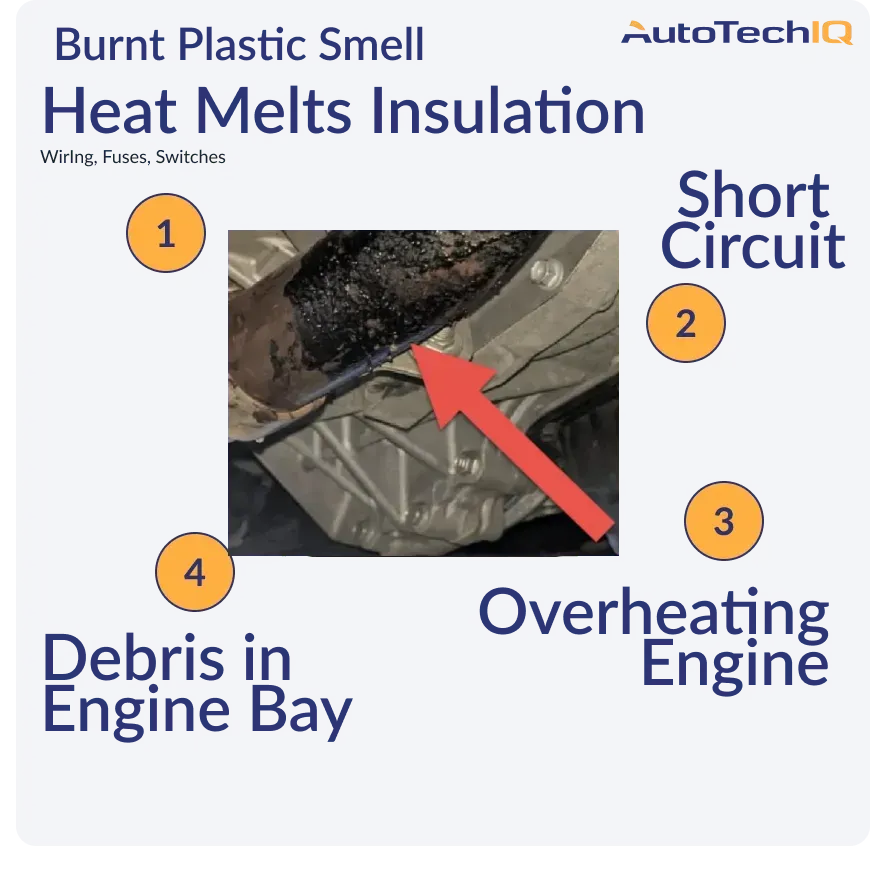
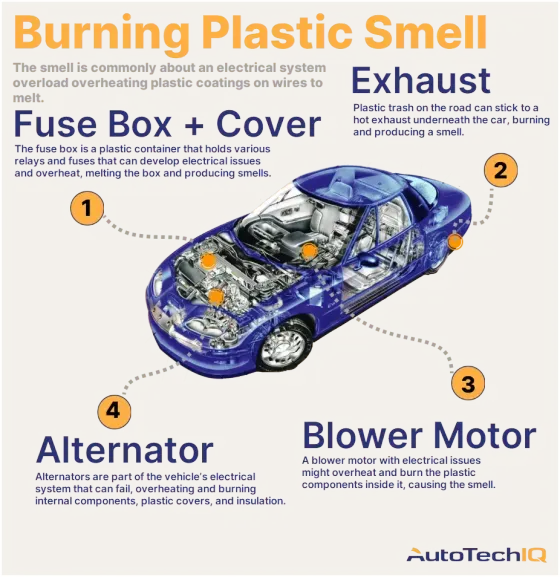
Common causes of a burning plastic smell in a car
Melting plastic near the exhaust
The exhaust manifold, catalytic converter, and exhaust pipe reach very high temperatures. A shopping bag, trash, road wrapper, or plastic underbody shield can stick to these parts and melt.
This is one of the simpler causes of why does my car smell like burning plastic. You may notice the odor after parking, because the exhaust remains hot even after the engine stops.
Never touch the exhaust to check it. Let the vehicle cool fully, then look from a safe distance with a flashlight.
Overheated or damaged wiring
Electrical wires have plastic insulation. If a wire carries too much current, rubs against metal, or develops a poor connection, the insulation can soften and burn.
Possible signs include:
• Flickering lights
• A dead accessory or power window
• Blown fuses
• Battery or charging warnings
• Smoke from the dashboard
• A smell that becomes stronger when using the heater, headlights, or stereo
A loose connection can create resistance. Resistance creates heat, much like a narrow section in a water pipe creates pressure. If the heat builds up, the wire coating may melt.
A failing blower motor or resistor
The cabin blower motor pushes air through the vents. Its resistor controls fan speed on many vehicles. A worn motor, blocked cabin filter, or damaged resistor can overheat.
You may smell burning plastic when the fan runs, especially on the highest setting. The fan may also work only on one speed, make a whining sound, or stop suddenly.
Do not keep running the fan to “see if it clears.” A failing blower circuit can damage nearby wiring.
Slipping serpentine belt
The serpentine belt drives parts such as the alternator, air-conditioning compressor, power steering pump, and water pump. If the belt slips, it creates friction and heat.
A slipping belt may smell like hot rubber or burning plastic. You might also hear squealing, notice a battery warning light, or see the temperature gauge rise.
A belt can slip because of age, oil contamination, a weak tensioner, or a seized pulley. Replacing only the belt may not solve the issue if another component caused the failure.
Overheated brakes
A stuck brake caliper, parking brake, or wheel bearing can create intense heat. This smell is often sharp and chemical, and it may seem strongest near one wheel.
Other warning signs include:
• One wheel feels much hotter than the others
• The vehicle pulls to one side
• A brake pedal feels soft
• The wheel gives off smoke
• A burning odor appears after hills or stop-and-go traffic
Brake components can remain hot for a long time. Do not spray water on hot brakes. Sudden cooling can damage parts, and steam can burn you.
Oil or other fluid dripping onto hot parts
Oil, power steering fluid, coolant, or transmission fluid can leak onto the exhaust. The fluid may burn and smell like plastic, rubber, or chemicals.
Look for wet spots under the vehicle, smoke from the engine bay, or a low fluid level. Oil that reaches a hot exhaust part can create a fire risk.
A fluid smell may not be easy to identify. When in doubt, treat any burning odor near the engine as a reason to stop and inspect the vehicle professionally.
Plastic engine covers or underbody shields
Modern vehicles use plastic covers, splash shields, and clips. A loose cover can sag onto the exhaust or rub against a tire.
This often happens after driving over a curb, deep pothole, or rough road. The vehicle may sound normal at first, but the odor appears once the plastic warms up.
A missing fastener can cause a large problem later. Fix loose panels early rather than waiting for them to fall onto the road.
A failing electrical accessory
Phone chargers, dash cameras, aftermarket stereos, heated seats, and USB adapters can overheat. Low-quality accessories may use thin wires or poor connectors.
If the smell begins after installing an accessory, unplug it and stop using it. Check the plug, socket, and nearby trim for heat or discoloration.
Never replace a fuse with a larger fuse. The fuse protects the wiring. A larger fuse can allow the wiring to overheat and start a fire.

Is a burning plastic smell dangerous?
Yes, it can be dangerous. The odor may signal melting insulation, an electrical short, leaking fluid, or a hot brake. Each of these problems can worsen while you drive.
Stop driving and turn off the engine if you notice:
• Visible smoke
• Sparks or flames
• A strong electrical smell
• A rising temperature gauge
• A battery warning light with unusual odors
• Loss of braking power
• A wheel that smokes or feels extremely hot
• A burning smell that enters the cabin
Move away from traffic if possible. Get everyone out of the vehicle if smoke increases or flames appear. Do not open the hood fully if you suspect an engine fire, because extra air can feed the flames.
Call emergency services for an active fire. Use a vehicle fire extinguisher only if you have a clear escape path and know how to use it. Do not risk personal safety to save the car.

How to find the source safely
You can perform a basic visual check, but avoid touching hot parts or working near moving belts and fans.
Step 1: Notice when the smell starts
Ask yourself:
• Does it happen during startup?
• Does it appear when the air conditioner or heater runs?
• Does it occur during braking?
• Does it begin after highway driving?
• Does it continue after the engine is turned off?
Timing helps separate an electrical, brake, exhaust, or HVAC problem.
Step 2: Identify where the smell is strongest
With the vehicle parked safely and fully cooled, walk around it. Compare the front, rear, and each wheel.
A smell inside the cabin points toward the ventilation system or an engine-bay source entering through the air intake. A smell near one wheel suggests brakes or a bearing. A smell below the center of the car may indicate exhaust contact.
Step 3: Look for visible clues
Use a flashlight and check for:
• Melted plastic
• Blackened wires
• Loose shields
• Oil or fluid leaks
• Damaged belts
• Debris near the exhaust
• Scorch marks near fuses or relays
Do not pull wires, move belts, or reach near the radiator fan. Electric fans can start even when the engine is off.
Step 4: Check warning lights and fluid levels
Read the dashboard before driving again. A check engine, battery, oil pressure, brake, or temperature warning changes the urgency.
Check engine oil and coolant only when the engine is cool and the vehicle is on level ground. Never remove a hot radiator cap. Pressurized coolant can cause severe burns.
Step 5: Decide whether to tow the vehicle
A tow is the safer choice when smoke, melting wires, brake heat, fluid leaks, or repeated odors are present. A short drive to a repair shop can turn a small repair into an expensive fire or engine failure.

What to do when your car smells like burning plastic
Use this simple response plan:
Pull over in a safe place.
Turn off the engine.
Turn off accessories such as the heater, air conditioner, stereo, and chargers.
Look for smoke without touching hot components.
Move away from the vehicle if smoke or flames appear.
Call roadside assistance or a qualified mechanic.
Tell the technician when the odor happens and what systems were running.
Do not pour water on an electrical fire or hot engine. Water can spread an electrical hazard and may create steam burns.
Do not continue driving just because the smell disappears. Some faults occur only when a wire, belt, brake, or exhaust part becomes hot. The problem can return under worse conditions.
A technician may inspect wiring, scan the vehicle computer, test charging voltage, check brake temperatures, examine the exhaust, and look for fluid leaks. Good diagnosis matters because replacing a visible melted part without finding the heat source may lead to another failure.
How much does it cost to fix the problem?
The cost depends on the source, vehicle design, and damage. A loose plastic shield or small piece of road debris may cost little to correct. A damaged wiring harness, blower motor, brake caliper, or catalytic converter can cost much more.
Typical repair categories include:
• Debris removal: Usually a minor service if no parts are damaged.
• Belt replacement: Moderate cost, especially if the tensioner or pulley also needs repair.
• Brake repair: Varies widely based on pads, rotors, calipers, hoses, and wheel bearings.
• Blower motor repair: Often moderate, but access can increase labor time.
• Wiring repair: Costs depend on whether one connector or a full harness is damaged.
• Fluid leak repair: Ranges from a simple seal to a major component replacement.
Prices vary by region and model. Ask the shop for the diagnosis, failed part, labor estimate, and any related damage before approving the repair.

How to prevent a burning plastic smell
Routine care can reduce the chance of heat and electrical problems.
• Inspect the engine bay during oil changes.
• Keep plastic bags and loose items away from the exhaust.
• Replace damaged underbody shields and missing fasteners.
• Use the correct fuse rating.
• Avoid cheap, overloaded electrical accessories.
• Replace a cracked or contaminated serpentine belt.
• Keep the cabin air filter clean.
• Have unusual brake heat checked quickly.
• Follow the maintenance schedule for your vehicle.
• Watch for new warning lights, strange sounds, or fluid spots.
One practical lesson from common repair cases is that small changes often appear first. A faint odor, a new squeal, or a warm electrical plug may be an early warning. Treat these signs like a smoke alarm, not an annoyance.
Another mistake to avoid is spraying an odor remover into the vents. That may hide the smell while the underlying problem grows. Find the source instead.
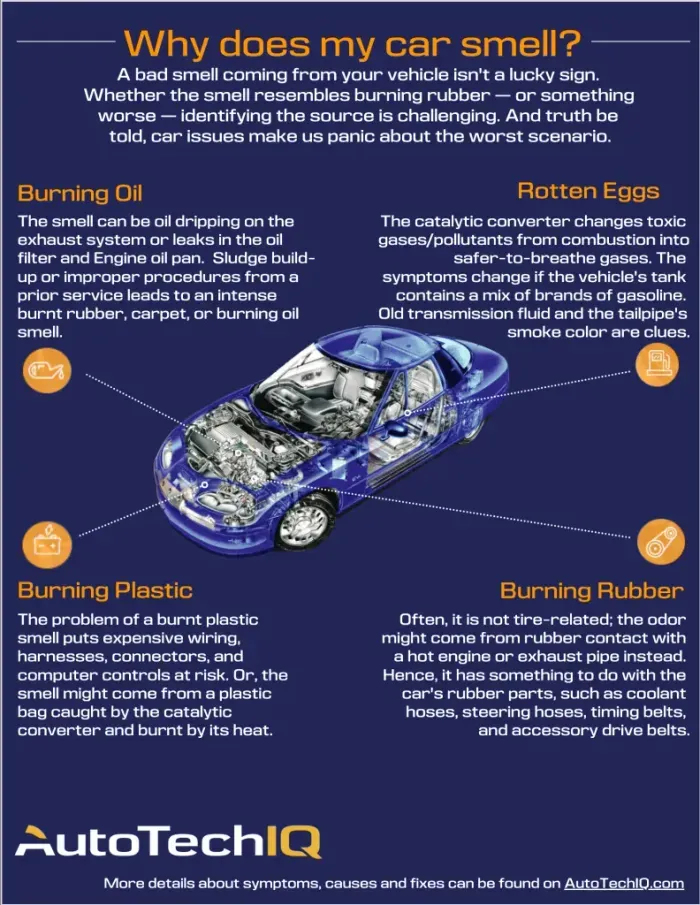
Burning plastic smell compared with other car odors
Odors can overlap, but these patterns may help you describe the problem.
Burning rubber
Burning rubber often points to a slipping belt, tire contact, or overheated brake. It tends to smell more like hot tires than melted plastic.
Burning oil
Burning oil often produces a smoky, acrid smell. It may come from a valve cover leak or another seal dripping onto the exhaust.
Sweet smell
A sweet odor often suggests coolant. If it comes with overheating, steam, or a low coolant level, stop driving and arrange a repair.
Electrical or fishy smell
A sharp electrical smell can come from melting wire insulation, a relay, fuse box, or accessory. Some overheated plastics produce a fishy odor.
Exhaust smell
Exhaust has a distinct gas-like odor and can contain carbon monoxide, which is dangerous and odorless. If exhaust enters the cabin, stop driving and have the vehicle inspected immediately.
Describing the smell clearly helps the technician. Mention its strength, location, timing, and any sound or warning light that appears with it.

Frequently Asked Questions
Why does my car smell like burning plastic but have no smoke?
A small amount of melted insulation, plastic debris, or overheated rubber can create a strong odor before visible smoke appears. Even without smoke, a repeated smell deserves an inspection.
Can low coolant cause a burning plastic smell?
Low coolant itself usually creates a sweet smell, not a plastic smell. However, low coolant can cause overheating, which may damage plastic parts, wiring, or seals and create a burning odor.
Why does my car smell like burning plastic when the heater is on?
The heater may bring an engine-bay odor into the cabin, or the blower motor and resistor may be overheating. Turn the heater off and have the ventilation system and nearby wiring checked.
Is it safe to drive if the burning plastic smell goes away?
It may not be safe because some problems appear only after parts reach operating temperature. If the odor returns, or if you notice smoke, warning lights, heat, or electrical faults, have the car towed.
Can a plastic bag cause a burning smell under my car?
Yes. A plastic bag can stick to a hot exhaust component and melt, producing a strong burning plastic smell. Let the exhaust cool completely before checking, and have stubborn residue removed safely.
Why does my car smell like burning plastic after an oil change?
A spilled drop of oil may have landed on a hot exhaust part, or a plastic cover, rag, or protective material may be near the engine. If the smell continues after one or two drives, return to the service shop for an inspection.
Can a bad alternator cause a burning plastic smell?
Yes. An alternator can overheat, and its wiring or belt can also become hot. Battery warnings, dim lights, squealing, or repeated electrical odors make this issue urgent.
Conclusion
A car that smells like burning plastic may have melted debris on the exhaust, overheated wiring, a slipping belt, hot brakes, a failing blower motor, or a fluid leak. Some causes are small, but the smell can also be an early warning of fire or major mechanical damage.
Pull over safely, shut down the vehicle, avoid hot and moving parts, and arrange a professional inspection when the odor is strong or repeated. Share this guide with another driver, and explore your vehicle’s owner’s manual for warning-light and emergency instructions.