
If you are searching “who buys new tires near me,” you likely want to know where to purchase and install new tires in the United States. The best options are local tire shops, national tire chains, auto repair centers, car dealerships, warehouse clubs, and some big-box retailers with auto service departments.
If you mean who will buy new tires from you, the answer is different: most tire stores do not buy back new tires from private sellers. They may accept a return under their policy, exchange an unused tire, or dispose of old tires for a fee.
Start by searching Google Maps, Apple Maps, or a tire retailer’s store locator for:
- “New tires near me”
- “Tire shop near me”
- “Tire installation near me”
- “Tire replacement near me”
- “Tire dealer near me”
- “Buy tires near me”
Then compare the full installed price, tire fit, warranty, installation services, and appointment time before you pay.
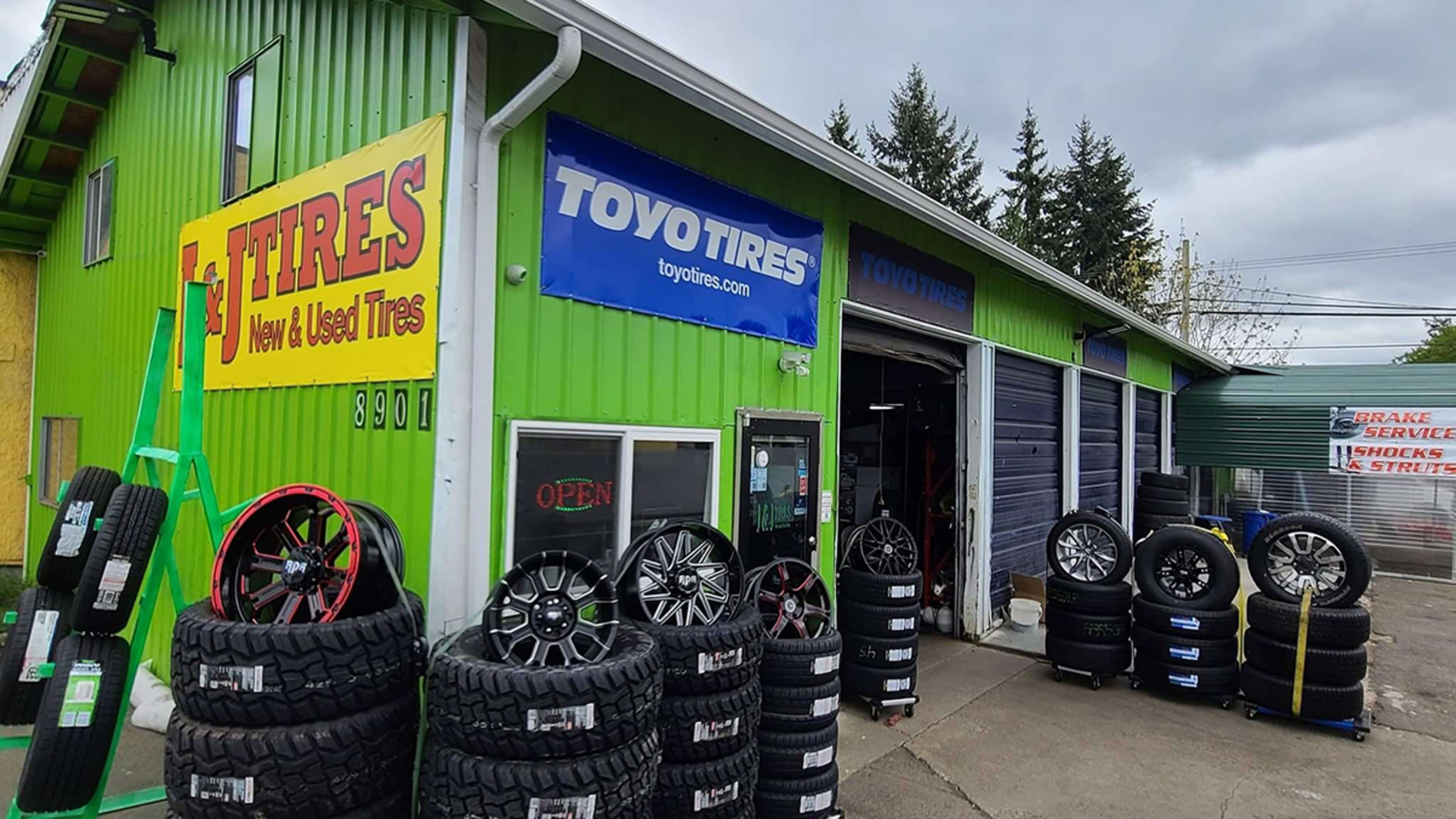
Where can you buy new tires near you?
You can buy new tires from several types of U.S. businesses. Each option has different strengths, prices, and service levels.
Local tire shops
Independent tire shops often provide personal service and may offer several tire brands. Many can inspect your vehicle, order a tire that is not in stock, mount and balance the tires, repair eligible punctures, and check the alignment.
A local shop may be a good choice when you need:
- Same-day tire service
- A hard-to-find tire size
- Help choosing between tire types
- Tire repair and rotation after the sale
- Service for work trucks, trailers, or specialty vehicles
Ask whether the quote includes mounting, balancing, valve stems, tire disposal, sales tax, and any shop fees.
National tire chains
Large U.S. tire chains may have more locations, online ordering, and standard service packages. Examples include Discount Tire, Firestone Complete Auto Care, Goodyear Auto Service, Les Schwab, Big O Tires, and NTB. Store names and services vary by state and location.
A national chain may be useful if you travel often and want access to more than one location. Check the actual store’s hours, stock, warranty terms, and service capacity before visiting.
Auto repair shops and dealerships
Many general repair shops sell tires. A dealership may also sell tires that match the original equipment size and speed rating for your vehicle.
A dealership can make sense when:
- Your vehicle has a special tire size
- The vehicle uses a specific tire type
- You want service from technicians familiar with that model
- Your vehicle has an active service plan or tire program
Dealership prices may not always be the lowest. Compare the tire model and total installed price with at least one independent shop.
Warehouse clubs
Some U.S. warehouse clubs sell and install tires for members. Costco, Sam’s Club, and BJ’s Wholesale Club are common examples, although available brands, services, and membership rules can differ.
Warehouse clubs may offer competitive package pricing. However, appointment times may be limited, and you may need an active membership. Confirm whether the club carries the exact size and load rating your vehicle needs.
Big-box retailers
Walmart and other large retailers may sell tires online or through an auto care center. Some locations offer installation, rotation, balancing, and flat-tire services.
Before ordering, verify that the selected store can install the tire. Online inventory does not always mean the tire is physically available at the nearest location.
Online tire retailers
Online sellers can provide a wide range of tire brands and sizes. Tire Rack is one example. Many online retailers ship tires to a local installer, while others ship directly to your home.
Online buying can work well when you already know the correct tire size and model. It is less convenient when you need an inspection, same-day service, or help confirming fit.
How do you find a reliable tire dealer near you?
The quickest method is to search for nearby tire dealers, then screen each one before booking an appointment.
1. Check the tire size first
Look at the tire sidewall or the vehicle placard. The placard is usually found on the driver’s doorjamb, inside the glove box, or in the owner’s manual.
A tire size may look like this:
225/65R17 102H
The numbers and letters describe the tire’s width, aspect ratio, construction, wheel diameter, load index, and speed rating. Do not choose a replacement based only on the vehicle’s make and model. Different trims may use different tire sizes.
The National Highway Traffic Safety Administration advises drivers to follow the vehicle manufacturer’s tire information and keep tires properly inflated.
2. Search with your ZIP code
Use your ZIP code or city name with terms such as:
- “225/65R17 tires near me”
- “new tires installed near me”
- “tire shop open today”
- “affordable tire installation near me”
- “best tire dealer in [city]”
This produces more useful results than searching only for “tire store.” It also helps you find shops that stock your exact size.
3. Read recent reviews carefully
Reviews can reveal useful service details, but do not rely on the star score alone. Look for repeated comments about:
- Correct tire installation
- Clear pricing
- Appointment delays
- Warranty handling
- Alignment recommendations
- Damage to wheels
- Communication after the sale
One angry review does not prove a shop is poor. A repeated pattern across recent reviews deserves more attention.
4. Call before you drive there
Ask five direct questions:
- Do you have the exact tire size in stock?
- What is the total installed price for four tires?
- Does the price include mounting, balancing, valve stems, disposal, and tax?
- Is alignment included or recommended after inspection?
- What warranty and free services come with the tires?
A written quote is better than a verbal estimate. It can help you compare shops fairly.

How much do new tires cost?
New tire prices vary by size, brand, vehicle, tire type, and local labor rates. A basic passenger-car tire may cost much less than a large truck, SUV, performance, run-flat, or all-terrain tire.
The tire price is only one part of the bill. A useful estimate is:
Total cost = tire price × number of tires + installation + balancing + valve stems + disposal fees + taxes − discounts
A hypothetical example:
| Item | Example cost |
|---|---|
| Four tires at $150 each | $600 |
| Mounting and balancing | $120 |
| Valve stems and disposal | $32 |
| Sales tax and other fees | Varies |
| Estimated total before tax | $752 |
This is only an example. Local prices can be higher or lower.
Ask whether the quote includes road-hazard coverage. This coverage may help with some punctures or damage, but it often has exclusions. Read the written terms before treating it as insurance.
Also compare the cost of replacing two tires with the cost of replacing four. On many vehicles, replacing only two tires requires careful placement. Tire manufacturers commonly recommend placing the tires with more tread on the rear axle to help maintain wet-road control. Your vehicle manufacturer or tire professional should confirm the correct approach for your vehicle.
How do you choose the right new tires?
The right tire depends on the vehicle, climate, roads, driving habits, and budget. The cheapest tire is not always the best value, and the most expensive tire may not provide useful benefits for your driving.
Match the original tire size
Use the size listed on the vehicle placard or in the owner’s manual. The replacement tire should meet or exceed the vehicle’s required load index and speed rating unless a qualified tire professional confirms another safe option.
Do not mix tires with different sizes on the same axle. Some vehicles also require matching tire types or tread patterns because of all-wheel-drive systems.
Choose a tire type for your roads
| Tire type | Best fit | Main trade-off |
|---|---|---|
| All-season | Mixed weather and normal street driving | May not perform as well as winter tires in severe snow |
| Summer | Warm weather and dry or wet roads | Not designed for cold winter conditions |
| Winter | Snow, ice, and very cold weather | Must usually be removed or changed when conditions warm |
| All-terrain | Light off-road use and rough roads | May create more noise and reduce fuel economy |
| Performance | Handling and steering response | Often costs more and may wear faster |
| Run-flat | Some vehicles designed for run-flat tires | Can cost more and may ride more firmly |
All-season tires are not the same as winter tires. In areas with frequent snow and ice, dedicated winter tires may provide better cold-weather traction. In warm regions, a summer or all-season tire may better fit normal use.
Check the date and condition
A new tire can have been manufactured months earlier. Tire age matters, especially if a tire has been stored in poor conditions. The DOT tire identification number on the sidewall includes a four-digit date code showing the week and year of manufacture.
For example, 3524 indicates the 35th week of 2024.
The NHTSA says some tire makers recommend replacing tires that are 6 to 10 years old, regardless of tread depth. Follow the tire maker’s guidance and inspect older tires for cracks, bulges, or other damage.
Consider noise, comfort, and tread life
Tire labels and manufacturer data can help, but they do not predict the exact result on every vehicle. A tire designed for long tread life may feel different from a tire designed for sharp handling.
Ask the dealer which feature matters most for your use:
- Quiet highway driving
- Wet braking
- Snow traction
- Long tread life
- Lower price
- Heavy-load capacity
- Off-road strength
A clear trade-off is better than a vague “best tire” claim.

What services should a tire shop provide?
A complete tire purchase often includes more than handing over four tires. Confirm the services before you approve the work.
Mounting and balancing
Mounting places the tire on the wheel. Balancing uses weights to reduce vibration as the wheel turns.
A vibration after installation can come from poor balance, a bent wheel, uneven tire wear, improper inflation, or another suspension problem. Return to the installer if the vehicle shakes after new tires are fitted.
Valve stems and TPMS service
The tire pressure monitoring system, or TPMS, warns the driver about low tire pressure. Some vehicles use sensors inside the wheel. Ask whether the shop will inspect, replace, or reset the sensors.
A TPMS warning after installation does not always mean the new tires are defective. The system may need to be reset, or a sensor battery may be weak.
Wheel alignment
Alignment adjusts the angles of the wheels. It may be needed when the vehicle pulls to one side, the steering wheel is off-center, or the tires show uneven wear.
Do not pay for an alignment only because a shop uses it as a standard sales add-on. Ask for the inspection results and before-and-after measurements. Alignment cannot fix every cause of uneven wear, such as worn suspension parts or incorrect tire pressure.
Tire rotation
Rotation moves tires to different positions to help manage normal wear. The correct pattern depends on the tire type, drivetrain, and vehicle. Follow the owner’s manual or tire maker’s guidance.
Some shops include free rotations for the life of the tires. Ask whether the service is included and whether it must be done at the original store.
Tire disposal
Old tires usually cannot go in regular household trash. Many states control tire disposal and require retailers or waste facilities to handle them through approved programs.
Ask whether the installation quote includes disposal. If you take old tires home, check your state and local disposal rules.
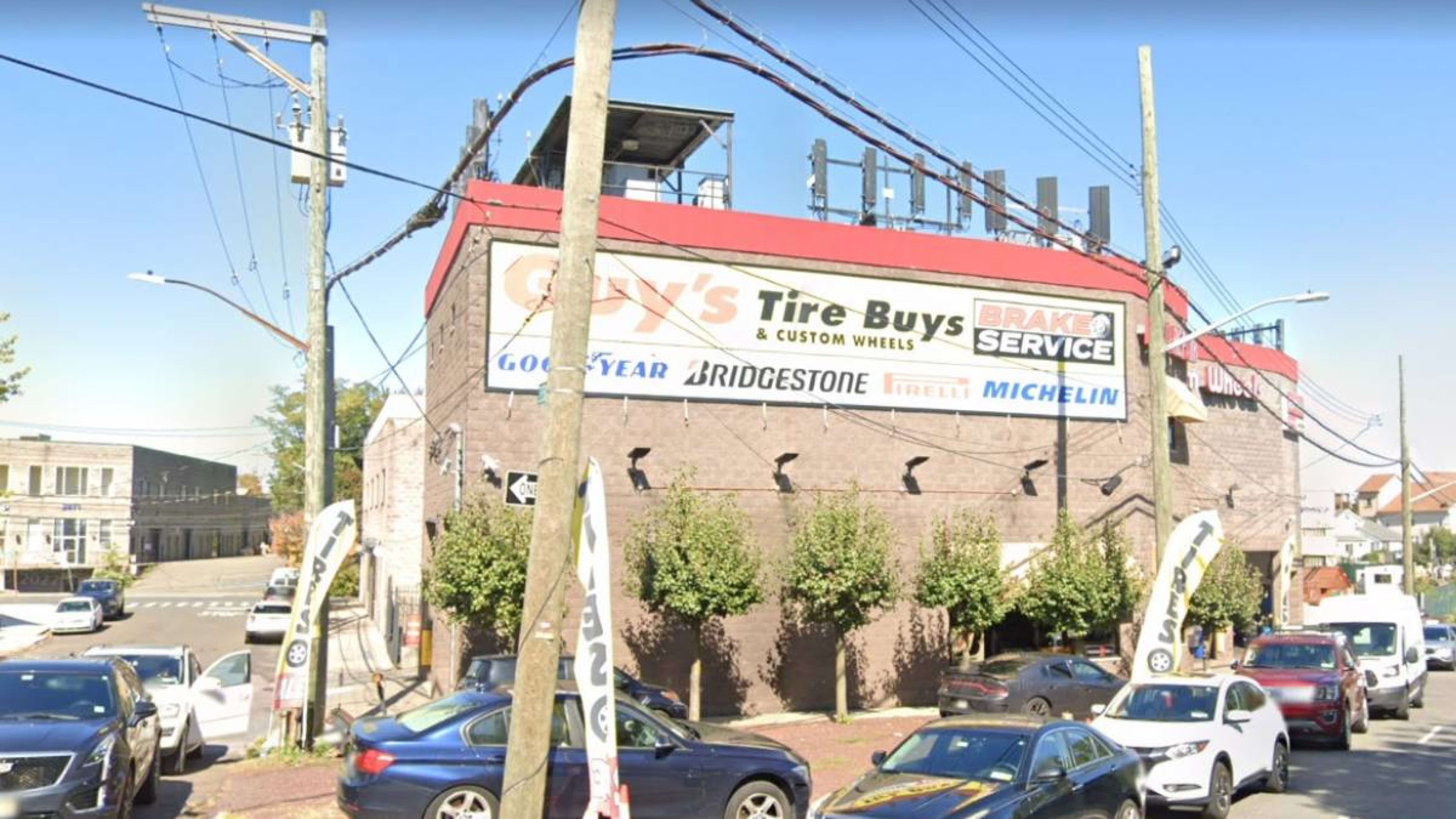
Do tire stores buy used or unused tires from customers?
Most tire stores do not buy new tires from private sellers. Their business model is to sell tires, not purchase tires from individuals.
If you have unused tires, possible options include:
- Returning them to the original seller under its return policy
- Asking whether the original seller allows an exchange
- Selling them privately if they are safe and accurately described
- Donating them when a local program accepts them
- Asking a tire shop whether it accepts them for disposal
A shop may refuse a return if the tires were mounted, driven on, damaged, stored improperly, or purchased outside its return period. A tire dealer also may not accept a tire if the size, age, condition, or history cannot be verified.
Never sell a tire with a bulge, deep cut, exposed cord, severe cracking, or an unknown repair history. Tire damage can be hidden, and a low price does not make an unsafe tire suitable for use.
What should you inspect after buying new tires?
Before leaving the tire shop, check the work and paperwork.
Confirm that:
- The installed tire size matches your order
- All four tires are the correct brand and model
- The load index and speed rating are suitable
- The tire pressure matches the vehicle placard
- The TPMS warning light is off
- The steering wheel is centered
- The vehicle does not vibrate during a short test drive
- The warranty information is included
- You received a receipt showing the tire identification details
Do not judge tire pressure by appearance. A tire can look normal while being underinflated. Use a reliable gauge when the tires are cold, and follow the pressure on the vehicle placard rather than the maximum pressure printed on the tire sidewall.
After a short drive, stop if you feel strong vibration, hear rubbing, smell overheated rubber, or notice a warning light. Contact the installer before driving farther.
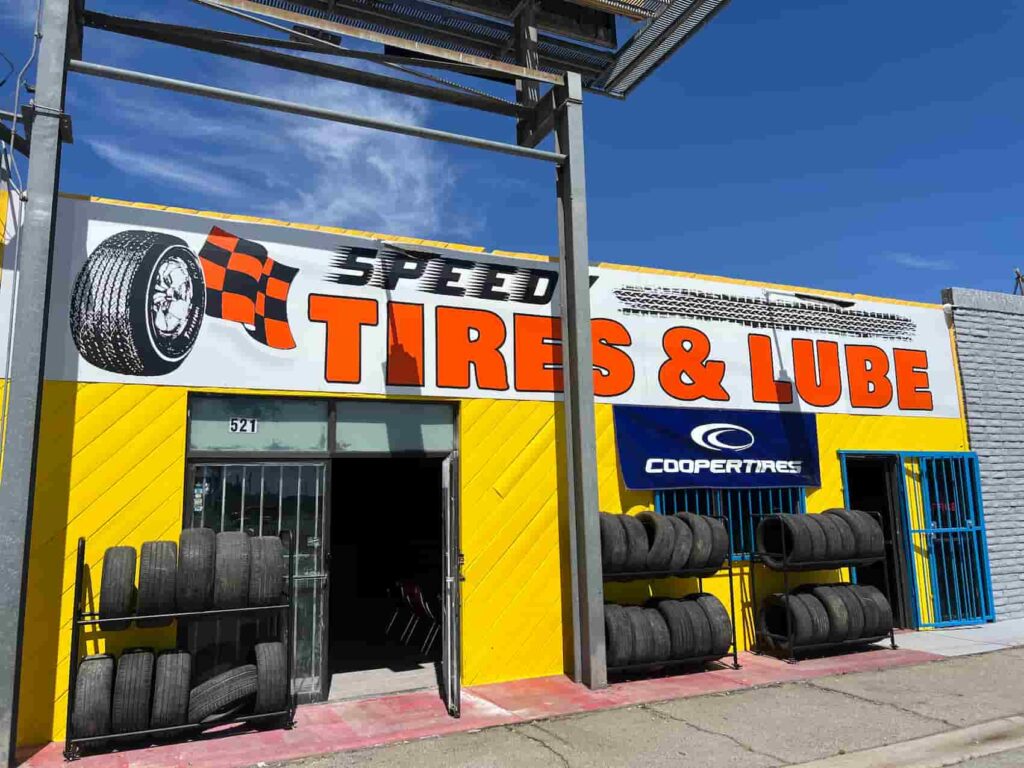
Common mistakes when buying tires near you
The most common mistake is comparing tire prices without comparing the complete installed cost.
Other problems include:
- Choosing the wrong size
- Ignoring the load index
- Buying a tire that does not suit the climate
- Assuming every tire warranty covers road damage
- Replacing only one tire on an all-wheel-drive vehicle without checking compatibility
- Skipping an inspection when the vehicle has uneven wear
- Accepting an alignment without seeing the measurements
- Forgetting to check the tire manufacture date
- Treating online inventory as proof of local stock
- Waiting until a tire is completely bald before replacing it
The U.S. legal minimum for passenger-car tread depth is commonly described as 2/32 inch, but waiting until the legal limit can reduce wet-weather safety. The NHTSA recommends checking tread and tire condition regularly. Replace tires sooner if they have damage, severe cracking, irregular wear, or poor wet traction.

Frequently asked questions
Who sells new tires near me?
Local tire shops, national tire chains, auto repair centers, dealerships, warehouse clubs, and some big-box retailers sell new tires in the United States. Search by your exact tire size and ZIP code, then call to confirm stock and installation pricing.
Can I buy tires online and have them installed nearby?
Yes. Many online tire retailers ship tires to a partner installer or to your home. Confirm the installer’s fees, appointment process, disposal charge, warranty rules, and whether the shop will service tires bought elsewhere.
Is it cheaper to buy tires online or at a local shop?
Not always. Online prices may be lower, but shipping, installation, disposal, taxes, and warranty costs can change the final bill. Compare the total installed price from both options.
Should I replace two tires or all four?
The answer depends on tread depth, tire type, drivetrain, wear pattern, and the vehicle maker’s guidance. If you replace only two tires, ask a qualified tire professional where they should be installed. All-wheel-drive vehicles may have tighter limits on tread-depth differences.
How do I know if a tire shop is trustworthy?
Look for a written quote, correct tire information, clear warranty terms, recent service reviews, and technicians who explain needed work. Be cautious when a shop will not show the tire model, adds unexplained fees, or recommends repairs without inspection results.
Conclusion: Find the best tire seller by comparing the complete job
For most U.S. drivers, the best place to buy new tires near you is a reputable local tire shop or established retailer that can confirm the correct fit and provide a clear, installed price. Compare more than the tire’s advertised cost.
Before booking, verify the tire size, load and speed rating, manufacture date, installation services, warranty, disposal fee, and appointment time. If you are trying to sell unused tires rather than buy them, contact the original seller first because most tire stores do not purchase tires from private owners.
Your next step is simple: photograph the tire-size information on your vehicle, request two or three written quotes, and choose the shop that offers the correct tire and transparent service—not merely the lowest headline price.