
For most drivers in the United States, the General Grabber A/TX is one of the best all-terrain tires for the money. It gives a strong mix of road comfort, wet grip, light off-road traction, winter performance, and tread life without the price of a premium tire.
The Falken Wildpeak A/T4W is a better pick for frequent snow, gravel, towing, or heavier trucks. The Cooper Discoverer Road Trail A/T can be a smart lower-cost choice for drivers who spend most of their time on pavement.
The right tire still depends on your vehicle, tire size, load needs, climate, and type of road. A tire that works well on a half-ton pickup may be a poor fit for a compact SUV.
Quick Takeaways
- Best overall value: General Grabber A/TX
- Best for snow and mixed use: Falken Wildpeak A/T4W
- Best lower-cost pavement choice: Cooper Discoverer Road Trail A/T
- Best premium option: BFGoodrich All-Terrain T/A KO3
- Best for serious off-road use: A rugged tire such as the Toyo Open Country A/T III or Nitto Ridge Grappler, depending on road use
- Best way to save money: Buy the correct size and load rating, then compare the full installed price from several U.S. retailers
A tire is not a good bargain if it wears fast, causes poor fuel economy, or lacks the load capacity your truck needs.
Introduction
Drivers across the United States often choose all-terrain tires because they need one set of tires for many surfaces. That may include dry highways, wet roads, snow, gravel, dirt roads, and work sites. The challenge is that no all-terrain tire is best at every task.
The best value comes from balancing the tire’s purchase price with traction, noise, comfort, tread life, fuel use, and replacement cost. For many U.S. drivers, the General Grabber A/TX offers that balance well. But a driver in Colorado, Michigan, Alaska, or a rural mountain area may gain more from the Falken Wildpeak A/T4W.

What Makes an All-Terrain Tire Different?
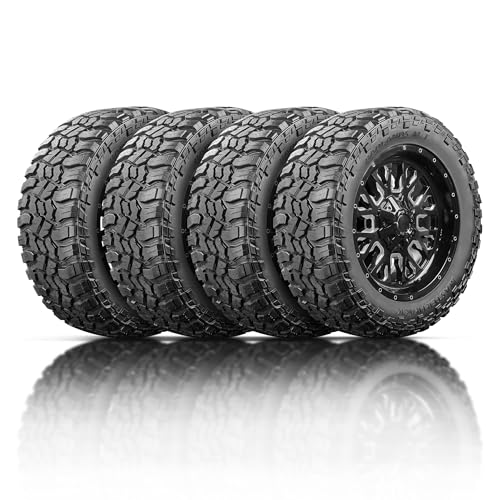
An all-terrain tire uses a tread pattern and casing designed for both paved roads and loose surfaces. Its tread blocks are usually larger than those on a highway tire. It also has wider grooves to clear mud, gravel, and slush.
Most all-terrain tires sit between two other tire types:
- Highway-terrain tires: Quieter and often more comfortable on pavement.
- All-terrain tires: A middle ground for pavement, gravel, dirt, and mild trail use.
- Mud-terrain tires: Better in deep mud and rough trails but louder and less efficient on roads.
All-terrain tires are not automatically better in deep snow, heavy rain, or mud. Their performance depends on tread design, rubber compound, sidewall construction, and the specific tire size.
A tire marked with the Three-Peak Mountain Snowflake, or 3PMSF, has passed a regulated snow-traction test. This mark is more useful for winter comparison than the general term “all-season.” However, it does not make the tire equal to a dedicated winter tire on ice or packed snow.
Best All-Terrain Tires for the Money
The table below compares several well-known choices for U.S. drivers. Prices change by tire size, load range, retailer, and promotion, so compare the installed total rather than only the listed tire price.
| Tire | Best for | Main strengths | Main limits |
|---|---|---|---|
| General Grabber A/TX | Best overall value | Good road manners, off-road grip, winter rating in applicable sizes, often lower cost than premium rivals | Can feel firm in heavy-duty sizes |
| Falken Wildpeak A/T4W | Snow, towing, and mixed use | Strong winter focus, stable handling, tough construction | Often heavier and more expensive than basic A/T tires |
| Cooper Discoverer Road Trail A/T | Mostly paved driving | Road comfort, mild off-road ability, competitive pricing | Not the first choice for deep mud or severe trails |
| BFGoodrich All-Terrain T/A KO3 | Premium all-around use | Strong brand support, robust casing, broad off-road capability | Usually costs more; value depends on how much off-road work you do |
| Toyo Open Country A/T III | Long-distance truck use | Stable highway behavior and durable construction | May cost more than value-focused options |
| Nitto Ridge Grappler | Aggressive mixed use | Strong trail traction and rugged look | More road noise and rolling resistance than a mild A/T tire |
1. General Grabber A/TX: Best Overall Value
The General Grabber A/TX is a strong choice for a driver who wants one tire for daily use, gravel roads, light trails, and winter travel. It is usually priced below some major premium competitors while still offering features aimed at snow and off-road traction.
Its tread has open grooves and traction edges that help on loose ground. Its sidewall design also provides added protection from common trail hazards. On pavement, it is generally more road-friendly than a mud-terrain tire.
The main trade-off is weight and ride feel. A heavy LT tire can make steering feel less light and may reduce fuel economy. If your vehicle does not need an LT load range, a proper passenger or XL version may provide a smoother ride.
Choose it if: You want a balanced tire for an SUV, Jeep, or half-ton pickup and do not spend most of your time in deep mud or on rock trails.
2. Falken Wildpeak A/T4W: Best for Snow and Heavy Mixed Use
The Falken Wildpeak A/T4W is designed for drivers who place a high value on winter traction, stability, and tougher use. It replaced the widely known Wildpeak A/T3W in the U.S. market.
The tire is available in versions for many SUVs and trucks. Some sizes use heavier construction or higher load ratings. That can help when carrying gear or towing, but it can also raise weight, cost, and fuel use.
The A/T4W is a good fit for parts of the United States with regular snow, gravel roads, and changing weather. It is still not a substitute for a dedicated winter tire when ice and packed snow are the main concern.
Choose it if: You drive in snow often, tow a trailer, or use your truck on rough roads but still need good highway behavior.
3. Cooper Discoverer Road Trail A/T: Best for Mostly Pavement
The Cooper Discoverer Road Trail A/T is aimed at drivers who want an all-terrain appearance and mild off-road ability without moving too far from a highway tire. It can suit a pickup or SUV that spends most of its week on paved roads.
This type of tire may be more comfortable and quieter than an aggressive all-terrain model. That matters if you drive many highway miles each year. Lower weight can also help preserve ride comfort and fuel economy.
Its limits become clearer in deep mud, sharp rocks, and severe trail use. Drivers who regularly visit remote trails should consider a tire with stronger sidewall protection and a more open tread.
Choose it if: Your driving is about 80% or more pavement, with occasional gravel, dirt, grass, or mild trail use.
4. BFGoodrich All-Terrain T/A KO3: Best Premium Choice
The BFGoodrich All-Terrain T/A KO3 is a premium all-terrain option. Its price is often higher than value-focused tires, but some owners may accept that cost for its casing design, off-road reputation, and wide availability.
The KO3 can make sense for drivers who work their trucks hard or travel far from tire shops. Still, a premium name alone does not guarantee the best value. If the truck rarely leaves pavement, a less aggressive tire may provide a quieter ride and lower total cost.
Check the exact size before buying. Construction, snow marking, load range, and warranty terms can differ between sizes.
Choose it if: You need a robust tire and are willing to pay more for a premium design and broad market support.

How to Choose the Best All-Terrain Tire for Your Vehicle
Start with the tire information on the driver-side door placard. It lists the original tire size and the recommended cold inflation pressure. The vehicle owner’s manual may list more information about load, speed, and spare-tire use.
Do not choose only by appearance. A wider tire, taller tire, or heavier load range can change steering, braking, fuel use, suspension clearance, and the accuracy of the speedometer.
Check These Five Items
Tire size
Match the size unless a qualified tire shop confirms that a different size will fit safely.Load index
The load index shows how much weight the tire can carry at its rated pressure. Never choose a lower load index than the vehicle requires.Speed rating
The speed rating describes the tire’s tested speed capability under set conditions. It is not a recommended driving speed.Construction type
Passenger tires, XL tires, and LT tires can have different ride, load, and durability traits.Clearance
Larger tires can rub the fender, suspension, or frame during a turn or when the suspension compresses.
A tire shop should check clearance at full steering lock and through suspension movement. Static clearance in a parking lot is not always enough.
Value Comparison: Price Is Only One Part of Cost
The lowest purchase price does not always create the lowest cost over time. A useful comparison includes the full installed price and expected service life.
A simple estimate is:
Cost per 10,000 miles = total tire cost ÷ expected miles × 10,000
Hypothetical Example
Suppose Tire A costs $900 installed and may last about 50,000 miles. Tire B costs $1,080 installed and may last about 65,000 miles.
- Tire A: $900 ÷ 50,000 × 10,000 = $180 per 10,000 miles
- Tire B: $1,080 ÷ 65,000 × 10,000 = about $166 per 10,000 miles
This is only an estimate. Real tread life depends on alignment, inflation, rotation, vehicle weight, driving style, climate, and road surfaces. A tire’s mileage warranty is not a promise that every driver will reach that number.
Also include:
- Mounting and balancing
- Sales tax
- Disposal fees
- Road-hazard coverage
- Alignment, if needed
- Rotation costs
- Fuel use from added weight
- Replacement availability in your area

Which All-Terrain Tire Is Best for Snow?
The best choice depends on the snow, ice, and road conditions you face.
For frequent snow on cleared roads, look for an all-terrain tire with the 3PMSF symbol in the exact size you plan to buy. The Falken Wildpeak A/T4W and General Grabber A/TX are common choices for this type of use, subject to size-specific markings.
For ice, a dedicated winter tire usually remains the better tool. All-terrain tires can provide useful snow traction, but their rubber compounds and tread designs may not match a true winter tire on cold ice.
Four-wheel drive and all-wheel drive help a vehicle accelerate on slippery surfaces. They do not shorten braking distance in the same way a tire with better winter grip can. Every vehicle still needs a safe speed and enough stopping space.
Should You Buy an LT All-Terrain Tire?
Buy an LT tire when your truck’s work requires its added load capacity or tougher construction. Do not buy one simply because it looks more rugged.
LT tires can be useful for:
- Frequent towing
- Heavy payloads
- Work trucks
- Rough construction sites
- Repeated gravel-road use
- Vehicles that require LT tires from the factory
They may also bring disadvantages:
- Firmer ride
- More road noise
- Higher purchase price
- More rolling resistance
- Greater unsprung weight
- Possible reduction in fuel economy
A half-ton pickup used mainly for commuting may ride better on a properly rated P-metric or XL tire. Always follow the vehicle maker’s load and fitment requirements.
How Much Should You Pay for All-Terrain Tires?
There is no single fair price because tire size changes the cost sharply. A compact SUV tire may cost far less than a 35-inch tire for a heavy-duty pickup.
For a fair comparison, ask each seller for the same package:
- Four tires in the same size
- The same load index and speed rating
- Mounting
- Balancing
- Valve stems or tire-pressure sensors
- Disposal fees
- Taxes
- Road-hazard coverage
- Delivery time
Check the date code on the tire when you receive it. Tires are made for storage and use over time, but buyers should avoid accepting old inventory without understanding the seller’s policy. A reputable retailer should be able to explain its return and age policy.
Promotional prices can also hide installation costs. Compare the final invoice, not only the advertised tire price.

Common Mistakes When Buying All-Terrain Tires
Choosing a tire that is too aggressive
Deep tread can help in mud, but it often adds noise, weight, and rolling resistance. If you drive on pavement most of the time, a mild all-terrain tire may serve you better.
Ignoring the load rating
A tire that fits the wheel may still be wrong for the vehicle. Check the door placard and owner’s manual before buying.
Mixing different tread patterns
Avoid mixing different tire models or types on an all-wheel-drive vehicle unless the vehicle maker allows it. Different rolling diameters can stress the drivetrain.
Skipping an alignment check
Uneven wear may point to poor alignment, worn suspension parts, or incorrect inflation. New tires cannot correct those problems.
Using the sidewall pressure as the normal setting
The pressure printed on the tire sidewall is usually the tire’s maximum rated pressure under specified conditions. Use the vehicle maker’s recommended cold pressure unless a qualified professional gives a documented reason to change it.
Expecting “all-terrain” to mean “all-weather”
An all-terrain tire can work across many surfaces. It does not guarantee strong ice grip, quiet highway travel, or deep-mud performance.
How to Get the Most Miles From Your Tires
Use a tire gauge when the tires are cold. Check pressure at least once each month and before long trips. Temperature changes can alter pressure, and a tire can lose air without looking flat.
Rotate the tires at the interval listed by the vehicle maker or tire manufacturer. Many vehicles need a different rotation pattern because of directional tires, staggered sizes, or different front and rear loads.
Inspect the tread and sidewalls for:
- Cuts
- Bulges
- Cracks
- Exposed cords
- Uneven wear
- Objects stuck in the tread
- Fast or unexplained air loss
Replace a tire if it has serious sidewall damage, exposed cords, or a bulge. A repair shop should inspect punctures before deciding whether a repair is safe. Repairs near the shoulder or sidewall are often not suitable.
Best All-Terrain Tire by Driver Type
| Driver type | Best starting point | Why |
|---|---|---|
| Daily SUV driver with occasional gravel use | Cooper Discoverer Road Trail A/T | Favors pavement comfort and value |
| Pickup used on roads and light trails | General Grabber A/TX | Balanced road and loose-surface performance |
| Driver in a snowy U.S. region | Falken Wildpeak A/T4W | Strong focus on snow-rated mixed use |
| Heavy-duty work truck | LT-rated model chosen for the truck’s required load | Load capacity matters more than price alone |
| Serious trail user | BFGoodrich KO3, Toyo Open Country A/T III, or another matched off-road tire | Stronger off-road focus, with road trade-offs |
| Driver who wants low noise | Mild all-terrain or highway-terrain tire | Aggressive tread is usually louder |
This table is a starting point, not a replacement for checking the exact vehicle fitment.
Frequently Asked Questions
Are all-terrain tires worth the extra money?
They can be worth it if you drive on gravel, dirt, snow, grass, or rough roads. If you drive only on paved roads, a highway tire may cost less, ride better, and last longer.
Are all-terrain tires good for rain?
Many all-terrain tires provide good wet-road traction when new. However, wider tread blocks and open patterns do not guarantee better rain performance. Speed, tire condition, tread depth, pressure, and standing water all matter.
How long do all-terrain tires last?
Many drivers get roughly 40,000 to 70,000 miles, but the result varies widely. Heavy trucks, poor alignment, low pressure, towing, gravel roads, and hard acceleration can shorten tread life.
Can I put all-terrain tires on a two-wheel-drive truck?
Yes, if the tire size, load rating, wheel fit, and vehicle requirements are correct. Two-wheel drive does not prevent a truck from using all-terrain tires.
Do all-terrain tires reduce gas mileage?
They can. Added weight, larger size, greater tread depth, and higher rolling resistance may reduce fuel economy. The change depends on the original tire and the replacement tire.
Should I replace all four tires at once?
On many vehicles, replacing all four is the safest approach, especially on all-wheel-drive systems. If only two tires are replaced, the vehicle maker may require the new tires on a specific axle or limit the difference in tread depth. Check the owner’s manual or ask a tire professional.
A Simple Buying Checklist
Before placing an order, confirm:
- The exact tire size
- Load index
- Speed rating
- P, XL, or LT construction
- 3PMSF marking if snow matters
- Wheel and fender clearance
- Warranty terms
- Manufacturing date policy
- Full installed price
- Return and road-hazard coverage
- Whether the shop will balance and check alignment
Use the vehicle door placard as the starting point. If you want a larger tire, verify the change with a qualified tire professional before buying.
Final Recommendation
For most U.S. drivers seeking the best all-terrain tire for the money, start with the General Grabber A/TX. It offers a useful balance of pavement manners, loose-road traction, winter capability in applicable sizes, and purchase price.
Choose the Falken Wildpeak A/T4W if snow, towing, or rough mixed use matters more than the lowest cost. Choose the Cooper Discoverer Road Trail A/T if your driving is mostly on pavement and you want a quieter, lower-cost all-terrain design.
The best value is the tire that matches your vehicle and roads. Confirm the exact size, load rating, winter marking, and installed price before you buy.