

In the United States, the safest way to place a newborn in a car seat is to use a rear-facing seat in the back seat, with the baby’s back flat against the seat, the harness snug, and the chest clip level with the armpits. Always follow the car seat manual and your vehicle owner’s manual. If the fit looks wrong or you are unsure, have a certified Child Passenger Safety Technician check it.
What You Need Before You Start
You need three things:
- A car seat that fits your newborn’s height and weight.
- Your vehicle owner’s manual.
- The car seat manufacturer’s manual.
Check the seat’s label for its rear-facing weight and height limits. A newborn may ride in an infant car seat or a rear-facing convertible car seat. Both can be safe when they are used correctly.
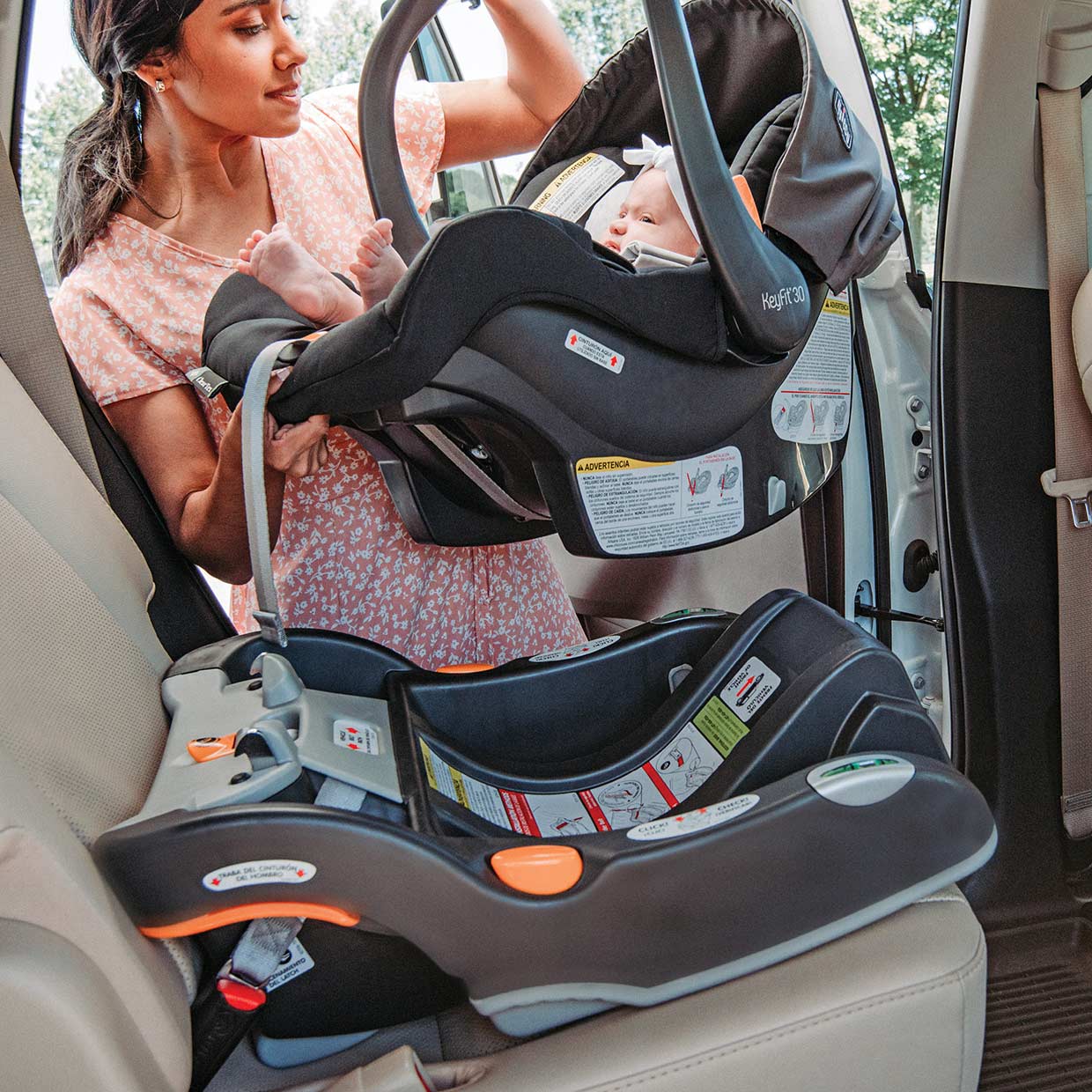
The seat must be installed in the vehicle before you place the baby in it. Do not try to hold the seat in place while buckling your newborn.
Use the back seat
Place the car seat in a rear seating position whenever possible. The center position is not always the safest or easiest position because it may not allow a proper installation.
Use only a seating position approved by both manuals. Some vehicles allow LATCH anchors in certain positions only. Others require the vehicle seat belt.
Never place a rear-facing car seat in front of an active passenger air bag. A front air bag can cause severe injury or death to a child in a rear-facing seat.
Check the seat angle
The car seat must be at the recline angle marked by the manufacturer. Newborns have limited head and neck control. If the seat is too upright, the baby’s head may fall forward and restrict breathing.
Use the built-in angle indicator if the seat has one. Do not guess the angle. Do not place folded towels, pool noodles, or other items under the seat unless the manual specifically allows them.
Remove bulky clothing
Dress your baby in thin layers. Thick coats, snowsuits, and padded bunting can compress during a crash and leave the harness too loose.
Place a blanket over the secured harness if your newborn needs more warmth. Keep the baby’s face uncovered.
How to Place a Newborn in a Car Seat
Follow these steps each time. If your newborn has a medical condition, was born prematurely, or has trouble breathing in the seat, ask a health care professional about safe travel before leaving the hospital.
1. Loosen the harness
Before placing your baby in the seat, loosen the harness straps. Use the harness adjustment button and pull the straps forward, if the seat uses that system.
Move the harness straps to the sides so they do not sit under your baby. Check that the buckle tongues are ready and that the crotch buckle is not twisted.
2. Place your newborn’s bottom at the back of the seat
Lower your baby into the seat with the bottom resting against the back of the seat. The baby’s back, shoulders, and head should stay flat against the seat cover.
Do not place a newborn in a seated or curled position. The baby should not slide forward or slump to one side.
A simple check is to look at the baby’s body from the side. The head should remain in a neutral position, not tipped sharply forward with the chin pressed to the chest.
3. Put the baby’s arms through the harness
Guide one arm through each harness loop. Make sure the straps lie flat on the baby’s body.
The harness should not be twisted. Twisted straps can spread crash forces unevenly and may not hold the baby as designed.
For a rear-facing newborn, the shoulder straps should come from at or below the baby’s shoulders. Use the slot allowed by the car seat manual. Do not move the straps to a higher slot simply because it looks easier.
4. Fasten the crotch buckle
Bring the two buckle tongues together and insert them into the crotch buckle. Listen for the buckle to click.
Pull up gently on the buckle to confirm that it is attached. Keep the buckle low on the baby’s body and positioned according to the manual.
Do not add a padded buckle cover or extra cushion unless it came with the seat and the manufacturer allows its use.
5. Fasten the chest clip
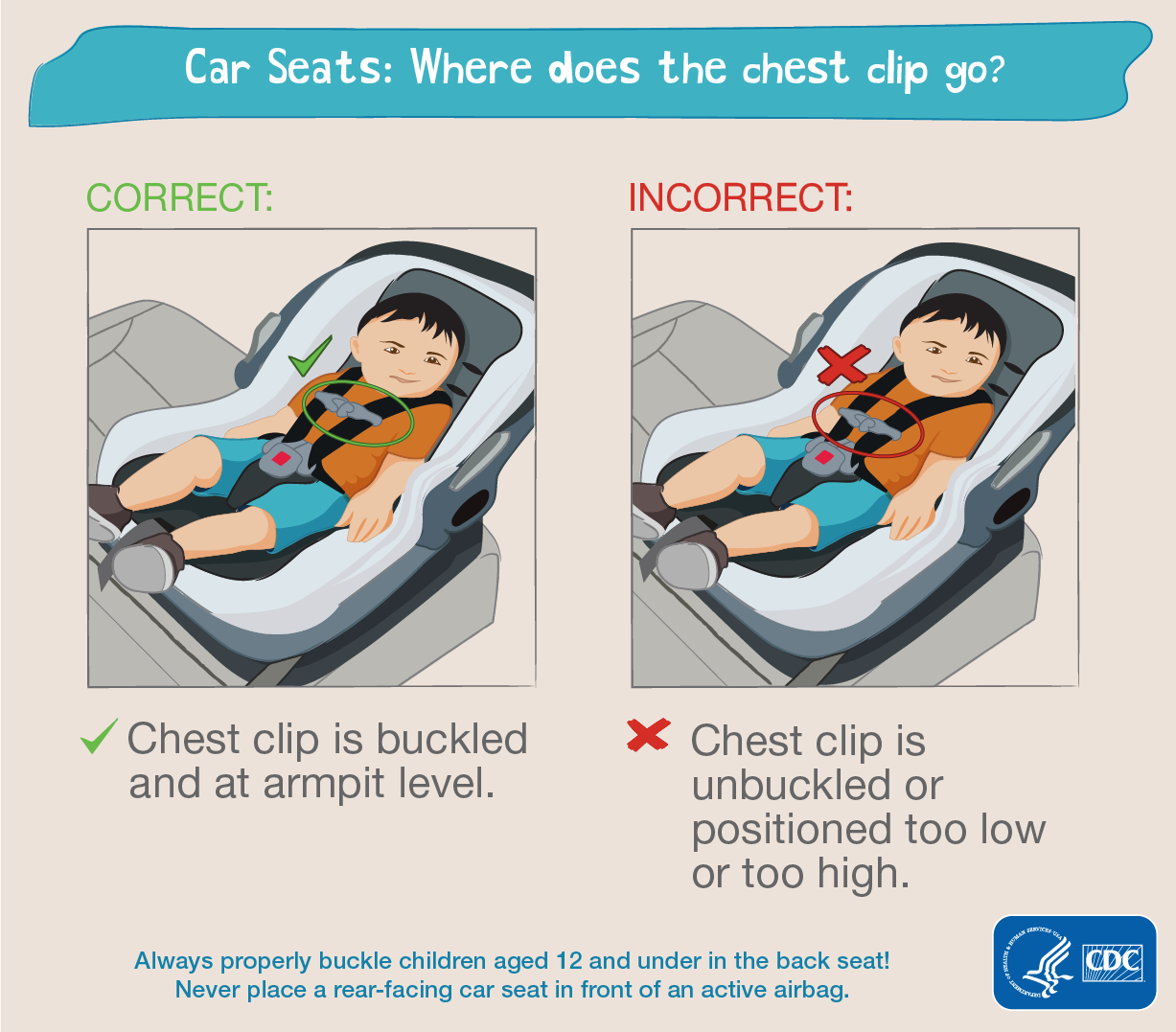
Connect the chest clip after the harness is buckled. Place it at armpit level across the baby’s chest.
The chest clip should not sit on the belly or at the neck. Its job is to help keep the shoulder straps in the correct position.
The chest clip is not a substitute for a tight harness. Both the chest clip and harness must be used.
6. Tighten the harness
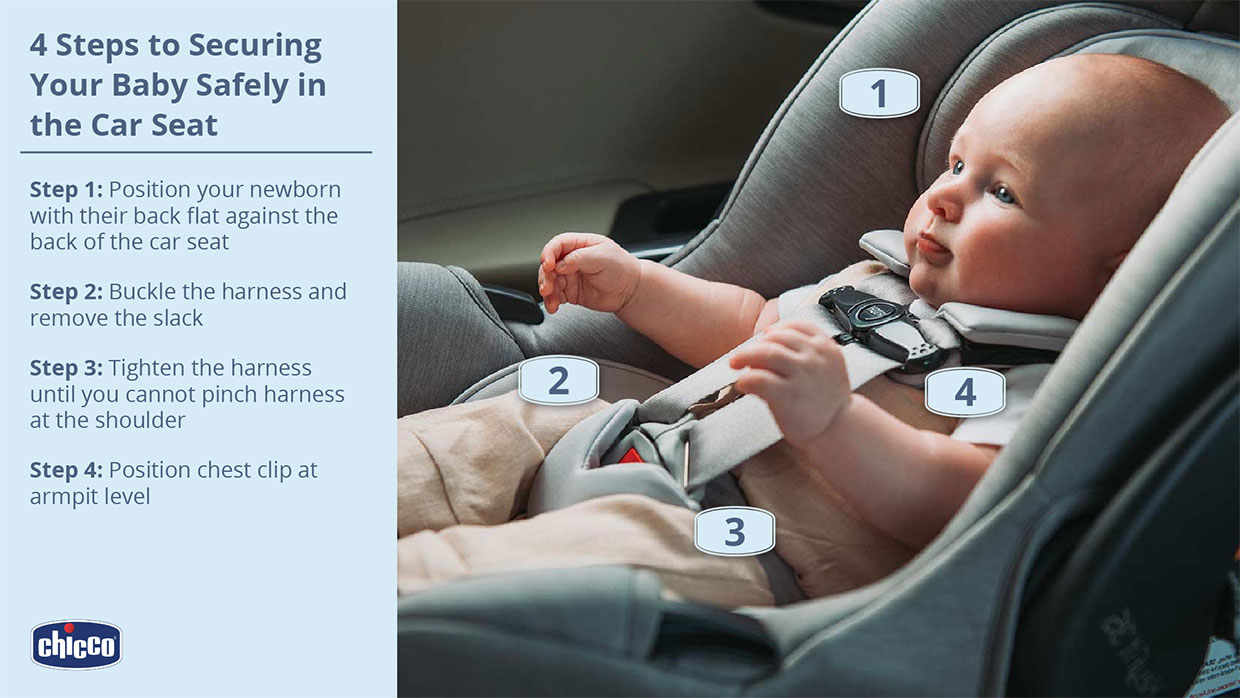
Pull the harness adjustment strap until it is snug. The straps should lie flat on the baby’s shoulders and chest.
Use the pinch test:
- Place your thumb and finger on the harness near the collarbone.
- Try to pinch the strap and pull it away from the shoulder.
- If you can pinch extra webbing, tighten the harness.
- If you cannot pinch the webbing, the harness is likely snug enough.
Do not rely on how tight the straps feel at the buckle. Check the shoulder area instead.
7. Check the final position
Before driving, confirm that:
- The baby’s back and bottom are against the seat.
- The head is not slumped forward.
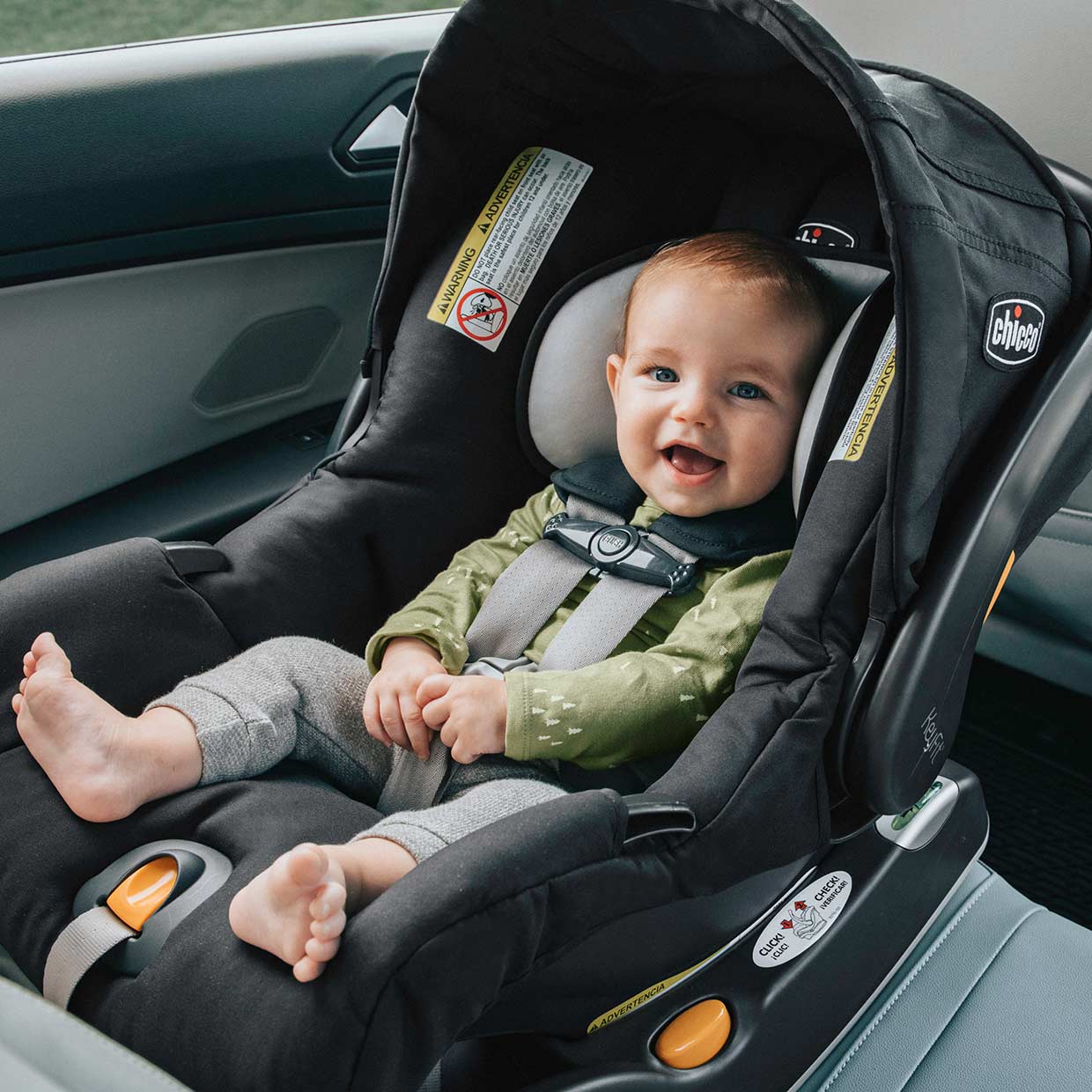
- The harness is snug and flat.
- The chest clip is at armpit level.
- The straps come from the correct slots.
- No blanket, coat, toy, or strap is behind the baby.
- The baby’s face is visible and uncovered.
- The seat remains at the correct recline angle.
If the baby slumps, stop and reset the position. Do not place rolled towels behind the baby’s head or body unless the car seat manufacturer permits them. If support is needed, use only approved inserts that came with the seat or were approved by the manufacturer.
How to Tell Whether the Fit Is Safe
A correct newborn fit should look secure but not crushed. The baby’s body should stay centered, and the head should remain in a neutral position.
Use this quick check before every trip:
| Check | What you should see |
|---|---|
| Position | Baby’s back and bottom touch the seat |
| Harness | Straps lie flat and cannot be pinched |
| Shoulder straps | At or below the shoulders for rear-facing use |
| Chest clip | Level with the armpits |
| Head | Face visible; chin not pressed to chest |
| Clothing | No thick coat under the harness |
| Seat angle | Indicator shows the approved recline range |
Newborns can look very small in a car seat. That does not mean you should add loose padding. Extra inserts can change how the harness fits and may interfere with the seat’s design.
If your baby moves to one side, first loosen the harness, reposition the baby’s bottom and back, and tighten the harness again. Do not pull the baby’s arms or shoulders into place while the harness is tight.
When a newborn needs extra support
Some babies have low muscle tone, breathing problems, or other medical needs. A car seat may not be appropriate for unsupervised sleep or long periods outside the vehicle.
If your baby’s head repeatedly falls forward, the baby turns blue, has breathing pauses, or cannot stay properly positioned, stop using the seat until you receive medical and car-seat guidance. Contact the baby’s clinician and a certified Child Passenger Safety Technician.
How to Install the Car Seat Correctly
Placing the baby correctly is only half of the task. The car seat itself must also be secure.
Install the seat according to the car seat and vehicle manuals. Depending on the seat and vehicle, you may use:
- The vehicle seat belt.
- The lower anchors and connectors known as LATCH.
- A top tether when the seat manual and vehicle instructions require or allow it.
Do not use both the lower anchors and the seat belt unless the car seat manufacturer specifically allows that combination.
After installation, hold the car seat near the belt path. Try to move it from side to side and front to back. It should move no more than 1 inch in any direction at the belt path.
This movement check applies to the installed seat, not to the carrier handle. Some infant seats allow a handle position during travel, while others do not. Follow the specific manual.
Get an in-person fit check
A certified Child Passenger Safety Technician can check both the installation and the newborn’s harness fit. The National Highway Traffic Safety Administration provides a locator for inspection stations and child passenger safety events in the United States.
A fit check is especially useful when:
- The seat is installed in a new vehicle.
- You changed from an infant seat to a convertible seat.
- The baby was born early or has special health needs.
- The seat rocks, shifts, or does not sit at the right angle.
- The harness straps do not reach the correct position.
- You are unsure whether to use LATCH or the vehicle seat belt.
Do not accept help from someone who has not learned the correct installation for your specific seat and vehicle.
Common Newborn Car Seat Mistakes
Putting the harness over a coat
A thick coat can create space between the harness and the baby. Use thin clothing and place a blanket over the secured harness instead.
Leaving the harness loose
A newborn may appear uncomfortable when the harness is snug. The correct test is whether you can pinch the webbing at the shoulder, not whether the baby looks relaxed.
Placing the chest clip too low
The chest clip belongs at armpit level. A low clip can allow the shoulder straps to move away from the correct position.
Using aftermarket inserts
Head supports, body pillows, strap covers, and cushions may not have been crash-tested with the seat. Use only parts that came with the seat or that the manufacturer approves for that exact model.
Moving the shoulder straps above the shoulders
For rear-facing use, the harness should come from at or below the shoulders. Check the manual if your newborn is between slots or if the straps seem too high.
Letting the baby slump
A newborn’s head falling forward is a warning sign. Recheck the recline angle, the baby’s bottom position, and the harness fit. If the problem continues, seek a professional fit check.
Using a seat past its limits
Stop using the seat when the child reaches the stated rear-facing height or weight limit, or when the manual says the child no longer fits. Do not rely on age alone.
Adding a toy or strap
Loose items can become hazards during a crash. Avoid attaching toys to the harness unless the seat manufacturer specifically permits them.
Using the car seat as a routine sleep space
Car seats are designed for travel, not routine sleep outside the vehicle. When you reach your destination, move the baby to a firm, flat sleep surface as soon as it is practical.
What to Do If the Newborn Does Not Fit
If the harness will not tighten, check whether clothing or an unapproved insert is blocking the straps. Remove the extra material, reposition the baby, and try again.
If the straps are too high, too low, or cannot reach the buckle, stop and read the manual. The seat may not fit your newborn, your vehicle, or both.
If the baby’s head keeps falling forward:
- Park safely.
- Remove the baby from the seat.
- Check the recline indicator.
- Reinstall the seat if needed.
- Reposition the baby’s bottom and back.
- Tighten the harness.
- Seek a professional inspection if the problem remains.
Do not solve a poor fit by adding blankets behind the baby, placing the seat on a cushion, or changing the approved recline angle.
If the baby is too small for the lowest harness position or the straps do not fit securely, contact the car seat manufacturer. A certified technician can also help you find a seat that fits the baby and vehicle.
How Long Can a Newborn Stay in a Car Seat?
There is no single time limit that applies to every newborn. The safest plan is to use the car seat only for travel and take regular breaks on longer trips.
Watch the baby during the ride. Stop if the baby slumps, has trouble breathing, or needs a change or feed. Never leave a newborn alone in a parked vehicle, even for a short time.
For long-distance travel, plan stops so you can remove the baby from the seat while the vehicle is parked safely. If a health care professional has given your baby specific travel limits, follow that advice.
Which Rear-Facing Seat Should You Use?
An infant seat and a convertible seat can both work for a newborn.
| Seat type | May fit a newborn well when | Main practical difference |
|---|---|---|
| Infant seat | The lowest harness position and insert fit the baby | Usually has a detachable carrier |
| Convertible seat | It has a newborn-approved rear-facing setup | Stays in the vehicle and can be used longer |
The best seat is not determined by brand name alone. It must fit the baby, fit the vehicle, allow the correct recline angle, and have a harness that can be tightened properly.
Keep the child rear-facing until the child reaches the seat’s rear-facing height or weight limit. The American Academy of Pediatrics and NHTSA recommend keeping children rear-facing as long as possible within the limits of the car seat.
State child passenger safety laws vary. The law is a minimum requirement, not always the safest maximum. Check your state’s current law and the car seat manual.

Frequently Asked Questions
Should a newborn wear a hat in a car seat?
A thin hat may be used if it does not interfere with the harness or cover the baby’s face. Do not use a thick hat or bulky clothing that changes the harness fit. Keep the baby’s airway clear.
Where should the infant car seat handle be during travel?
Handle positions vary by model. Some seats require the handle to be fully upright, while others allow a different position. Read the car seat manual rather than using a general rule.
Can a newborn ride in the front seat?
A rear-facing car seat should not be placed in front of an active passenger air bag. Use the back seat and follow the vehicle manual.
Should the chest clip be at the neck?
No. The chest clip should rest at armpit level. It should hold the shoulder straps in place without pressing against the neck.
Can I use a rolled towel to support my newborn?
Only if the car seat manufacturer allows it and explains where it may be placed. Never put a rolled towel behind the baby’s head, back, or bottom unless the manual specifically approves that use.
What if my newborn cries in the car seat?
Check the fit, temperature, harness, diaper, and head position. Pull over when safe if the baby slumps or appears distressed. Do not loosen the harness while driving.
Key Takeaways
- Install the car seat before placing the newborn inside.
- Use a rear-facing position in the back seat.
- Keep the baby’s back and bottom against the seat.
- Set the seat to the manufacturer’s recline angle.
- Put rear-facing harness straps at or below the shoulders.
- Tighten the harness until you cannot pinch the webbing.
- Place the chest clip at armpit level.
- Avoid bulky clothing and unapproved padding.
- Get a professional inspection if the fit or installation is uncertain.
Sources and Further Guidance
For current U.S. guidance, consult:
- National Highway Traffic Safety Administration: Car Seats and Booster Seats
- NHTSA: Find a Child Passenger Safety Technician
- American Academy of Pediatrics: Car Seats and Booster Seats
- Your car seat manufacturer’s instructions
- Your vehicle owner’s manual
The next best step is to install the seat, place your newborn in it using the steps above, and have the complete setup checked by a certified Child Passenger Safety Technician before the first trip.