

Introduction
The best tire deal near you is usually the one with the lowest installed cost, not the lowest tire price shown online. In the United States, that means comparing the tire, mounting, balancing, new valve stems, tire disposal, taxes, warranty coverage, and any required service.
Large retailers such as Discount Tire, Costco, Sam’s Club, Walmart, Tire Rack, and regional tire shops may all offer good deals. The right choice depends on your ZIP code, tire size, vehicle, driving needs, available rebates, and the quality of local installation.
This guide shows how to compare tire deals near you without relying on a misleading sale price.

The short answer: where to look for the best tire deals
Start with at least three local sources:
- A national tire retailer such as Discount Tire or an equivalent regional chain.
- A warehouse club such as Costco or Sam’s Club, if you already have a membership.
- An independent tire shop or car dealer that sells your tire size.
You can also check online sellers such as Tire Rack and Walmart. Their prices may be competitive, but you must compare the full installed price and confirm which local shop will perform the work.
The best deal is often found by comparing:
- The exact tire model and size
- The out-the-door installed price
- Manufacturer rebates
- Road-hazard coverage
- Free tire rotations and flat repairs
- Warranty terms
- Appointment availability
- The shop’s service reputation
A tire that costs $20 less may not be the better value if the shop charges more for installation or offers no useful service after the sale.
What “tire deals near me” should include
A tire deal is more than a discount on four tires. Ask each seller for a written estimate that includes every required charge.
Common costs in a tire quote
| Cost | What it covers | Why it matters |
|---|---|---|
| Tire price | Cost of each tire | Compare the same brand, model, size, and load rating |
| Mounting | Installing the tire on the wheel | Often charged per tire |
| Balancing | Adding weights so the tire spins smoothly | Needed after tire installation |
| Valve stems | Replacing the rubber valve stem | Some vehicles use special TPMS parts |
| Tire disposal | Removing old tires | May appear as an environmental or disposal fee |
| Sales tax | State and local tax | Varies by location |
| Road-hazard plan | Repair or replacement coverage | Read exclusions before paying |
| Alignment | Adjusting wheel angles | Needed only when inspection shows a problem |
| Tire protection fees | Store-specific charges | Ask what the fee provides |
Some quotes include installation. Others show a low tire price and add installation at checkout. That difference can make a large change in the final bill.
A simple installed-price calculation
Use this formula:
Total installed cost = tire price + installation + required parts + disposal fees + taxes − valid rebates
For example, this hypothetical quote compares four tires:
- Tire price: $145 × 4 = $580
- Installation: $25 × 4 = $100
- Disposal and valve fees: $40
- Sales tax: $58
- Mail-in rebate: −$80
Estimated final cost: $698
The rebate may not reduce the amount paid on installation day. Some rebates arrive later by prepaid card, digital payment, or check. Confirm the deadline and submission rules.

How to find the best tire deals in your area
Use a repeatable process. It takes a little time, but it helps prevent a cheap advertised price from hiding a high final cost.
1. Find your exact tire size
Look at the driver-side door-jamb label first. It usually lists the original tire size and recommended cold tire pressure.
You can also check the owner’s manual or the current tire sidewall. A size may look like this:
P225/65R17 102H
Each part provides useful information:
- P means passenger vehicle tire.
- 225 is the section width in millimeters.
- 65 is the aspect ratio.
- R means radial construction.
- 17 is the wheel diameter in inches.
- 102 is the load index.
- H is the speed rating.
Do not buy a tire based only on wheel diameter. The width, load index, speed rating, and vehicle fit must also match the vehicle’s requirements.
2. Search by ZIP code
Search terms such as these can help:
tire deals near mecheap tires near me installedbest tire prices near metire rebates near meused tires near mesame day tire installation near me
Use the ZIP code on each retailer’s website. A store only a few miles away may have different inventory, fees, or appointment times than another location in the same city.
3. Compare the same tire model
Do not compare a premium all-season tire with a low-cost touring tire and call the result a price match. Compare the same:
- Brand
- Model
- Size
- Load index
- Speed rating
- Run-flat status
- Original-equipment version, if required
A tire with the same size may still have a different load rating or construction. That can affect handling, warranty coverage, and fit.
4. Request the full installed price
Ask this exact question:
“What is the total out-the-door price for four of these tires, including mounting, balancing, valve stems, disposal, taxes, and all required fees?”
Also ask whether the quote includes:
- Tire rotations
- Flat repairs
- Road-hazard coverage
- Alignment checks
- TPMS service
- Manufacturer rebates
- A price-match policy
Get the quote by email or text when possible. Written details make it easier to compare offers.
5. Check local inventory before visiting
Online listings can show a tire as available even when the local store must transfer it from another location. Ask whether the tires are physically at the selected store.
Confirm the tire’s date code if the tires have been in stock for a long time. A tire date code shows the week and year of manufacture. For example, 2424 means the 24th week of 2024.
A newer tire is not automatically better, and a tire made earlier is not automatically unsafe. However, tire age matters. Follow the tire maker’s inspection and replacement guidance. The National Highway Traffic Safety Administration advises consumers to check tire age and notes that some tire makers recommend replacement at six to ten years, even if tread remains.
6. Check for rebates from the tire maker
Tire manufacturers often offer rebates through retailers. The offer may apply only to:
- Certain models
- A minimum number of tires
- A limited purchase period
- Specific participating retailers
- A required online claim
- A submission deadline
Save the receipt, rebate form, invoice, and proof of purchase until payment arrives. A sale price and a rebate are not always the same thing.

Which tire retailer has the best deal?
No single retailer has the best deal in every U.S. city. Each type of seller has different strengths and limits.
| Seller type | May be best for | Check before buying |
|---|---|---|
| Discount tire chain | Competitive prices and ongoing service | Local fees, coverage limits, and appointment times |
| Costco or Sam’s Club | Members who value package pricing and service | Membership cost, limited locations, and installation wait times |
| Walmart | Low advertised prices and broad store coverage | Installation quality, warranty details, and local service capacity |
| Tire Rack | Wide selection and online comparison tools | Shipping, installer fees, and who handles post-sale service |
| Car dealership | Vehicle-specific fit and factory service | Often higher labor cost and a smaller tire selection |
| Independent tire shop | Personal service and local flexibility | Written warranty terms, equipment, and total price |
| Used-tire seller | Short-term budget relief | Tire age, damage, tread depth, and uncertain history |
Discount Tire and similar tire chains
A national tire chain may be a strong choice when you want local service after the sale. Some chains offer free flat repairs, tire rotations, inspections, or limited road-hazard protection on eligible tires.
Read the actual terms. Road-hazard coverage can exclude commercial use, off-road damage, cosmetic damage, underinflation, or tires with insufficient remaining tread.
Costco and Sam’s Club
Warehouse clubs may offer competitive package pricing and member-only promotions. Their tire programs can include services such as rotation, balancing, or flat repair, depending on the club and current terms.
The trade-off is access. You may need a membership, appointments can fill quickly, and not every location has the same inventory. Include the membership cost if you would join only to buy tires.
Walmart
Walmart may be useful when price and broad store coverage matter. Compare its tire price with the complete installation package. Ask which services the local auto center performs and what happens if you need a repair at another location.
A low price is less useful if the store cannot install your tire size promptly or does not offer the after-sale service you need.
Tire Rack and other online sellers
Online tire sellers can make it easy to compare models, test results, and customer reviews. Many let you ship tires to an approved installer.
Before ordering, confirm:
- Shipping cost
- Installer labor
- Disposal fees
- TPMS service
- Appointment timing
- Warranty claims
- Return shipping rules
- Whether the installer accepts customer-supplied tires
The online price is not the installed price until you add every local service charge.
Independent tire shops
A local shop may beat a large chain on service, availability, or negotiation. It may also know local road conditions and common vehicle issues.
Ask for the shop’s written warranty and check whether it uses a calibrated balancing machine, performs torque checks, and provides an invoice listing the tire identification details.

How to compare tire quality, not just price
The cheapest tire is not always the lowest-cost choice over its useful life. A better comparison considers tread life, fuel use, comfort, wet grip, winter performance, and warranty support.
Match the tire to your driving
Choose based on how and where you drive:
- All-season tires: A common choice for moderate climates and mixed use.
- All-weather tires: Often designed for stronger winter performance than standard all-season tires.
- Summer tires: May provide strong warm-weather grip but are not suited to cold or snowy conditions.
- Winter tires: Designed for cold temperatures, snow, and ice; they require seasonal storage or a second set of wheels.
- All-terrain tires: Useful for some paved and unpaved driving, but may add noise and reduce fuel economy.
- Performance tires: May improve steering response but can cost more and wear faster.
If you live where temperatures often fall below freezing or roads regularly receive snow and ice, a basic all-season tire may not provide the same winter traction as a dedicated winter tire.
Understand treadwear warranties
A treadwear warranty is not a promise that the tire will last for the stated mileage. It usually has conditions, such as:
- Regular tire rotations
- Correct inflation
- Alignment maintenance
- Proof of service
- Even tread wear
- Replacement before a minimum tread depth
The warranty may provide a partial credit rather than a free replacement. Ask how the store calculates the credit.
Use reviews with care
Customer reviews can reveal service problems, noise complaints, or delivery issues. They do not replace the tire’s specifications or an independent test.
Give more weight to reviews that identify:
- The exact tire model
- The vehicle
- The driving conditions
- The mileage
- The date of purchase
- The problem and its resolution
A review about a tire on a pickup truck may not apply to the same tire in a compact sedan.
Consider total cost per mile
A hypothetical example:
- Set A costs $640 and lasts an estimated 40,000 miles.
- Set B costs $820 and lasts an estimated 60,000 miles.
Ignoring installation and other costs:
- Set A: $640 ÷ 40,000 = 1.6 cents per mile
- Set B: $820 ÷ 60,000 = 1.37 cents per mile
This does not prove Set B is the better tire. Actual life depends on alignment, inflation, driving style, road surfaces, climate, and rotation. The calculation simply shows why purchase price alone can mislead.

When a tire sale is not a good deal
Some offers deserve extra caution.
Extremely cheap used tires
Used tires can help someone manage a short-term emergency, but their history may be unknown. Do not buy a used tire if you see:
- Cracks in the sidewall or tread
- Bulges or bubbles
- Exposed cords
- Uneven wear
- Repairs near the sidewall
- A damaged bead
- Signs of run-flat driving
- An old date code
- Different sizes or types on the same axle
The U.S. Tire Manufacturers Association advises consumers to inspect used tires carefully and have them checked by a qualified tire professional.
Tire mismatches
Avoid mixing tires in a way that conflicts with the vehicle maker’s instructions. Differences in size, construction, load rating, or tread pattern can affect handling.
All-wheel-drive vehicles may have stricter limits on tread-depth differences. Replacing only one or two tires can create drivetrain problems in some vehicles. Ask the vehicle maker or a qualified technician before replacing fewer than four tires.
“Free” installation
Free installation may exclude balancing, valve stems, disposal, taxes, or TPMS service. Ask for the exact services included.
Unneeded alignment work
An alignment can be useful when the vehicle pulls, the steering wheel is off-center, or the tires show uneven wear. It is not automatically required every time you buy tires.
Ask the shop to show you the alignment readings and explain the recommended repair. If a suspension part is bent or worn, an alignment alone may not solve the problem.
Pressure sales
You should have time to compare the quote. Be cautious when a seller refuses to provide a written price, will not identify the tire model, or says you must buy an expensive service without explaining why.

Questions to ask before paying
Use this checklist at the store or on the phone:
- What is the exact brand, model, size, load index, and speed rating?
- What is the complete installed price for four tires?
- Are taxes, disposal, valve stems, and balancing included?
- Is the tire a current-production tire, and what is its date code?
- Does the tire include a manufacturer treadwear warranty?
- Does the store offer free rotations or flat repairs?
- What does road-hazard coverage include and exclude?
- Is an alignment needed, and what evidence supports that recommendation?
- Can this vehicle safely use only two new tires?
- What happens if the tire is defective or damaged after installation?
- Are rebates deducted today or paid later?
- How long will the installation take?
A clear answer to these questions is often more valuable than a large percentage-off sign.
Tire safety after installation
New tires should be installed by a qualified technician. After installation:
- Confirm that the tire-pressure monitoring system warning light is off.
- Check that the tires are inflated to the vehicle maker’s recommended pressure.
- Make sure lug nuts are tightened to the vehicle maker’s torque specification.
- Ask when to return for the first rotation.
- Watch for vibration, pulling, unusual noise, or steering changes.
- Stop driving and request an inspection if you see a bulge, sudden pressure loss, or severe vibration.
Check tire pressure when the tires are cold. The correct pressure is usually listed on the driver-side door label, not on the maximum-pressure number molded into the tire sidewall.
If a warning light remains on after installation, return to the shop or consult the vehicle manual. A TPMS light may indicate low pressure, a sensor problem, or a system that needs to be reset.
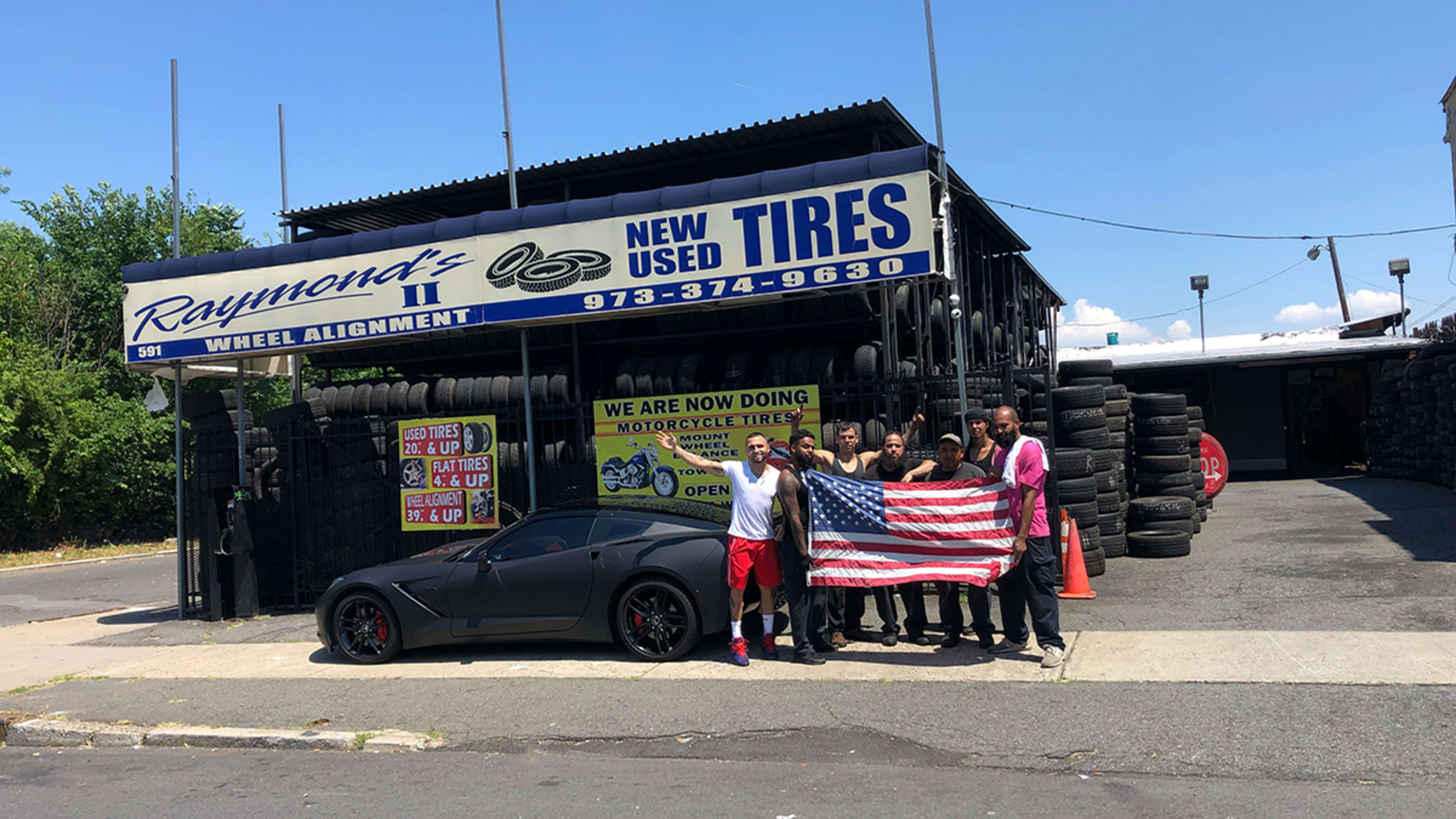
Best tire deal by buyer type
The right seller depends on your priorities.
| Your priority | Where to start | Main trade-off |
|---|---|---|
| Lowest immediate price | Compare local chains, Walmart, and independent shops | Service and warranty terms may differ |
| Convenient local service | National tire chain | The lowest tire price may not be available |
| Warehouse-club value | Costco or Sam’s Club | Membership and appointment limits |
| Wide online selection | Tire Rack or another online seller | You must arrange and pay for installation |
| Short-term emergency replacement | Reputable used-tire shop | Unknown history and shorter remaining life |
| Vehicle-specific advice | Dealer or trusted independent shop | Labor and tire prices may be higher |
| Snow and ice performance | Tire shop familiar with winter tires | Extra storage and seasonal change costs |
The best deal for a commuter may be a durable touring tire with free rotations. For a driver in a snowy region, the safer choice may cost more because winter traction matters more than the lowest purchase price.
Frequently asked questions
Who usually has the cheapest tires in the United States?
There is no single cheapest seller nationwide. Prices vary by tire size, location, inventory, promotions, installation fees, and rebates. Compare the total installed price for the exact same tire at several local sellers.
Is it cheaper to buy tires online or in a store?
Online prices can be lower, but shipping, installation, disposal, balancing, and warranty service may reduce the difference. Compare the final installed cost and confirm who handles problems after the sale.
How much should four new tires cost?
The price varies widely by vehicle and tire type. A basic passenger-car set may cost far less than a premium truck, run-flat, performance, or winter set. Ask for an out-the-door quote rather than relying on a general price range.
Should I buy all four tires at once?
Replacing all four is often best for balanced handling, especially on all-wheel-drive vehicles. If you replace only two, the vehicle maker may specify where they should go. Ask a qualified tire professional before deciding.
How old is too old for a new tire?
There is no single age rule for every tire. Check the date code, inspect the tire, and follow the vehicle and tire manufacturer’s guidance. NHTSA notes that some manufacturers recommend replacement at six to ten years, even if the tire still has tread.
Are tire rebates worth using?
A rebate can lower the effective cost if you meet all conditions and submit the claim on time. Confirm whether the rebate is instant or paid later, and keep all required documents.
Final recommendation
To find the best tire deals near you, compare three written quotes for the same tire model and size. Judge each quote by its installed total, warranty, service coverage, tire age, and local availability.
Do not choose a tire only because it has the lowest advertised price. The best value is the option that fits your vehicle, climate, roads, and budget while providing safe installation and reasonable support after the sale.