

Yes, you may be able to replace a 55-series tire with a 60-series tire, or a 60-series tire with a 55-series tire, but the numbers alone do not tell you whether the tire will fit safely.
In the United States, the correct choice depends on the full tire size, wheel diameter, tire width, load rating, speed rating, vehicle clearance, and your vehicle manufacturer’s specifications. A tire marked 205/55R16 is not simply a “55 tire.” The complete size must match the vehicle and wheel.
If you are considering a change such as 205/60R16 to 205/55R16, the 55-series tire will usually be shorter. That can change ride comfort, ground clearance, speedometer readings, handling, and the operation of some vehicle systems.

What Do 55 and 60 Mean on a Tire?
The numbers 55 and 60 are the tire’s aspect ratio. They describe the sidewall height as a percentage of the tire’s width.
For example:
- 205/55R16: The sidewall is 55% of 205 millimeters.
- 205/60R16: The sidewall is 60% of 205 millimeters.
The number does not describe the tire’s height in inches. It also does not describe the wheel size. In both examples, the R16 means the tire fits a 16-inch wheel.
How tire size markings work
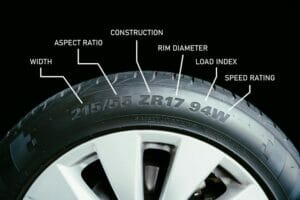
A tire marked 205/55R16 91V includes several measurements and ratings:
| Marking | Meaning |
|---|---|
| 205 | Tire width in millimeters |
| 55 | Aspect ratio |
| R | Radial construction |
| 16 | Wheel diameter in inches |
| 91 | Load index |
| V | Speed rating |
The complete marking matters. You should not compare only the 55 or 60 number.
Can a 55-Series Tire Replace a 60-Series Tire?
A 55-series tire can replace a 60-series tire in some cases, but it is usually a plus-minus fitment change, not a direct match.
If the tire width and wheel diameter stay the same, the 55-series tire has a shorter sidewall. For example:
- Original: 205/60R16
- Possible substitute: 205/55R16
The 205/55R16 tire is about 20.5 millimeters shorter in overall diameter, assuming the published tire sizes are close to their nominal dimensions. That is about a 3.1% reduction in diameter.
A small change may work on some vehicles. However, a 3% difference is large enough to affect vehicle behavior and should not be treated as harmless.
What changes when you use a 55 instead of a 60?
A shorter tire can cause:
- A firmer ride
- Less sidewall flex
- Slightly less ground clearance
- Faster wheel rotation at the same road speed
- A higher speedometer reading than your actual speed
- Possible changes in traction-control or anti-lock brake operation
- A greater chance of wheel or tire damage from potholes
The tire may also look slightly smaller inside the wheel opening.

How to Calculate the Difference Between 55 and 60 Tires
You can estimate the difference with the tire-size formula below.
Tire sidewall height
Sidewall height = tire width × aspect ratio
For a 205/60R16 tire:
205 × 0.60 = 123 millimeters
For a 205/55R16 tire:
205 × 0.55 = 112.75 millimeters
The sidewall difference is:
123 − 112.75 = 10.25 millimeters per side
Because the tire has a sidewall above and below the wheel, the total diameter difference is about:
10.25 × 2 = 20.5 millimeters
Example comparison
| Tire size | Approx. overall diameter | Difference |
|---|---|---|
| 205/60R16 | 652.4 mm | Original |
| 205/55R16 | 631.9 mm | About 20.5 mm smaller |
| Difference | — | About 3.1% |
Actual tire dimensions vary slightly by brand and model. Use the manufacturer’s published specifications when making a final comparison.
How the change affects the speedometer
A smaller tire travels a shorter distance with each rotation. As a result, it turns more times than the original tire.
With the example above, if your speedometer shows 60 mph, your actual speed could be about 58 mph, assuming the original speedometer was accurate and the only change was tire diameter.
The exact result depends on the original tire’s measured diameter and the replacement tire’s actual diameter.

When Is a 55-to-60 Tire Change Usually Acceptable?
The change may be reasonable when all of the following conditions are met:
- The tire fits the same wheel diameter.
- The tire’s approved rim-width range matches your wheel.
- The replacement tire has enough load capacity.
- The speed rating meets or exceeds the vehicle requirement.
- The tire does not contact the suspension, fender, or inner wheel well.
- The overall diameter remains within the vehicle maker’s accepted range.
- The change does not violate your vehicle manual, tire placard, lease terms, or local inspection rules.
- All tires on the same axle are the same size and type.
Many tire professionals use a small overall-diameter difference as a practical target. A common guideline is to stay near the original diameter, often within about 3%, but this is not a universal safety rule. Your vehicle manufacturer may require a tighter limit, especially on vehicles with all-wheel drive, electronic stability control, or sensitive driver-assistance systems.
Do not treat the 3% figure as automatic approval.
When Should You Not Make the Change?
Avoid the swap when the replacement tire creates a major change in diameter, width, load capacity, or wheel fitment.
You should be especially cautious with:
- All-wheel-drive and four-wheel-drive vehicles
- Vehicles with limited fender clearance
- Performance cars with precise suspension settings
- Cars that use tire-size information for stability or braking systems
- Vehicles carrying heavy loads or towing
- Tires with a lower load index than the original
- Tires with a lower speed rating than the vehicle requires
- Different tire sizes on the same axle
- Mixed 55- and 60-series tires on an AWD vehicle
Some AWD systems can be affected by differences in tire circumference. Even a tire that physically fits may cause driveline stress or electronic-system warnings if the rolling circumference differs too much.

What You Should Check Before Buying
Check the vehicle, wheel, and tire as one system. Do not rely on the aspect ratio alone.
1. Read the driver-door tire placard
In the United States, the tire and loading information label is usually attached to the driver-side door jamb or door edge. It normally lists:
- Original tire size
- Recommended cold tire pressure
- Front and rear tire information, where applicable
- Maximum vehicle load information
The owner’s manual may list optional tire sizes as well. An optional size listed by the vehicle manufacturer is more reliable than a size found only through an online tire selector.
2. Confirm the wheel diameter
A 55-series tire for a 16-inch wheel must be mounted on a 16-inch wheel. A 55-series tire for a 17-inch wheel will not fit a 16-inch wheel.
For example:
- 205/55R16 requires a 16-inch wheel.
- 225/55R17 requires a 17-inch wheel.
The 55 number does not determine wheel diameter.
3. Check the wheel width
Every tire has an approved wheel-width range. A tire that is too narrow or too wide for the wheel may not sit correctly, even if the diameter is correct.
Check the wheel width stamped on the wheel or listed in the wheel documentation. Then compare it with the tire manufacturer’s approved rim-width range.
4. Match or exceed the load index
The load index shows how much weight one tire can carry under specified conditions. The replacement tire should meet or exceed the original tire’s load index unless the vehicle manufacturer gives different instructions.
Do not choose a tire only because it has the correct outside diameter. A tire with insufficient load capacity is not an acceptable substitute.
5. Match the speed rating
The speed rating is shown by a letter such as H, V, W, or Y. The replacement tire should meet the vehicle manufacturer’s requirement.
A higher speed rating does not automatically make a tire better for every vehicle. It may change ride firmness, cost, and performance.
6. Check clearance
Turn the steering wheel fully left and right. A tire must clear:
- Struts and springs
- Brake parts
- Control arms
- Inner fenders
- Fender lips
- Mud flaps
- Wheel-well liners
Clearance should be checked with the suspension loaded and unloaded. A tire that clears while parked may rub during cornering, braking, or suspension compression.
What Happens If You Put 60 Tires on a Vehicle Designed for 55?
A 60-series tire is taller than a 55-series tire when the width and wheel diameter are the same.
For example, replacing a 205/55R16 with a 205/60R16 may provide:
- More sidewall cushioning
- A softer ride
- More protection from potholes
- Slightly more ground clearance
It may also cause:
- Speedometer readings that are lower than actual speed
- Less space around the tire
- Increased rubbing risk
- Slower steering response
- Changes in braking and stability-system behavior
The taller tire may be useful on some vehicles, but it can also be the wrong choice if the wheel well has limited space.
What Happens If You Put 55 Tires on a Vehicle Designed for 60?
A 55-series tire usually has a shorter, firmer sidewall than a 60-series tire.
Possible benefits include:
- Slightly sharper steering response
- Less sidewall movement
- A sportier appearance
- A lower overall vehicle height
Possible disadvantages include:
- A harsher ride
- Less protection from potholes
- Reduced ground clearance
- More risk of wheel damage
- An inaccurate speedometer
- Possible electronic-system issues
A shorter sidewall is not automatically safer or better. It changes the tire’s behavior and reduces the amount of rubber between the wheel and the road hazard.

Should You Put 55 and 60 Tires on the Same Car?
Do not mix 55- and 60-series tires casually.
If the front and rear tires use different sizes from the factory, follow the vehicle manufacturer’s fitment chart. Some vehicles are designed with a staggered setup, where the front and rear tire sizes are intentionally different.
However, replacing only one tire with a different aspect ratio can create uneven rolling circumference. At minimum, tires on the same axle should normally match in size, construction, load rating, and speed rating.
For AWD vehicles, all four tires often need closely matched rolling circumference. Check the owner’s manual or contact the vehicle manufacturer before changing tire size.
Can You Mount a 55 Tire on a 60 Rim?
This wording can mean two different things.
If “60 rim” means a 60-series tire
A wheel does not have a 55 or 60 aspect ratio. Tires have the aspect ratio. A wheel has a diameter and width.
A 55-series tire may fit the same wheel used by a 60-series tire if:
- The wheel diameter matches
- The tire width is suitable
- The tire’s rim-width range includes the wheel
- The vehicle has sufficient clearance
- The complete tire size is appropriate
For example, both 205/55R16 and 205/60R16 fit a 16-inch wheel in terms of wheel diameter. That does not prove that both sizes are safe for a particular vehicle.
If “60 rim” means a 60-inch wheel
A normal passenger-car tire marked 205/55R16 will not fit a 60-inch wheel. The final number in the tire size must match the wheel diameter.
Common Mistakes to Avoid
Mistake 1: Comparing only the aspect ratio
A 225/55R17 and a 205/60R16 have different widths, wheel diameters, and overall dimensions. The 55 and 60 numbers do not provide enough information.
Mistake 2: Assuming the tire will fit because it mounts
A tire can mount on a wheel and still rub the vehicle or have the wrong load rating. Mounting is only one part of fitment.
Mistake 3: Ignoring the load index
A tire that is physically smaller or cheaper may not carry enough weight for the vehicle. Check the full sidewall marking.
Mistake 4: Changing only one tire
One different tire can affect handling and rolling circumference. Follow the vehicle maker’s instructions for tire replacement.
Mistake 5: Using the old tire pressure without checking
The correct pressure depends on the vehicle, tire, load, and manufacturer’s instructions. Start with the pressure on the driver-door placard unless a qualified tire professional or vehicle manufacturer provides different guidance.
Mistake 6: Assuming the speedometer will remain exact
Changing tire diameter changes the distance traveled per revolution. Verify the result with a GPS speed readout or a calibrated speed-check device, but remember that GPS readings can vary with signal and road conditions.

A Practical Decision Example
Suppose a U.S. sedan uses 205/60R16 92H tires and you are considering 205/55R16 91V tires.
The comparison looks like this:
| Item | Original | Replacement | Result |
|---|---|---|---|
| Width | 205 mm | 205 mm | Same |
| Wheel diameter | 16 in | 16 in | Same |
| Aspect ratio | 60 | 55 | Lower sidewall |
| Load index | 92 | 91 | Lower capacity |
| Speed rating | H | V | Higher rating |
| Overall diameter | About 652 mm | About 632 mm | About 3.1% smaller |
The lower load index is a concern even though the speed rating is higher. The replacement may also alter speedometer readings and ground clearance.
The next step would be to verify the vehicle’s required load index, the tire maker’s actual dimensions, the wheel-width range, and the vehicle manufacturer’s approved alternatives. Do not approve the change from this table alone.
What to Do After Installing a Different Tire Size
After installation:
- Confirm that all lug nuts are tightened to the vehicle manufacturer’s torque specification.
- Set cold tire pressure using the vehicle placard.
- Check for rubbing during full-lock turns.
- Drive slowly in a safe area.
- Watch for steering pull, vibration, warning lights, or unusual noise.
- Recheck tire pressure after the tires cool.
- Reset or relearn the tire-pressure monitoring system if the vehicle requires it.
- Have the alignment checked if the vehicle pulls or the steering wheel is off-center.
Stop driving and have the vehicle inspected if a tire rubs, a warning light appears, the vehicle handles poorly, or the tire loses pressure.
Frequently Asked Questions
Is a 55 tire smaller than a 60 tire?
Usually, yes, when the tire width and wheel diameter are the same. A 55-series tire has a sidewall that is 55% of its width, while a 60-series tire has a sidewall that is 60% of its width.
Can I use 205/55R16 instead of 205/60R16?
It may fit the same 16-inch wheel, but it is about 3% smaller in overall diameter by nominal calculation. Check load index, clearance, approved wheel width, speed rating, vehicle electronics, and the manufacturer’s approved sizes before installing it.
Will changing from 60 to 55 affect the speedometer?
Yes. A smaller tire rotates more times over the same distance. The speedometer may show a higher speed than the vehicle is actually traveling.
Is a 55-series tire better for handling?
A shorter sidewall may reduce sidewall flex and make steering feel more responsive. It can also produce a firmer ride and offer less protection against potholes. Handling depends on the entire tire design, not just the aspect ratio.
Can I use different aspect ratios on the front and rear?
Only when the vehicle manufacturer specifies that setup. Do not create a front-to-rear size difference without checking the vehicle manual, especially on AWD and 4WD vehicles.
Bottom Line
You can sometimes put a 55-series tire where a 60-series tire was used, but the full tire size must be checked first. The change affects more than appearance: it can alter tire diameter, ride comfort, ground clearance, speedometer accuracy, load capacity, handling, and vehicle-system operation.
For a safe U.S. fitment decision, compare the complete original and replacement sizes, confirm the door-placard requirements, check the wheel and tire specifications, and ask a qualified tire professional to verify clearance and compatibility before installation.