
Most Graco combination and all-in-one car seats can become a booster only when the specific model allows it. To convert one safely, check the manual, meet the child’s age, height, and weight limits, remove or store the harness as directed, and use the vehicle’s lap-and-shoulder belt across the child—not the seat’s internal harness.
The exact steps differ between models such as the Graco 4Ever DLX, Graco SlimFit3 LX, Graco Nautilus, and other Graco seats sold in the United States. Never rely on appearance alone. A seat that looks like a booster may still require its harness.

First, confirm that your Graco seat can become a booster
Check the label and manual before changing anything. Graco makes several types of child restraints:
- Rear-facing-only seats: These usually do not become boosters.
- Convertible car seats: These may switch from rear-facing to forward-facing, but many do not become boosters.
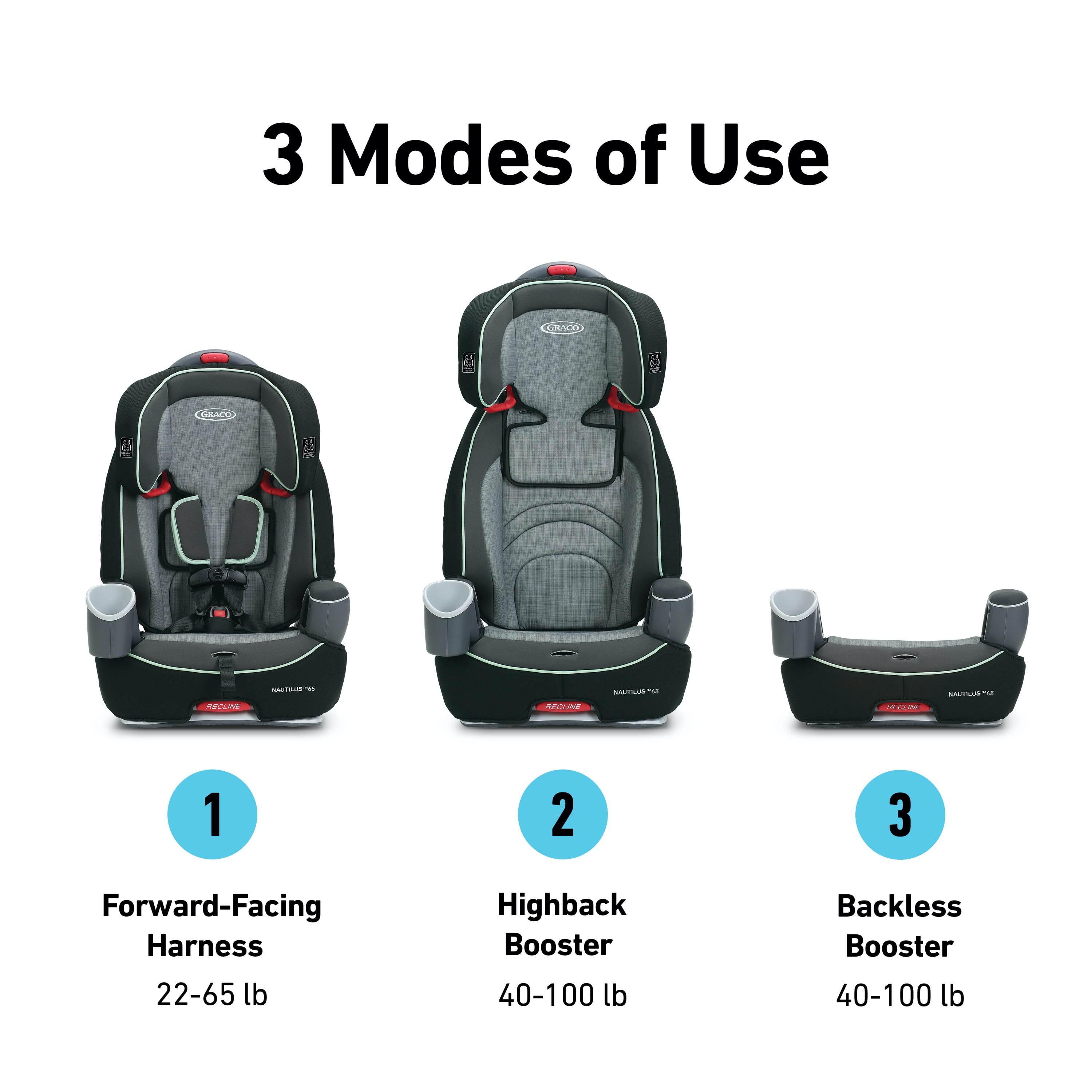
- Combination seats: These face forward with a harness and may later work as high-back or backless boosters.
- All-in-one seats: These may cover rear-facing, forward-facing harness, high-back booster, and backless booster modes.
Look for wording such as:
- “Highback booster”
- “Backless booster”
- “Belt-positioning booster”
- “Harnessed booster”
- “Converts to a booster”
The model name and model number are usually printed on a sticker near the child’s back, side, or bottom of the seat. Use that information to find the correct manual on the Graco support website.
Do not assume every Graco seat converts
For example, a Graco convertible seat may support rear-facing and forward-facing harness use but have no booster mode. A Graco combination seat may support only a forward-facing harness and high-back booster. Another model may also allow backless use.
The manual controls. Online photos, retailer descriptions, and instructions for a similar Graco model do not replace the manual for your seat.
Know when your child is ready for booster mode
A booster is not simply the next stage after a child outgrows the rear-facing position. In the United States, children should remain rear-facing until they reach the seat’s rear-facing height or weight limit. After that, they should use a forward-facing harness until they reach the harness limits or are mature enough for the booster stage.
A child is generally ready for a belt-positioning booster when the child can:
- Sit upright for the whole ride.
- Keep the back against the vehicle seat.
- Keep the shoulder belt on the shoulder.
- Keep the lap belt low across the hips and upper thighs.
- Avoid leaning, slouching, kneeling, or putting the shoulder belt behind the back.
- Stay in the correct position even when asleep.
Follow the limits printed in your Graco manual. The American Academy of Pediatrics advises using a booster until the vehicle seat belt fits properly without it. This often occurs when a child is about 4 feet 9 inches tall, but height alone does not decide readiness.
A booster does not restrain the child by itself. The vehicle’s lap-and-shoulder belt does that work.

What you need before converting the seat
Gather these items before you start:
- The Graco owner’s manual for the exact model.
- The model number and date of manufacture.
- A vehicle seat with a lap-and-shoulder belt.
- The parts that came with the seat, such as the crotch buckle cover or harness storage door.
- Enough time to inspect the seat without rushing.
Clean hands and good light also help. Take photos before removing parts if the manual permits removal. Do not remove a part just because it seems unnecessary.
Check the seat’s expiration date
Graco places useful date information on the seat label or in the manual. Many child restraints have a useful life measured from the date of manufacture, but the exact period varies by model. Do not use a seat past the manufacturer’s stated expiration date.
Also replace a seat after a moderate or severe crash unless Graco or another qualified source confirms that it remains usable. Crash damage may not be visible.
Check the vehicle belt
A booster normally requires a lap-and-shoulder belt. Do not use a booster with a lap-only belt unless both the booster manual and vehicle instructions specifically allow that setup.
The shoulder belt must pass through the booster’s belt guide. The lap belt must rest low on the child’s hips or upper thighs. It should not ride across the stomach.
How to convert a Graco car seat into a high-back booster
Use these steps as a general guide. Your Graco manual may use a different order or name for the parts.
1. Move the seat to the forward-facing position
A booster is used forward-facing. Do not convert a seat to booster mode while it is rear-facing.
Place the seat in the vehicle according to the booster instructions. Some Graco boosters may use lower anchors to keep the empty seat from moving when the child gets in or out. Lower anchors do not replace the vehicle seat belt that protects the child.
2. Remove the child from the harness
Take the child out before changing the seat. Release the harness and open the chest clip.
Never cut the harness. Do not remove the harness unless the manual says the seat can operate as a booster without it.
3. Loosen the harness fully
Pull the harness adjuster so the straps have enough slack. This gives you room to remove the harness from the splitter plate or other attachment point.
The splitter plate is the small metal or plastic piece behind the seat shell where the harness straps join. Some Graco seats use a different system. Follow the diagrams in your manual.
4. Detach the harness straps as directed
Many Graco combination and all-in-one seats require you to:
- Remove the seat cover or open an access panel.
- Disconnect the harness straps from the splitter plate.
- Pull the straps through the harness slots.
- Remove the chest clip and buckle only if the manual instructs you to do so.
- Store the harness parts in the seat’s approved storage area.
Some models let you store the harness without fully removing every part. Others require more disassembly. Do not guess.
5. Store the harness and buckle
Place the harness, chest clip, crotch buckle, and related parts only where the manual shows. Loose parts can become projectiles in a crash. They can also get trapped under the child or interfere with the belt path.
Do not leave the harness hanging behind the seat. Do not tuck it beneath the cushion unless Graco specifically provides that storage method.
6. Set the headrest and backrest
Raise the headrest so the shoulder belt passes through the belt guide near the child’s shoulder. The guide should not push the belt onto the neck or let it fall off the shoulder.
The child’s ears should remain within the headrest area required by the manual. Adjust the back and head support before buckling the child.
7. Place the child in the booster
Have the child sit all the way back. The child’s bottom should touch the booster’s back, and the child should remain upright.
Route the belt as shown by the labels on the seat:
- The lap portion goes low across the hips and upper thighs.
- The shoulder portion goes across the chest and shoulder.
- The shoulder belt passes through the high-back belt guide.
- The belt lies flat and is not twisted.
Buckle the belt and remove slack from the lap portion first. Then allow the shoulder belt to retract naturally.
8. Check the final belt fit
Use this five-point check:
- The lap belt is low, not on the belly.
- The shoulder belt crosses the middle of the chest.
- The shoulder belt rests on the shoulder, not the neck.
- The child’s back stays against the vehicle seat.
- The knees bend comfortably at the vehicle seat edge without causing slouching.
If the child cannot maintain this position, the child may not be ready for a booster.

How to convert a Graco seat into a backless booster
Only use backless mode if your exact Graco model allows it. Some seats become backless boosters by removing the back portion. Others do not separate at all.
The general process is:
- Confirm backless mode in the manual.
- Remove the back section using the release points shown by Graco.
- Keep all removed parts in a safe place if the manual permits future reassembly.
- Place the booster flat on the vehicle seat.
- Seat the child with the back against the vehicle seat.
- Route the lap-and-shoulder belt through the booster’s belt-positioning guide.
- Confirm that the child’s head is supported by the vehicle head restraint or by the booster, as required by the manual.
A backless booster usually needs a vehicle seat with adequate head support. The child’s head should not extend beyond the protection allowed by the vehicle seat or booster instructions.
A high-back booster may be a better choice when the vehicle seat has no head restraint, the shoulder belt does not fit well, or the child falls asleep and needs more side support.
High-back versus backless booster: which should you use?
The best mode depends on the child, the vehicle, and the belt fit.
| Booster mode | Useful when | Main limits |
|---|---|---|
| High-back booster | The vehicle has poor belt geometry, limited head support, or the child needs belt guides and side support | It may take more space and may not fit well beside other seats |
| Backless booster | The vehicle provides good head support and the child needs only belt lift | It cannot correct every belt-fit problem and may be less supportive during sleep |
The booster should raise the child enough for the vehicle belt to fit correctly. Do not choose backless mode only because it takes up less room.

How to install the Graco booster correctly
A booster is different from a harnessed car seat. In most booster modes, the vehicle belt restrains both the child and the booster.
Use the vehicle belt as shown in the manual
Route the belt through every required guide. A high-back booster may have a shoulder-belt guide near the headrest and a lap-belt path near the seat cushion.
Do not route the shoulder belt under the child’s arm, behind the back, or across the neck. These positions can change how crash forces reach the body.
Use lower anchors only when approved
Some Graco boosters include lower anchors or connectors. They may help keep the empty booster in place, but they do not hold the child during a crash in the same way as the vehicle belt.
Read both manuals:
- The Graco booster manual explains whether lower anchors are allowed.
- The vehicle manual explains the anchor locations and weight limits.
When the child is buckled, the vehicle belt must still be routed correctly through the booster.
Avoid adding unapproved accessories
Do not add belt clips, strap covers, cushions, seat protectors, or extra padding unless Graco approves them for that model. An accessory can alter belt position or interfere with the booster’s design.
Aftermarket products may look helpful but can create a gap between the child and the belt.
Common problems after converting a Graco car seat
The harness will not come out
Possible causes:
- The harness is still attached to the splitter plate.
- A cover or access panel is blocking the attachment point.
- The seat is not in the correct forward-facing configuration.
- The model does not convert to a booster.
What to do: Stop pulling. Find the exact harness-removal diagram in the manual. If the instructions do not show removal, contact Graco customer service.
The shoulder belt touches the child’s neck
Possible causes:
- The headrest is too low or too high.
- The belt is not in the correct guide.
- The booster does not fit that vehicle seating position.
- The child is leaning or slouching.
What to do: Adjust the headrest and belt guide. Try another approved seating position. If the belt still crosses the neck, use a different booster configuration or seat.
The lap belt rests on the stomach
Possible causes:
- The child is slouching.
- The booster is too low for the child.
- The belt is outside the required guide.
- The vehicle belt geometry is poor in that position.
What to do: Have the child sit back and upright. Recheck the lap-belt path. If the belt still sits high, do not use that position.
The child keeps leaning out of position
A booster cannot correct poor belt behavior. If the child moves the shoulder belt behind the back, puts the belt under an arm, or cannot sit still, return to a properly fitted harnessed seat if the child remains within its limits.
The seat feels loose
A booster may move when empty. That does not always mean it is installed incorrectly. Check whether your model allows lower-anchor connectors. When the child is buckled, the vehicle belt must pass through the booster and fit the child correctly.
Do not tighten the booster with an unapproved method.

Safety mistakes to avoid
Avoid these common errors when turning a Graco car seat into a booster:
- Converting before the child reaches the harness limit or is ready to sit correctly.
- Using instructions for a different Graco model.
- Leaving the internal harness attached when the manual requires storage.
- Using a booster with a lap-only belt without specific approval.
- Letting the shoulder belt sit behind the back or under the arm.
- Placing the lap belt across the stomach.
- Using a backless booster without suitable vehicle head support.
- Adding aftermarket clips or padding.
- Using an expired, damaged, or recalled seat.
- Installing the booster in a seating position that the vehicle manual forbids.
- Assuming LATCH replaces the vehicle belt.
- Allowing the child to buckle without checking belt fit.
For U.S. recall information, check the NHTSA car seat recall page. For general child passenger safety help, use a certified Child Passenger Safety Technician through NHTSA’s child passenger safety resources.
How to tell whether the conversion worked
The conversion is complete only when all of these conditions are true:
- The exact Graco model permits booster use.
- The child meets the booster requirements in the manual.
- The internal harness is removed or stored as directed.
- The seat is in the approved booster configuration.
- The vehicle has the required lap-and-shoulder belt.
- The lap belt sits low across the hips and thighs.
- The shoulder belt crosses the chest and shoulder.
- The child can stay upright for the entire ride.
- The booster does not block or share a belt path incorrectly with another seat.
- No expired, broken, recalled, or unapproved parts are being used.
If any item fails, do not use the booster mode yet. Recheck the manual or ask a certified Child Passenger Safety Technician to inspect the setup.
Frequently asked questions
Can I turn any Graco car seat into a booster?
No. Only Graco models designed and labeled for booster use can become boosters. Check the model number, label, and owner’s manual.
Do I remove the Graco harness to use booster mode?
Usually, yes, but the exact process varies. Some models require complete removal; others provide approved harness storage. Follow the instructions for your exact model.
Does my child need to meet a specific age for a Graco booster?
The exact minimum age, height, and weight depend on the model and the laws or guidance that apply in your state. Read the Graco manual and use the booster only when the child can sit correctly for every ride.
Can I use the Graco booster with a lap-only belt?
Generally, a belt-positioning booster requires a lap-and-shoulder belt. Check both the Graco manual and the vehicle manual before using any other belt arrangement.
Is a high-back booster safer than a backless booster?
Neither mode is automatically best in every vehicle. A high-back booster can help with belt positioning and head support. A backless booster can work well when the vehicle supplies adequate head support and the belt fits correctly.
What if I lost the Graco manual?
Find the manual through Graco’s official product-instructions page using the model number. If you cannot identify the model, contact Graco before removing the harness or using booster mode.
Final recommendation
To make a Graco car seat into a booster, first confirm that the exact model supports that mode. Then follow its manual to remove or store the harness, set the headrest, route the vehicle lap-and-shoulder belt, and check the child’s belt fit.
The safest conversion is not the fastest one. If the manual is missing, the model is unclear, or the belt does not sit correctly, stop and get help from Graco or a certified Child Passenger Safety Technician before using the seat.