

In the United States, children should ride rear-facing until they reach the highest height or weight limit allowed by their car seat. The American Academy of Pediatrics (AAP) does not set one age for turning a child forward-facing. Instead, it advises parents to keep children rear-facing for as long as the seat permits.
Many children can remain rear-facing until age 2, 3, or even longer. The exact time depends on the car seat model, the child’s size, and the seat’s instructions. A child should not face forward just because their legs touch the vehicle seat or because they reach a certain birthday.

What does “rear-facing as long as possible” mean?
“Rear-facing as long as possible” means using the rear-facing position until your child reaches either of these limits:
- The maximum rear-facing weight listed by the manufacturer
- The maximum rear-facing height listed by the manufacturer
The first limit reached is the one that matters. For example, if a convertible car seat allows rear-facing use up to 40 pounds or 40 inches, a child who reaches 40 inches before 40 pounds has outgrown the rear-facing mode.
This guidance comes from the American Academy of Pediatrics and the National Highway Traffic Safety Administration. The rules apply to children in the United States, but state laws may set lower minimum requirements.
Age is a guide, not the main limit
Some U.S. state laws require rear-facing use only until a child reaches age 1 or age 2. Those laws are legal minimums. They are not always the safest time to turn a child around.
A child may legally face forward at age 2 in one state but still fit safely in the rear-facing mode of their seat. In that case, continued rear-facing use usually provides more protection.
Rear-facing car seat types
Parents commonly use one of three seat types:
| Seat type | Rear-facing use | What happens next |
|---|---|---|
| Infant car seat | Usually for infants and young babies | Replace it with a convertible or all-in-one seat |
| Convertible car seat | Rear-facing, then forward-facing | Turns forward after the child outgrows rear-facing limits |
| All-in-one car seat | Rear-facing, forward-facing, and often booster use | May serve a child for several years |
Check the printed label and the instruction manual for the exact limits. Two seats that look similar may have different height, weight, recline, and harness rules.

Why is rear-facing safer?
A rear-facing seat supports a young child’s head, neck, and spine during a crash. In a frontal crash, the child’s body moves toward the front of the vehicle. A rear-facing shell spreads much of that force across the back of the seat.
A forward-facing harness holds the child in place, but the head moves forward more sharply. Young children have larger heads and less mature necks than adults. Their bones and spinal structures also continue to develop during early childhood.
This does not mean forward-facing seats are unsafe when used correctly. It means rear-facing is generally the better position for a child who still fits within the rear-facing limits.
The AAP recommends that children remain rear-facing as long as possible, according to the height and weight limits of the seat. The NHTSA also tells parents to follow the car seat manufacturer’s instructions.
What if the child’s legs touch the vehicle seat?
Legs touching the back of the vehicle seat are not, by themselves, a reason to turn a child forward-facing. Children can sit with bent legs, crossed legs, or their feet resting on the vehicle seat.
There is no known safety rule that requires a child’s legs to stay straight. A child may choose a position that looks awkward to an adult but is still acceptable if the car seat is installed correctly and the child remains within the seat’s limits.
Turn the seat forward only when the child outgrows the rear-facing height or weight limit, or when the manufacturer’s instructions require it.
Does a child need to be uncomfortable to stay rear-facing?
No. A child may dislike the rear-facing view or want to see the driver. You can try small changes that follow the manual, such as:
- Using the approved recline setting
- Adjusting the harness for a proper fit
- Removing bulky clothing under the harness
- Offering a soft, approved toy within reach
- Checking whether the child has enough leg room within the seat’s design
Do not add aftermarket padding, seat inserts, mirrors, or toys unless the car seat maker specifically approves them. Extra items can affect how the harness or seat works in a crash.

How do you know when a child has outgrown rear-facing?
A child has outgrown rear-facing when they exceed a listed height or weight limit, or when the manual gives another clear fit rule that they no longer meet.
Use this check:
- Find the car seat model number and manual.
- Read the rear-facing height and weight limits.
- Weigh and measure the child using the method stated by the manufacturer.
- Check whether the child’s head, shoulders, and harness position meet the manual’s requirements.
- Move to forward-facing only after the rear-facing mode is outgrown.
Do not rely on a general rule such as “turn at age 2” or “turn at 40 pounds.” Those rules can be wrong for a particular seat.
Signs that need a manual check
Look closely at the instructions if:
- The child is close to the top height limit
- The child’s shoulders are near the top harness slots
- The child’s head appears close to the top of the shell
- The child is above the rear-facing weight limit
- The seat has more than one rear-facing recline setting
- The seat was bought used or has missing labels
- The seat has been in a moderate or severe crash
Manufacturers use different rules for head clearance, harness height, and shell height. Never guess when the manual gives a specific measurement.
A simple example
Suppose a convertible seat allows rear-facing use up to:
- 40 pounds
- 40 inches
A child who weighs 36 pounds and measures 41 inches has outgrown rear-facing because the height limit came first.
A child who weighs 41 pounds and measures 38 inches has also outgrown rear-facing because the weight limit came first.
The limits work like an “and/or” gate: the child must stay under both limits.

How long can babies use a rear-facing infant car seat?
A baby can use a rear-facing infant seat until reaching that seat’s height or weight limit. Many infant seats have a lower limit than convertible seats, so a baby may outgrow the infant carrier before being ready to face forward.
When that happens, move the child to a larger convertible or all-in-one seat and keep the child rear-facing. The next seat should fit the child and the vehicle according to both manuals.
Infant seat versus convertible seat
An infant seat often has a detachable carrier. This can be useful for carrying a small baby, but the carrier may have a shorter usable period.
A convertible seat stays in the vehicle and usually offers a higher rear-facing limit. It may be a practical choice for families who want to keep a child rear-facing for several years.
Neither seat type is automatically safer simply because it costs more or has more features. Correct installation, correct harness use, and staying within the seat’s limits matter more.
When should a newborn use a car seat?
A newborn should ride in a rear-facing seat made for newborns and used according to the manufacturer’s instructions. The harness should fit snugly, and the baby should remain within the seat’s lowest weight and height limits.
Premature babies or babies with medical needs may need a specific fit assessment before leaving the hospital. Ask the hospital team or the child’s health care provider about a car seat tolerance screening when advised.

How do you install a rear-facing car seat correctly?
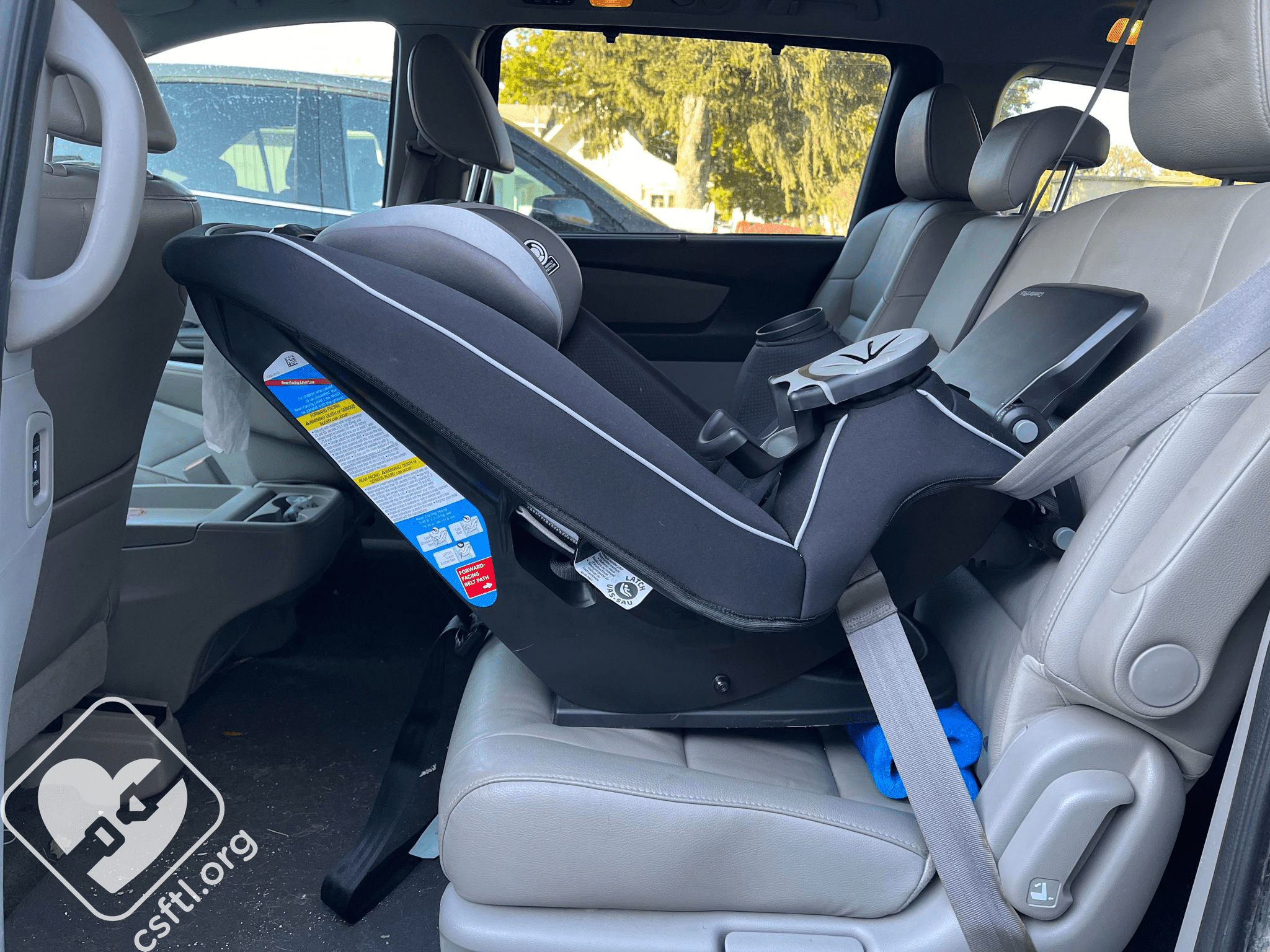
A rear-facing car seat must be installed tightly and at the correct angle. Read the car seat manual and the vehicle owner’s manual before installation.
Follow these steps:
Choose an approved seating position.
The back seat is generally the safest place for children. Never place a rear-facing seat in front of an active passenger air bag.Check the vehicle manual.
Look for rules about lower anchors, seat belts, center seating positions, and allowed child restraints.Choose one installation method.
Use either the lower anchors or the vehicle seat belt unless both manuals specifically allow both. More attachment points do not automatically make the installation safer.Set the correct recline angle.
Use the angle indicator on the seat. A newborn often needs a different angle from an older child.Tighten the seat.
After installation, hold the seat near the belt path and try to move it side to side and front to back. It should not move more than about 1 inch at the belt path.Install and tighten the harness.
For rear-facing use, harness straps usually come from at or below the child’s shoulders. The chest clip should sit at armpit level.Remove bulky clothing.
Coats and thick layers can leave the harness too loose in a crash. Use thin layers and place blankets over the harness after buckling.Recheck the fit often.
Children grow quickly. Check the harness, recline angle, and seat limits as the child grows.
If you cannot get a tight installation, stop and ask for help. A certified Child Passenger Safety Technician can inspect the installation. Use the NHTSA child passenger safety technician directory or contact a local inspection station.
What should you do after a child outgrows rear-facing?
After rear-facing is outgrown, use the forward-facing mode of a suitable car seat with its internal harness and tether. Keep the child forward-facing until reaching the seat’s forward-facing height or weight limit.
The top tether is a key part of a forward-facing installation. It can reduce how far the upper part of the seat moves in a crash. Use it exactly as described in both manuals.
After the forward-facing harness is outgrown, most children need a belt-positioning booster. A booster helps the vehicle seat belt fit across the child’s strong body points:
- Low across the hips or upper thighs
- Across the center of the chest and shoulder
- Away from the neck and face
A child is ready for an adult seat belt when the belt fits correctly without a booster and the child can sit upright for the whole trip. This often happens between ages 8 and 12, but age alone does not decide the fit.
The five-step seat belt test
A child may be ready to stop using a booster when they can:
- Sit all the way back against the vehicle seat.
- Bend their knees at the edge of the seat without slouching.
- Keep the lap belt low across the hips and upper thighs.
- Keep the shoulder belt across the chest and shoulder.
- Stay in that position for the entire ride.
If any step fails, keep using a booster.

Common rear-facing car seat mistakes
The most common problems involve fit, installation, or incorrect use of accessories. Avoid these errors:
Turning the seat at a birthday
A birthday does not prove that a child has outgrown rear-facing. Check the seat’s limits first.
Using the legal minimum as the safety goal
State law may allow forward-facing earlier than the AAP recommendation. Meeting the law does not mean the child has reached the best time to turn.
Using the wrong harness slot
Rear-facing harness straps generally need to come from at or below the child’s shoulders. Read the manual because seat designs vary.
Leaving slack in the harness
Pinch the harness webbing at the shoulder. If you can pinch a fold of webbing, tighten the harness. Do not rely on how snug the straps look over clothing.
Adding unapproved products
Aftermarket inserts, head supports, strap covers, and padding can change the way the seat performs. Use only items supplied with the seat or approved by its manufacturer.
Using a seat with an active air bag
Never place a rear-facing car seat in front of an active frontal air bag. The air bag can strike the back of the child’s seat with great force.
Keeping an unsafe or expired seat
Check the expiration date, recall history, crash history, and condition of the seat. A used seat with an unknown history may have hidden damage or missing parts.

Does state law determine how long a child must stay rear-facing?
State law determines the legal minimum, not necessarily the best safety practice. U.S. child passenger laws vary by state and may change, so check your state’s official transportation or highway safety website.
A law may cover:
- Minimum rear-facing age
- Forward-facing requirements
- Booster seat age or size
- Seat belt requirements
- Where a child may sit
- Exceptions for medical or vehicle conditions
Use the stricter applicable requirement when state law and the car seat manual differ. If the law is unclear, contact your state highway safety office or a certified Child Passenger Safety Technician.
The Insurance Institute for Highway Safety maintains state-law information, but confirm details with your state because legal requirements can change.

Key takeaways
- Keep a child rear-facing until the child reaches the car seat’s rear-facing height or weight limit.
- Do not turn a child forward-facing only because they turn 1 or 2, or because their legs touch the vehicle seat.
- Follow the car seat manual and the vehicle owner’s manual.
- Keep a child in a forward-facing harness after rear-facing is outgrown.
- Use the top tether for forward-facing installation when required by the manuals.
- Get an installation checked if the seat moves more than 1 inch or you are unsure about the fit.
Frequently asked questions
Can a 3-year-old still ride rear-facing?
Yes. A 3-year-old can remain rear-facing if the child fits within the seat’s rear-facing height and weight limits. Age alone is not a reason to turn the seat forward-facing.
Is rear-facing safe for a child’s legs?
Yes. Bent or crossed legs are generally acceptable when the child remains within the seat’s limits and the seat is installed correctly. Children are not required to keep their legs straight.
When can a baby face forward in a car seat?
A baby should not face forward simply because the baby reaches a certain age. The child should remain rear-facing until outgrowing the seat’s rear-facing limits. For most young children, this occurs well after infancy.
Can I use a rear-facing car seat in the front seat?
Do not use a rear-facing seat in front of an active passenger air bag. The back seat is generally the safer location for children. Follow the vehicle and car seat manuals for approved seating positions.
What if my child is too tall but still under the weight limit?
The child must stop using the rear-facing position when either the height or weight limit is reached. Move the child to an appropriate forward-facing harness seat, if the child meets its minimum requirements.
What is the safest rear-facing car seat?
The safest choice is a seat that fits the child, fits the vehicle, stays within its limits, and can be installed correctly every time. A certified technician can help compare fit and installation. No single seat is best for every child, vehicle, or family.
Conclusion
In the United States, the clearest answer to “how long should a child ride rear-facing?” is: until the child reaches the rear-facing height or weight limit of the car seat. This may be age 2, 3, or later, depending on the seat and the child.
Check the manual today, confirm the harness fit, and inspect the installation. If you are unsure, have the seat checked by a certified Child Passenger Safety Technician before changing the direction.