
In the United States, a Nuna PIPA car seat should be cleaned without changing any part that helps protect your child. The safest method is simple: remove only the approved fabric parts, wash them with mild detergent, wipe the plastic shell and base, and clean the harness and buckle with care. Always check the manual for your exact U.S. PIPA model before removing a cover or part.
What You Need Before You Start
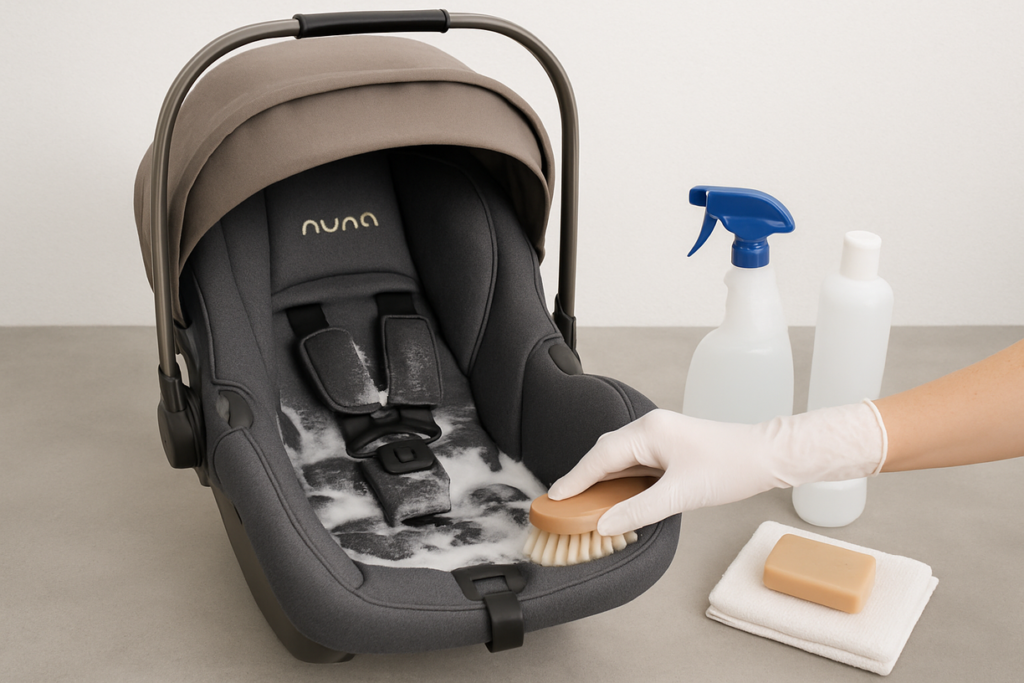
Gather these items before cleaning your Nuna PIPA:
- Mild laundry detergent
- Clean, soft cloths
- A soft toothbrush or small soft-bristle brush
- Warm water
- A basin or sink
- A towel or drying rack
- Your Nuna PIPA instruction manual
Avoid bleach, strong cleaners, solvents, disinfectant sprays, abrasive pads, and lubricants. These products may damage the fabric, plastic, harness webbing, or buckle.
Before you begin, place the car seat in a clean, dry area. Do not clean it while it is installed in the vehicle.
Check the Exact PIPA Model
Nuna has made several PIPA models, including the PIPA, PIPA Lite, PIPA Lite LX, PIPA RX, PIPA aire, PIPA urbn, and related versions. The general cleaning method is similar, but the cover, infant insert, canopy, and base may differ.
Use the manual for your exact model to confirm:
- Which covers can be removed
- Whether an insert can be machine washed
- How the canopy comes off
- Whether a specific cover has a special care label
- Which parts must stay attached
Never force a cover, harness, buckle, or padding part off the seat. If removal requires pulling hard or using a tool, stop and check the manual.

How to Clean the Nuna PIPA Car Seat Step by Step
The best way to clean a Nuna PIPA is to work from the least dirty parts to the most delicate parts. Start with crumbs and loose dirt. Then wash the removable fabric. Finish by cleaning the harness and buckle.
1. Remove Loose Crumbs and Debris
Take the car seat out of the vehicle and remove the child from the area. Turn the seat upside down over a clean towel and gently shake out loose crumbs.
Use a soft brush to loosen dirt around:
- The seat seams
- The harness slots
- The buckle area
- The infant insert
- The base connection points
- The edge of the canopy
Do not use a sharp object to dig dirt out of the harness slots. A sharp tool can cut or weaken the webbing.
A vacuum with a soft brush attachment can help remove crumbs. Keep the vacuum nozzle away from the harness webbing and buckle openings.
2. Remove Only the Approved Fabric Parts
Remove the seat cover, infant insert, harness pads, and canopy fabric only if the Nuna manual permits removal for your model.
Take a quick photo before removing parts. This can help you remember how the fabric and elastic fit around the shell.
Keep small pieces together. Place screws, plastic tabs, and removable inserts in a bowl or labeled bag. Do not remove the harness from the car seat unless Nuna specifically instructs you to do so.
3. Wash the Fabric Cover
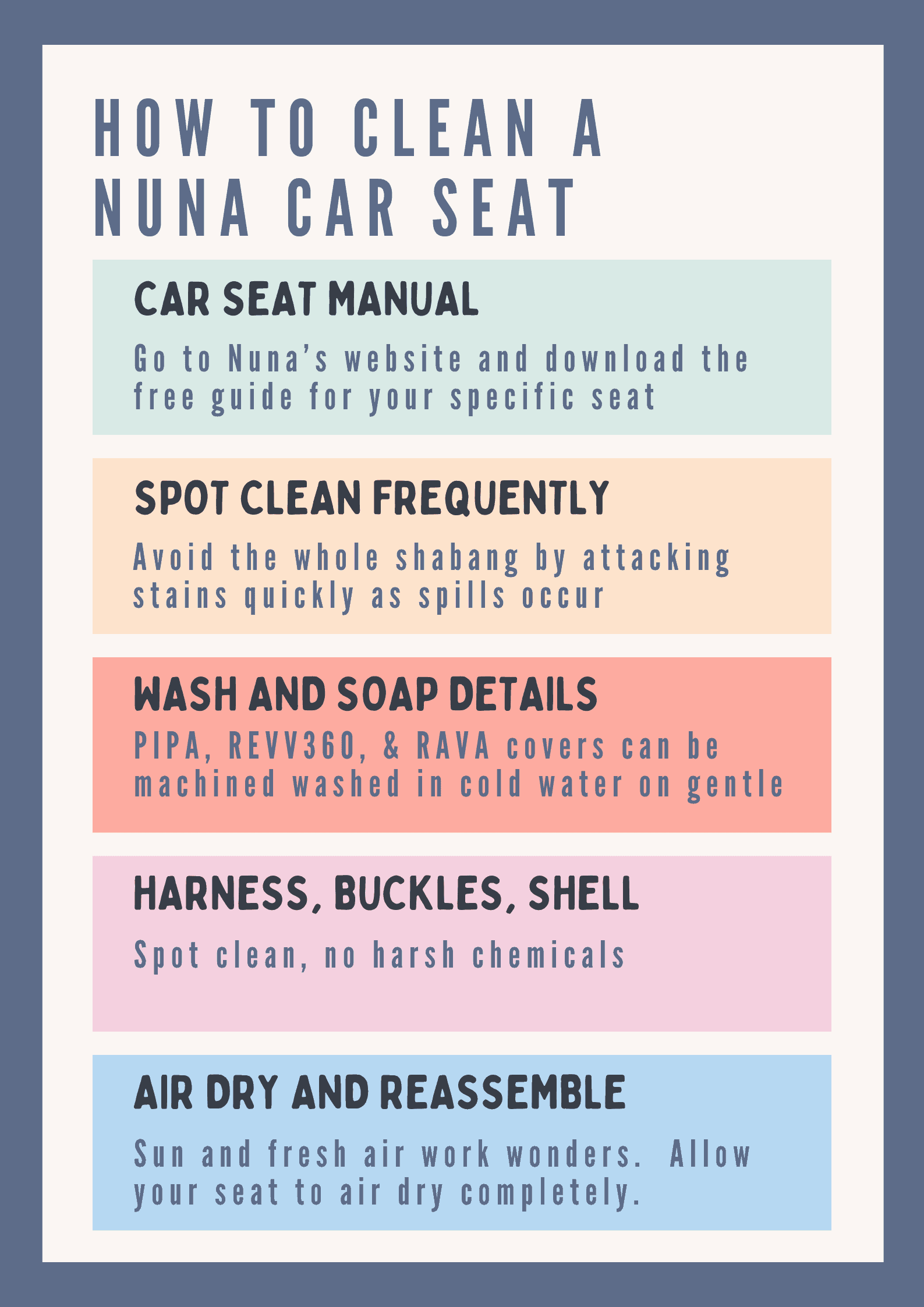
Follow the care label and model manual first. For many Nuna PIPA fabric parts, the usual care method is:
- Place the removable fabric in a washing machine.
- Use cold water and a gentle or delicate cycle.
- Add a small amount of mild detergent.
- Do not use bleach or fabric softener.
- Remove the fabric as soon as the cycle ends.
- Air-dry it completely.
Do not place the cover in a clothes dryer unless the manual or sewn-in care label clearly allows it. Heat can shrink the fabric and may affect its fit.
A cover that looks clean but is still damp should not go back on the seat. Moisture can cause odor and mold, and it may make the fabric difficult to fit correctly.
4. Hand-Wash Delicate Pads and Inserts
Some infant inserts, harness pads, or canopy pieces may require hand washing. Use cool or lukewarm water and a small amount of mild detergent.
Rinse until the water runs clear. Press the part between clean towels to remove extra water. Do not twist, wring, or stretch padded parts.
Lay the insert flat or hang it as directed by the care label. Let it dry fully before reinstalling it.
5. Clean the Plastic Shell
Mix warm water with a small amount of mild soap. Dip a soft cloth into the mixture and wring it out well.
Wipe the plastic shell, side walls, handle, and other hard surfaces. Use a soft toothbrush for dirt in seams and around molded details.
Do not pour water onto the shell. Do not soak the car seat. Water can collect inside areas that are hard to dry.
Wipe away soap with a second damp cloth. Then dry the shell with a clean towel.
6. Clean the Harness Webbing
The harness is a safety part. Treat it gently.
Wipe the harness straps with a cloth dampened with water and mild soap. Move the cloth along the webbing to remove food, milk, and surface dirt.
Do not:
- Remove the harness from the seat
- Put the harness in a washing machine
- Soak the harness
- Use bleach or stain remover
- Scrub hard with a stiff brush
- Iron or apply heat
- Use solvents or disinfectant chemicals
If a sticky spill has dried on the harness, hold a damp cloth over the area for a short time. Then wipe gently. Repeat as needed instead of scraping the webbing.
If the harness is cut, frayed, badly stained with an unknown chemical, or has a stiff or damaged section, contact Nuna before using the seat.
7. Clean the Buckle
Food and dirt can collect inside the buckle. The buckle tongues must click in and release correctly.
Use the cleaning method listed in the manual for your model. In general, the buckle may be rinsed with clean warm water while it remains attached to the seat.
Work each buckle tongue in and out several times while rinsing. This can help loosen small pieces of debris.
Then:
- Shake out excess water.
- Turn the buckle upside down.
- Let it air-dry completely.
- Test it before use.
Do not use soap, oil, grease, lubricant, bleach, or household cleaner inside the buckle unless Nuna specifically directs you to use a product. Do not force a tool into the buckle.
If the buckle does not click, stays stuck, or does not release with normal pressure, do not use the car seat. Contact Nuna for service or replacement guidance.
8. Wipe the Nuna PIPA Base
If your PIPA includes a separate base, clean it with a damp cloth and mild soap.
Pay attention to:
- The load leg, if included
- The rigid lower anchors
- The belt path
- The recline area
- The lock indicators
- The connection points
Remove crumbs with a soft brush. Do not spray cleaner into the base or soak the base in water.
Make sure all indicators, locks, and moving parts work as they did before cleaning. Do not apply oil or lubricant unless the Nuna manual specifically requires it.
9. Dry and Reassemble the Seat
Allow every part to dry fully. This includes the cover, infant insert, harness pads, buckle, shell, and base.
Reinstall the parts exactly as shown in the manual. Check that:
- The cover is not twisted
- The harness passes through the correct slots
- The harness lies flat
- The buckle is not trapped under padding
- The infant insert is facing the right way
- The canopy moves normally
- No fabric blocks the buckle or harness
After reassembly, place the infant carrier on the base and remove it once. Confirm that the attachment and release functions work normally.
Do not use the seat if a part does not fit, a strap is twisted, or the buckle behaves differently after cleaning.

How to Remove Tough Stains and Odors
Mild soap and water are usually the safest starting point. Do not use stronger chemicals simply because a stain is difficult.
Milk, Formula, and Food
First remove solid material with a soft cloth. Blot the area with warm water and mild detergent. Rinse the cloth and wipe again to remove soap.
For a removable cover, wash it according to the care label. Air-dry it fully before reinstalling it.
Vomit
Remove the fabric parts that the manual allows you to remove. Blot the mess instead of rubbing it deeper into the padding.
Wash the fabric with mild detergent and rinse well. Clean the shell with a damp cloth. Pay special attention to the harness area and buckle, but do not soak the harness or force liquid into the buckle.
If an odor remains after proper cleaning, contact Nuna before using a fragrance spray or disinfectant. A strong product may create a new safety problem.
Urine
Remove the approved fabric parts and wash them as directed. Wipe the shell and base with mild soapy water.
Do not use bleach to remove urine odor. Bleach can damage materials and may leave residue where your child sits.
Ink, Paint, or Chemical Spills
Stop and identify the substance if possible. Some chemicals can damage harness fibers or plastics even when the damage is not easy to see.
Do not use alcohol, acetone, nail-polish remover, paint thinner, or stain remover unless Nuna confirms that the product is safe for that exact part. Contact Nuna if the spill reached the harness, buckle, or foam.

Cleaning Method by Car Seat Part
This table summarizes the safest general approach. Your model manual and care label take priority.
| Car seat part | General cleaning method | Avoid |
|---|---|---|
| Removable cover | Cold, gentle machine wash with mild detergent if allowed | Bleach, fabric softener, high heat |
| Infant insert | Hand wash or gentle wash as directed | Wringing, harsh cleaners |
| Canopy fabric | Follow the model care label | Forcing the frame or fabric off |
| Harness webbing | Wipe with a damp cloth and mild soap | Machine washing, soaking, bleach |
| Harness pads | Wash only if the manual allows removal | Reinstalling while damp |
| Buckle | Rinse or clean as directed by the manual | Oil, grease, bleach, forced tools |
| Plastic shell | Damp cloth with mild soap | Abrasive pads, solvents, soaking |
| PIPA base | Wipe with mild soapy water | Spraying into locks or indicators |
The key distinction is between removable fabric and safety hardware. Covers can often be washed. The harness, buckle, shell, and base need more limited cleaning.
Common Nuna PIPA Cleaning Mistakes to Avoid
Do Not Put the Whole Car Seat in Water
A full soak can trap water inside the shell, buckle, or base. It also makes it hard to confirm that the harness and safety parts are dry.
Do Not Use Bleach or Harsh Disinfectants
Strong chemicals may weaken or discolor materials. They can also leave residue where a child’s skin and mouth may touch the seat.
Do Not Remove the Harness
The harness is routed through the shell in a specific way. Removing it can lead to incorrect reassembly.
If the harness needs more than gentle surface cleaning, ask Nuna for instructions.
Do Not Use a Dryer Without Permission
Heat may shrink the cover or alter its fit. Air-drying is the safer default unless the care label says otherwise.
Do Not Reinstall Damp Fabric
Damp fabric can smell, grow mold, and fit differently around the shell. Wait until every part is completely dry.
Do Not Use the Car Seat Before Testing the Buckle
The buckle should click in securely and release normally. If it sticks or fails to latch, stop using the seat until Nuna or an authorized service source provides a solution.
Do Not Assume Cleaning Fixes Crash Damage
Cleaning cannot repair a car seat that was involved in a crash, dropped from a height, exposed to fire, or damaged by a chemical. Follow Nuna’s replacement guidance after such an event.

What to Do If the Cover Will Not Come Off
Stop if the cover feels stuck. Nuna PIPA models use different fabric layouts, tabs, elastic sections, and attachment points.
Check the owner’s manual for a removal diagram. Nuna provides model-specific manuals through its U.S. support resources.
Do not cut elastic, pry plastic tabs, or pull the cover over the harness. If you cannot confirm the correct removal method, clean the visible surface with a damp cloth and contact Nuna.
A cover that cannot be removed safely may still be serviceable. The wrong removal method can create a larger problem than the original stain.
When to Contact Nuna or Replace a Part
Contact Nuna before using the seat if:
- The harness is frayed, cut, melted, or stiff
- The buckle will not latch or release
- The harness adjuster no longer moves normally
- A plastic part is cracked
- The seat has been in a crash
- A chemical spill reached the harness or buckle
- The cover no longer fits correctly
- A replacement part is missing
- You cannot reinstall the seat correctly
Use Nuna’s U.S. customer-care or product-support page for model-specific help. Have the model name, manufacture date, and any product label information available.
Do not buy a random replacement buckle, harness, cover, or insert. A part may look similar but still be incompatible with your PIPA model.

How Often Should You Clean a Nuna PIPA?
Clean small spills as soon as possible. A full fabric wash is usually needed when the cover is visibly soiled, has a persistent odor, or has been exposed to a large spill.
A simple routine works well:
- After each trip: Remove crumbs and wipe fresh spills.
- As needed: Clean the buckle area, shell, and harness surface.
- After a major mess: Remove and wash approved fabric parts.
- Before storage: Clean and dry the seat completely.
- After cleaning: Check the harness, buckle, cover fit, and base function.
Frequent deep washing is not automatically better. Repeated removal, harsh scrubbing, and high heat may wear the materials faster.
Frequently Asked Questions
Can I machine wash the Nuna PIPA car seat cover?
Many removable Nuna PIPA fabric covers can be machine washed on a cold, gentle cycle with mild detergent, but the exact instructions vary by model. Check the sewn-in care label and the manual before washing.
Can I put the Nuna PIPA cover in the dryer?
Air-drying is the safest general choice. Use a dryer only if the care label or Nuna manual clearly permits it. High heat may shrink the cover or change its fit.
Can I wash the Nuna PIPA harness?
Do not machine wash, remove, or soak the harness. Wipe the webbing with a damp cloth and mild soap. Contact Nuna if the harness is heavily contaminated or damaged.
How do I clean the Nuna PIPA buckle?
Use the model’s manual as the main guide. A buckle may be rinsed with clean warm water when permitted. Do not use oil, grease, bleach, or household cleaner inside it. Let it dry fully and test the latch before use.
Can I use disinfectant wipes on a Nuna PIPA?
Do not assume disinfectant wipes are safe. Many contain alcohol, bleach, or other chemicals that may damage car seat materials. Use mild soap and water unless Nuna approves another product for your model.
What if my Nuna PIPA still smells after cleaning?
Wash the approved fabric parts, wipe the shell, and dry every component completely. If the smell remains, especially after vomit, urine, mold, or chemical exposure, contact Nuna before using sprays or replacing parts.

Final Cleaning Checklist
Before putting your child back in the Nuna PIPA, confirm that:
- The cover and insert are fully dry.
- The cover fits without pulling or bunching.
- The harness lies flat and is not twisted.
- The harness webbing has no cuts, frays, or stiff spots.
- The buckle clicks and releases correctly.
- The canopy moves as designed.
- The shell and base have no cracks.
- No cleaner or lubricant remains on the seat.
- All parts match the correct Nuna PIPA model.
- The seat was not damaged during cleaning.
The safest cleaning plan is gentle and model-specific: wash only approved fabric parts, wipe the shell and base, treat the harness and buckle as safety hardware, and stop when a part does not work normally. After cleaning, keep the owner’s manual with the seat so the next service or inspection follows the instructions for your exact U.S. Nuna PIPA model.