

Wash, decontaminate, polish, and protect the paint to remove most water spots from a black car safely.
Black paint shows every mark, so even tiny mineral deposits can look like cloudy rings or white dots. I’ve seen water spots disappear with a gentle wash and mineral remover, while older stains needed light machine polishing. This guide explains how to fix water spots on black car paint without adding scratches or removing more clear coat than needed.
What Causes Water Spots on Black Car Paint?
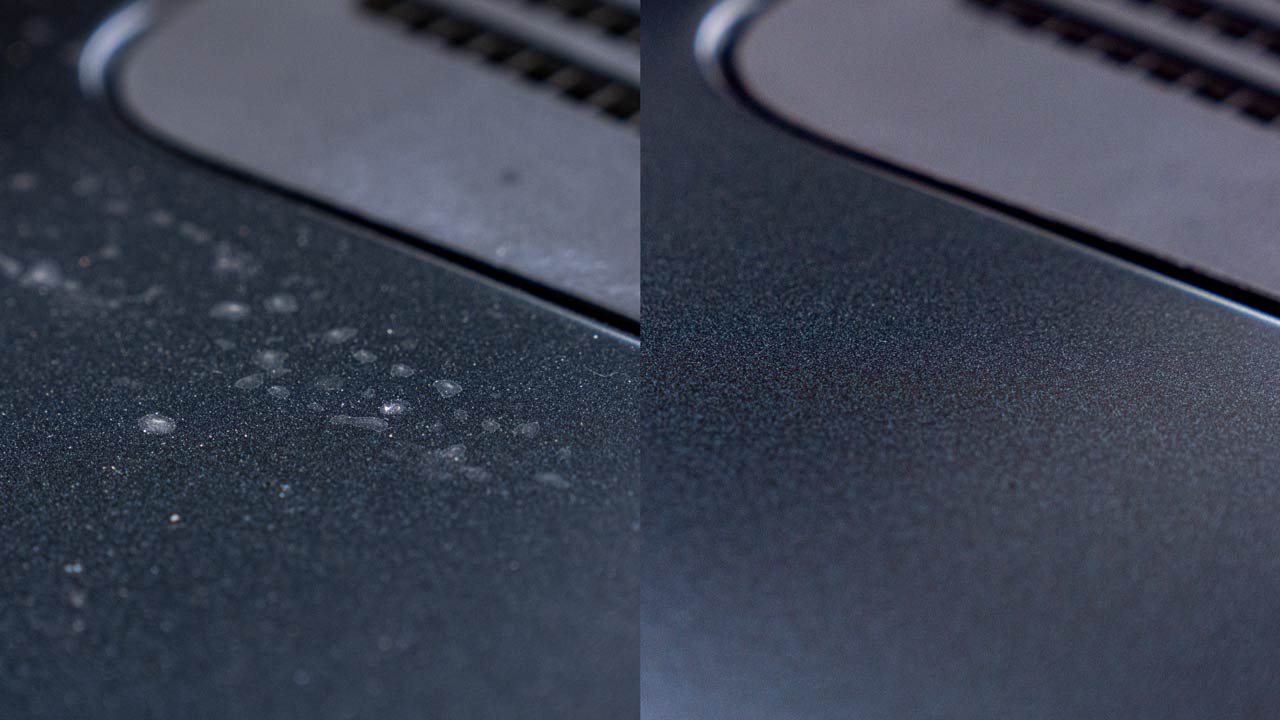
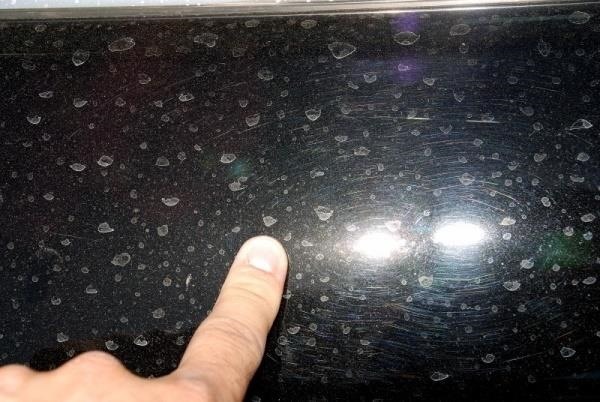
Water spots form when water dries on the vehicle and leaves minerals behind. Tap water, sprinkler water, rain, and water from a car wash can contain calcium, magnesium, salt, and other dissolved minerals.
The water evaporates, but the minerals stay on the clear coat. On black paint, these deposits stand out because the dark surface reflects light like a mirror.
There are three common types of water spots:
• Surface mineral deposits sit on top of the clear coat and feel rough.
• Bonded mineral spots stick tightly to the paint and may resist normal washing.
• Etched water spots create shallow damage in the clear coat. They look like rings or dull patches and cannot be removed by washing alone.
Fresh spots are usually easy to fix. Old spots can act like tiny acid burns because minerals, dirt, and pollutants may react with the paint while the car sits in the sun.
How to Tell Which Type of Water Spot You Have
Before choosing a product, inspect the paint in shade or soft indoor light. Direct sunlight can hide fine defects and make the surface look worse than it is.
Run clean fingertips over the area after washing and drying. If the paint feels rough, material may still be sitting on top of the clear coat. If it feels smooth but the mark remains, the spot may be etched.
Use this simple test:
Wash and dry the area properly.
Spray a small amount of automotive glass cleaner or diluted white vinegar on a microfiber towel.
Touch the towel to one small spot for a few seconds.
Wipe gently, then rinse the area with water.
Check whether the mark has changed.
Do not use vinegar as a regular paint cleaner. Its mild acidity may help dissolve mineral residue, but it can dry rubber, stain sensitive trim, and damage weak wax or sealant. Always test a hidden area first.
If the spot disappears after a chemical treatment, it was likely a surface deposit. If the mark stays, polishing may be needed.

How to Fix Water Spots on Black Car Paint Step by Step
1. Work in the right conditions
Park the car in full shade and make sure the paint is cool to the touch. Avoid windy areas, hot panels, and direct sunlight.
Hot paint causes soap and cleaning products to dry too fast. That can create more marks and make the original problem harder to judge.
2. Rinse away loose dirt
Use a strong but controlled stream of clean water to rinse the car. Focus on removing dust, sand, and road grit before touching the paint.
This step matters because a single grain of sand under a towel can create a long scratch across black paint.
3. Wash with the two-bucket method
Use one bucket for car shampoo and another for rinsing the wash mitt. A grit guard can help keep dirt at the bottom of the rinse bucket.
Wash from the roof down. Rinse the mitt after each small section, especially when cleaning lower doors, bumpers, and wheel areas.
Use a pH-neutral car shampoo. Dish soap can strip protection and may leave the surface dry, although it will not safely remove etched mineral damage.
4. Dry without rubbing hard
Use a clean, high-quality microfiber drying towel. Lay it flat on the panel and gently pull it across the surface, or use a filtered air blower.
Do not let the car air-dry after washing. Remaining water can leave a new layer of mineral deposits.
5. Use a water-spot remover
Choose a product made for automotive paint. Apply it to a microfiber towel or directly to a small section, based on the label directions.
Work one panel at a time. Let the product dwell only as long as directed, then wipe it away and rinse the area well.
Water-spot removers often contain mild acids that dissolve mineral deposits. Wear gloves, avoid breathing the fumes, and keep the product away from unpainted metal, glass, textured plastic, and delicate trim unless the label says it is safe.
6. Try a clay bar if the surface feels rough
A clay bar or synthetic clay mitt can remove bonded contamination that washing does not remove. Use plenty of clay lubricant and light pressure.
Move the clay in straight lines. If it drags, add more lubricant. Fold the clay often so trapped dirt does not scratch the paint.
Claying may improve the surface, but it will not repair clear-coat etching. It is a cleaning step, not a polishing step.
7. Polish etched spots
If the water mark remains after chemical cleaning, use a finishing polish and a soft foam pad. A dual-action polisher is safer for most beginners than a rotary polisher.
Start with the least aggressive method:
Apply a small amount of finishing polish to a foam pad.
Work a section about two feet by two feet.
Use slow, overlapping passes with light to moderate pressure.
Wipe the residue with a clean microfiber towel.
Inspect the area from several angles.
If the mark remains, move to a medium polish or a slightly firmer pad. Do not jump straight to heavy compound unless the defect truly needs it.
Polishing removes a very small amount of clear coat. Repeated aggressive polishing can weaken the paint, so use the mildest method that works.
8. Protect the clean paint
After removing water spots, apply a wax, paint sealant, or ceramic coating. Protection makes future cleaning easier and slows the bonding of mineral deposits.
A sealant often lasts longer than traditional wax. A ceramic coating can offer stronger chemical resistance, but it does not make paint immune to water spots.
How to Fix Water Spots on Black Car Paint Without Polishing
Light water spots do not always need an abrasive product. Start with a safe chemical approach because it preserves more clear coat.
Try these options in order:
• Fresh water spots: Use a proper wash and dry the car before minerals can bond.
• Light mineral deposits: Use an automotive water-spot remover.
• Rough bonded residue: Use a clay bar with proper lubricant.
• Dull etched marks: Use a finishing polish.
• Deep defects: Ask a professional detailer to inspect the paint.
A common mistake is using polish before checking whether the mark is only sitting on the surface. That is like sanding a table to remove dust. It may work, but it removes material that was not damaged.

How to Fix Water Spots on Black Car Paint With Household Products
Some household products can help in limited cases, but they carry more risk than dedicated automotive products.
Distilled white vinegar diluted with equal parts water may dissolve light mineral deposits. Apply it briefly to a cool, small area, then rinse and dry the surface. Never leave it on the paint for several minutes or allow it to dry.
Avoid these products:
• Baking soda, because it can be abrasive.
• Melamine foam, because it can remove or dull the clear coat.
• Bathroom limescale cleaner, because it may be too strong for automotive finishes.
• Razor blades, because they can gouge paint.
• Abrasive kitchen sponges, because they create fine scratches.
Automotive paint is not the same as a ceramic sink or glass shower door. A product that works well in the bathroom may permanently damage a car’s clear coat.
Removing Severe or Old Water Spot Etching
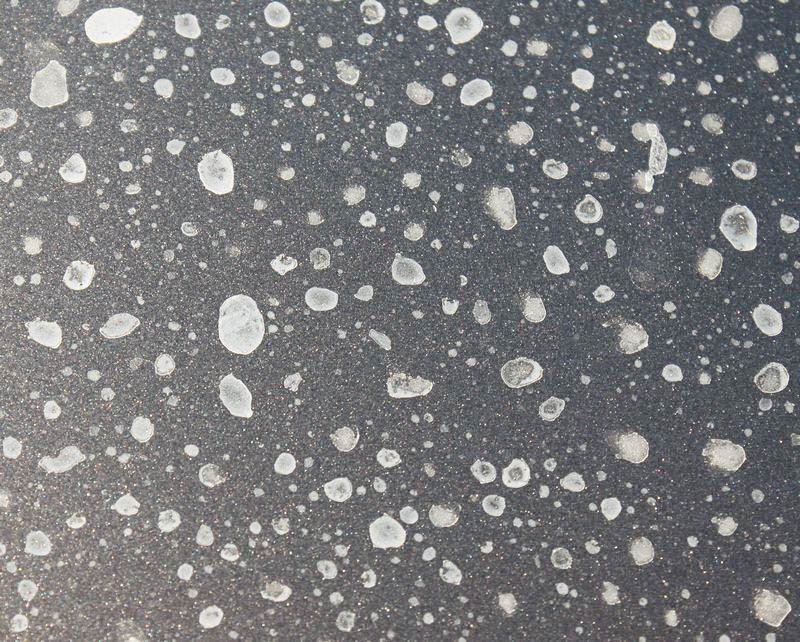
Old water spots may appear as pale rings, cloudy circles, or dark outlines. If the surface feels smooth but the marks remain after cleaning, the minerals may have etched into the clear coat.
A professional detailer may use paint thickness readings before correcting severe defects. This helps reduce the risk of removing too much clear coat.
For deeper etching, the repair may involve:
Decontamination with a chemical cleaner and clay.
Test polishing with a mild compound.
Machine polishing with a dual-action polisher.
Refinement with a finishing polish.
Paint protection after correction.
Wet sanding may remove deep marks, but it should not be a first choice for home use. It can cut through the clear coat quickly, especially on sharp edges and body lines.
I once saw a black hood that looked damaged beyond repair under harsh shop lights. A careful wash, chemical treatment, and mild polish removed most of the spots. The key lesson was simple: test a small area first instead of attacking the whole panel with a strong compound.
Mistakes That Make Water Spots Worse
Black paint needs a gentle process. Most damage comes from rushing or using the wrong tool.
Avoid these common errors:
• Washing in direct sun: Soap and water dry before you can rinse them.
• Using a dirty towel: Embedded grit can create swirl marks.
• Scrubbing in circles: Circular rubbing can make defects visible from every angle.
• Applying too much pressure: Pressure does not replace proper lubrication or product choice.
• Using a dry clay bar: Dry clay can mar the paint quickly.
• Polishing without testing: A strong compound may remove more clear coat than needed.
• Ignoring trim: Acidic cleaners can stain textured plastic and rubber.
• Skipping protection: Bare paint can collect mineral deposits again soon.
Use separate towels for wheels, paint, glass, and interior surfaces. A towel that touched brake dust should never touch a glossy black panel.
How to Prevent Water Spots on Black Car Paint
Prevention is easier than correction. The goal is to keep water from drying on the paint and to reduce how strongly minerals bond.
Follow these habits:
• Wash the car in shade when the panels are cool.
• Use a clean drying towel after every wash.
• Dry the roof, hood, and trunk first because they hold water.
• Avoid parking near lawn sprinklers.
• Do not let automatic sprinklers spray the car.
• Use filtered or deionized water when possible.
• Apply wax or paint sealant on a regular schedule.
• Remove bird droppings and bug residue quickly.
• Keep a clean microfiber towel and quick detailer in the garage for fresh spots.
If you use a touchless wash, dry the car afterward when safe. Touchless systems remove loose dirt, but they may not remove bonded mineral deposits.
Ceramic coatings can reduce cleaning effort, but they still need care. Water beads can dry into concentrated mineral rings, especially on a hot black hood. A coating is a shield, not a substitute for proper washing.

Choosing the Right Products and Tools
You do not need a large professional kit. A few well-chosen products are enough for most cases.
Recommended tools include:
• pH-neutral automotive shampoo.
• Two wash buckets or a rinseless wash system.
• Quality microfiber wash mitts.
• Large, clean drying towels.
• Automotive water-spot remover.
• Clay bar or synthetic clay towel.
• Clay lubricant.
• Finishing polish.
• Soft foam polishing pad.
• Dual-action polisher, if you are comfortable using one.
• Paint sealant or wax.
Read every label before use. Product strength, dwell time, and surface compatibility vary. If the label says to avoid glass, plastic, or hot surfaces, follow that warning.
For a valuable, new, repainted, or heavily damaged vehicle, a professional inspection is often the safer choice. Paint hardness and clear-coat thickness vary between manufacturers and even between panels.

When to Call a Professional Detailer
Consider professional help when water spots cover the whole vehicle, return quickly, or remain after careful chemical treatment.
A detailer can also help when:
• The paint has deep etching.
• The vehicle has custom or recently repaired paint.
• You see exposed primer, peeling clear coat, or cracking.
• You are unsure how much clear coat remains.
• You do not have experience with a machine polisher.
A reputable detailer should inspect the paint, perform a test spot, explain the risks, and show you the expected result. Be cautious of anyone who promises to remove every defect without discussing paint thickness or limitations.
No correction process can restore clear coat that has already failed. Peeling or severely oxidized paint may need repainting rather than detailing.
Frequently Asked Questions About How to Fix Water Spots on Black Car Paint
Can water spots be removed from black car paint?
Yes, many water spots can be removed with a proper wash, automotive mineral remover, or clay treatment. Etched spots may need polishing because the clear coat itself has been marked.
Does vinegar remove water spots from car paint?
Diluted white vinegar may dissolve light mineral deposits when used briefly on cool paint. Rinse it well and test first, because vinegar can affect wax, trim, rubber, and sensitive finishes.
Will a car wash remove water spots?
A normal car wash can remove fresh dirt and some surface residue, but it may not remove bonded minerals or etched marks. Drying the vehicle properly after washing is also essential.
Can toothpaste remove water spots from black paint?
Toothpaste is not a reliable paint-care product. Its abrasives may create uneven haze or fine scratches, which are much easier to see on black paint.
Is polishing safe for black car paint?
Polishing is safe when you use the least aggressive method and avoid repeated heavy correction. It removes a small amount of clear coat, so test a small area and use proper technique.
How can I stop water spots from coming back?
Wash in the shade, dry the car quickly, avoid sprinkler water, and apply a wax or paint sealant. Ceramic coatings can add protection, but they still require routine maintenance.
Conclusion
Water spots on black car paint are usually mineral deposits, but older marks may be etched into the clear coat. Start with a cool, careful wash, then use an automotive water-spot remover before trying clay or polish. Always choose the least aggressive method that solves the problem.
The best way to fix water spots on black car paint is to work slowly, test a small area, and protect the surface afterward. Use these steps on one panel first, then maintain the finish with safe washing and fast drying. Share your results or explore more paint-care guides to keep your black car looking deep, clean, and glossy.