

If you see P265 at the start of a tire size in the United States, it usually means two things:
- P means the tire is a P-metric passenger tire.
- 265 means the tire has a nominal width of 265 millimeters, or about 10.4 inches, from sidewall to sidewall.
For example, in P265/70R17, the P265 portion does not tell you the tire’s full size. You also need the aspect ratio, construction type, and wheel diameter to understand the complete fit.
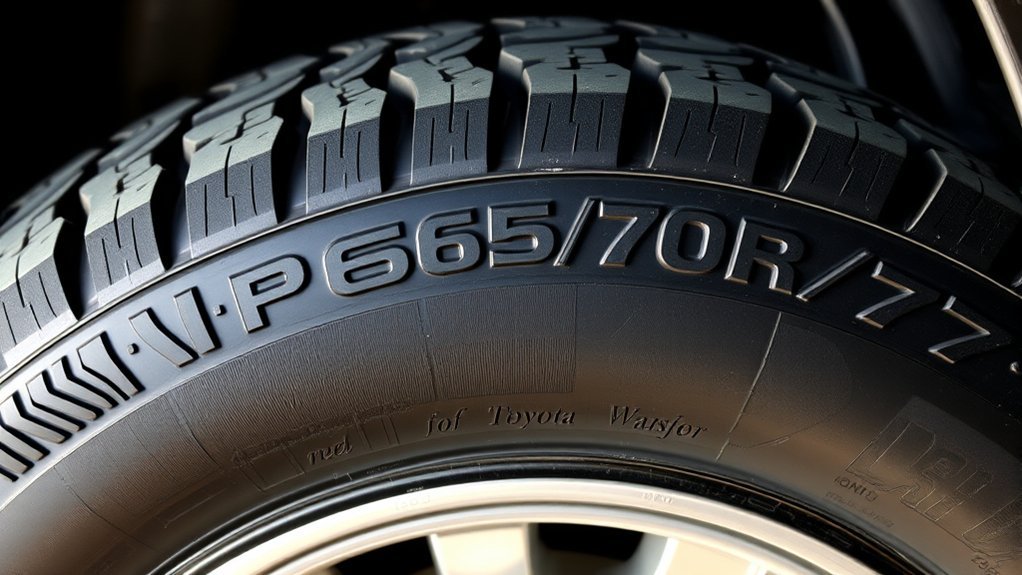
How to Read P265/70R17
The full code P265/70R17 contains several separate measurements and ratings.
| Marking | Meaning |
|---|---|
| P | Passenger tire designation |
| 265 | Nominal tire width in millimeters |
| 70 | Sidewall height as a percentage of tire width |
| R | Radial construction |
| 17 | Wheel diameter in inches |
The number 265 is the part most people ask about. It describes the tire’s approximate width, but it does not describe the sidewall height or the wheel size.
P: Passenger tire
The letter P identifies a P-metric tire. This is a U.S. tire-sizing designation commonly used on cars, crossovers, SUVs, and some light-duty pickup trucks.
A P-metric tire is not automatically a “car tire” in the everyday sense. Many SUVs and half-ton pickups use P-metric tires from the factory. The vehicle maker decides whether that tire type provides the needed load capacity and handling.
265: Nominal width
The number 265 means the tire is designed to be about 265 millimeters wide.
That is roughly:
265 ÷ 25.4 = 10.43 inches
The measurement is taken across the tire’s widest point when mounted on its specified measuring rim. The actual width can change slightly with:
- Wheel width
- Tire brand
- Tread design
- Sidewall shape
- Inflation pressure
- Tire wear
- Load on the tire
So a 265 tire may not measure exactly 265 millimeters on every wheel.
70: Aspect ratio
The 70 means the sidewall height is about 70% of the tire’s section width.
For a P265/70R17 tire:
265 × 0.70 = 185.5 millimeters
That gives a nominal sidewall height of about 185.5 mm, or 7.3 inches.
A larger aspect-ratio number usually means a taller sidewall. A smaller number usually means a shorter, lower-profile sidewall.
R: Radial construction
The R means the tire uses radial construction. Radial tires have internal cords arranged across the tire and are standard on nearly all modern passenger vehicles.
The R does not mean “rim” or “right side.” It describes how the tire is built.
17: Wheel diameter
The 17 means the tire fits a 17-inch wheel.
This number must match the actual wheel diameter. A 17-inch tire cannot be safely mounted on an 18-inch wheel, even if the width looks similar.
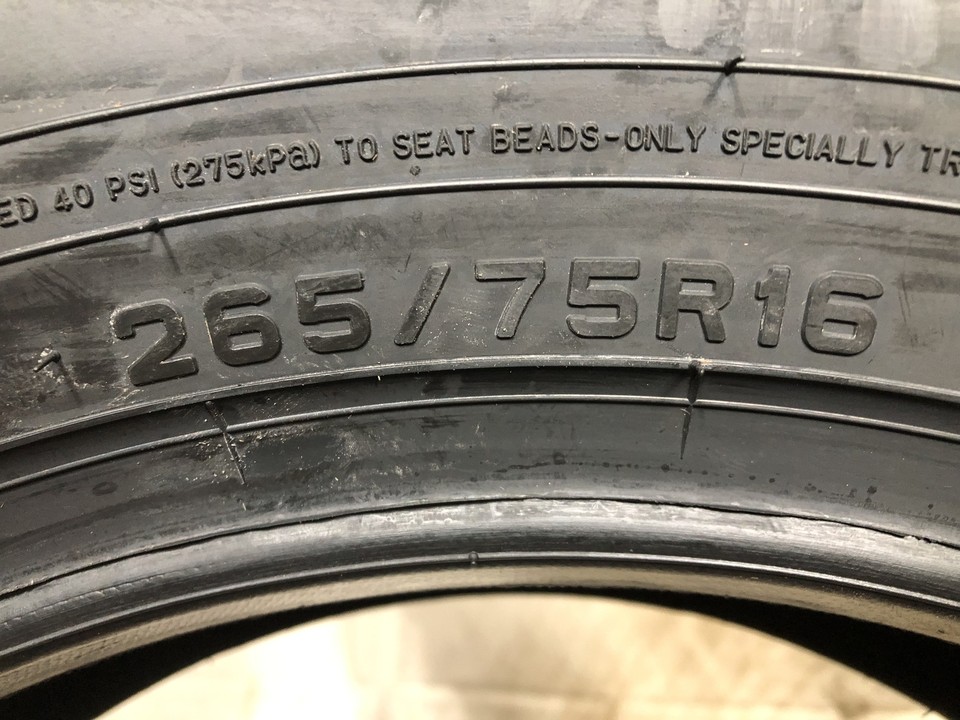
Is a P265 Tire 265 Millimeters Wide?
A P265 tire has a nominal section width of 265 millimeters. That does not always equal the exact tread width or the exact width you will measure on your vehicle.
The section width includes the tire’s sidewalls. The tread width is the part that contacts the road. These are different measurements.
For example, two tires may both be labeled P265/70R17 but have slightly different:
- Tread widths
- Overall widths
- Shoulder shapes
- Sidewall bulges
- Recommended rim widths
Use the manufacturer’s specifications when clearance is tight. This matters when you are checking whether a tire will fit near the suspension, fender, mud flap, or frame.
Section width versus tread width
Section width is the tire’s approximate maximum width from sidewall to sidewall.
Tread width is the width of the road-contact area. It may be narrower than the section width, especially on tires with rounded shoulders.
This distinction matters when comparing tire choices. A wider-looking tread does not always mean the tire has a larger section width, and the labeled size alone does not guarantee identical dimensions between brands.
What Does P265 Mean Compared With LT265?
The most important difference is the letter before 265.
- P265 is a P-metric passenger tire.
- LT265 is a light-truck tire.
- ST265 is a special-trailer tire.
- T often identifies a temporary spare tire.
The number 265 still refers to nominal width, but the tire’s design, load rating, pressure rules, and intended use can differ.
P265 versus LT265
A P265 tire and an LT265 tire may look similar, but they are not automatically interchangeable.
An LT tire is built for light-truck service and may support heavier loads at higher inflation pressures. It may also have a different load range, casing design, ride quality, and rolling resistance.
A P-metric tire used on a light truck may also need a load-capacity adjustment. The U.S. Tire and Rim Association and tire manufacturers provide specific load tables for these applications. Do not assume that the same number means the same carrying ability.
If your vehicle’s door-jamb label or owner’s manual calls for LT265, replacing it with P265 can reduce the available load capacity. Check the vehicle manufacturer’s requirements before changing the tire type.
P265 versus ST265
ST tires are designed for trailers. They are not intended as a direct replacement for passenger or light-truck tires on a vehicle.
Even if an ST tire has the same 265 width, its construction and service purpose are different. Never use a trailer tire as a substitute for a drive, steer, or passenger-vehicle tire unless the vehicle maker specifically approves it.
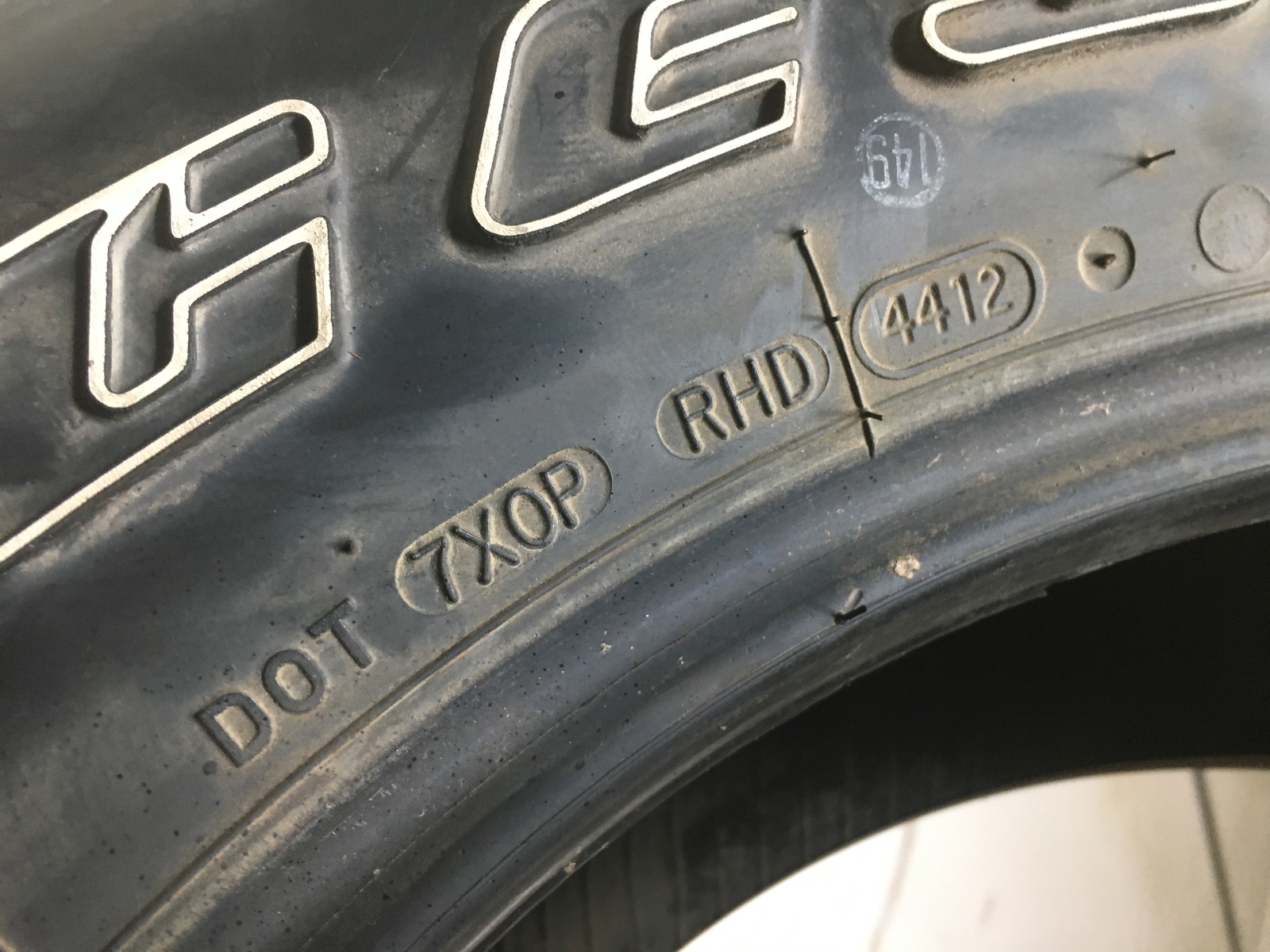
How Tall Is a P265 Tire?
You cannot determine the complete tire height from P265 alone. You need the aspect ratio and wheel size.
For a full size such as P265/70R17, you can estimate the overall diameter with this formula:
- Convert the sidewall height to millimeters:
265 × 0.70 = 185.5 mm - Double the sidewall height:
185.5 × 2 = 371 mm - Convert the 17-inch wheel to millimeters:
17 × 25.4 = 431.8 mm - Add the two measurements:
371 + 431.8 = 802.8 mm - Convert the result to inches:
802.8 ÷ 25.4 = about 31.6 inches
So a P265/70R17 tire has a nominal overall diameter of about 31.6 inches.
The real mounted diameter can vary. Tread depth, inflation pressure, load, rim width, and brand specifications all affect the measurement.
Common P265 examples
| Tire size | Approximate overall diameter | Approximate sidewall height |
|---|---|---|
| P265/65R17 | 30.6 inches | 6.8 inches |
| P265/70R17 | 31.6 inches | 7.3 inches |
| P265/75R16 | 31.6 inches | 7.8 inches |
| P265/70R18 | 32.6 inches | 7.3 inches |
These are calculated estimates, not guaranteed measured dimensions. Always compare the tire maker’s data when you need precise clearance or speedometer information.
Can You Put a P265 Tire on Any Vehicle?
No. The P265 label only describes part of the tire size. A tire must also meet the vehicle’s requirements for load, speed, wheel fit, clearance, and use.
Before installing a P265 tire, check these items:
1. The full factory tire size
Find the original size on the driver-side door-jamb label. You may also find it in the owner’s manual.
The label often lists:
- Original tire size
- Recommended cold inflation pressure
- Maximum vehicle load
- Front and rear load limits
- Spare-tire information
The door-jamb label is usually more useful than the size printed on the tire because it reflects the vehicle maker’s approved setup.
2. Load index and load capacity
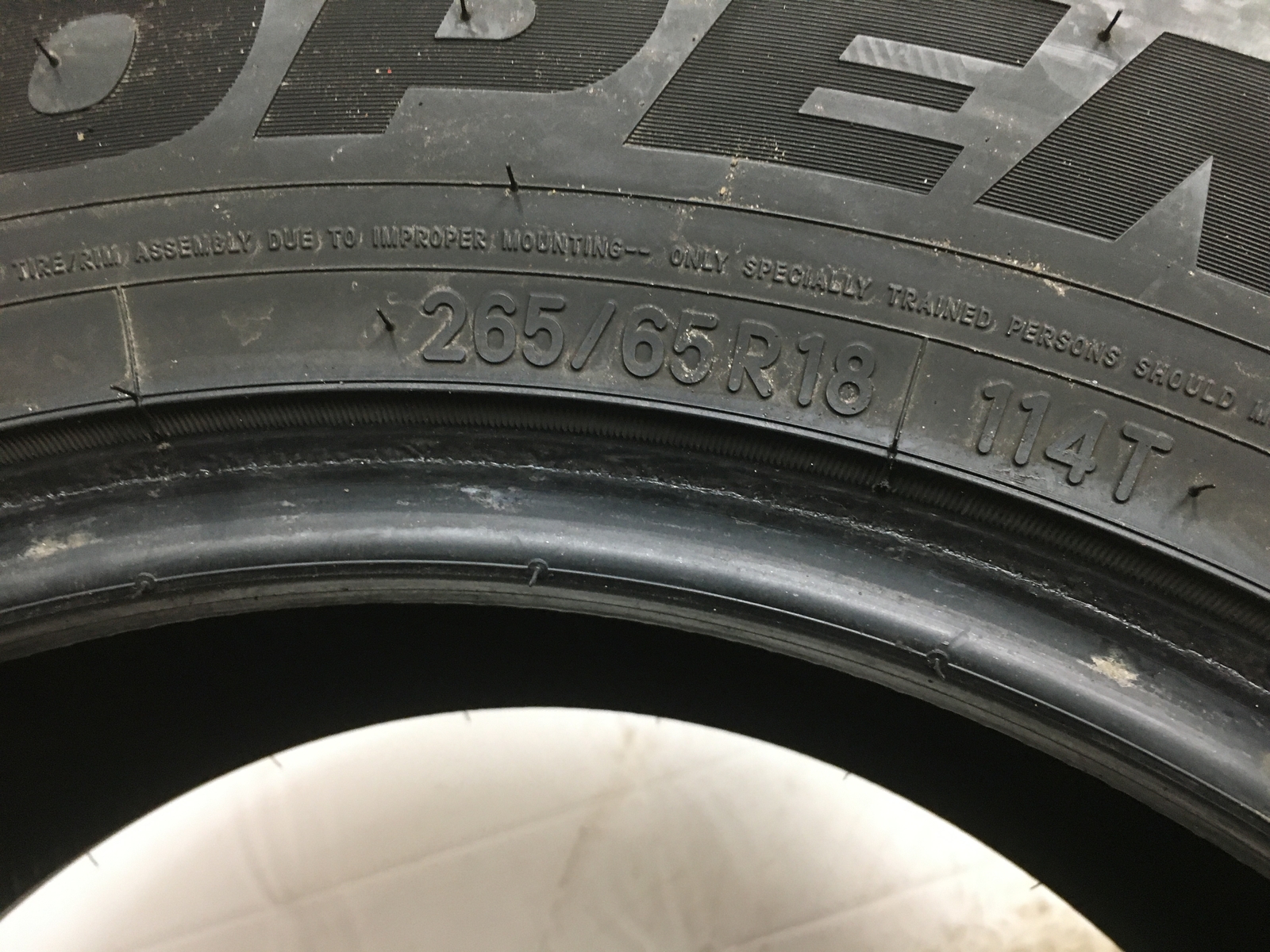
The load index is usually printed after the size and may look like 115T or 121S.
The number is a coded load rating. The letter is a speed rating. A P265 tire with a lower load index may not safely carry the same load as another P265 tire.
Do not choose a replacement based on width alone. The replacement tire should meet or exceed the vehicle maker’s required load capacity unless a qualified tire professional confirms another approved option.
3. Wheel width and diameter
The tire must fit the wheel diameter, and the wheel width must fall within the tire manufacturer’s approved range.
A 265 tire mounted on a wheel that is too narrow or too wide can change the tire’s shape. That may affect handling, wear, bead seating, and clearance.
4. Physical clearance
A larger or wider tire may rub against:
- Suspension parts
- Inner fenders
- Steering components
- Brake parts
- Mud flaps
- Body panels
Check clearance at full steering lock and through the suspension’s normal range of movement. A tire that fits while parked may rub when the suspension compresses or the steering is turned.
5. Drivetrain requirements
Vehicles with four-wheel drive or all-wheel drive may require tires with closely matched rolling diameters.
Using different tire sizes or significantly different tread depths can place extra strain on drivetrain components. Follow the vehicle manufacturer’s instructions for tire replacement and rotation.

Does a Wider P265 Tire Improve Grip?
A P265 tire is wider than a tire such as a P245, but width alone does not guarantee better traction.
Grip depends on several factors:
- Tire compound
- Tread design
- Road surface
- Weather
- Tire temperature
- Inflation pressure
- Vehicle weight
- Alignment
- Tread depth
A wider tire may change steering feel and dry-road behavior. It may also increase the risk of hydroplaning in some conditions, reduce snow performance, or rub against the vehicle. The result depends on the exact tire and vehicle.
For wet or winter driving, the tire’s design and condition often matter more than the width number by itself.
Does P265 Affect Gas Mileage and Ride Comfort?
Changing to a P265 tire can affect fuel use and ride quality, but the result is not predictable from the width alone.
A wider or heavier tire may increase rolling resistance and unsprung weight. That can affect acceleration, fuel economy, steering effort, and suspension response.
A taller sidewall can provide more cushioning over rough roads. However, a heavier tire, stiffer casing, or aggressive tread may offset that benefit.
When comparing a new tire size, review the tire’s:
- Overall diameter
- Weight
- Load rating
- Tread type
- Recommended rim width
- Speed rating
- Manufacturer-reported specifications
Keep the overall diameter close to the original size unless the vehicle maker or a qualified tire professional approves the change. A major diameter change can affect speedometer readings, gear ratios, braking systems, and electronic safety systems.
What Tire Pressure Should a P265 Tire Have?
Use the vehicle manufacturer’s recommended cold tire pressure, not the maximum pressure molded into the tire sidewall.
The correct pressure is usually shown on the driver-side door placard or in the owner’s manual. The pressure may differ between the front and rear axles.
The pressure on the sidewall identifies the tire’s maximum allowable pressure under stated conditions. It is not necessarily the pressure your vehicle needs for normal driving.
Check pressure when the tires are cold, ideally before driving or after the vehicle has been parked for several hours. Driving heats the air inside the tire and raises the pressure reading.
Underinflation can cause excess heat, poor handling, irregular wear, and reduced load capacity. Overinflation can reduce the contact patch and make the ride harsher. The National Highway Traffic Safety Administration provides general U.S. tire-safety guidance.
How to Check Whether P265 Is the Right Replacement
Use this order when checking a possible replacement:
- Read the door-jamb label. Record the factory size, pressure, and load information.
- Compare the complete size. Do not compare only the 265 width.
- Check the load index. It must meet the vehicle’s required capacity.
- Check the speed rating. It should meet the vehicle maker’s specification.
- Confirm wheel compatibility. Verify diameter and approved rim width.
- Compare overall diameter. Keep it within an approved range.
- Check clearance. Look for possible rubbing at full steering lock and suspension movement.
- Confirm drivetrain requirements. This is especially important for AWD and 4WD vehicles.
- Set the cold pressure correctly. Use the door placard after installation.
- Reset or relearn the TPMS if required. Follow the vehicle’s instructions.
If the new tire size differs from the factory size, ask a tire professional to verify the fit before buying or mounting the tires.
Common Mistakes About P265 Tire Sizes
Mistake 1: Treating P265 as a complete tire size
P265 does not tell you the aspect ratio, wheel diameter, construction, load index, or speed rating.
A complete example would be P265/70R17 115T, not simply P265.
Mistake 2: Assuming every 265 tire has the same capacity
P265, LT265, and ST265 tires can have different load ratings and intended uses. The full sidewall marking matters.
Mistake 3: Using the sidewall maximum pressure
The number on the sidewall is not the normal vehicle pressure. Use the pressure listed by the vehicle maker.
Mistake 4: Measuring only the tread
The 265 number refers to nominal section width, not necessarily the tread width. The actual tire can measure differently on different approved rims.
Mistake 5: Changing only one tire on an AWD vehicle
A different overall diameter can create problems for some all-wheel-drive systems. Follow the vehicle maker’s replacement guidance.
Mistake 6: Assuming a larger tire always gives more traction
Tire compound, tread design, road conditions, and pressure all affect traction. A wider tire is not automatically safer or better.
FAQ About P265 Tires
Is P265 the same as 265 millimeters?
Yes, the 265 refers to a nominal width of 265 millimeters. The P identifies the tire as a P-metric passenger tire. The actual measured width may vary by brand and rim width.
What is the difference between P265/70R17 and LT265/70R17?
Both sizes have a nominal width of 265 millimeters, a 70 aspect ratio, radial construction, and a 17-inch wheel fit. The P-metric and LT designations indicate different tire categories, load rules, and intended service. They are not automatically interchangeable.
Is a P265 tire good for an SUV?
It can be, if the tire size, load index, speed rating, and construction match the SUV manufacturer’s requirements. Many SUVs use P-metric tires, but the vehicle placard should be the starting point.
How many inches wide is a P265 tire?
A P265 tire is nominally about 10.4 inches wide because 265 millimeters equals about 10.43 inches. The actual mounted width can differ.
Can I replace P265/70R17 with P265/75R17?
The P265/75R17 tire is taller because it has a higher aspect ratio. That can affect clearance, speedometer accuracy, gearing, and drivetrain operation. Use the alternative only if it is approved for the vehicle and confirmed to fit safely.
Bottom Line
P265 means a P-metric passenger tire with a nominal width of 265 millimeters. It does not provide enough information to choose a replacement by itself.
Read the complete size, load index, and speed rating. Then compare them with the driver-side door placard and owner’s manual. If you are changing from the factory size or switching between P-metric and LT tires, have the fit and load capacity checked before installation.