

Your car may shudder when you accelerate because the engine, transmission, drivetrain, or tires cannot transfer power smoothly.
If you are asking, “why does my car shudder when I accelerate,” the answer can range from a worn spark plug to a serious transmission problem. The speed, timing, and feel of the vibration provide useful clues. This guide explains the most likely causes, safe checks, repair choices, and warning signs that should not be ignored.
Why does my car shudder when I accelerate?
A car shudders during acceleration when one or more parts struggle under load. The engine must create power, the transmission must transfer it, and the axles and tires must send that power to the road. If any part slips, misfires, bends, or moves too much, you may feel a shake, jerk, or vibration.
The first step is to notice when the shudder happens:
• During light acceleration
• Under hard acceleration
• At one specific speed
• When the transmission shifts
• Only when the engine is cold
• Only when the car turns
• With a flashing check engine light
A smooth car should accelerate without repeated shaking. A brief movement during a normal gear change can be acceptable, but a strong or growing shudder needs attention.
Common reasons your car shudders when you accelerate
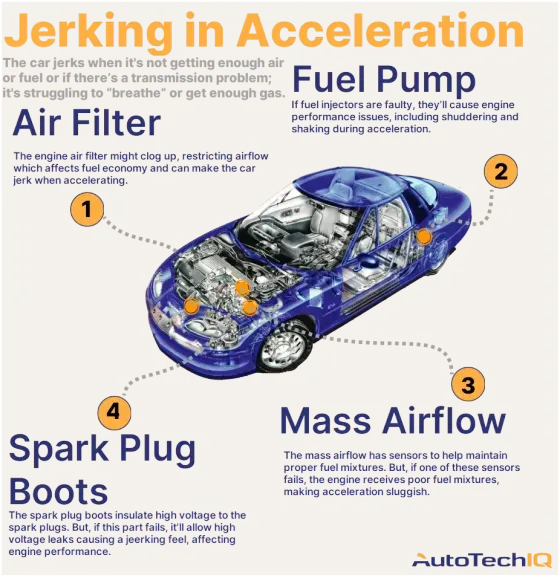
1. Engine misfire
An engine misfire is one of the most common answers to why does my car shudder when I accelerate. A misfire occurs when one cylinder fails to burn its air and fuel mixture correctly.
Common causes include:
• Worn or fouled spark plugs
• A weak ignition coil
• Damaged spark plug wires on older vehicles
• A clogged fuel injector
• Low fuel pressure
• A vacuum leak
• Poor engine compression
Acceleration places more demand on the engine. A small misfire that is hard to notice at idle may become a strong shake when you press the gas pedal.
A flashing check engine light often means the misfire may damage the catalytic converter. Reduce engine load and have the vehicle checked as soon as possible.
2. Worn spark plugs or ignition coils
Spark plugs create the spark that burns fuel inside each cylinder. Ignition coils supply the high voltage needed to fire those plugs. When either part wears out, the engine may hesitate, buck, or shudder during acceleration.
Many modern vehicles show a diagnostic trouble code such as P0300 or P0301 through P0308. These codes can point to a random misfire or a misfire in a specific cylinder. A code is useful, but it does not always identify the failed part by itself.
Replacing parts without testing can waste money. A technician may inspect coil output, swap coils between cylinders, check plug condition, and review live data before making a repair.
3. Fuel delivery problems
Your engine needs the correct fuel pressure and spray pattern. A weak fuel pump, clogged fuel filter, dirty injector, or restricted fuel line can cause a lean condition during acceleration.
Typical signs include:
• Shuddering under heavy throttle
• Slow response from the gas pedal
• Stalling or hard starting
• A lack of power when climbing a hill
• A check engine light
Poor fuel quality can also contribute to rough running. However, do not assume every shudder is caused by bad gasoline. Fuel problems require pressure testing and, in some cases, injector testing.
4. Transmission shudder
A transmission may shudder when internal parts slip or when the fluid cannot provide the correct friction. Automatic transmissions can produce a vibration during a gear change or while the torque converter clutch engages.
This may feel like driving over a series of small rumble strips. It often happens at a steady speed with light throttle, such as during a gentle cruise. Some vehicles have known transmission software updates or fluid specifications, so the correct fluid matters.
Low, dirty, or incorrect transmission fluid can make the problem worse. Never use a universal fluid unless the vehicle maker specifically approves it.
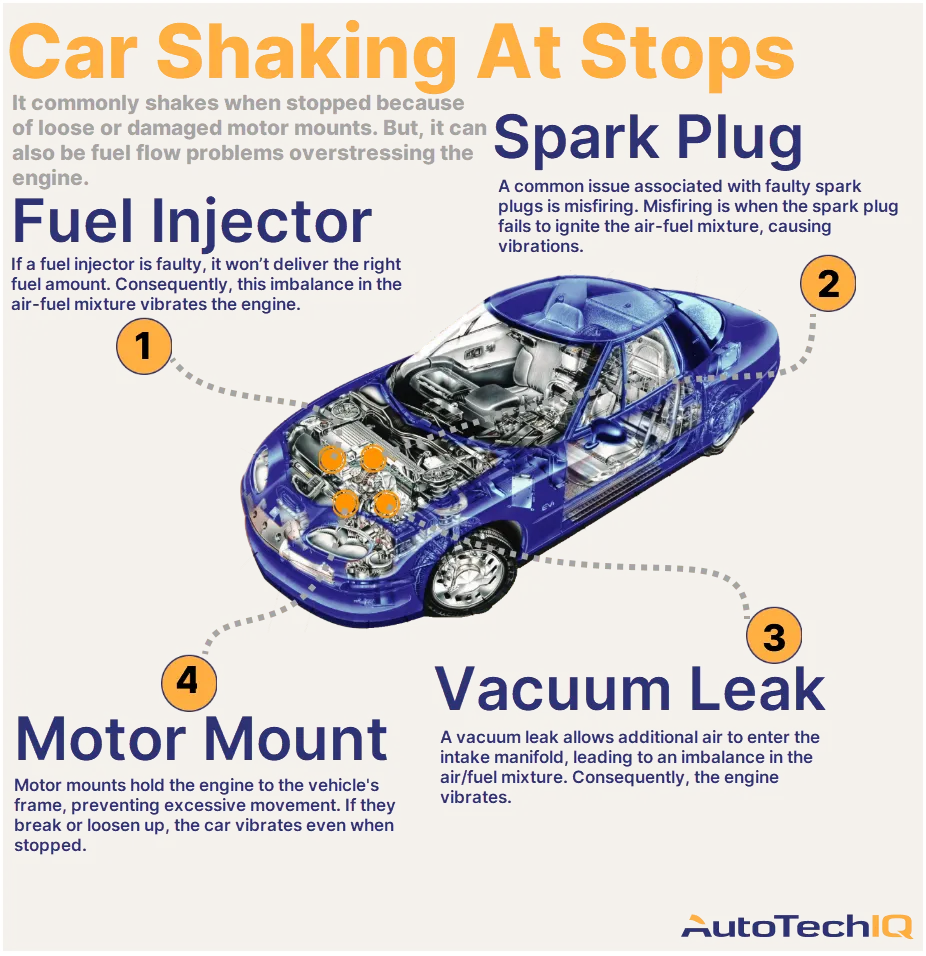
5. Worn engine or transmission mounts
Engine mounts hold the powertrain in place. They also absorb normal movement. When a mount cracks or collapses, the engine can rock sharply when you accelerate.
You may notice:
• A clunk when shifting from Park to Drive
• A thump when you press or release the gas
• Excessive movement under the hood
• Vibration at idle
A bad mount can make the whole car feel as if it is shuddering, even when the engine itself is running well. A visual inspection may reveal a torn rubber section, leaking hydraulic mount, or broken bracket.
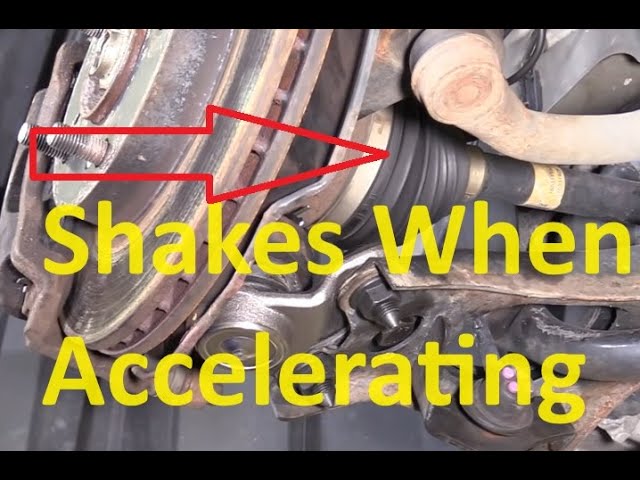
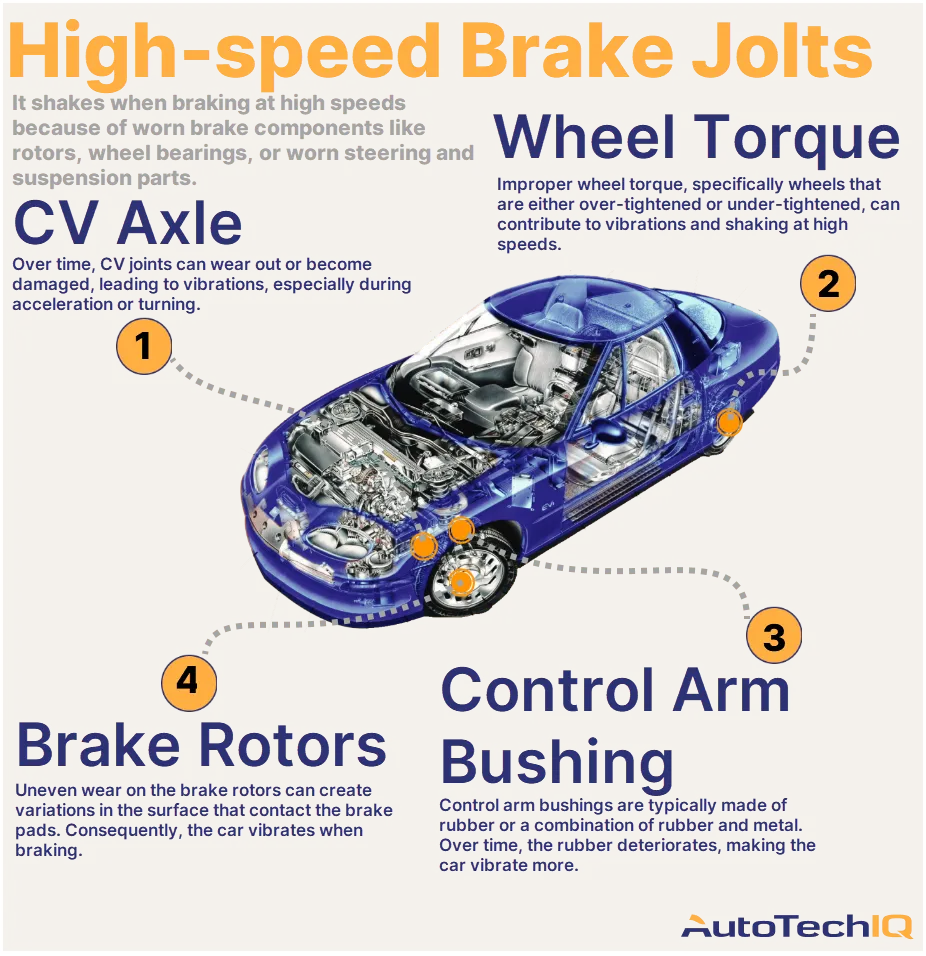
6. Damaged CV joints or drive axles
Front wheel drive and all wheel drive vehicles use constant velocity joints to send power to the wheels. A worn outer CV joint often clicks during turns. A worn inner CV joint can cause a shudder during acceleration.
The vibration may become stronger when you accelerate and fade when you coast. Grease around the inside of a wheel or a split axle boot is another useful clue.
A damaged axle can eventually fail. If the car makes loud clicking, clunking, or grinding sounds, avoid hard acceleration and arrange an inspection.
7. Driveshaft or differential problems
Rear wheel drive and four wheel drive vehicles may shudder because of a worn driveshaft, universal joint, center support bearing, or differential.
The vibration may come from beneath the center of the vehicle. It can change with vehicle speed rather than engine speed. A clunk when moving from Reverse to Drive may also point to play in the drivetrain.
These repairs require safe lifting equipment and careful inspection. Do not crawl under a vehicle supported only by a jack.
8. Tire and wheel problems
Not every acceleration shudder starts with the engine. A bent wheel, damaged tire, loose lug nut, or out of balance wheel can cause a vibration that becomes easier to feel at higher speeds.
Look for:
• A vibration that continues while coasting
• A steering wheel shake
• Uneven tread wear
• A tire bulge
• Recent contact with a pothole or curb
A tire problem can become dangerous quickly. If you see a bulge, exposed cords, or a loose lug nut, stop driving until the problem is repaired.

How to diagnose a car that shudders during acceleration
Start with simple observations. Write down the speed, engine temperature, road conditions, and throttle position when the shudder begins. Also note whether the vibration comes through the steering wheel, seat, floor, or pedals.
Use this basic process:
Check the warning lights. A flashing check engine light requires prompt attention. A steady light still deserves a scan.
Check the tires. Look for low pressure, uneven wear, damage, and loose lug nuts.
Listen for sounds. Clicking during turns suggests a CV joint. A clunk during gear changes may suggest a mount or drivetrain issue.
Notice the engine speed. If the RPM jumps while the car does not speed up, the transmission may be slipping.
Scan for trouble codes. An OBD-II scanner can identify misfire, fuel, sensor, and transmission-related codes.
Check service records. The vehicle may be overdue for spark plugs, transmission fluid service, or a software update.
Schedule a professional inspection. A road test often reveals more than a parked inspection.
Avoid repeated hard acceleration to “test” the problem. That can turn a small fault into a damaged catalytic converter, clutch, transmission, or axle.

What the shudder feels like can reveal the cause
The sensation itself is a helpful diagnostic clue.
Shuddering at low speed
A shake at low speed may come from a misfire, worn engine mount, clutch problem, or transmission issue. If it happens while releasing the clutch in a manual car, the clutch may be chattering.
Shuddering at high speed
A vibration that appears at a certain road speed often points toward tires, wheels, axles, or driveshaft parts. If it continues while you lift off the accelerator, the engine is less likely to be the main cause.
Shuddering only during gear changes
A harsh shift can result from old fluid, a faulty solenoid, worn clutch packs, or transmission control software. It may also come from a weak powertrain mount.
Shuddering while turning
A clicking or shudder during a turn may indicate a worn CV joint. Four wheel drive systems can also bind if the tires differ greatly in size or if the wrong drivetrain mode is selected.
Shuddering with loss of power
A loss of power suggests an engine misfire, fuel delivery fault, restricted exhaust, or transmission problem. Treat this symptom more seriously than a mild vibration alone.
How much does it cost to fix a car shudder?
The repair cost depends on the failed part, vehicle design, labor rates, and whether the problem caused secondary damage. A diagnosis may cost a basic inspection fee, while some repair shops apply that fee toward the final bill.
Typical repair ranges can vary widely:
• Spark plugs: often a lower-cost repair
• Ignition coil: usually a moderate repair
• Engine mount: moderate to high, depending on access
• CV axle: moderate to high
• Tire or wheel repair: low to moderate
• Fuel pump: moderate to high
• Transmission service: moderate
• Transmission rebuild or replacement: high
These are general categories, not guaranteed prices. Ask the shop for the diagnostic findings, failed part, labor estimate, warranty, and possible additional damage.
A useful lesson from many repair cases is that early diagnosis saves money. Replacing one worn ignition coil is far cheaper than driving for months with a misfire and damaging the catalytic converter.
When is a shudder an emergency?
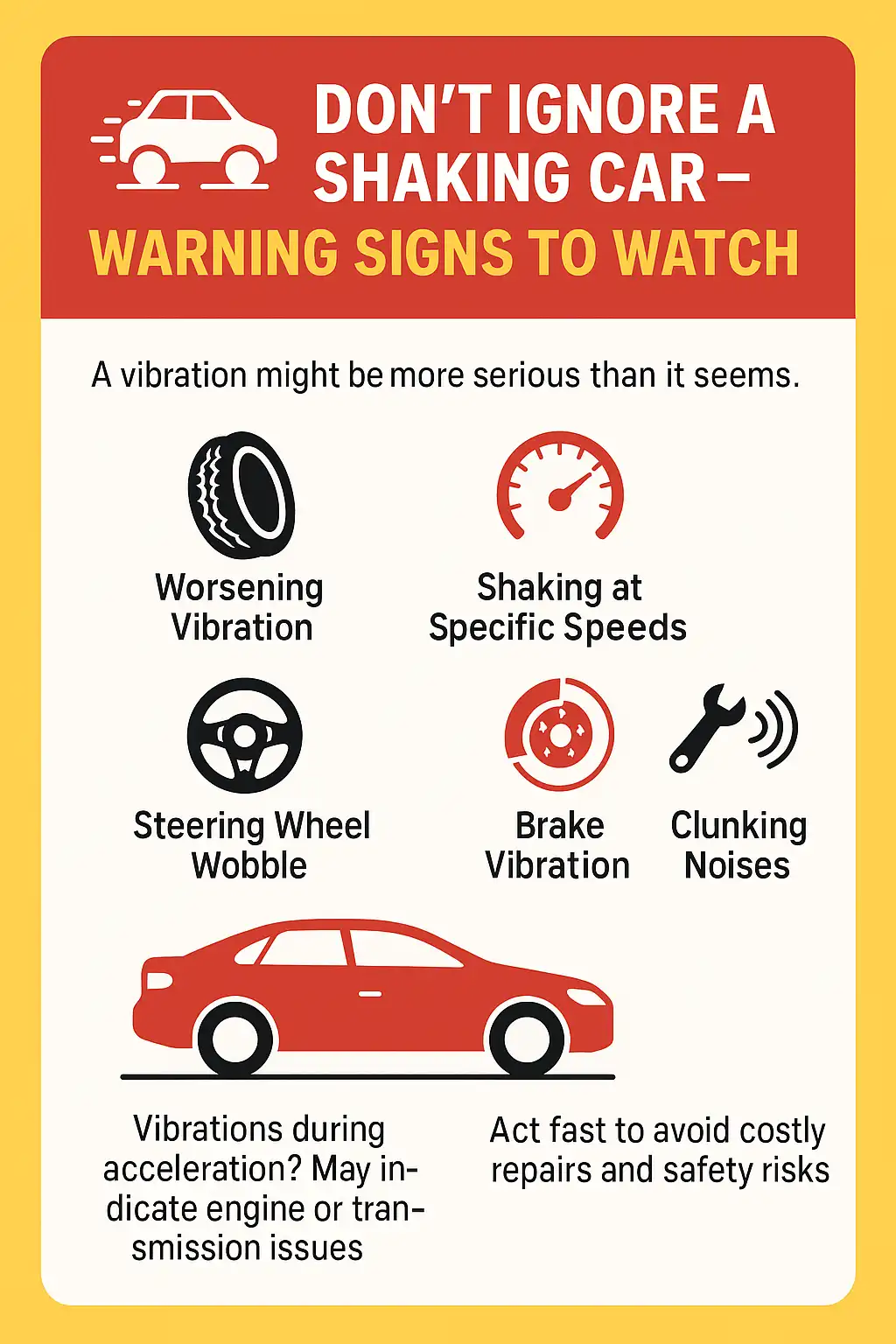
Stop driving and seek help if any of these signs appear:
• The check engine light is flashing
• The car loses power in traffic
• The vibration is severe or sudden
• You smell burning fluid or fuel
• The engine overheats
• A tire has a bulge or exposed cords
• You hear loud grinding, banging, or repeated clicking
• The transmission will not engage properly
• The vehicle pulls sharply to one side
A mild shudder may allow a short trip to a repair shop, but there is no safe way to judge every problem from symptoms alone. If the car feels unstable, use roadside assistance instead of taking a risk.
How to prevent acceleration shudder
Regular maintenance reduces the chance of many powertrain problems. Follow the service schedule in your owner’s manual, not a random interval found online.
Helpful habits include:
• Replace spark plugs at the recommended interval.
• Use the correct engine oil and transmission fluid.
• Check tire pressure at least once a month.
• Rotate and inspect tires as recommended.
• Repair small fluid leaks early.
• Avoid ignoring warning lights.
• Have the drivetrain inspected after a strong pothole impact.
• Use the correct tires on all wheel drive vehicles.
• Do not tow beyond the vehicle’s rated capacity.
One mistake drivers often make is changing transmission fluid without confirming the correct procedure. Some transmissions need a specific fluid level, temperature, and fill method. Incorrect service can create new problems instead of solving the old one.

Frequently Asked Questions About Why Does My Car Shudder When I Accelerate
Why does my car shudder when I accelerate from a stop?
A shudder from a stop may come from an engine misfire, worn mount, slipping clutch, or automatic transmission issue. If the engine RPM rises but the vehicle barely moves, have the clutch or transmission inspected.
Can low transmission fluid cause a car to shudder?
Yes, low or incorrect transmission fluid can cause slipping, delayed engagement, and shuddering. Check the owner’s manual before checking the level because some vehicles require a special procedure.
Is it safe to drive when my car shudders during acceleration?
It depends on the severity and the warning signs. Avoid driving if the check engine light flashes, power drops, the vibration is severe, or you hear loud mechanical noises.
Can bad spark plugs make a car shudder?
Yes, worn or damaged spark plugs can cause an engine misfire under load. The problem may be most noticeable during acceleration, hill climbing, or cold starts.
Why does my car shudder at a certain speed?
A speed-specific vibration often points to a tire, wheel, axle, or driveshaft issue. If the shudder changes with engine RPM instead of road speed, an engine or transmission fault becomes more likely.
Can a bad motor mount cause shaking when accelerating?
Yes, a damaged motor mount allows the engine to move too far when torque increases. You may also hear a clunk when shifting between Reverse and Drive.
Will an alignment fix a car that shudders when accelerating?
An alignment may correct pulling or uneven tire wear, but it usually will not fix an engine misfire or transmission shudder. A tire, wheel, axle, and powertrain inspection may be needed.
Conclusion
When asking why does my car shudder when I accelerate, begin with the timing and feel of the vibration. Engine misfires, spark plugs, fuel problems, transmission faults, worn mounts, axles, tires, and drivetrain parts are all possible causes.
Do not guess by replacing expensive parts at random. Check warning lights, inspect the tires, record the symptoms, scan for codes, and get a professional diagnosis when the problem persists. If your car shudders when you accelerate, early action can improve safety and prevent a small repair from becoming a major bill. Explore your owner’s maintenance guide, speak with a trusted repair shop, and share your symptoms or questions in the comments.