
Introduction
In the United States, move your child to a booster seat only after they outgrow their forward-facing car seat with a harness and can sit upright for the full ride. Your child should also meet the booster’s size limits. Age alone does not decide the change.
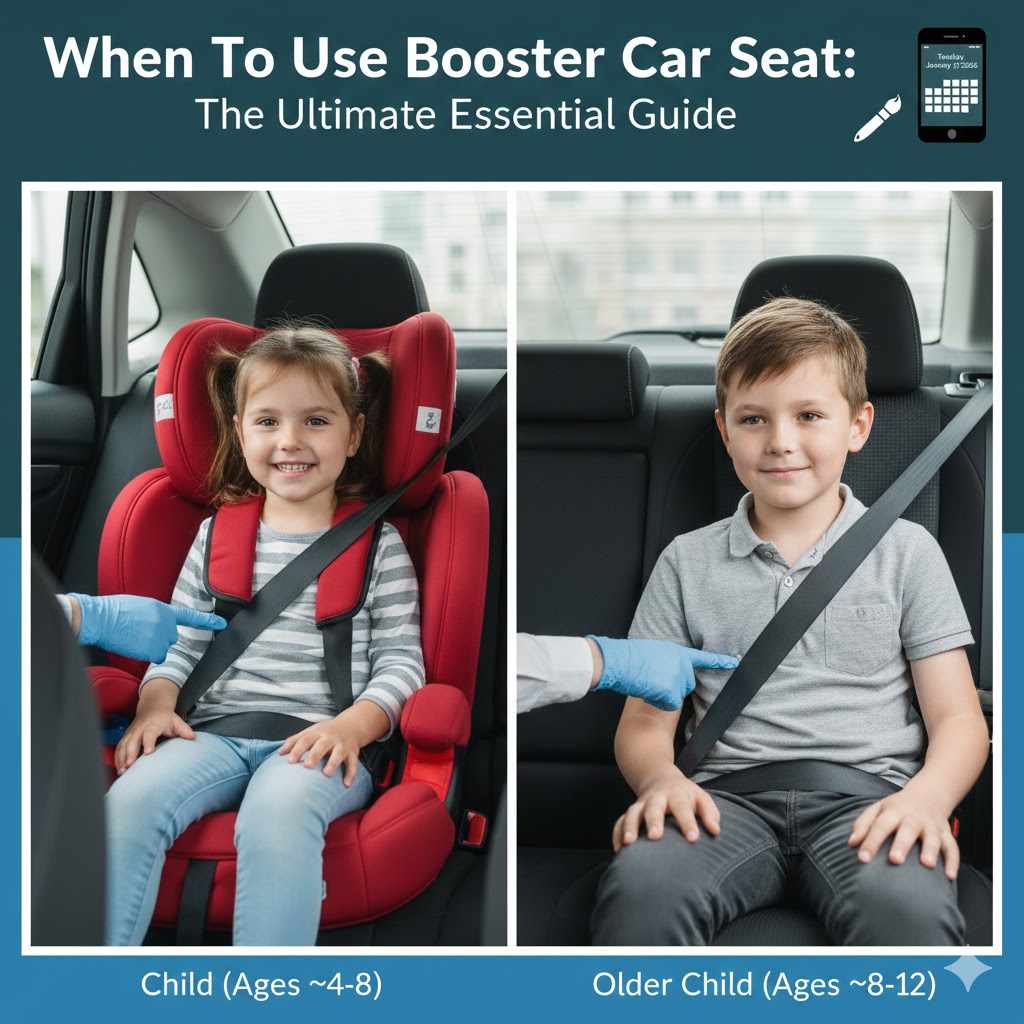
Most children need a booster until the vehicle’s lap and shoulder belt fit them well. For many children, this happens between ages 8 and 12, but the correct time varies by height, body shape, seat design, and vehicle. The safest guide is the car seat manual, the booster manual, your vehicle manual, and proper belt fit.
The Short Answer: When Should a Child Use a Booster?
A child is usually ready for a booster when all of these points are true:
- They have outgrown the height or weight limit of their forward-facing harnessed car seat.
- They meet the booster seat’s minimum size rules.
- They can sit upright without leaning, slouching, or moving the belt.
- The vehicle has a lap and shoulder belt in the seating position.
- The child can keep the belt in the right place for the whole trip.
A booster seat does not restrain a child by itself. It raises the child so the vehicle belt can fit across the strongest parts of the body.
The American Academy of Pediatrics recommends this general order:
- Rear-facing car seat for as long as the seat allows.
- Forward-facing car seat with a harness for as long as the seat allows.
- Booster seat until the vehicle belt fits correctly.
- Seat belt alone when the child passes the belt-fit test.
NHTSA gives similar guidance in its Car Seat Recommendations for Children.
Signs Your Child Is Ready for a Booster Seat
The clearest sign is that your child has reached the limit of the forward-facing harnessed seat. Check both the height and weight limits. A child must stop using the seat when either limit is reached.
Your child must also have the maturity to use a booster correctly. A booster cannot work well if a child leans forward, lies down, puts the shoulder belt behind the back, or moves the lap belt onto the stomach.
Use this readiness check:
| Question | Ready for a booster? |
|---|---|
| Has the child outgrown the forward-facing harness? | Yes, this is required |
| Does the child meet the booster’s minimum height and weight? | Yes, this is required |
| Can the child sit straight during the whole ride? | Yes |
| Can the child keep the shoulder belt on the chest? | Yes |
| Can the child keep the lap belt low on the hips? | Yes |
| Does the seating position have a lap and shoulder belt? | Yes |
If the answer to any question is no, keep using the harnessed car seat if it still fits. If the child has outgrown the harness but cannot sit properly in a booster, ask a certified child passenger safety technician for help finding the safest next step.

Do Not Move to a Booster Too Early
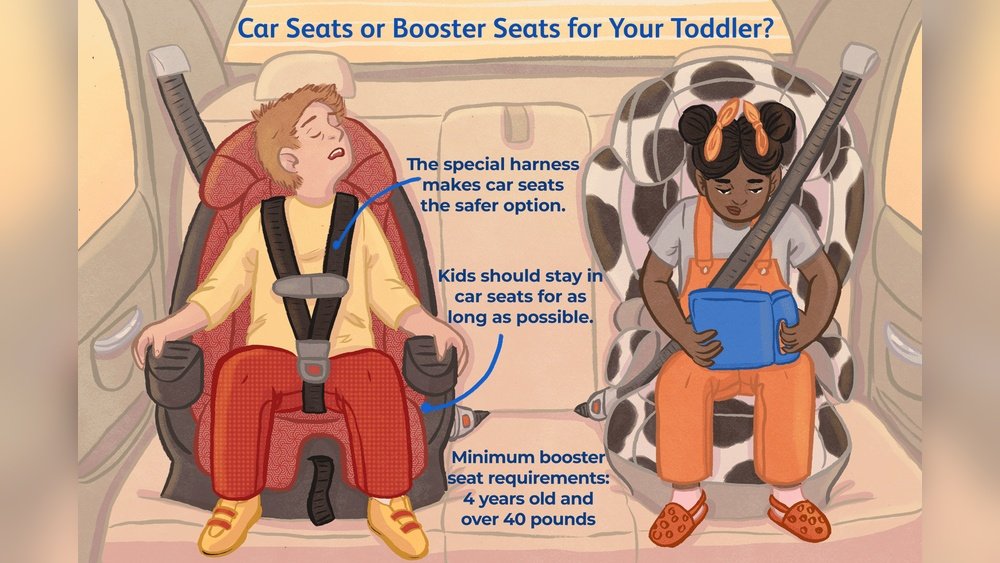
A five-point harness spreads crash forces across the child’s shoulders, chest, hips, and thighs. A vehicle seat belt is made for an older body. A booster helps the belt fit, but it does not replace the need for good posture and proper belt placement.
Many young children are not ready to stay in the correct position. They may fall asleep, lean toward the window, twist around, or pull the shoulder belt away from the body. These actions can reduce the protection provided by the belt.
Do not move a child to a booster because:
- Their legs look cramped in the forward-facing seat.
- They want to sit like an older sibling.
- Their feet touch the vehicle seat.
- They complain that the harness feels tight.
- They have reached a certain birthday but still fit the harness.
- The booster seems easier to use.
A child who still fits the forward-facing harness should usually keep using it. Check the harness height, strap position, and chest clip position before deciding that the seat is too small. The chest clip should sit at armpit level, and the harness should be snug.
Is age 4 old enough for a booster?
Not by itself. Some booster seats have a minimum age of 4 years, but that does not mean every 4-year-old is ready. The child must meet the seat’s size rules and show the maturity needed to stay positioned correctly.
The American Academy of Pediatrics advises parents to keep children in a forward-facing seat with a harness for as long as possible, within the seat’s limits. A four-year-old who still fits the harness may be safer and better supported by staying in it.

How to Check Whether the Seat Belt Fits
A child is ready to stop using a booster when the vehicle belt fits without help from the booster. Use the five-step belt-fit test below in every vehicle the child rides in.
The five-step booster seat test
The child’s back touches the vehicle seat.
The child should sit all the way back, not perch on the edge.The child’s knees bend at the edge of the seat.
The knees should bend naturally without the child sliding forward.The lap belt lies low on the hips and touches the upper thighs.
It should not rest across the soft stomach.The shoulder belt crosses the middle of the chest and shoulder.
It should not touch the neck or fall off the shoulder.The child can stay in this position for the whole trip.
The child should not slouch, lean, tuck the belt under an arm, or place it behind the back.
If even one step fails, keep using a booster. A child may pass the test in one vehicle but fail it in another because seats and belts vary.
The common “4 feet 9 inches” rule is only a rough guide. Many children reach that height before the belt fits well, and some smaller children need a booster longer. Belt fit matters more than a number on a growth chart.

How to Choose Between a High-Back and Backless Booster
Both high-back and backless boosters can help position the vehicle belt when used as directed. The right type depends on the vehicle seat, head support, belt path, and the child’s posture.
High-back booster
A high-back booster may be useful when:
- The vehicle seat has a low back.
- The child needs support to stay upright.
- The vehicle does not provide a head restraint high enough for the child.
- The shoulder belt does not rest well without a guide.
- The child falls asleep and needs side or back support.
A high-back booster can also help the child understand where to place the shoulder belt. Follow the booster manual for head-restraint and seating requirements.
Backless booster
A backless booster may work well when:
- The vehicle seat supports the child’s head and neck.
- The vehicle seat back or head restraint reaches at least the child’s ears.
- The shoulder belt crosses the chest correctly.
- The child can sit upright without leaning or sliding.
A backless booster is not automatically less safe. Its performance depends on correct use, a good belt fit, and a suitable vehicle seat. It may be lighter and easier to move, but it gives less support for posture and sleep.
Never place a booster on a vehicle seat with a lap-only belt unless the manufacturer specifically permits that use. Most belt-positioning boosters require both a lap belt and a shoulder belt.
How to Install and Use a Booster Seat Correctly
A booster seat is not installed like a harnessed car seat. In most cases, the vehicle’s lap and shoulder belt holds the child and booster in place.
Follow these steps:
- Read the booster manual and the vehicle owner’s manual.
- Place the booster in a seating position with a lap and shoulder belt.
- Center the child on the booster.
- Route the lap belt through the marked lap-belt path.
- Route the shoulder belt through the correct guide.
- Buckle the belt.
- Remove slack from the lap and shoulder belt.
- Check that the lap belt stays low on the hips.
- Check that the shoulder belt lies across the chest and shoulder.
- Make sure the child does not move the belt during the ride.
Some boosters have lower anchors. These anchors can help keep an empty booster from becoming a loose object when the child is not seated in it. Lower anchors do not replace the vehicle belt that must restrain the child. Use them only as the booster manual directs.
Do not add aftermarket pads, clips, covers, or belt devices unless the booster maker approves them. Unapproved products can change the belt path or interfere with crash protection.

When Can a Child Stop Using a Booster?
A child can usually stop using a booster when the vehicle belt passes the five-step test in every vehicle they use. The child should also be able to keep the correct position for the entire ride.
This often happens between ages 8 and 12 in the United States. That range is not a rule. A tall child may still need a booster if the belt rides across the neck or stomach. A child who meets the height guideline may still need one if they slouch or move the belt.
Test the fit in each vehicle:
- The family car
- A second parent’s car
- A grandparent’s car
- A carpool vehicle
- A school or activity vehicle
A child may be ready for a seat belt in a large SUV but still need a booster in a smaller car. Recheck the fit after a change in vehicle, seating position, or child height.

U.S. Car Seat and Booster Seat Laws
Car seat laws differ by state. A state law may set a minimum requirement, but meeting the law does not always mean a child is ready for the next restraint stage.
Check your state’s current rules through the Insurance Institute for Highway Safety child restraint laws page or your state highway safety office. Laws can change, and some states apply different rules by age, height, weight, or seating position.
Federal Motor Vehicle Safety Standard 213 sets performance requirements for child restraint systems sold in the United States. It does not give parents one nationwide age for moving a child to a booster. The child’s seat limits, belt fit, proper use, and state law all matter.
Children younger than 13 should ride in the back seat when possible, according to NHTSA and the American Academy of Pediatrics. Always follow the vehicle manual for air bags and seating positions.

Common Booster Seat Mistakes
Moving up based only on age
Age can help you plan, but it cannot show whether the belt fits. Use the harness limits and belt-fit test instead.
Using a booster with a lap-only belt
A booster normally needs a lap and shoulder belt. A lap-only belt does not provide the upper-body restraint that a booster is designed to position.
Putting the shoulder belt behind the back
This removes the belt from the chest and can place the upper body in an unsafe position. The shoulder belt must stay across the chest and shoulder.
Putting the lap belt across the stomach
The lap belt should rest low on the hips and upper thighs. A belt across the stomach can provide poor restraint in a crash.
Letting the child lean or slouch
A booster cannot correct poor posture. Stop and reset the child before driving.
Using a booster with a thick coat
Bulky clothing can add space between the child and the belt. Put the coat over the buckled belt, or use thin layers.
Buying a used seat without checking its history
Avoid a used booster if you do not know whether it was in a crash, is missing parts, has expired, or has been recalled. Check the label for the model name, manufacture date, and instructions. Search the model in the NHTSA recall database.

What to Do If Your Child Refuses the Booster
Start by explaining that the booster helps the car belt fit their body. Let the child help choose between approved booster options, such as a high-back or backless model that fits the vehicle.
Practice while the car is parked. Show the child how the lap belt stays low and how the shoulder belt crosses the chest. Praise correct use, but keep the rule firm: the car does not move until the belt is in the right place.
If the child cannot stay seated correctly, do not switch to a booster just to avoid conflict. Keep using a properly fitted harnessed seat if possible. A local certified child passenger safety technician can check the seat and suggest options.
Use the [National Highway Traffic Safety Administration inspection station locator](https://www.nhtsa.gov/find- a-seat-check-station) to find a child seat check in your area. Appointment rules and services vary by location.

When to Ask a Child Passenger Safety Technician for Help
Ask for hands-on help when:
- Your child is between stages.
- The harness seat seems too small.
- The booster belt path is unclear.
- The child has special positioning needs.
- The vehicle has unusual belts or seating.
- You are unsure whether a used seat is safe.
- The child cannot stay upright in a booster.
- The belt fits differently in more than one vehicle.
A certified technician can check the child restraint, the vehicle seating position, and the belt path. A technician cannot override the seat or vehicle manufacturer’s instructions, so bring both manuals when possible.

Key Takeaways
- Move from a forward-facing car seat to a booster only after the child outgrows the harnessed seat.
- Do not use age alone to decide.
- The child must meet the booster’s size limits and stay seated correctly.
- Use a booster with a lap and shoulder belt.
- Keep using the booster until the vehicle belt passes the five-step fit test.
- State laws set minimum rules; they do not replace proper belt fit.
- Check the car seat manual, booster manual, and vehicle manual.
- Get help from a certified child passenger safety technician when the answer is unclear.
FAQs
What is the minimum age for a booster seat in the United States?
There is no single nationwide age that makes every child ready for a booster. Many boosters list a minimum age of 4, but the child must also meet the size limits and sit correctly. A child who still fits a forward-facing harness may be better served by staying in that seat.
Should a 6-year-old use a car seat or a booster?
It depends on the child and the seat. A 6-year-old who still fits the forward-facing harness and cannot sit properly in a booster should remain in the harnessed seat. A child who has outgrown the harness and can maintain good belt position may use a booster that fits the vehicle.
Can a child use a backless booster?
Yes, if the booster permits it and the vehicle provides proper head support. The lap and shoulder belt must fit correctly, and the child must stay upright. Follow the booster manual for head-restraint and seating requirements.
Can a booster seat go in the front seat?
The back seat is preferred for children under 13 when possible. If a front-seat position must be used, follow the vehicle and booster manuals and all air-bag warnings. Never place a rear-facing child restraint in front of an active passenger air bag.
Does a booster seat need lower anchors?
No. Many boosters are designed to work with the vehicle lap and shoulder belt alone. Some models allow lower anchors to hold the empty booster in place, but the vehicle belt still restrains the child. Follow the product manual.
Conclusion
The right time to move from a car seat to a booster is not based on a birthday. Move when your child has outgrown the forward-facing harness, meets the booster’s limits, and can sit correctly for every trip.
Keep using the booster until the vehicle belt fits low across the hips and upper thighs, crosses the chest and shoulder, and stays in place without the child’s help. Check the fit in each vehicle, follow current U.S. state law, and ask a certified child passenger safety technician when you are unsure.