

Introduction
Yes, a 215/70R15 tire may replace a 205/70R15 tire on some U.S. cars, SUVs, and light trucks—but it is not an automatic, one-size-fits-all swap. The new tire is about 10 mm wider and about 0.55 inches taller.
That size change is modest, but it can affect speedometer readings, wheel-well clearance, handling, fuel use, and load capacity. Before buying, compare the vehicle’s tire placard, owner’s manual, wheel size, tire load rating, and clearance.

What Is the Difference Between 205/70R15 and 215/70R15?
The first number shows tire width in millimeters. The second number is the sidewall height as a percentage of the width. The “R” means radial construction, and “15” means the tire fits a 15-inch wheel.
Here is the size comparison:
| Measurement | 205/70R15 | 215/70R15 | Difference |
|---|---|---|---|
| Section width | 205 mm | 215 mm | +10 mm |
| Sidewall height | 143.5 mm | 150.5 mm | +7 mm |
| Approximate overall diameter | 26.30 in | 26.85 in | +0.55 in |
| Approximate circumference | 82.63 in | 84.35 in | +1.72 in |
| Diameter change | — | — | About +2.1% |
These are theoretical dimensions. The exact measured size can vary by tire brand, tread design, approved rim width, and inflation pressure. Tire manufacturers publish the final specifications for each tire model.
What changes on the vehicle?
The 215/70R15 tire will usually:
- Add about 5 mm of width on each side.
- Raise the vehicle by about 0.28 inches.
- Reduce the gap between the tire and nearby suspension or body parts.
- Turn slightly more slowly at the same road speed.
- Make the speedometer read slightly lower than the vehicle’s true speed.
- Potentially provide a little more cushioning from potholes because of the taller sidewall.
A larger tire does not always increase load capacity. Check the load index printed on the tire sidewall rather than assuming the wider tire is stronger.
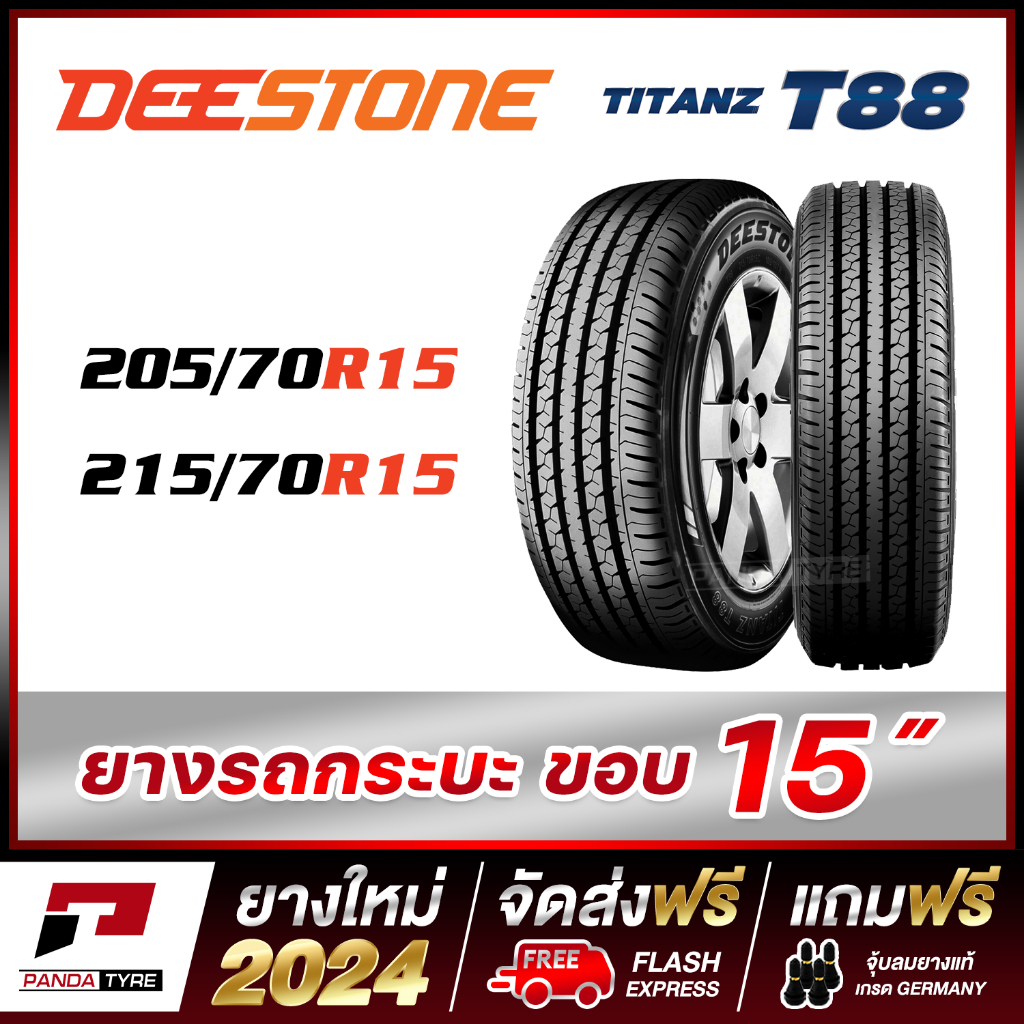
Will a 215/70R15 Tire Fit a Vehicle Designed for 205/70R15?
It may fit, but the vehicle manufacturer’s approved tire sizes should decide the final answer. The size difference alone does not prove compatibility.
Check these five areas before making the change:
- Vehicle approval: Look in the owner’s manual and the tire information placard, usually found on the driver’s door jamb or door edge.
- Wheel compatibility: Confirm that the tire manufacturer approves the 215/70R15 tire for your exact wheel width.
- Clearance: Check the suspension, fender liner, mud flap, and body clearance.
- Load and speed ratings: Match or exceed the original tire’s required ratings.
- Vehicle system needs: Consider ABS, traction control, all-wheel drive, and tire-pressure monitoring requirements.
The tire placard lists the original tire size, cold inflation pressure, and the vehicle’s required load information. It is a better starting point than a general tire-size chart because it applies to that specific vehicle configuration.
Wheel width matters
Both tires fit a 15-inch wheel, but the wheel’s width still matters. A 215/70R15 tire may require a wider approved rim than a 205/70R15 tire, depending on the tire model.
Do not judge fit by the rim diameter alone. Read the tire maker’s approved rim-width range for the exact tire. A tire mounted on an unsuitable rim can have poor bead seating, unusual tread contact, or unsafe handling.
Offset can change clearance
Wheel offset controls how far the wheel sits inward or outward. The same 215/70R15 tire may clear one wheel setup but rub on another.
A wheel with different offset can move the tire closer to:
- The strut or spring.
- Brake parts.
- Steering components.
- The outer fender.
- The inner fender liner.
This is why a tire shop should check the complete wheel and tire assembly, not just the tire number.
How Much Will the Speedometer Change?
If the vehicle was calibrated for 205/70R15 tires, a 215/70R15 tire will travel about 2.1% farther with each revolution.
As a simple estimate:
- When the speedometer shows 60 mph, the vehicle may be traveling about 61.3 mph.
- When it shows 70 mph, the actual speed may be about 71.5 mph.
The calculation is:
Actual speed ≈ indicated speed × new tire diameter ÷ original tire diameter
Using the theoretical sizes:
60 × 26.85 ÷ 26.30 ≈ 61.3 mph
The real result can differ because speedometers are not perfectly exact and tire diameter changes with load, pressure, tread wear, and construction.
The odometer may also record about 2.1% fewer miles than the vehicle actually travels. For example, a displayed 10,000 miles could represent roughly 10,210 actual miles under the same theoretical comparison.
Can the Larger Tire Cause Rubbing?
Yes. Rubbing is one of the main risks when moving from 205/70R15 to 215/70R15.
The new tire is wider and taller. That reduces clearance both sideways and above the tire. Rubbing may appear only when the steering wheel is turned fully, when the suspension compresses, or when the vehicle carries passengers and cargo.
Before driving normally, inspect clearance during:
- Full left and right steering lock.
- Suspension compression.
- Reversing with the steering turned.
- A full passenger or cargo load.
- Use of tire chains, if chains are required in your area.
Look for fresh scuff marks on the tread shoulder, sidewall, fender liner, mud flap, or suspension parts. Listen for scraping or tapping over bumps.
Do not rely only on a parked visual check. A tire can clear the wheel opening at rest and still touch during steering or suspension movement.
What to do if the tire rubs
Do not ignore rubbing. Contact between the tire and a suspension or steering part can damage the tire or affect control.
Possible solutions may include:
- Returning to the original tire size.
- Using a different approved wheel.
- Choosing a tire with different measured dimensions.
- Correcting an existing suspension or wheel problem.
Avoid trimming body parts, adding spacers, or changing wheel offset without professional guidance. Those changes can create new clearance, bearing, steering, or fender problems.

Does 215/70R15 Improve Ride or Handling?
The taller sidewall may make the ride feel slightly softer over small bumps, but the change is not guaranteed. Tire construction, tread pattern, inflation pressure, vehicle weight, and suspension condition often matter more than the 10 mm width increase.
A 215/70R15 tire may also feel different in corners. The wider tread can change steering response, while the taller sidewall can add a little sidewall flex. The result depends on the exact tire model and wheel width.
Potential trade-offs include:
- Slightly different steering feel.
- A small change in cornering response.
- Possible increase in rolling resistance.
- Possible change in wet-road behavior.
- A small effect on fuel economy.
- More risk of rubbing.
Do not expect a wider tire to automatically provide better grip. Tire compound, tread design, road temperature, pressure, alignment, and pavement conditions all affect traction.
Always set tire pressure from the vehicle placard unless a qualified tire professional or vehicle manufacturer gives a specific alternative. Do not use the maximum pressure molded on the tire sidewall as the normal vehicle setting unless it matches the vehicle’s requirements.

How to Check Whether the Swap Is Safe
Use this process before purchasing or installing the tires.
1. Read the vehicle tire placard
Find the placard on the driver’s door area. Record:
- Original tire size.
- Recommended cold pressure.
- Front and rear requirements, if different.
- Vehicle load information.
Then check the owner’s manual for alternate tire sizes or special instructions.
2. Check the tire’s full service description
Do not compare only the size. Check the complete marking, such as:
- 215/70R15 98T
- 215/70R15 100H
- 215/70R15 104S
The number is the load index. The letter is the speed symbol. The replacement must meet the vehicle’s required load and speed specifications.
A higher load index is not automatically a problem, but the tire must still be suitable for the vehicle and wheel. Never install a tire with a lower required rating.
3. Confirm the rim-width range
Read the exact tire model’s technical data. Confirm that your 15-inch wheels fall within the approved rim-width range for the 215/70R15 tire.
If you do not know the wheel width, a tire shop can usually identify it from the wheel markings or measure it.
4. Compare actual tire dimensions
Use the tire manufacturer’s specifications instead of relying only on theoretical size calculations. Two tires with the same marked size may have slightly different:
- Overall diameter.
- Section width.
- Tread width.
- Approved rim range.
5. Inspect the vehicle for clearance
Check the complete range of steering and suspension movement. A professional shop can use a lift and inspect the likely contact points.
6. Install matching tires correctly
For a two-tire replacement, tires should normally be installed as a matching pair on the same axle. Many tire manufacturers and safety organizations recommend placing the tires with more tread on the rear axle, but follow the tire maker’s instructions and the vehicle manufacturer’s guidance.
Do not mix different sizes across an axle. On many all-wheel-drive vehicles, even small differences in rolling circumference can place stress on the driveline. Check the vehicle manual before changing size on an AWD or four-wheel-drive vehicle.
7. Recheck pressure and alignment
After installation, set cold pressure to the vehicle placard specification. Check for steering pull, vibration, noise, uneven wear, or rubbing.
If the vehicle pulls or the steering wheel is no longer centered, have the alignment checked. A tire-size change does not directly correct an alignment problem.
When Should You Keep the Original 205/70R15 Size?
Keep 205/70R15 when it is the only size listed by the vehicle manufacturer or when clearance, load, or driveline requirements are uncertain.
The original size is usually the safer choice when:
- The vehicle is an AWD model.
- The 215/70R15 tire is not approved for the wheel.
- The larger tire rubs during steering or suspension movement.
- The replacement tire has a lower load or speed rating.
- The vehicle is heavily loaded or used for towing.
- The owner’s manual warns against alternate sizes.
- The vehicle has limited wheel-well space.
- The tire placard requires a different size for the front or rear axle.
A modest diameter change does not remove the need to follow the vehicle maker’s specifications. If the manufacturer lists 215/70R15 as an approved alternate size, the decision is much easier. If it does not, ask a qualified tire professional to verify the complete setup.
Common Mistakes to Avoid
Assuming the 15-inch measurement proves fit
The “15” only confirms the wheel diameter. It does not confirm wheel width, offset, load rating, or clearance.
Comparing only the width
The 215/70R15 tire is not just 10 mm wider. It also has a taller sidewall and larger overall diameter.
Using the tire’s maximum pressure
The maximum pressure on the sidewall is not necessarily the correct pressure for your vehicle. Use the placard or manual.
Installing one different tire
Do not install a single 215/70R15 tire alongside 205/70R15 tires on the same axle. If a temporary spare is involved, follow the vehicle manual and drive only as instructed.
Ignoring AWD requirements
AWD systems can be sensitive to differences in tire circumference. Confirm the allowed difference with the vehicle manufacturer before changing tire size or replacing only some tires.
Forgetting the spare tire
A full-size spare should match the vehicle’s approved setup. A temporary spare has separate limits and may not be suitable for long-term use.
Assuming a wider tire carries more weight
Load capacity comes from the tire’s load index, construction, inflation, and application. Width alone does not establish capacity.
Judging by appearance
A tire that looks like it fits while parked may rub during a turn, bump, heavy load, or suspension movement.

Frequently Asked Questions
Is 215/70R15 bigger than 205/70R15?
Yes. The 215/70R15 is about 10 mm wider and about 0.55 inches larger in diameter based on nominal size calculations. The actual dimensions vary by tire model.
Can I put 215/70R15 tires on the same 15-inch wheels?
Possibly, but the wheel must have a suitable width for the exact tire. Check the tire manufacturer’s approved rim-width range and verify clearance on the vehicle.
Will 215/70R15 tires affect my ABS or traction control?
They may affect systems that use wheel-speed information because the tire has a different rolling circumference. A small change may work normally on some vehicles, but the vehicle manufacturer’s approved tire sizes should control the decision.
Can I use 215/70R15 on only one axle?
Only if the vehicle and tire manufacturer allow that arrangement. Do not mix different tire sizes on the same axle. AWD and four-wheel-drive vehicles may require all four tires to match closely.
Will 215/70R15 tires improve fuel economy?
Not necessarily. The larger tire may reduce engine speed at a given road speed, but added weight, rolling resistance, tread design, pressure, and driving conditions can offset that effect. Fuel-economy results are vehicle- and tire-specific.
Do I need to recalibrate the speedometer?
A 2.1% theoretical size increase changes the speedometer and odometer relationship. Some vehicles can be recalibrated, while others cannot be adjusted easily. Ask the vehicle manufacturer or a qualified repair shop about your specific model.

Conclusion
You may be able to replace 205/70R15 with 215/70R15, but confirm the change before installation. The replacement is about 10 mm wider, about 0.55 inches taller, and roughly 2.1% larger in diameter.
The safest next step is to compare the vehicle placard and owner’s manual with the exact 215/70R15 tire specifications. Then verify load and speed ratings, wheel-width compatibility, clearance, and AWD or traction-control requirements. If any item is unclear, have a qualified tire professional inspect the vehicle before you buy.