

Introduction
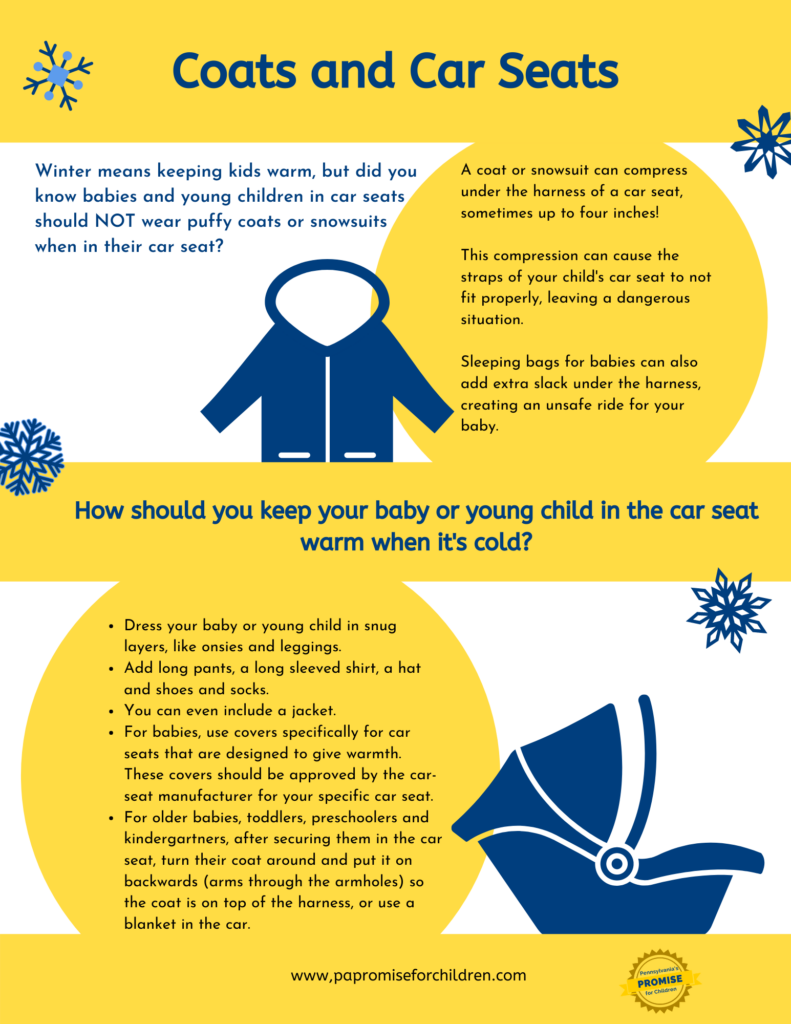
For families driving in the United States, an infant should not wear a bulky winter coat under the car-seat harness. Thick coats can compress in a crash and leave the harness too loose to hold the child safely.
Use thin, close-fitting layers instead. Once the harness is buckled and tightened, place a blanket over the straps, or use a car-seat cover approved by the seat maker that does not go under the harness. Always follow the instructions for your specific infant car seat and vehicle.

Why bulky coats are unsafe in a car seat
A car-seat harness must stay close to a child’s body. It should hold the child back as one unit during sudden braking or a crash.
A puffy coat creates space between the child and the harness. That space may look small, but the coat’s filling can flatten under crash force. The child may then move farther forward than the harness allows. In severe cases, the child could slide partly out of the harness.
The concern is not that every winter coat will fail in every crash. The concern is that a parent may tighten the harness over a coat that later compresses. The harness can feel snug at the start of a trip and still leave too much room in a crash.
The American Academy of Pediatrics advises parents not to use bulky clothing, including winter coats and snowsuits, under car-seat straps. The National Highway Traffic Safety Administration also emphasizes a snug harness and following the car-seat manufacturer’s directions.
The harness pinch test
After buckling your infant:
- Place the harness straps flat over the child’s shoulders.
- Buckle the chest clip at armpit level, if the seat has one.
- Pull the harness adjuster until the straps are snug.
- Try to pinch the strap near the child’s shoulder.
You should not be able to pinch a fold of webbing. This check is often called the pinch test. It does not replace the car-seat manual, but it helps show whether the harness has slack.
Do not loosen the harness to make room for a coat. If a coat prevents you from passing the pinch test, remove the coat before driving.
What counts as too bulky?
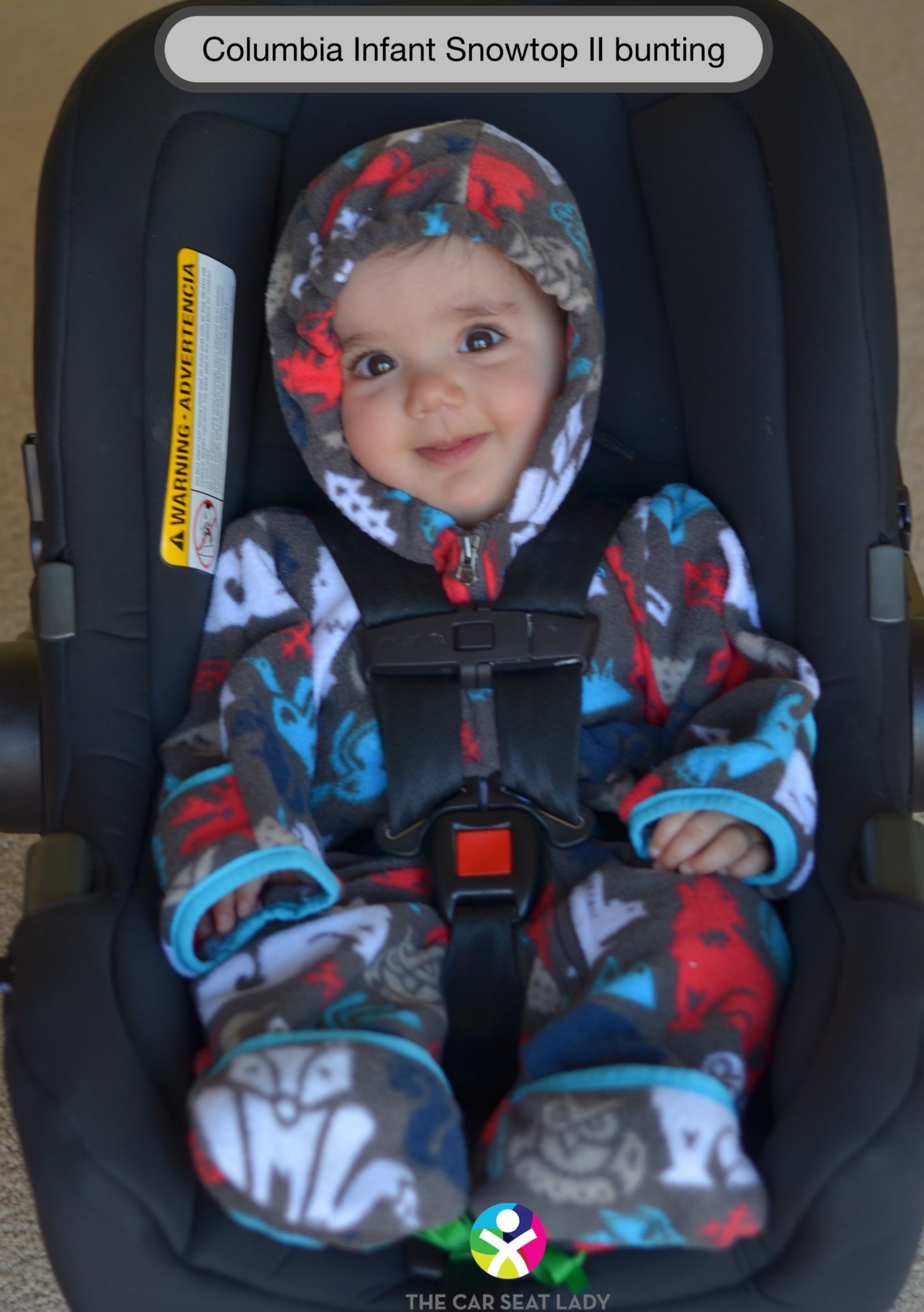
A thick puffer coat, snowsuit, bunting, or padded body suit is usually too bulky under the harness. Hooded garments can also affect how the child’s head rests against the seat.
A thin fleece jacket may be acceptable if the harness still fits snugly and the car-seat manufacturer does not prohibit it. The key issue is the amount of padding between the child and the harness, not the garment’s name or brand.
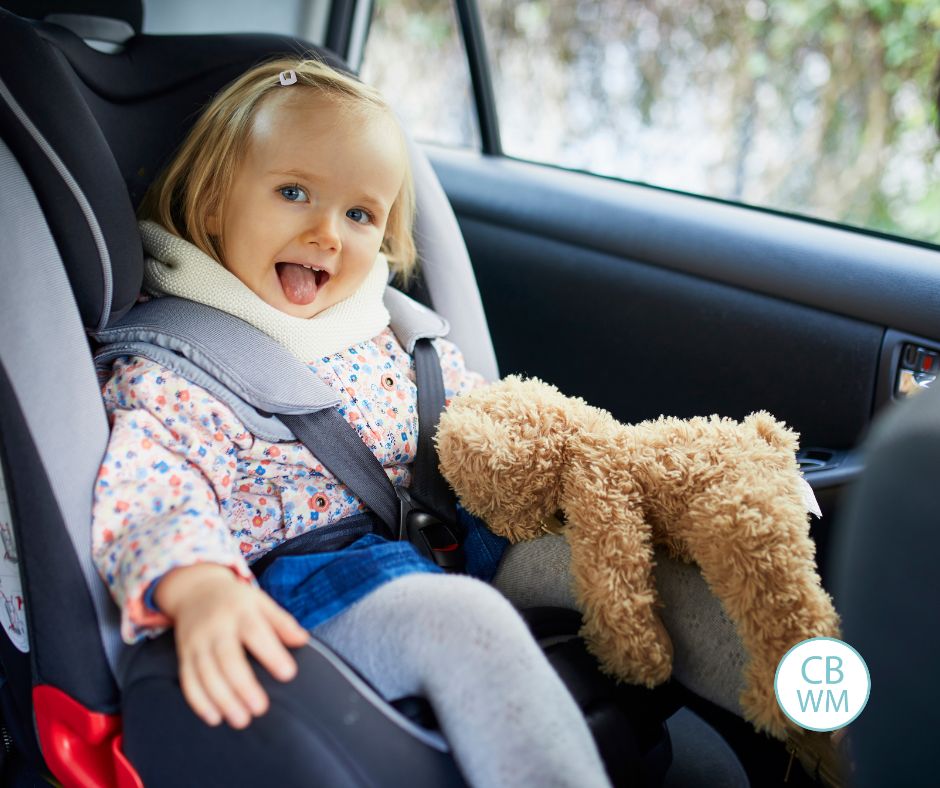
What infants can wear in a car seat
Infants can wear thin, close-fitting layers that do not create a thick cushion under the harness. Good options may include:
- A long-sleeve shirt or bodysuit
- Thin cotton pajamas
- Lightweight fleece
- Thin pants or leggings
- Socks or booties
- A thin sweater, if the harness still fits correctly
Dress the baby in layers that keep the torso warm without adding bulk beneath the straps. The car’s heater can help once the vehicle is warm.
Avoid placing thick layers behind the infant’s back or beneath the harness. Do not add padding, inserts, head supports, or aftermarket cushions unless the car-seat manufacturer supplied them or specifically approved them for that seat.
The safest order for a cold-weather trip
Use this order:
- Put the infant in thin clothing.
- Place the infant in the car seat.
- Buckle the harness.
- Tighten the harness until you cannot pinch slack.
- Add warmth over the secured harness.
A blanket may go over the harness. Keep it below the infant’s face and away from the mouth and nose. Check the baby during the trip to ensure the blanket has not shifted.
For a small infant, you can also place a blanket over the child after buckling. Do not tuck a thick blanket beneath the child’s back or between the child and the harness.
Car-seat covers and shower-cap-style covers
Some products fit over the outside of an infant carrier like a shower cap. These may be safer than products that sit between the child and the harness, but they still need careful use.
Choose only a cover that:
- Goes over the outside of the carrier
- Leaves the harness area clear
- Does not cover the baby’s face
- Does not block airflow
- Is allowed by the car-seat manufacturer
Never use a cover that attaches beneath the infant, lies behind the child, or makes it hard to see the child’s face. Many car-seat makers warn against unapproved accessories because they can change how the seat performs.
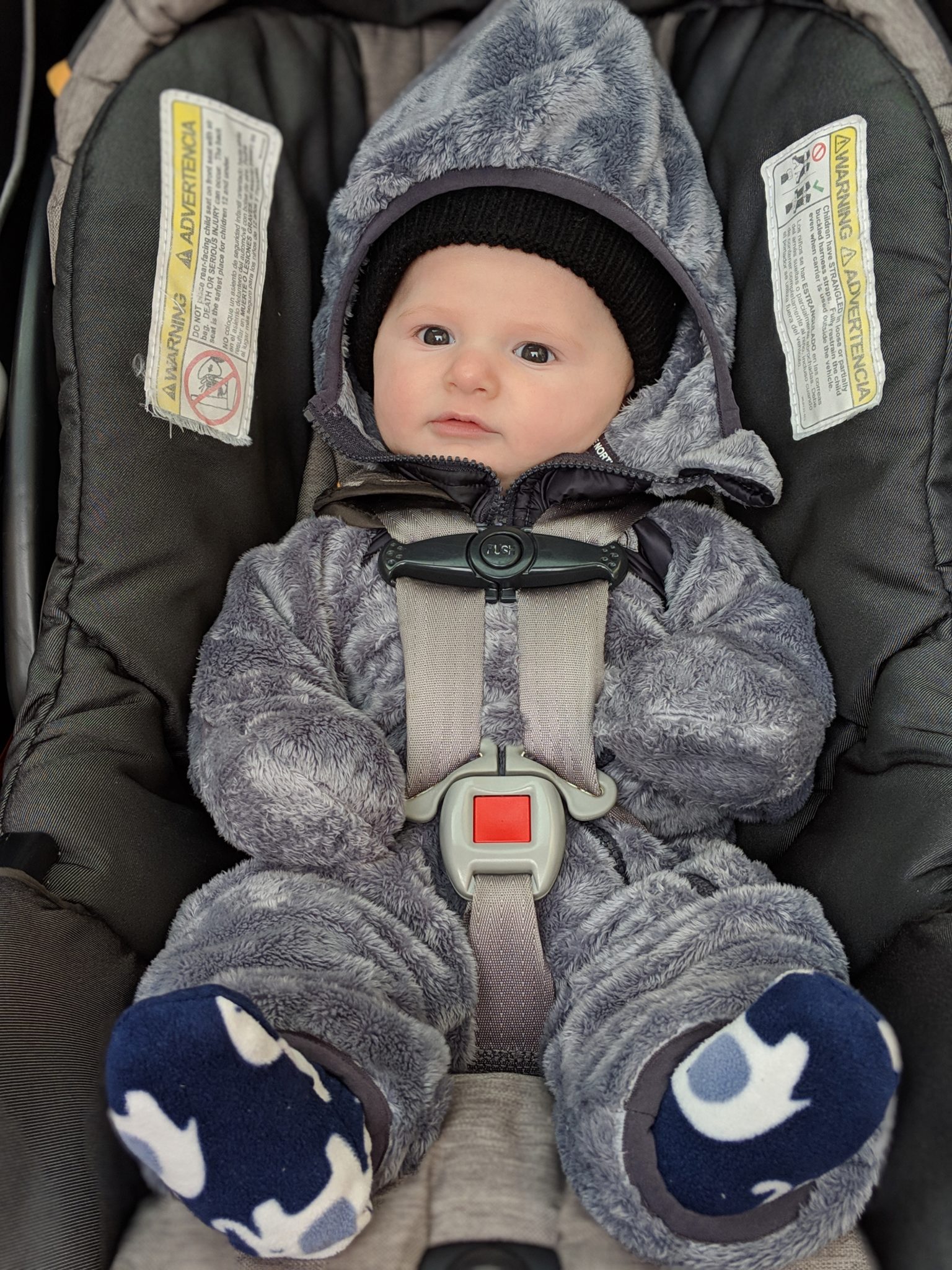
How to keep an infant warm without a bulky coat
The best approach is to warm the car and add layers after the harness is secure.
Before leaving the house
Warm the vehicle before placing the baby inside when practical. Clear snow and ice from the windows, mirrors, roof, lights, and license plate. Do not leave an infant alone in a running vehicle, even for a short time.
Bring the coat to the vehicle. The baby can wear it while walking from the home to the car, but remove it before buckling the harness.
If the infant carrier is used outside the vehicle, keep the baby covered while carrying the seat. Remove thick outerwear before placing the carrier in the vehicle and securing the child.
Once the baby is buckled
Put a blanket over the harness. You can also put the coat on backward over the baby’s arms and the already-secured harness, as long as it does not cover the face or interfere with the straps.
For very young infants, check that the blanket does not ride up. Babies cannot reliably move a blanket away from their face. Keep the airway visible and avoid loose items near the mouth and nose.
Watch for overheating
Cold weather does not remove the risk of overheating. A baby may become too warm under several blankets, a hat, and a heated vehicle.
Check the baby’s chest or back rather than relying only on hands and feet. Remove a layer if the baby feels hot, sweaty, flushed, or damp. Seek medical advice promptly if the infant is unusually sleepy, hard to wake, breathing oddly, or appears ill.

A simple coat safety check
When you are unsure about a garment, use the coat test. It helps compare the harness fit with and without the coat.
- Put the coat on the child.
- Place the child in the car seat.
- Buckle and tighten the harness as you normally would.
- Perform the pinch test.
- Without changing the harness setting, remove the child and take off the coat.
- Put the child back in the seat and buckle the same harness setting.
- Check the harness again.
If the harness is loose without changing the adjustment, the coat took up space under the straps. That garment is too bulky to wear under the harness.
The test is a practical screening method, not a substitute for the seat manual. If the manual gives a stricter rule, follow the manual.
Signs the harness is fitted correctly
The harness should meet these basic conditions:
- The straps lie flat and are not twisted.
- The straps pass through the correct slots for rear-facing use.
- The harness is snug enough that you cannot pinch slack.
- The chest clip sits at armpit level.
- The child’s back and bottom are against the seat as the manual directs.
- No thick coat or blanket sits between the child and the harness.
Check the installation each time you use the seat. A correctly fitted harness cannot compensate for an incorrectly installed car seat.
If the coat does not pass the test
Do not loosen the harness and do not rely on the coat’s hood or padding to protect the baby. Instead:
- Remove the coat before buckling.
- Use thin layers.
- Cover the child after buckling.
- Warm the vehicle first when possible.
- Ask a certified child passenger safety technician to check the setup.
You can find inspection help through the National Highway Traffic Safety Administration child passenger safety page.

Common winter car-seat mistakes
Putting the coat under the straps
This is the most common mistake. The coat may feel tight, but its filling can compress under crash force. Buckle the child without the bulky coat instead.
Adding a blanket beneath the baby
A blanket under the baby changes the position of the child and can create slack. Keep blankets over the secured harness, not underneath the infant.
Using an aftermarket insert
A soft insert may change the way the infant sits or alter the harness path. Use only parts that came with the seat or that the manufacturer approves for that exact model.
Covering the harness with a thick cover
Some covers are made to go over the car seat, while others sit behind the child. These designs are not interchangeable. Read the car-seat manual and the cover’s instructions before use.
Leaving the chest clip too low
The chest clip should sit at armpit level. It should not rest on the stomach or at the neck. A low clip can change the harness position during a crash.
Using a car seat as a sleep space outside the car
An infant carrier is designed for travel in the vehicle and short carrying periods. The AAP safe-sleep guidance recommends moving a sleeping baby to a firm, flat sleep surface when practical. This is separate from coat safety, but it matters when a baby falls asleep in a carrier after a winter trip.
What changes for different infant car seats?
The basic rule applies to rear-facing infant seats and rear-facing convertible seats: avoid thick clothing under the harness. Details can differ by model.
Read the manual for:
- Approved infant inserts
- Harness height and routing
- Head-support rules
- Approved covers or accessories
- Weight and height limits
- Instructions for winter clothing
- How the carrier attaches to the base
A manufacturer may allow a particular thin liner or cover for one model but not another. Do not assume that an accessory approved for a stroller or another car seat is approved for your infant car seat.
Infant carrier versus convertible car seat
An infant carrier is often carried between the house and vehicle, so parents may be tempted to leave the baby in a thick coat. Remove the coat before securing the carrier in its base.
A convertible car seat stays in the vehicle. In this setup, it is often easier to keep a blanket in the car and place it over the harness after each ride.
Both types require the same core check: the harness must sit directly over the child, with as little compressible material as possible between the body and the straps.
Can infants wear hats, gloves, or boots in car seats?
Thin hats, gloves, socks, and booties generally do not create the same harness problem as a bulky coat because they are not placed between the torso and the straps. However, they still must not cover the face, obstruct breathing, or interfere with the seat’s fit.
A thick hood can push the baby’s head forward or prevent the head from resting in the position shown in the manual. Remove the hood if it changes the child’s position.
Large shoes or rigid booties can also be uncomfortable in a tightly enclosed seat. Keep the infant’s legs in the position allowed by the seat and do not force the child’s body into a different posture.
When in doubt, use a thin hat and blanket rather than a padded hooded suit.
Can a baby wear a snowsuit in a car seat?
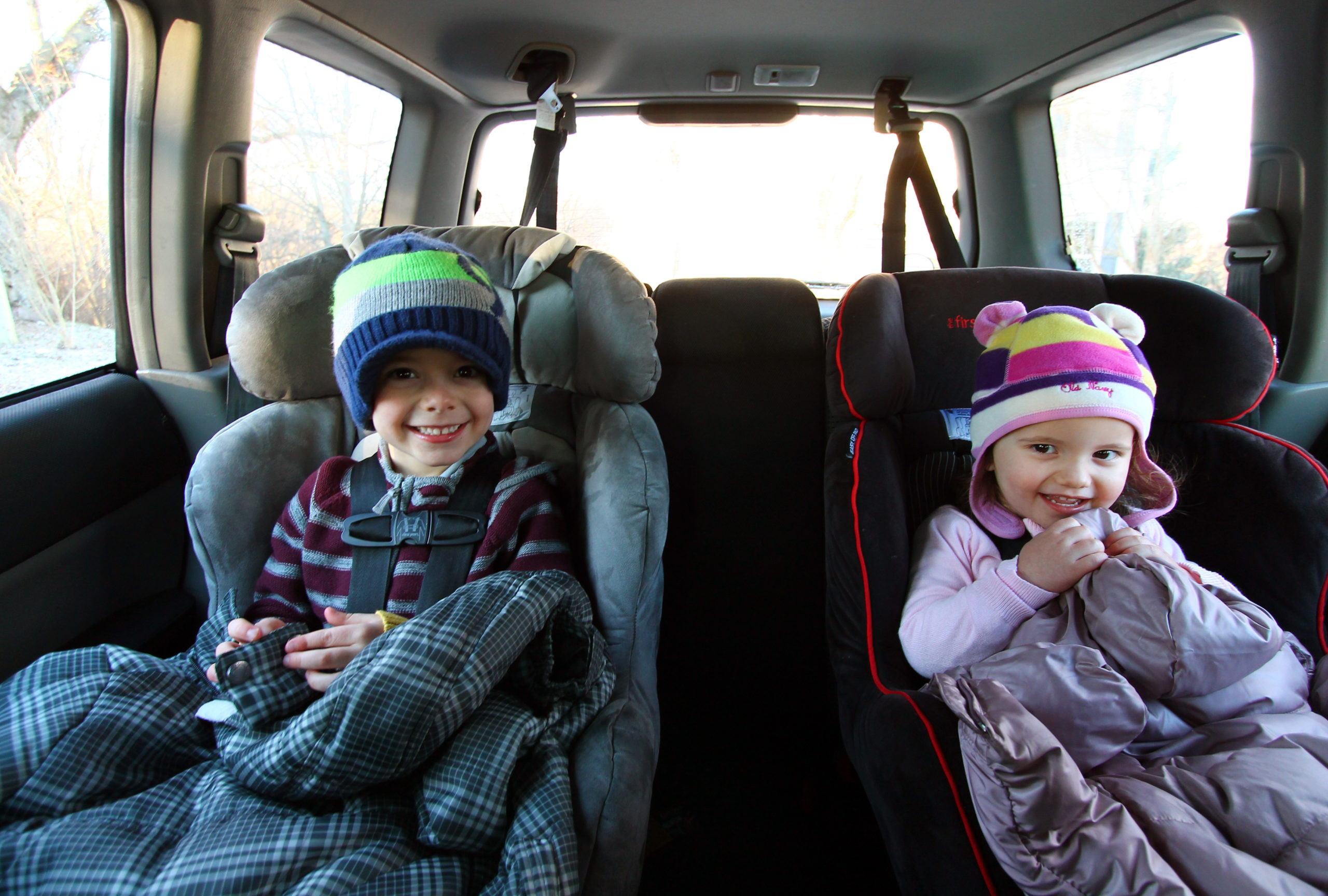
A traditional padded snowsuit should not be worn under the harness unless the car-seat maker specifically permits that exact garment and use. Most snowsuits are too thick around the torso.
Use thin clothing under the harness and place a blanket over the secured straps. A coat may be worn over the harness with the sleeves on, or backward with the front open behind the child, as long as it does not affect the harness or cover the baby’s face.
Is fleece safe under a car-seat harness?
Thin fleece may be acceptable when it does not add significant bulk and the harness passes the pinch test. Thick fleece jackets, fleece bunting, and layered fleece suits may still be too bulky.
The garment’s thickness and fit matter more than the fabric label. Follow the car-seat manual if it sets a specific restriction.
Can a blanket go over the car-seat straps?
Yes, a light blanket can usually go over a properly tightened harness. Keep the blanket below the baby’s face and do not place it behind the infant’s back or under the straps.
Check the baby during the trip. A blanket that shifts toward the face creates a breathing risk.
Are car-seat ponchos safe?
A poncho may be suitable if it is designed for use with the specific car seat and does not sit behind the child or under the harness. Some ponchos leave the harness area open, while others may interfere with the straps.
Check the product instructions and the car-seat manual. If the design makes the harness hard to see, tighten, or inspect, do not use it.
What should I do if the baby cries without a coat?
Remove the bulky coat before driving and use thin layers plus a blanket over the harness. Crying does not make a loose harness safe.
If the baby remains upset, check for cold hands, a wet diaper, hunger, an uncomfortable position, or an overly warm vehicle. Pull over safely when you need to attend to the baby. Never unbuckle the child while the vehicle is moving.
Key takeaways
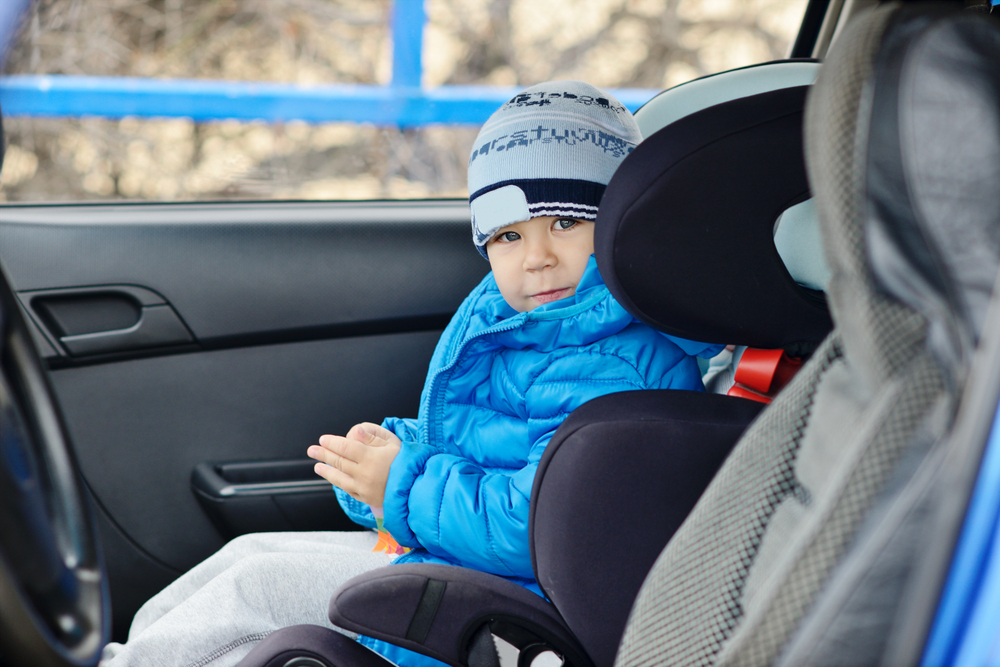
- Do not place a bulky winter coat, snowsuit, or puffer under an infant car-seat harness.
- Use thin, close-fitting layers instead.
- Tighten the harness until you cannot pinch slack.
- Put a blanket over the secured harness, not beneath the child.
- Keep the baby’s face uncovered.
- Use only car-seat accessories approved by the manufacturer.
- Read the exact car-seat manual and seek a child passenger safety check if you are unsure.
Conclusion
Infants can stay warm in a car without wearing a bulky coat under the harness. Use thin layers, buckle the baby snugly, and add a blanket or approved outer cover over the secured straps.
The safest final check is simple: if the coat makes the harness loose or prevents you from passing the pinch test, take it off before the car moves.