
Introduction
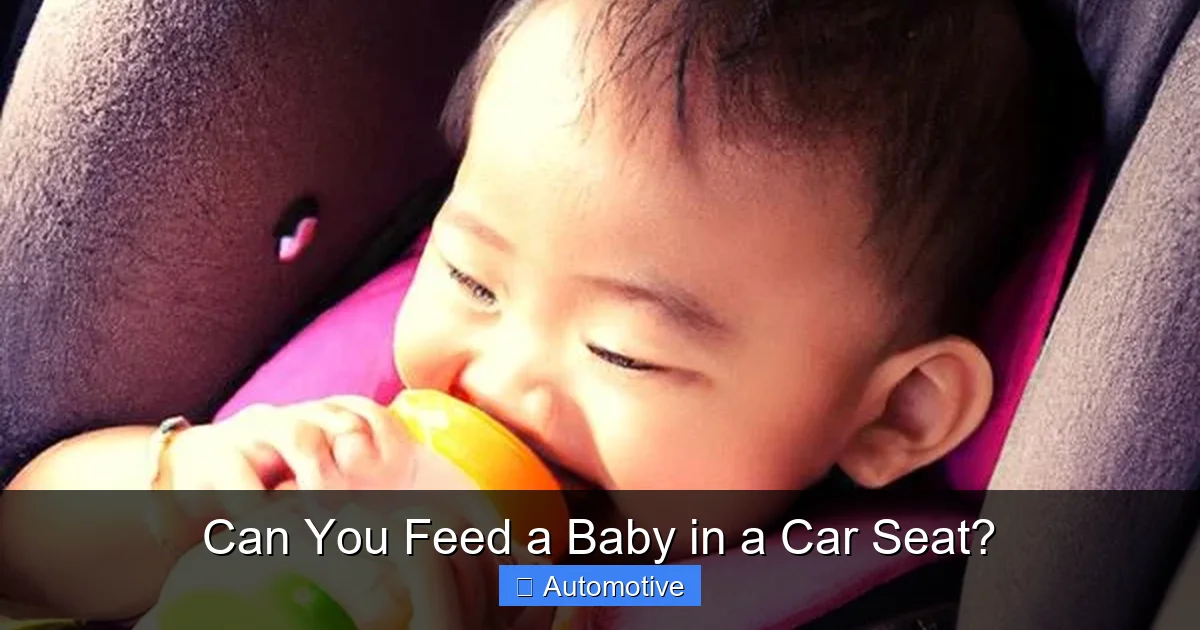
You should not feed a baby while the car is moving. A baby can choke, vomit, or slip into an unsafe position, and the driver cannot safely respond. In the United States, the safest plan is to pull over, park, and take the baby out of the car seat for a calm feeding.
A car seat is made to protect a child during travel. It is not designed to replace a high chair, feeding seat, or caregiver’s arms. If you must feed your baby during a trip, plan regular stops and watch your baby closely from start to finish.
Can You Feed a Baby in a Car Seat While the Car Is Moving?
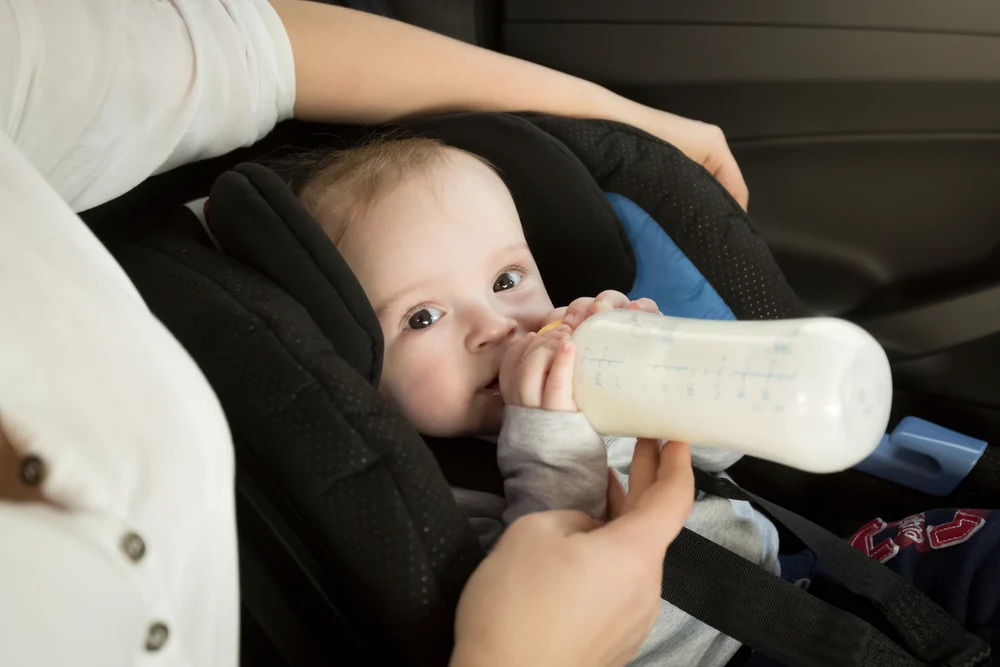
No. Do not feed a baby in a moving vehicle, even if the baby is strapped into a rear-facing car seat.
A moving car creates several risks:
- The baby may choke while the driver is unable to help.
- A bottle, spoon, pouch, or food may block the baby’s airway.
- The baby may cough or vomit and need immediate attention.
- A caregiver may loosen or remove the harness to make feeding easier.
- Food or liquid may cause the baby to move, slump, or slide down.
- A sudden stop or crash can turn a bottle, spoon, or food container into a hazard.
The American Academy of Pediatrics advises parents to use car seats only for travel and to avoid feeding children in a car. The National Highway Traffic Safety Administration also emphasizes correct harness use and keeping children properly restrained for every trip.
If your baby is hungry, the driver should stop in a safe place. A caregiver can then remove the baby from the car seat and provide the meal or bottle outside the vehicle.
What if another adult is sitting beside the baby?
An adult sitting next to the baby can provide closer supervision, but that does not make feeding during motion safe. The adult may notice choking, but the car may still be moving, and the caregiver may not be able to remove the baby or give first aid safely.
The best choice remains the same: stop the car, park, and feed the baby outside the car seat.
Is It Safe to Feed a Baby in a Car Seat While Parked?
Feeding in a car seat while the car is parked is safer than feeding while driving, but it is still not the preferred setup.
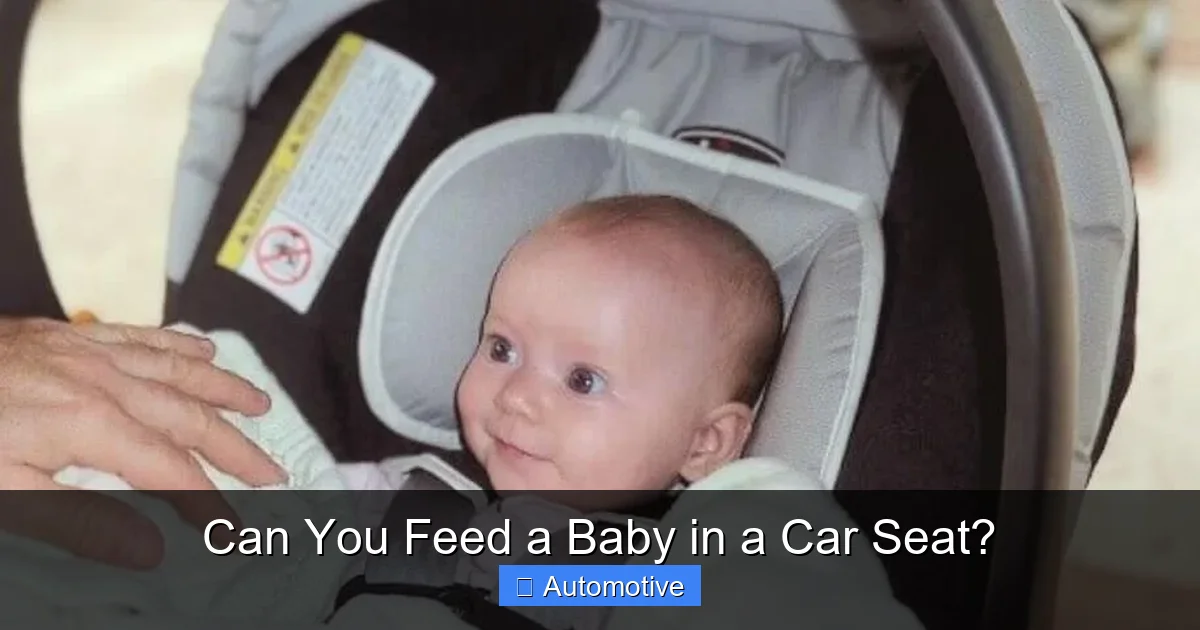
A parked car removes the crash risk from moving traffic, but the car seat still has a narrow purpose. It holds the baby in a reclined position for travel. It does not give the same support as a caregiver’s arms, a properly used high chair, or an age-appropriate feeding seat.
For a bottle-fed baby, the safest option is usually:
- Park the vehicle completely.
- Turn off the engine.
- Remove the baby from the car seat.
- Hold the baby in a semi-upright position.
- Offer the bottle while watching the baby.
- Burp the baby as needed.
- Return the baby to the car seat only when the feeding is over.
For a baby eating solid food, use a stable, upright feeding seat outside the vehicle whenever possible. The baby should be awake, alert, and supervised by an adult who can respond quickly.
If you feed the baby in the car seat during an emergency or brief delay, keep the car parked, keep the harness correctly fastened, and stay within arm’s reach. Do not treat this as a regular feeding routine.
Why Feeding in a Car Seat Can Be Risky
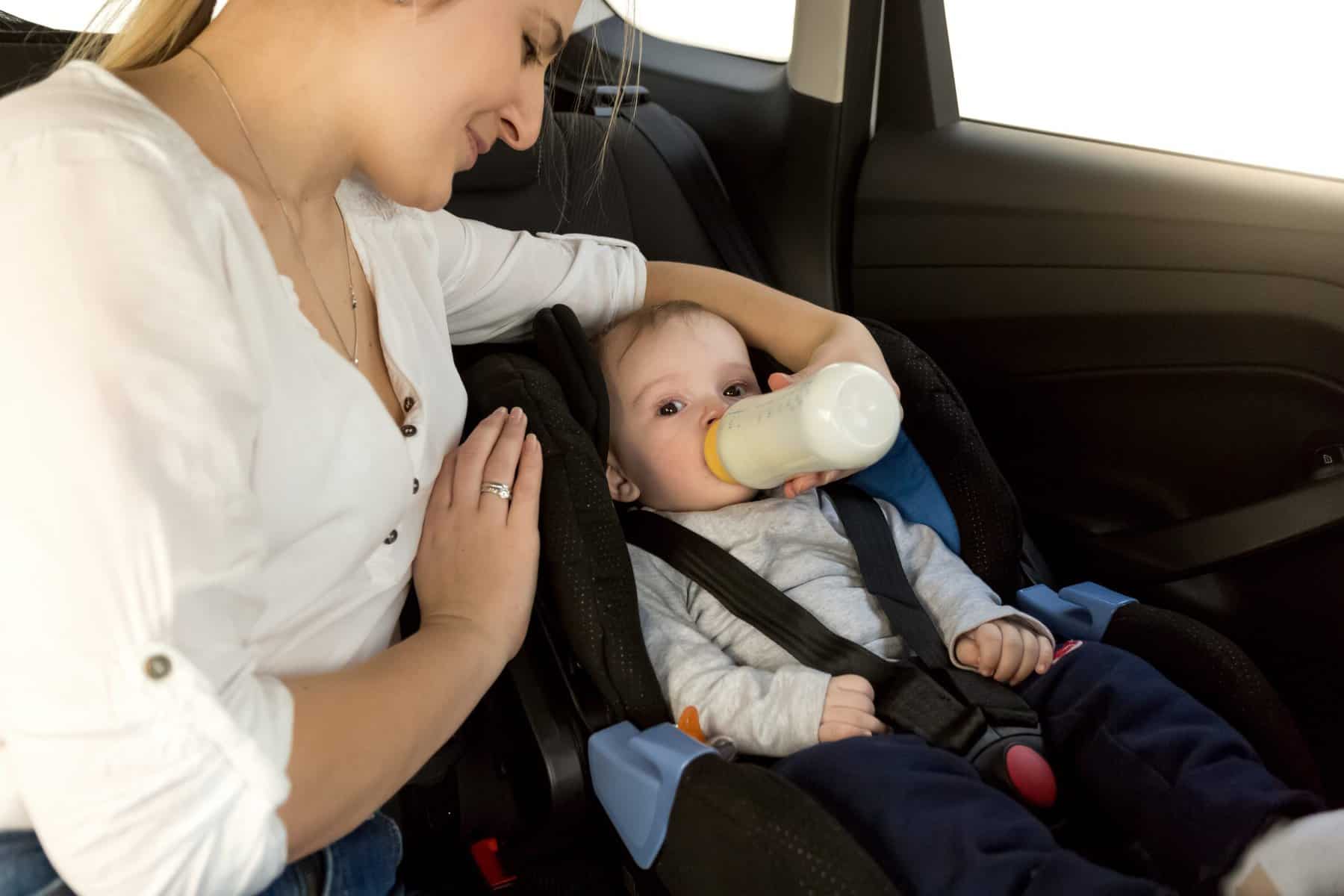
The main risks are choking, poor positioning, unsafe harness changes, and prolonged time in a seated device.
Choking
Babies and young children can choke quickly. A caregiver may need to remove the child from the seat and begin first aid. That response is harder when the child remains strapped into a car seat inside a vehicle.
Do not rely on coughing, crying, or movement as proof that the baby is safe. A baby can become quiet during a serious airway blockage.
The Centers for Disease Control and Prevention recommends preparing food in forms that match a child’s age and development. Common choking hazards for young children include whole grapes, nuts, popcorn, chunks of meat, hard raw vegetables, hot dogs, and sticky foods such as spoonfuls of nut butter.
Reclined positioning
Infant car seats place babies at a reclined angle to help protect the airway during travel. That angle is not the same as the upright position generally used for eating.
When a baby eats while reclined, milk or food may not move as easily. The baby may also slide, bend the neck, or let the head fall forward. A chin pressed toward the chest can narrow the airway.
A baby’s position can change after the caregiver looks away, especially if the baby is small, tired, or not yet able to sit steadily.
Bottle propping
Never prop a bottle in a car seat. Do not use a blanket, toy, pillow, or other object to hold the bottle in place.
Bottle propping may increase the risk of choking, ear infections, tooth decay, and overfeeding. It also removes the close contact that lets a caregiver notice changes in breathing or swallowing.
The caregiver should hold the bottle and watch the baby. Never leave a baby alone with a bottle.
Loose or altered harness straps
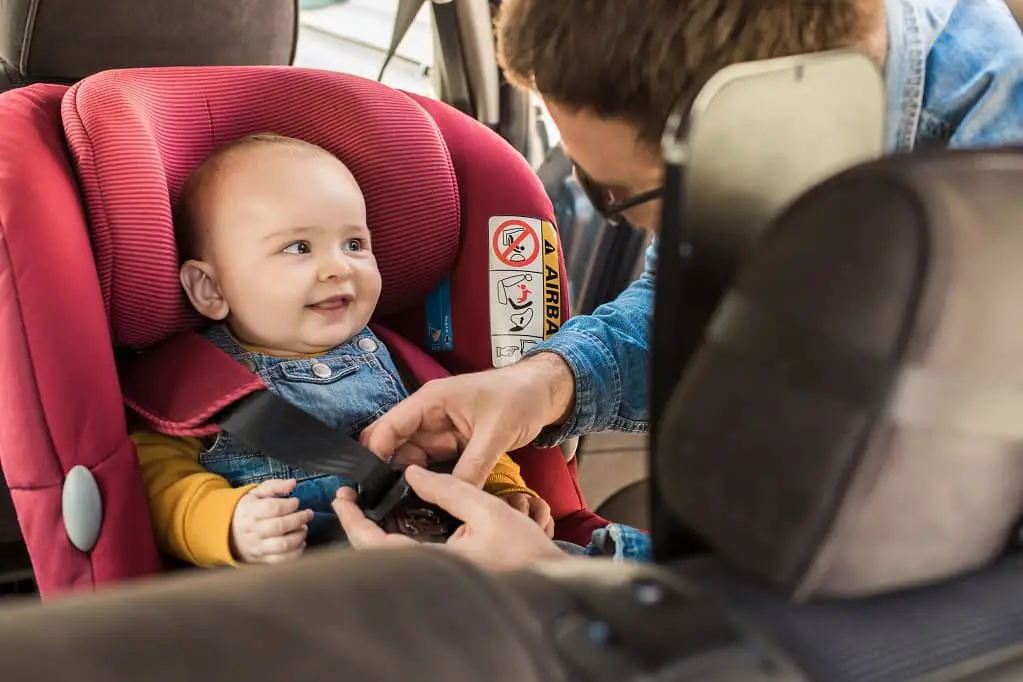
Do not loosen, remove, or place the harness behind the baby to make feeding easier. A car seat harness must fit according to the seat maker’s instructions during travel.
The harness should not be used as a feeding restraint. It cannot prevent every unsafe movement during eating, and changing the harness may make the seat less effective in a crash.

The Safest Way to Feed a Baby During a Road Trip
Build feeding breaks into the trip before you leave. This is safer and usually less stressful than trying to feed through the car seat.
Before the trip
- Feed the baby before loading into the car, when practical.
- Pack bottles, breast milk, formula, burp cloths, bibs, and clean supplies.
- Bring age-appropriate foods if the baby eats solids.
- Plan a safe place to stop.
- Allow extra travel time for feeding, diaper changes, and soothing.
- Have a second adult sit near the baby when possible, but do not use that adult as a reason to feed while driving.
Never leave a baby alone in a parked car. Interior temperatures can rise or fall quickly, even when the outside weather feels mild.
During the trip
When the baby shows hunger cues:
- The driver should look for a safe stopping place.
- Park fully away from moving traffic when possible.
- Turn off the vehicle.
- Remove the baby from the car seat.
- Feed the baby while holding them or using a safe, stable feeding seat.
- Keep the baby supervised throughout the meal.
- Clean up spills and check the baby’s clothing.
- Place the baby back in the car seat.
- Check the harness and seat position before driving again.
If the baby is crying but the next safe stop is not close, the driver should stay focused on driving. Never reach back to give a bottle or food.
If the baby falls asleep
Do not use feeding as a way to settle a baby in the car seat for a long period. Once you reach your destination, move the baby to a firm, flat sleep surface on their back as soon as practical.
The AAP warns that sitting devices, including car seats, are not a routine sleep space outside travel. Do not place a car seat on a table, bed, sofa, counter, or shopping cart.
Bottle-Feeding a Baby During Travel
Bottle-feeding is safest when the baby is held rather than left in the car seat.
Hold the baby so the head and upper body are higher than the stomach. Keep the bottle angled so the nipple stays filled with milk or formula. Watch the baby’s breathing, swallowing, and cues to stop.
Do not force the baby to finish a bottle. Pause when the baby turns away, stops sucking, relaxes the hands, or shows other signs of fullness.
For formula, follow the product label and the CDC’s preparation guidance. Use safe water and clean equipment. Prepared formula and breast milk require proper storage and time limits; do not leave a bottle in a warm vehicle.
Never microwave a bottle. Heat can create dangerous hot spots. Test the liquid before feeding.
A baby who coughs often, struggles to breathe, turns blue, becomes unusually quiet, or cannot cry needs immediate attention. Stop feeding and call 911 for a serious breathing emergency. If the baby is choking and you know infant choking first aid, begin it while someone calls 911.

Feeding Solid Foods During a Car Trip
Do not give solid food to a baby in a moving car. Once parked, feed the baby outside the car seat in an upright and stable position.
Before offering food, check these conditions:
- The baby is awake and alert.
- The baby can sit upright with good head control.
- The food is soft and prepared in an age-appropriate shape.
- An adult is within reach and watching continuously.
- The baby is not eating while reclined, walking, playing, or being carried.
- The food is not hot, hard, sticky, round, or cut into a high-risk shape.
Starting solids is based on development, not just a specific age. Many babies are ready around 6 months, but readiness signs matter. Ask the baby’s pediatrician if you are unsure, especially if the baby was born early or has swallowing, growth, or developmental concerns.
Do not give a baby food simply to keep them quiet during a long drive. A feeding break may take more time, but it provides a safer setting and gives the baby a chance to eat without distraction.
What to Do If You Cannot Stop Right Away
If the baby is hungry but the car cannot stop immediately, keep driving safely until you reach an appropriate stopping place. Do not pass food or a bottle to the baby.
If the baby is crying, the driver should not turn around, unbuckle the baby, or reach into the back seat. Pull over when it is safe.
If the baby appears to be choking:
- Stop the vehicle as soon as it is safe.
- Remove the baby from the car seat.
- Call 911 if the baby cannot breathe, cry, or cough effectively.
- Give infant choking first aid if you are trained.
- Follow the dispatcher’s instructions.
If the baby is coughing forcefully and breathing, allow the baby to cough while watching closely. Do not blindly sweep a finger into the mouth. A finger sweep can push an object deeper.
Parents and caregivers should consider taking an infant CPR and choking-response class through a recognized provider, such as the American Heart Association or the American Red Cross.

Common Mistakes to Avoid
These shortcuts can create unnecessary risk:
- Feeding the baby while the vehicle is moving.
- Assuming a second adult makes moving-car feeding safe.
- Propping a bottle with a blanket or toy.
- Loosening the harness for feeding.
- Offering solid food to an infant who cannot sit upright.
- Leaving a bottle in the baby’s mouth while the baby sleeps.
- Leaving a baby alone in a parked car.
- Letting the baby sleep in the car seat after the trip ends.
- Giving food during a rushed stop near moving traffic.
- Using a car seat as a high chair or routine feeding chair.
A short delay is usually easier to manage than a preventable emergency. Plan for stops rather than trying to save a few minutes.

Quick Decision Guide
| Situation | Safest choice |
|---|---|
| Car is moving | Do not feed. Stop first. |
| Car is parked in a safe place | Remove the baby from the car seat and feed while supervised. |
| Baby is in a rear-facing infant seat outside the car | Use the seat only briefly and with close supervision; a caregiver’s arms or a safe flat sleep surface is better for routine care. |
| Baby is eating solid food | Use an upright, stable feeding seat outside the car. |
| Baby is asleep after arrival | Move the baby to a firm, flat sleep surface on their back. |
| Baby is choking | Stop, remove the baby from the seat, call 911 when needed, and use trained first aid. |
Frequently Asked Questions
Can I breastfeed a baby in a parked car seat?
Breastfeeding is best done while holding the baby in a supported position. A parked car is safer than a moving car, but the car seat is still not the ideal feeding position. Remove the baby from the seat when practical, and keep the baby’s head and airway well supported.
Can a baby drink a bottle in a car seat if an adult is holding it?
An adult should hold the baby and the bottle rather than feed the baby while the baby remains reclined in the car seat. If a brief exception is unavoidable, the vehicle must be parked, the baby must remain supervised, and the bottle must never be propped.
Can a baby eat snacks in a car seat?
Do not give snacks while the car is moving. In a parked vehicle, remove the baby from the car seat and use a stable, upright feeding position. Choose foods that match the baby’s development and avoid known choking hazards.
Can I leave my baby in the car seat after feeding?
A car seat is appropriate for travel, not routine rest or sleep outside the vehicle. Once you reach your destination, move the baby to a firm, flat sleep surface if the baby has fallen asleep.
How often should I stop to feed a baby on a road trip?
There is no single safe interval for every baby. Stop when the baby shows hunger cues, needs a diaper change, or needs a break from the seat. Plan more time than the map app suggests, and follow your baby’s normal feeding pattern as closely as possible.
Key Takeaways
- Do not feed a baby while the car is moving.
- Pull over and park before offering a bottle or food.
- Remove the baby from the car seat for routine feeding.
- Never prop a bottle or loosen the harness.
- Feed solid foods only when the baby is awake, upright, and closely supervised.
- Move a sleeping baby to a firm, flat sleep surface after travel.
- Call 911 for a serious choking or breathing emergency.
Conclusion
A car seat protects a baby during travel, but it is not a feeding chair. The safest routine for U.S. families is simple: stop the car, remove the baby from the seat, feed in a supported upright position, and return the baby to the correctly fitted car seat before driving again.
For a trip with a young baby, schedule feeding breaks before leaving. That small amount of planning helps protect the baby and lets the driver focus on the road.
Sources
- National Highway Traffic Safety Administration: Car Seats and Booster Seats
- American Academy of Pediatrics: Car Seats and Booster Seats
- American Academy of Pediatrics: Safe Sleep
- Centers for Disease Control and Prevention: Choking Hazards
- Centers for Disease Control and Prevention: Infant Formula Preparation and Storage
- American Red Cross: Infant Choking