
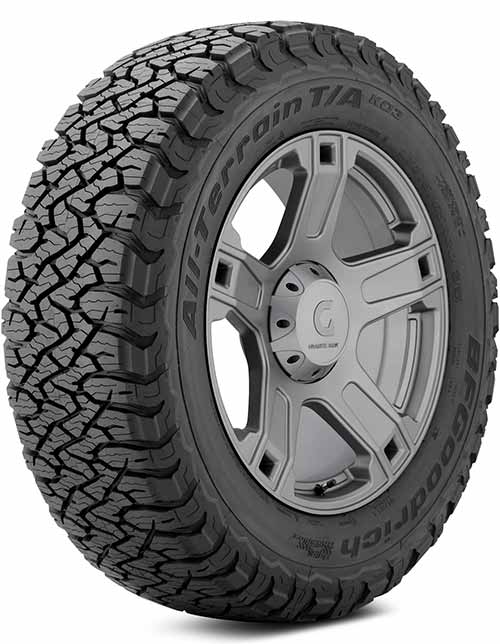
For most drivers in the United States, the BFGoodrich Trail-Terrain T/A is the best all-terrain tire for daily driving. It offers quiet road manners, good wet grip, light off-road ability, and strong performance in snow when the tire carries the 3-Peak Mountain Snowflake (3PMSF) symbol.
It is not the best choice for deep mud, rock crawling, or heavy towing. If your SUV or truck spends most of its time on pavement, the Trail-Terrain is a better fit than a loud, aggressive mud tire.
Your best choice can change with your vehicle, climate, mileage, and road use. A driver in Colorado may need stronger snow performance. A driver in Texas may care more about heat, rain, and tread life. A driver who often uses gravel roads may need a tougher tire than a driver who stays on city streets.
Quick answer: Which all-terrain tire is best for daily driving?
The BFGoodrich Trail-Terrain T/A is the strongest all-around pick for everyday driving in the U.S. It is made for SUVs, crossovers, and light trucks that spend most of their time on highways and city roads but still see gravel, dirt, or snow.
Consider these alternatives:
| Best for | Recommended tire | Why it may fit |
|---|---|---|
| Best overall daily use | BFGoodrich Trail-Terrain T/A | Quiet, balanced, and light off-road capable |
| More snow and off-road use | Falken Wildpeak A/T4W | Stronger all-terrain design and winter rating on many sizes |
| Crossover daily driving | Falken Wildpeak A/T Trail | Road-focused fit for many unibody SUVs |
| Light trucks and mixed use | Firestone Destination A/T2 | Comfortable road use with useful dirt-road traction |
| Heavy-duty all-terrain use | Toyo Open Country A/T III | Tough casing and strong off-road focus |
No tire is best for every driver. The best all-terrain tire is the one that matches your vehicle, wheel size, load needs, weather, and driving habits.
What makes a good all-terrain tire for daily driving?
A daily-use all-terrain tire must do more than grip dirt. It also needs to behave well on pavement, where most drivers spend most of their time.
Look for these traits:
- Low road noise: Large tread blocks can create a hum at highway speed.
- Stable steering: The tire should track straight without constant correction.
- Good wet braking: Rain is a common road hazard in much of the U.S.
- Predictable snow grip: The 3PMSF mark is useful if you drive in regular winter conditions.
- Reasonable fuel use: Heavy tires can increase rolling resistance.
- Correct load capacity: The tire must safely support your vehicle.
- Even wear: Proper alignment and inflation matter as much as tread design.
- Strong sidewalls: Extra protection helps on gravel and rough roads.
An all-terrain tire uses larger tread blocks and open grooves than a highway tire. This design helps it find grip on loose surfaces. The trade-off is often more noise, weight, and rolling resistance.
For daily driving, choose a tire with a balanced tread pattern, not the most aggressive pattern available.

Best overall: BFGoodrich Trail-Terrain T/A
The BFGoodrich Trail-Terrain T/A is a strong choice for drivers who want a more rugged look and extra traction without giving up normal road comfort.
Its design suits:
- Commuter SUVs
- Crossover vehicles
- Half-ton pickups
- Drivers who use gravel roads
- Drivers who face rain and occasional snow
- Owners who want mild off-road ability
The tire carries the 3PMSF symbol in applicable sizes. That mark means the tire passed a standardized snow-traction test. It does not mean the tire performs like a dedicated winter tire on ice or packed snow.
Why it works for daily use
The Trail-Terrain uses a less aggressive tread than many traditional all-terrain tires. That helps reduce noise on highways. Its tread also supports normal cornering and braking on dry pavement.
It is a good fit when your driving is roughly:
- 70% to 90% pavement
- 10% to 30% gravel, dirt, or light trail use
Those percentages are only a decision aid. They are not a manufacturer rating or a promise of performance.
Where it falls short
The Trail-Terrain is not designed for serious mud or difficult rock trails. Its lighter tread design may also provide less loose-surface grip than a more aggressive tire such as the Falken Wildpeak A/T4W or Toyo Open Country A/T III.
Choose another tire if you regularly:
- Drive through deep mud
- Carry heavy loads
- Tow near your vehicle’s maximum rating
- Drive on sharp rocks
- Travel in severe winter conditions
- Need maximum sidewall protection

Best all-terrain tires for different daily-driving needs
Falken Wildpeak A/T Trail: best for crossover SUVs
The Falken Wildpeak A/T Trail is aimed at crossover SUVs and similar vehicles. It offers more dirt-road ability than a typical highway tire while keeping a road-friendly design.
It may suit vehicles such as:
- Subaru Outback
- Subaru Forester
- Toyota RAV4
- Honda Passport
- Ford Bronco Sport
- Jeep Cherokee
Always confirm the exact size, load index, speed rating, and vehicle fitment before buying.
The Wildpeak A/T Trail can be a good choice for drivers who deal with snow, gravel, and wet roads but do not need a heavy truck tire. Its main limit is that it is not a replacement for a dedicated winter tire in areas with frequent ice or deep snow.
Falken Wildpeak A/T4W: best for more severe mixed use
The Wildpeak A/T4W is better suited to drivers who spend more time on rough roads or need a tougher tire for a pickup or SUV.
It may be a better choice than the Trail-Terrain when you need:
- More aggressive tread
- Stronger off-road traction
- Higher load options
- Better support for regular gravel and trail use
- A tire built for demanding light-truck work
The trade-off is extra weight and more road noise. A heavier tire can also affect acceleration, braking feel, and fuel economy.
Firestone Destination A/T2: best for balanced truck use
The Firestone Destination A/T2 is designed for light trucks and SUVs that split time between paved roads and unpaved surfaces.
It may work well for:
- Work trucks
- Rural roads
- Farm and ranch access roads
- Drivers who tow moderate loads
- Highway use mixed with gravel
Check the tire’s load range and your truck’s required specifications. A tire with the wrong load rating can create safety and handling problems.
Toyo Open Country A/T III: best for a tougher all-terrain tire
The Toyo Open Country A/T III is a more rugged option. It suits drivers who want greater off-road ability and do not mind a firmer ride or more tread noise.
It can be useful for:
- Full-size pickups
- Frequent gravel travel
- Hunting and camping roads
- Moderate trail use
- Drivers who need a strong light-truck tire
It may be more tire than a city commuter needs. Extra capability often brings extra weight, cost, and noise.

All-terrain versus all-season tires for everyday driving
An all-terrain tire is not automatically better than an all-season tire for pavement.
A highway or touring all-season tire often provides:
- Lower noise
- Better fuel economy
- Smoother handling
- Shorter dry-road stopping distances
- Lower purchase cost
An all-terrain tire may provide:
- Better gravel traction
- More sidewall protection
- Better performance on dirt
- More ground-surface grip
- A more rugged appearance
If you rarely leave pavement, a highway all-season tire may be the smarter choice. Examples include highway-focused SUV and truck tires such as the Michelin Defender LTX M/S 2, depending on the vehicle and available size.
Choose an all-terrain tire when its extra traction solves a real problem. Do not choose one only because it looks more rugged.
How to choose the right all-terrain tire
Use this process before you buy.
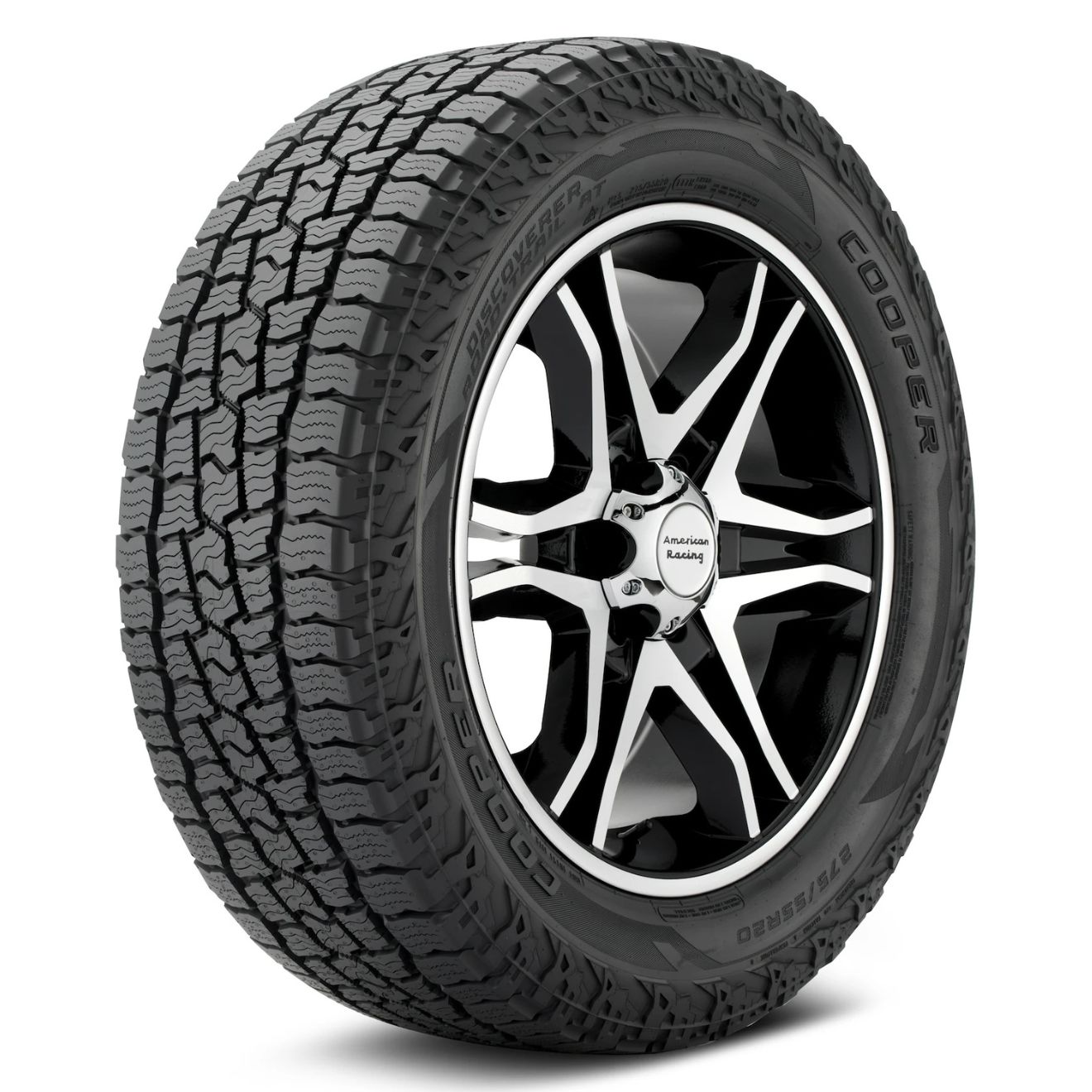
1. Confirm the correct tire size
Read the size printed on the tire sidewall. It may look like:
265/70R17 115T
The numbers and letters describe:
- 265: Tire width in millimeters
- 70: Sidewall height as a percentage of width
- R: Radial construction
- 17: Wheel diameter in inches
- 115: Load index
- T: Speed rating
Your vehicle placard and owner’s manual are the safest starting points. The placard is often found on the driver’s doorjamb.
Do not change size without checking clearance, load capacity, speed rating, and electronic systems. A tire shop or vehicle manufacturer can help verify unusual fitments.
2. Check the load index and load range
The tire must support the weight of your vehicle and its intended load.
A pickup used for towing or carrying tools may need a higher load range than an empty commuter truck. However, installing a much stiffer tire can reduce ride comfort and may not improve safety if the vehicle does not need it.
Never exceed the vehicle’s:
- Gross vehicle weight rating
- Axle weight rating
- Tire load limit
- Trailer rating
- Payload rating
The tire does not increase the vehicle’s legal or mechanical towing capacity.
3. Match the tread to your roads
Use a road-focused all-terrain tire when you mainly drive on:
- Asphalt
- Concrete
- Wet pavement
- Gravel
- Maintained dirt roads
Use a more aggressive tire when you often drive on:
- Deep loose soil
- Mud
- Sharp rocks
- Rutted trails
- Remote roads with no maintenance
More aggressive tread is not free performance. It can increase noise, vibration, weight, and fuel use.
4. Consider winter conditions
Look for the 3PMSF symbol if you drive in areas with regular snow. It looks like a mountain with a snowflake inside.
The 3PMSF symbol is different from M+S, which means mud and snow. M+S is a broad tread designation. It does not show that the tire passed the same severe-snow test.
Use dedicated winter tires if you regularly drive on:
- Ice
- Packed snow
- Steep snowy roads
- Very cold pavement
- Roads where winter traction is critical
All-terrain tires can be useful in snow, but they cannot match a quality winter tire in every cold-weather condition.
5. Compare warranty terms carefully
Some tire warranties cover workmanship or materials. Others include a limited treadwear warranty.
Read the conditions. Treadwear coverage may require:
- Regular tire rotation
- Proper inflation
- Proof of maintenance
- Alignment checks
- Use on the correct vehicle
- Replacement before the tread reaches a stated limit
A warranty is not a guarantee that every tire will last the same number of miles. Driving style, alignment, climate, load, and road surface change tire life.
How much do all-terrain tires cost?
All-terrain tire prices vary by size, load range, speed rating, brand, and availability. A set for a compact crossover may cost much less than a set for a heavy-duty pickup.
Include these extra costs in your budget:
- Mounting
- Balancing
- Valve stems or tire-pressure sensors
- Disposal fees
- Alignment
- Rotation
- Road-hazard coverage
- Taxes
A larger or heavier tire can also increase long-term fuel costs. This may matter more than a small difference in the purchase price.
A simple comparison is:
Total ownership cost = purchase price + installation + expected maintenance + fuel impact
This is only an estimate. Actual fuel use depends on the vehicle, tire pressure, weather, traffic, and driving style.
Do all-terrain tires reduce fuel economy?
They can reduce fuel economy, but the amount varies.
All-terrain tires are often heavier than highway tires. Their tread can also create more rolling resistance. Those factors may require more energy to move the vehicle.
The effect is usually greater when you choose:
- A larger tire
- A heavier load range
- A wider tire
- A very aggressive tread
- A tire with deep tread
- A tire that is underinflated
Keep the tires at the pressure listed on the vehicle placard unless a qualified professional gives you a vehicle-specific reason to use another pressure. Do not use the maximum pressure printed on the tire sidewall as your normal target unless the vehicle maker specifies it.
How long do all-terrain tires last?
There is no single mileage number that applies to every driver.
Tire life depends on:
- Alignment
- Inflation
- Rotation schedule
- Vehicle weight
- Driving speed
- Hard braking
- Road surfaces
- Climate
- Tire compound
- Tread depth
- Storage conditions
Inspect the tires regularly. Replace them when the tread reaches the legal wear indicator or when the tire shows damage, cracking, bulges, or irregular wear.
The National Highway Traffic Safety Administration advises drivers to inspect tires and follow the vehicle and tire maker’s maintenance guidance. Age also matters. Tires can deteriorate even when they have plenty of tread.
Ask a tire professional to inspect older tires, especially if you see sidewall cracking or the vehicle is used for long highway trips.

Common mistakes when buying all-terrain tires
Buying the most aggressive tire
A mud-focused tire may look capable, but it can be tiring on a daily commute. Noise, vibration, braking feel, and fuel use may all suffer.
Ignoring the tire’s load rating
A tire that fits the wheel may still be wrong for the vehicle. Check the load index and load range before buying.
Treating 3PMSF as an ice rating
The 3PMSF symbol indicates tested severe-snow traction. It does not promise strong ice grip or replace winter tires.
Mixing different tire types
Mixing tread designs, sizes, or brands can change handling. For vehicles with all-wheel drive, mismatched rolling circumference may also create drivetrain concerns.
Follow the vehicle manufacturer’s instructions. If you replace fewer than four tires, ask a qualified tire professional about the safest arrangement.
Skipping alignment after uneven wear
Uneven wear may point to poor alignment, worn suspension parts, or incorrect inflation. New tires will not solve the cause by themselves.
Using the door placard for a modified vehicle without checking
Lift kits, different wheels, altered axle parts, and nonstandard tire sizes can change clearance and load needs. Modified vehicles deserve a fitment check before purchase.

Best all-terrain tire for daily driving: final recommendation
For most U.S. SUV and light-truck drivers, start with the BFGoodrich Trail-Terrain T/A. It offers the best balance of road comfort, wet-weather use, light off-road traction, and winter capability in applicable sizes.
Choose the Falken Wildpeak A/T Trail for a crossover-focused option. Choose the Falken Wildpeak A/T4W, Firestone Destination A/T2, or Toyo Open Country A/T III when your vehicle carries more weight or sees more demanding roads.
Before ordering, verify the exact tire size, load index, speed rating, wheel fit, winter marking, and vehicle requirements. If you drive mostly on pavement, compare the same-size all-season highway tire too. It may provide a quieter, more efficient ride.
Frequently asked questions
Are all-terrain tires good for highway driving?
Yes. Road-focused all-terrain tires can work well on highways. They may be louder and less fuel-efficient than highway tires, especially with aggressive tread or heavy load ratings.
Are all-terrain tires good in snow?
Some are good in light or moderate snow, especially when they have the 3PMSF symbol. A dedicated winter tire remains the better choice for frequent ice, deep snow, or very cold conditions.
Are all-terrain tires safe in rain?
They can provide good wet traction when properly designed, inflated, and maintained. Wet performance varies by tire model. Replace worn tires and slow down in heavy rain to reduce hydroplaning risk.
Should I buy all-terrain tires for a 4WD or AWD vehicle?
Not automatically. Four-wheel drive and all-wheel drive help deliver power, but they do not replace tire grip during braking or cornering. Choose tires based on your roads and weather, not only the drivetrain.
Can I use all-terrain tires on a car?
Some crossover-style all-terrain tires fit unibody SUVs and similar vehicles. Passenger cars may lack the required clearance, load capacity, or approved fitment. Check the owner’s manual and tire placard first.
How often should I rotate all-terrain tires?
Use the vehicle and tire maker’s schedule. Many vehicles need rotation at regular service intervals, but uneven wear, towing, off-road use, and directional tread can change the correct procedure.
What should I do before buying a full set?
Write down your current tire size, load index, speed rating, drivetrain, and typical road conditions. Then compare at least one road-focused all-terrain tire with one highway all-season tire. That comparison often makes the trade-off clear.
Sources and verification
This guide is based on manufacturer specifications and owner guidance from:
- National Highway Traffic Safety Administration tire safety information
- BFGoodrich Trail-Terrain T/A
- Falken Wildpeak tires
- Firestone Destination tires
- Toyo Open Country tires
Product specifications can change by size and model year. Confirm the current specification for your exact vehicle before purchase.