

A newborn should sit rear-facing, semi-reclined, centered, and snugly secured in the car seat. The baby’s back and bottom should rest flat against the seat, the head should stay in a neutral position, and the harness should lie flat without slack.
The baby should not slump forward, lean to one side, or have the chin pressed against the chest. That position can make breathing harder. Always follow the car seat and vehicle manuals, because the correct recline angle and harness settings vary by model.
This guide follows safety guidance from the National Highway Traffic Safety Administration (NHTSA), the American Academy of Pediatrics (AAP), and the Centers for Disease Control and Prevention (CDC).

What a Properly Positioned Newborn Looks Like
A newborn in a correctly adjusted car seat usually looks small and supported, not tightly squeezed. The baby’s body should stay in line with the center of the seat, with the head supported by the seat’s approved padding and the harness resting on the shoulders.
Use this visual checklist before every trip:
- The car seat faces the rear of the vehicle.
- The seat is installed at the newborn or young-infant recline angle.
- The baby’s bottom is all the way back in the seat.
- The baby’s back and hips rest against the seat without a gap.
- The head stays upright and does not fall chin-to-chest.
- The harness straps are at or below the shoulders for a rear-facing child, if the manual says this is the correct position.
- The harness lies flat and feels snug.
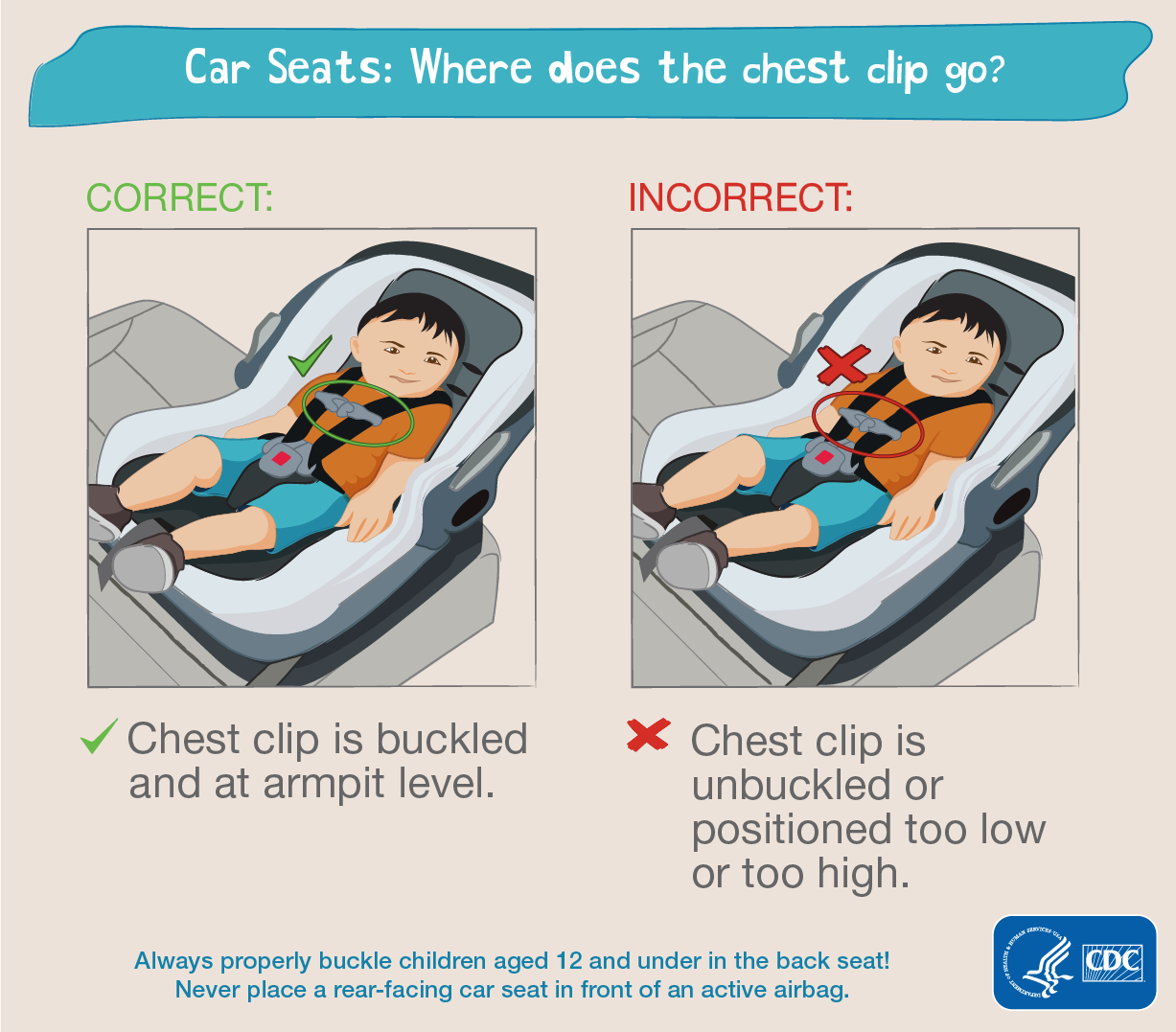
- The chest clip sits at armpit level.
- The baby’s face and airway remain clear.
- No thick coat, blanket, pillow, or unapproved insert sits under the harness.
A newborn’s head may turn slightly to one side. That is usually different from the head falling forward. The key concern is whether the baby’s chin presses down toward the chest or the body folds into a deep “C” shape.
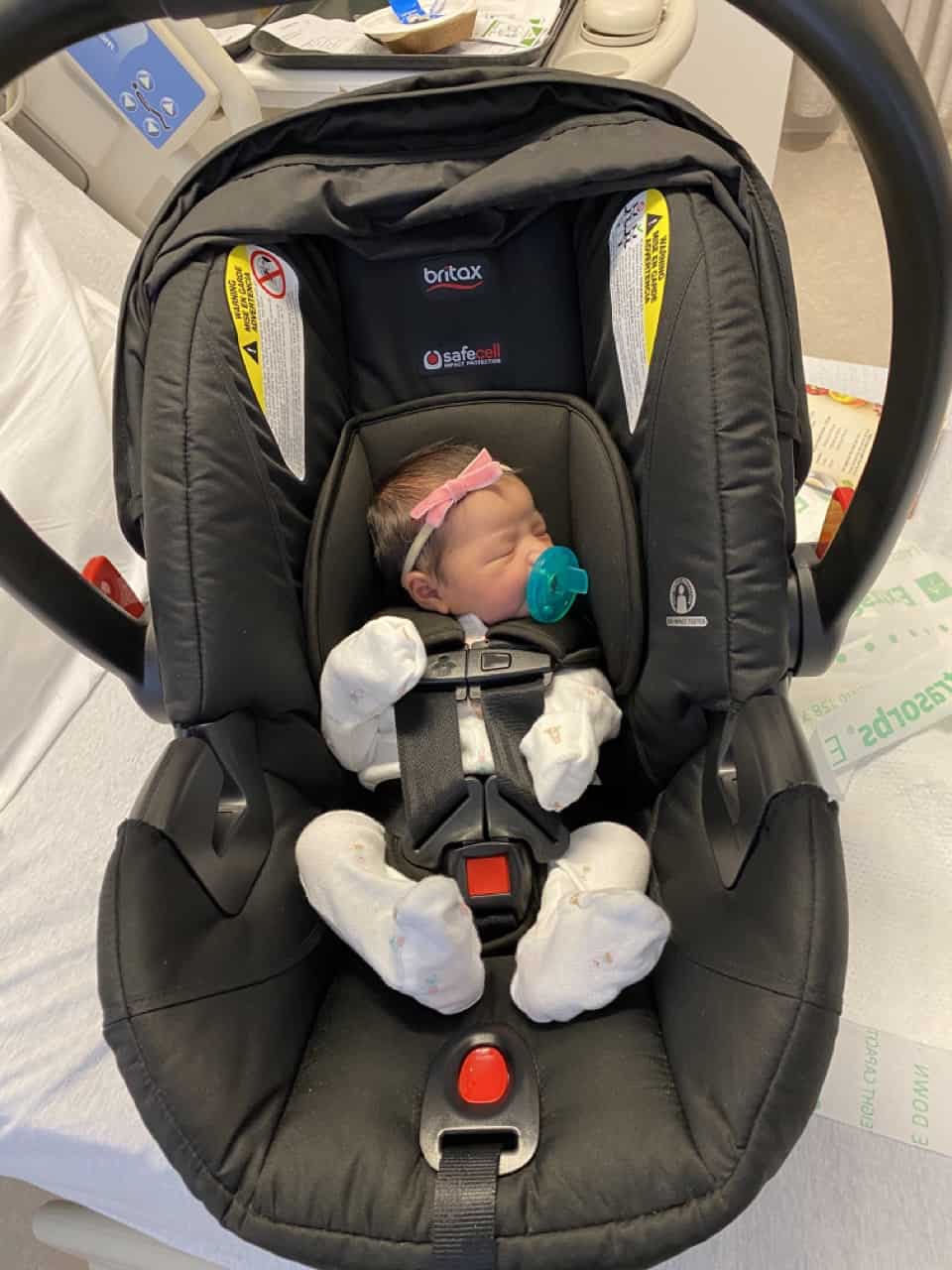
How a Newborn Should Sit in an Infant Car Seat
The baby should sit with the bottom deep in the seat and the back supported from the shoulders to the hips. Newborns have limited head and trunk control, so even a small gap or loose harness can allow the body to slide or curl.
Bottom and hips
The baby’s bottom should touch the back of the seat. The hips should remain centered rather than pushed toward one side.
If the baby slides down, remove the baby from the seat and reset the position. Do not place a rolled towel, blanket, or homemade cushion under the baby unless the car seat manufacturer specifically allows that item and explains where it goes.
Many infant seats include a newborn insert. Use it only if it came with the seat or is specifically approved for that exact model. A product that fits one car seat may change how another seat holds the baby.
Back and shoulders
The baby’s back should rest against the seat shell. The shoulders should stay under the harness straps, and the baby should not lean forward or fold sideways.
A newborn may appear slightly rounded because newborns naturally curl their arms and legs. Mild rounding is not the same as dangerous slumping. Look for a clear airway, a neutral head position, and a snug harness.
Head and neck
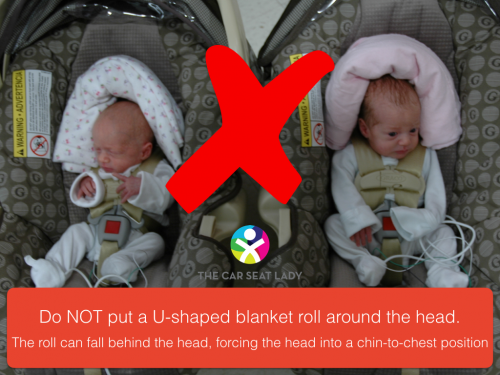
The baby’s head should remain in line with the body. It may rest against the seat’s built-in support, but the head should not be forced forward by extra padding.
Check the baby from the side. The chin should not touch the chest. If the head falls forward, stop and correct the recline angle, installation, or baby’s position before driving.
Do not use a neck pillow, headband, strap, or cushion that did not come with the seat. These products can change the way the harness works or push the baby’s head into an unsafe position.
How Tight Should a Newborn’s Car Seat Harness Be?
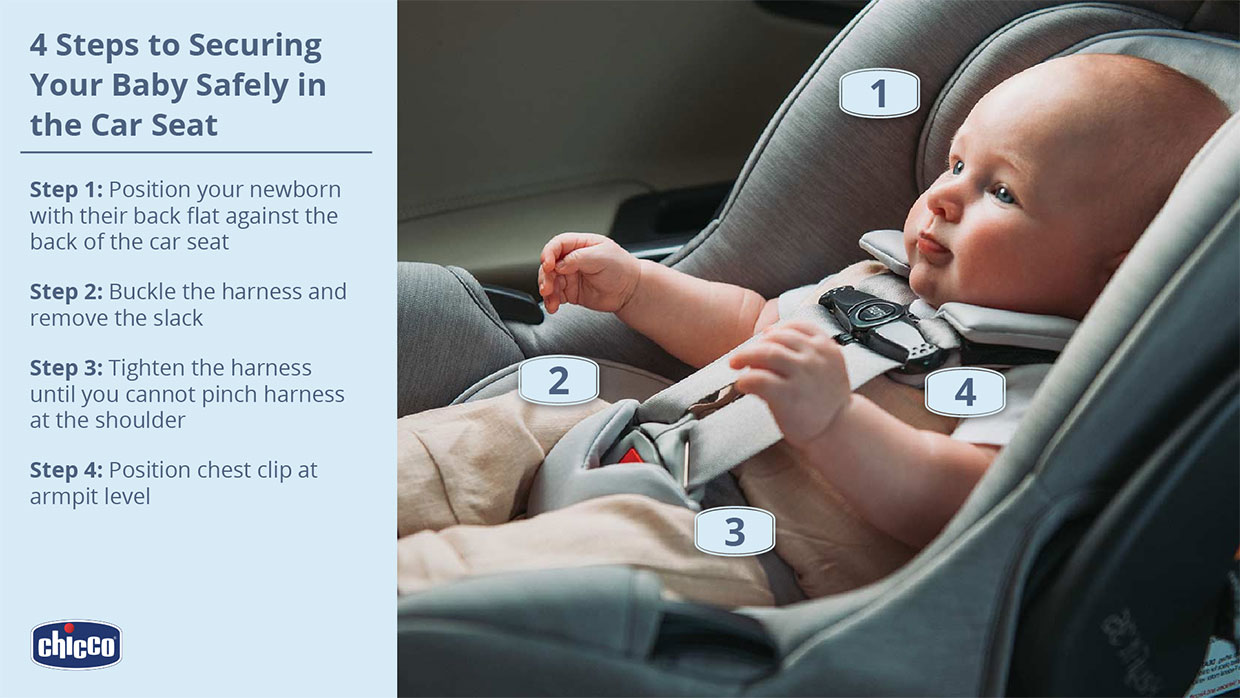
The harness should be snug enough that you cannot pinch extra webbing at the baby’s shoulder after buckling and tightening it. This is often called the pinch test.
The harness should:
- Rest flat against the baby.
- Pass over the shoulders.
- Stay at or below the shoulders when the seat is rear-facing, according to the seat manual.
- Meet at the chest clip.
- Keep the baby from sliding down or moving out of position.
The chest clip should sit at the baby’s armpit level. It should not rest on the neck or belly. The clip helps position the harness straps; it is not a substitute for a tight harness.
A simple harness check
- Place the baby’s bottom and back against the seat.
- Buckle the crotch buckle and chest clip.
- Tighten the harness until it lies flat.
- Try to pinch the harness webbing at the shoulder.
- If you can pinch a fold of webbing, tighten it more.
- Check that the chest clip has moved back to armpit level.
Do not place bulky clothing under the harness. Thick coats can compress during a crash and leave extra space between the child and the straps. Dress the baby in thin layers, buckle the harness snugly, and place a blanket over the secured harness if needed.

What Recline Angle Does a Newborn Need?
A newborn needs the car seat’s approved rear-facing recline angle. The correct angle keeps the baby’s head from falling forward while also helping the seat protect the baby during a crash.
The exact angle differs by car seat. Use the built-in angle indicator and the instructions for that model. Do not estimate the angle by appearance alone.
The seat should not be so upright that the baby’s chin falls to the chest. It should also not be reclined beyond the range allowed by the manufacturer. A seat that is too reclined may not install correctly or may not provide the protection intended by its design.
If the baby’s head falls forward
If your newborn’s head keeps falling forward:
- Park the vehicle before making changes.
- Check that the car seat is installed at the correct angle.
- Confirm that the recline foot or adjustment is set as shown in the manual.
- Reposition the baby’s bottom all the way back in the seat.
- Check that the harness is snug and correctly placed.
- Make sure no extra insert or padding is changing the baby’s position.
- If the problem continues, contact the car seat manufacturer or a certified Child Passenger Safety Technician.
Never place a rolled towel or other item under the seat unless the manufacturer permits it. Some manufacturers allow a tightly rolled towel at a specific location to correct vehicle-seat contours, but that decision must come from the instructions for the exact car seat.

Where Should a Newborn Car Seat Go in the Vehicle?
The safest practical location is usually a rear seating position, because children should ride in the back and away from active front airbags. The center rear position is not automatically safest if the seat cannot be installed tightly there.
Choose the position where you can install the car seat correctly. A proper installation should meet the seat manual’s requirements for:
- Vehicle belt routing.
- Lower anchor use.
- Seat belt locking.
- Recline angle.
- Front-to-back clearance.
- Contact with the vehicle seat.
A car seat should not move more than 1 inch from side to side or front to back when tested at the belt path, according to common NHTSA installation guidance. Measure movement only at the point where the vehicle belt or lower anchors attach to the car seat.
Do not use both lower anchors and a seat belt together unless the car seat and vehicle manufacturers specifically allow that method. Most seats require one approved installation method, not both.
Front passenger seat warning
Never place a rear-facing car seat in front of an active passenger airbag. A front airbag can strike the back of the car seat with great force.
If a vehicle has no rear seat, check the vehicle manual and car seat manual carefully. In many cases, the passenger airbag must be turned off. A certified Child Passenger Safety Technician can help confirm the setup.
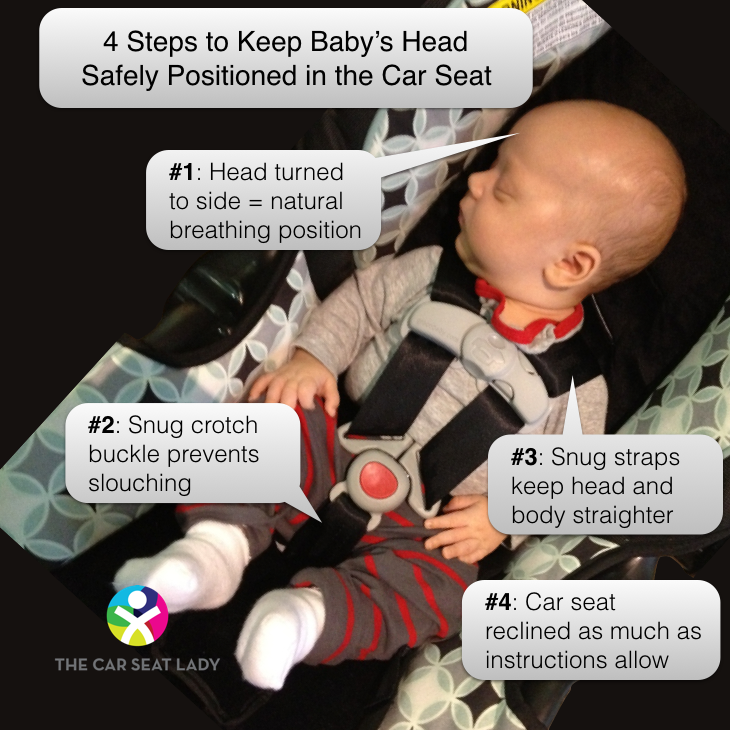
What Newborn Car Seat Problems Should You Fix?
Most positioning problems come from the baby sliding down, loose harness straps, the wrong recline angle, or extra items placed around the baby. Fix the cause rather than forcing the baby into a different position.
| What you see | Possible cause | What to check |
|---|---|---|
| Chin falls toward the chest | Seat too upright, baby slumped, or extra padding | Recline angle, bottom position, and approved inserts |
| Baby leans to one side | Baby not centered or seat installed unevenly | Center the baby and reinstall the seat if needed |
| Harness straps sit above the shoulders | Incorrect harness slot or seat setup | Read the rear-facing harness instructions |
| Harness feels loose | Straps not tightened or clothing is bulky | Tighten after removing thick layers |
| Chest clip sits near the neck or stomach | Clip was left in the wrong place | Move it to armpit level |
| Baby’s bottom lifts away from the seat | Baby slid forward or a cushion is underneath | Remove unapproved padding and reset the baby |
| Head moves a lot | Harness is loose or baby does not fit well | Tighten the harness and check the stated size limits |
| Baby cries or fusses | Normal discomfort, heat, hunger, or poor fit | Stop safely and check the baby; do not loosen the harness while driving |
A newborn may cry in the car seat even when the fit is correct. Crying alone does not prove the seat is unsafe. Still, check the baby’s airway and position whenever the baby appears to slump or the head moves forward.
If the baby cannot fit correctly within the seat’s lowest height or weight limits, do not add extra padding to make the seat work. Contact the manufacturer, a pediatric clinician, or a Child Passenger Safety Technician.
What Should a Newborn Wear in a Car Seat?
A newborn should wear thin clothing that does not add thick padding between the body and harness. Common choices include a thin sleeper, light shirt, or thin sweater, depending on the weather.
Avoid:
- Puffy winter coats.
- Snowsuits with thick padding.
- Bulky bunting under the harness.
- Thick blankets tucked between the baby and straps.
- Aftermarket shoulder pads not approved for the seat.
- Heavy clothing that prevents the harness from tightening.
After the harness is secured, place a blanket over the baby if needed. Keep the blanket below the chest clip and away from the face. Check the baby often for overheating, especially in warm vehicles.
A hat can also become too warm in a heated car. Keep the baby’s face visible and watch for sweating, flushed skin, or unusual sleepiness.

Can a Newborn Sleep in a Car Seat?
A newborn may fall asleep during a car ride, but a car seat is designed for travel, not routine sleep outside the vehicle. When you arrive, move the sleeping baby to a firm, flat sleep surface on the baby’s back as soon as it is practical.
Do not place the car seat on a bed, sofa, table, counter, or other raised surface. The seat can tip, and the baby’s head may fall into a position that affects breathing.
The AAP recommends a separate, firm sleep surface that meets current federal safety standards for routine sleep. A car seat should remain installed in the vehicle or be used as directed for travel, not as a regular nap space.
Never leave a newborn alone in a vehicle, even for a short time. Vehicle temperatures can rise quickly, and a sleeping baby may not show distress right away.

How to Check a Newborn Car Seat Before the First Trip
Complete the full setup before the baby arrives if possible. Read both manuals: the car seat manual and the vehicle owner’s manual. The manuals control details such as belt paths, lower anchors, recline settings, and permitted accessories.
Use this sequence:
- Confirm the seat’s limits. Make sure the newborn meets the stated minimum height and weight requirements.
- Choose a rear seating position. Avoid an active front airbag.
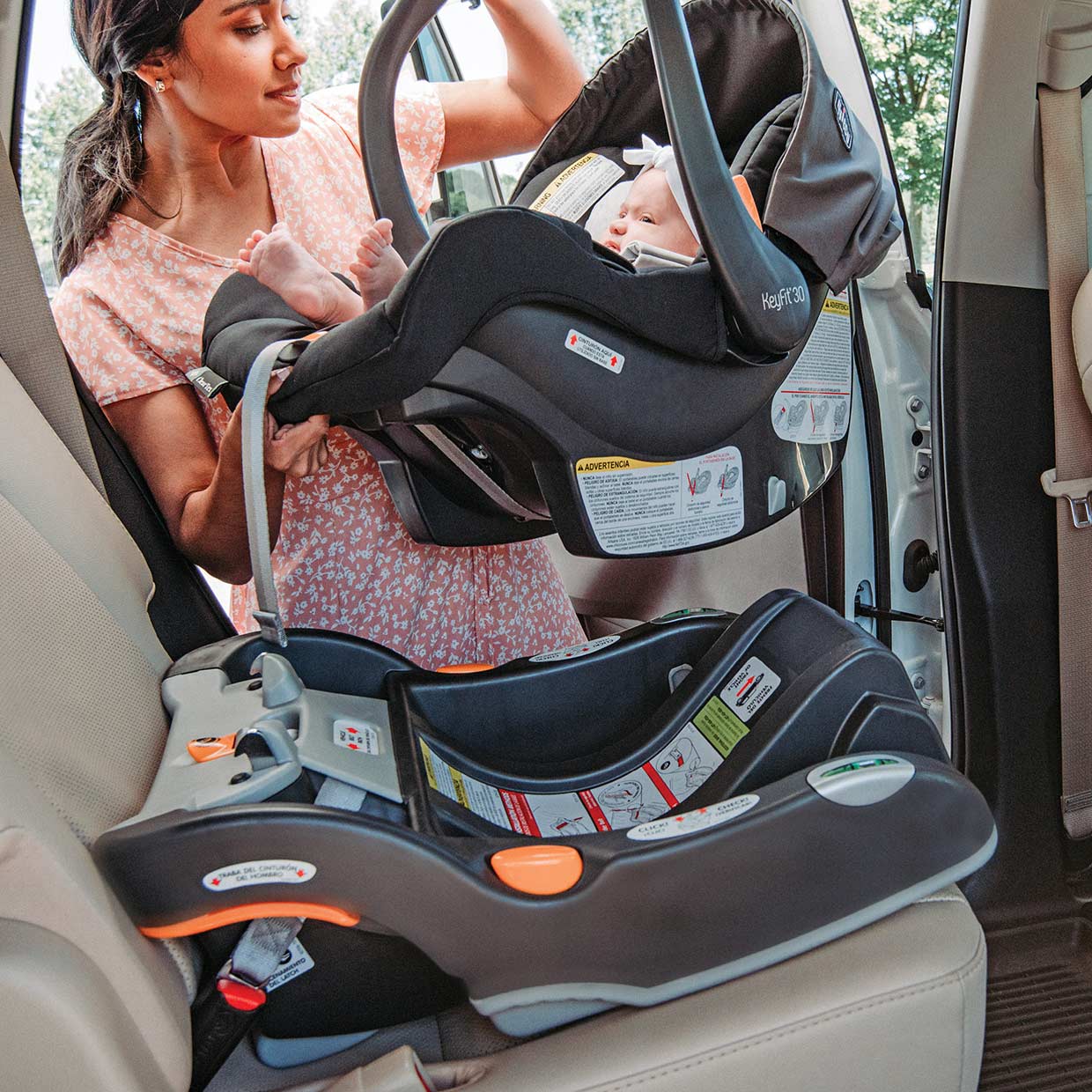
- Install the seat. Use the belt path or lower anchors allowed by both manuals.
- Check the angle indicator. Set it for a newborn or young infant.
- Test the installation. Hold the seat at the belt path and check for excessive movement.
- Place the baby in the seat. Keep the bottom and back against the seat.
- Adjust the harness. Use the correct rear-facing slot and tighten the straps.
- Position the chest clip. Place it at armpit level.
- Inspect the airway. Confirm that the chin is not pressed to the chest.
- Secure loose items. Keep toys, bags, and hard objects away from the baby and car seat.
A certified Child Passenger Safety Technician can check the installation in person. The National Highway Traffic Safety Administration’s inspection-station locator can help families find assistance in the United States. Some local fire stations, hospitals, police departments, and public health agencies offer checks, but services vary. Call first rather than assuming a station provides this service.

Special Considerations for Premature or Small Newborns
Premature and very small newborns may need extra attention because they can have less muscle control and may be more likely to slump. The car seat must still fit the baby according to its minimum size limits and the manufacturer’s instructions.
A hospital may recommend a monitored car-seat test before discharge for a premature baby or a baby with certain medical concerns. The test may involve observing the baby while secured in the car seat for a set period. The hospital team decides whether this is needed based on the baby’s condition and its discharge policy.
Ask the baby’s health care team for help if the baby:
- Has breathing problems in the seat.
- Turns blue, gray, or unusually pale.
- Has repeated oxygen drops or pauses in breathing.
- Cannot maintain a safe head position.
- Does not meet the car seat’s minimum size limits.
- Has a medical device or positioning need that affects harness use.
Do not use a car bed or special positioning device unless a medical professional and the manufacturer confirm that it is appropriate. A different device may have different installation rules and limits.
Common Mistakes to Avoid
The most common mistake is judging the fit by comfort alone. A baby may look cozy while the harness is too loose or the head is pushed forward. Check the position and harness every time.
Avoid these errors:
- Turning the car seat forward-facing too early.
- Moving the harness straps above the newborn’s shoulders in a rear-facing seat.
- Leaving slack in the harness.
- Placing the chest clip on the stomach.
- Adding a head support or insert bought separately.
- Buckling the baby over a thick coat.
- Installing the seat too upright.
- Allowing the baby to slump sideways.
- Using a car seat that has expired, been recalled, or been in a moderate or severe crash.
- Reusing a seat when its history is unknown.
- Assuming a used seat is safe without checking its date, condition, recall status, and crash history.
- Leaving the baby unattended in the car seat outside the vehicle.
A car seat that looks clean may still be damaged or missing parts. Check the label, model number, manufacture date, instructions, and recall information before use.
When to Get Help With the Car Seat Fit
Get help before driving if you cannot keep the newborn’s head in a safe position, cannot tighten the harness, or cannot install the seat securely.
Contact the car seat manufacturer for model-specific questions. Contact the baby’s health care provider for medical concerns such as breathing changes, color changes, or repeated slumping. For installation help, use a certified Child Passenger Safety Technician.
Bring the baby and the exact car seat to an in-person check when possible. A technician can assess the actual fit, the harness height, the recline angle, and the installation in your vehicle. Online photos can help explain a concern, but they cannot replace a full hands-on check.
Frequently Asked Questions
Should a newborn’s head touch the sides of the car seat?
It is not necessary for the head to touch both sides. The baby should be centered, supported by the seat’s approved design, and protected by the harness. Do not add side cushions or head supports unless the manufacturer supplied and approved them for that seat.
Is it normal for a newborn to look curled up in a car seat?
Some rounding is normal because newborns naturally flex their arms and legs. The baby should not be folded sharply, sliding down, or positioned with the chin against the chest. Check the recline angle and make sure the bottom is all the way back.
Can I use a rolled towel beside my newborn’s head?
Do not use a rolled towel beside the head unless the car seat manufacturer specifically permits it. Aftermarket padding can change the baby’s position and may interfere with the harness or side protection.
How long can a newborn ride in a car seat?
There is no single time limit that applies to every baby or every trip. Keep car rides as short as practical, take breaks on longer trips, and check the baby often. Stop the vehicle if the baby slumps, the airway looks blocked, or the baby shows signs of distress.
Should I loosen the harness if my newborn cries?
No. Do not loosen the harness while driving. Pull over safely, then check hunger, temperature, diaper needs, and positioning. The harness should remain snug whenever the vehicle is moving.
What if my newborn does not fit the car seat?
Do not pad the seat with blankets or use an unapproved insert. Check that the baby meets the seat’s minimum requirements and contact the manufacturer or a Child Passenger Safety Technician. If the baby is premature or has medical needs, ask the hospital or pediatric clinician for guidance.
Key Takeaways
- Keep the newborn rear-facing in the back seat.
- Use the recline angle shown in the car seat manual.
- Place the baby’s bottom and back firmly against the seat.
- Keep the head neutral, with the chin off the chest.
- Tighten the harness until you cannot pinch slack.
- Place the chest clip at armpit level.
- Avoid thick coats and unapproved inserts.
- Move the baby to a firm, flat sleep surface after reaching the destination.
- Get an in-person check when the fit or installation is uncertain.
Conclusion
A newborn should look supported and centered in a car seat, with a clear airway and a snug harness. The baby’s head should not fall forward, the bottom should not slide down, and no bulky clothing or extra padding should sit under the straps.
Before the first trip, install the seat using both manuals, check the fit with the baby in place, and seek help from a certified Child Passenger Safety Technician if anything looks wrong. Small adjustments can make a major difference in keeping a newborn positioned safely during travel.