

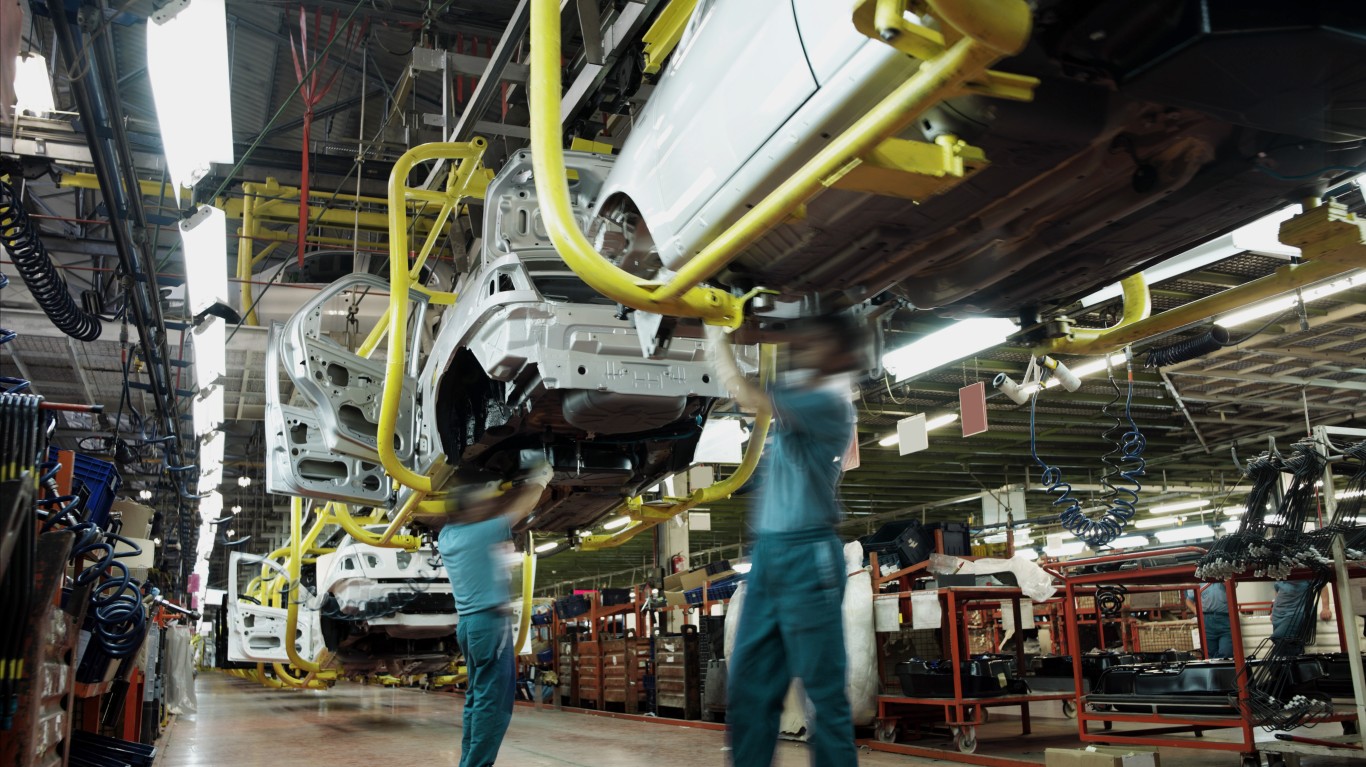
Yes. Cars are still being made in the United States and around the world. U.S. factories build gasoline cars, hybrid cars, plug-in hybrids, electric vehicles, trucks, and SUVs.
The confusion comes from changing demand. Many brands have stopped making some small sedans and hatchbacks. They have shifted factory space toward SUVs, crossovers, pickups, hybrids, and electric vehicles instead. That does not mean car production has ended.
In this guide, “cars” means new passenger vehicles sold to the public. It does not mean only traditional four-door sedans.

Are Cars Still Being Manufactured?
Yes, vehicle manufacturing remains a major U.S. industry. Automakers operate assembly plants in states such as Michigan, Ohio, Kentucky, Indiana, Alabama, Tennessee, South Carolina, Texas, Georgia, and California.
These plants make several types of vehicles:
- Gas-powered cars and SUVs
- Hybrid cars
- Plug-in hybrid vehicles
- Battery-electric vehicles
- Pickup trucks
- Delivery vans
- Commercial vehicles
- Vehicle batteries, motors, and other parts
The U.S. Bureau of Economic Analysis includes motor vehicle manufacturing within the nation’s manufacturing economy. The International Organization of Motor Vehicle Manufacturers also records the United States as a major vehicle-producing country.
So, the short answer is simple: yes, new cars are still being made in America.
The bigger change is the mix of vehicles coming off the production line. A factory that once built a sedan may now build a crossover SUV or an electric truck.
Why Does It Seem Like Cars Are No Longer Being Made?
It seems that way because many familiar sedan models have been discontinued. The main reasons include buyer demand, profit margins, factory planning, and stricter emissions rules.
For many years, U.S. buyers moved away from traditional sedans and toward SUVs and crossovers. A crossover is usually built like a car but has a taller body and more cargo space.
Examples of discontinued or reduced sedan lines include:
- Ford Fusion
- Chevrolet Cruze
- Chevrolet Impala
- Ford Focus
- Buick Regal
- Volkswagen Passat in the U.S. market
The exact list changes by brand and model year. A discontinued model does not mean the company stopped making all cars. It means the company stopped making that particular vehicle.
Manufacturers also use the same plant, tools, and workers to build vehicles with stronger demand. If a crossover sells better than a sedan, the company may change the plant’s output.
This is similar to a bakery replacing a slow-selling loaf with one that customers buy more often. The bakery is still making bread; it is simply changing the recipe.
What Types of Cars Are Still Being Made?
Automakers still make several types of passenger vehicles. The best choice depends on how you drive, where you live, and what you need to carry.
| Vehicle type | Power source | Common strengths | Main trade-off |
|---|---|---|---|
| Sedan | Gas, hybrid, or electric | Efficient, easy to drive, often lower cost | Less cargo height |
| Hatchback | Gas, hybrid, or electric | Flexible cargo space and small size | Fewer models are sold in the U.S. |
| Coupe | Usually gas or electric | Sporty design and handling | Small rear seats and less space |
| Crossover SUV | Gas, hybrid, plug-in hybrid, or electric | More space and easier entry | Often costs more than a sedan |
| Full-size SUV | Gas, hybrid, or electric | Large cargo area and towing ability | Higher purchase and running costs |
| Pickup truck | Gas, diesel, hybrid, or electric | Cargo carrying and towing | Large size and fuel use |
| Minivan | Gas or hybrid | Excellent family space | Fewer styling choices |
Gasoline cars
Gasoline cars are still being produced. They remain common because they can be refueled quickly and are supported by a large fuel station network.
A gasoline engine burns fuel to create power. It also needs regular oil changes and has more moving engine parts than a battery-electric vehicle.
Hybrid cars
Hybrid cars combine a gasoline engine with one or more electric motors. They do not usually need to be plugged in.
A hybrid can save fuel in stop-and-go traffic because it can recover energy during braking. It may also turn off the gasoline engine when the vehicle is stopped.
Plug-in hybrid cars
A plug-in hybrid has a larger battery than a standard hybrid. The owner can charge it from an outlet or charging station.
A plug-in hybrid can use electric power for shorter trips and gasoline for longer drives. Its real fuel savings depend on how often the owner charges it.
Electric cars
Electric cars use a battery and electric motor instead of a gasoline engine. They must be charged, either at home or at a public charging station.
The U.S. Department of Energy’s Alternative Fuels Data Center provides information about electric vehicles, charging, and alternative fuels.
Are Gas-Powered Cars Still Being Made?
Yes. Gas-powered cars, SUVs, and trucks are still being made in the United States.
Automakers continue to offer gasoline vehicles because many drivers need:
- Long driving range
- Quick refueling
- Easy access to fuel stations
- Towing power
- Reliable use in areas with limited charging
- Lower purchase prices than some electric models
However, the number of gasoline-only car models may change. Some companies are adding more hybrids and electric vehicles while reducing the number of gas-only sedans.
A gasoline vehicle may still be the better fit for a person who drives long distances, lives in a place with few chargers, or cannot charge at home. A hybrid may be more useful for someone who wants lower fuel use without changing how they refuel.
The answer is not the same for every driver. The vehicle’s use matters more than the powertrain label alone.
Are Electric Cars Still Being Made?
Yes. Electric cars are being made in the United States and imported from other countries for U.S. buyers.
Several automakers have built or expanded U.S. facilities for electric vehicles, batteries, and electric motors. These projects are supported by consumer demand, state incentives, federal policy, and investments in battery production.
The U.S. Department of Energy, Environmental Protection Agency, and Internal Revenue Service publish information about electric vehicles and available federal tax rules.
Electric vehicle production does not mean gasoline vehicles have instantly disappeared. For now, the U.S. market includes all of these choices:
- Gasoline
- Diesel
- Hybrid
- Plug-in hybrid
- Battery electric
- Hydrogen fuel cell in limited applications
Availability differs by brand, state, and model year. A vehicle listed on a manufacturer’s global website may not be sold in the United States.
Are Traditional Sedans Still Being Made?
Yes, but there are fewer sedan choices than there were in the past.
Traditional sedans remain available from several manufacturers. Common examples in recent U.S. model years have included vehicles such as the Toyota Camry, Honda Accord, Nissan Altima, Hyundai Elantra, Hyundai Sonata, Kia K4, and Tesla Model 3. Model availability can change, so buyers should check the manufacturer’s current U.S. website.
Sedans still offer useful benefits:
- Good fuel economy
- A lower step-in height than many SUVs
- Stable handling
- Less wind resistance
- Often lower prices than similar SUVs
- A smaller footprint for city driving
SUVs have a taller seating position and more cargo height, but they are not automatically better. A sedan may cost less, use less fuel, and be easier to park.
A key mistake is treating “car” and “SUV” as opposites. A crossover SUV is still a passenger vehicle built for everyday transportation. It simply uses a different body style.
Does the United States Still Make Its Own Cars?
Yes. The United States still has a large vehicle assembly and parts industry.
Some vehicles sold in the U.S. are assembled domestically. Others are imported from Canada, Mexico, Japan, South Korea, Germany, and other countries. A vehicle may also use parts from many nations before final assembly.
The phrase “made in the USA” can mean different things:
- Final assembly took place in the United States.
- A large share of parts came from U.S. suppliers.
- The vehicle meets a legal content standard for a specific program.
- The brand is based in the United States.
- The vehicle was fully designed in the United States.
These statements are not interchangeable. A U.S.-based automaker may build a vehicle abroad. A foreign-owned company may build a vehicle in an American factory.
For accurate information, check the vehicle identification number, window sticker, manufacturer information, and the National Highway Traffic Safety Administration’s VIN Decoder. The window sticker usually identifies the final assembly location and parts information.
Are Cars Still Being Made With Manual Transmissions?
A small number of new cars still offer manual transmissions in the United States, but they are much less common than automatic transmissions.
Manual transmissions may remain available in:
- Sports cars
- Performance hatchbacks
- Certain compact cars
- Some off-road vehicles
Availability depends on the exact trim and model year. A manual transmission may be offered only on a higher trim or special version.
Most new vehicles use automatic transmissions because they are easier for most drivers, work well with modern safety systems, and suit hybrid and electric powertrains. Battery-electric vehicles generally do not use a traditional multi-speed manual transmission.
If a manual car matters to you, confirm the exact stock number or vehicle configuration. A dealer may advertise a model name that is available only with an automatic transmission.
Are Cars Still Being Made in 2025 and Beyond?
Automakers are still making cars, but future production will likely include a wider mix of powertrains.
The main forces shaping production are:
Buyer demand
Automakers build more of the vehicles that sell well.Fuel economy and emissions rules
Federal and state rules affect how manufacturers design and sell vehicles.Battery costs and supply
Electric vehicle production depends on battery materials, factories, and charging access.Factory investments
A plant may need major upgrades before it can build electric vehicles or batteries.Business costs
Labor, shipping, steel, semiconductors, and energy prices affect production plans.Government policy
Tax credits, emissions standards, tariffs, and state rules can influence vehicle prices and availability.
No single rule means that every gasoline car will stop being made on one date across the entire United States. Policies can differ by state and can change over time.
The EPA vehicle standards and California Air Resources Board provide primary information about emissions rules and related programs. These rules govern emissions and sales requirements; they do not mean that all existing gasoline vehicles must be removed from the road.
How Can You Tell Whether a Car Is Still in Production?
Use the automaker’s current U.S. website first. Look for the model in the new-vehicle section rather than the used-vehicle section.
Then check these details:
- The current model year
- Available trims
- A build-and-price tool
- A current owner’s manual
- Dealer inventory
- A recent manufacturer press release
- The vehicle’s official window sticker
Be careful with old articles and search results. A page can remain online even after a model has been discontinued.
A model may also be:
- Discontinued worldwide but sold in the U.S.
- Discontinued in the U.S. but sold in another country
- Temporarily unavailable
- Replaced by a redesigned model
- Sold only through remaining dealer stock
- Available under a new name
The most reliable answer comes from the automaker’s current U.S. model list and a confirmed dealer listing.
What Happens When a Car Model Is Discontinued?
A discontinued car can still be driven, serviced, repaired, and sold as a used vehicle.
Manufacturers usually continue to supply parts for many years. Independent repair shops can also support common models. However, some trim-specific parts may become harder to find as a vehicle gets older.
A discontinued model may still be a sensible used-car choice when:
- It has a strong repair record.
- Parts are easy to find.
- The price reflects its age.
- It meets your safety and space needs.
- A qualified mechanic checks it before purchase.
Do not assume a discontinued model is unsafe or unreliable. Do not assume it is a bargain, either. Check its maintenance history, recall status, crash-test information, insurance cost, and likely repair needs.
You can search for open recalls through the official NHTSA recall tool. A recall repair is generally completed by an authorized dealer at no charge, but owners should confirm the process with the dealer.
Common Mistakes About Car Production
Several common claims create confusion.
“No more sedans are being made”
This is false. Fewer sedans are available, but some are still produced and sold in the United States.
“If a brand stopped one model, it stopped making cars”
A company may end one model while launching another. Production often shifts rather than disappears.
“Electric vehicles replaced all gas cars”
Electric vehicles are growing, but gasoline, hybrid, and plug-in hybrid vehicles remain part of the U.S. market.
“A foreign brand does not make cars in America”
Brand ownership and factory location are different. A company headquartered outside the United States may operate U.S. factories.
“An online listing proves the model is still in production”
A listing may be old, duplicated, or based on remaining inventory. Check the model year and the manufacturer’s current site.
“An SUV is not a car”
In everyday speech, people often use “car” to mean a sedan. In the wider passenger-vehicle market, SUVs, crossovers, sedans, hatchbacks, and wagons are all types of cars or light vehicles.
Key Takeaways
- Yes, cars are still being made in the United States.
- U.S. factories build gas vehicles, hybrids, plug-in hybrids, and electric vehicles.
- Traditional sedans are less common, but they have not disappeared.
- Automakers are shifting production toward SUVs, crossovers, pickups, and electric vehicles.
- A discontinued model can still be a practical used car.
- Check the automaker’s current U.S. website to confirm whether a model is still in production.
- Use NHTSA and EPA resources for recall and emissions information.
Frequently Asked Questions
Are new cars still being made?
Yes. New cars are still being built in the United States and imported for sale in the U.S. market. Production includes sedans, hatchbacks, SUVs, trucks, hybrids, plug-in hybrids, and electric vehicles.
Are gasoline cars going away?
Gasoline cars are becoming a smaller part of some automakers’ future plans, but they are still being produced and sold. The timing of any change depends on the company, vehicle type, regulations, and buyer demand.
Are sedans cheaper than SUVs?
Often, yes, but not always. A sedan may have a lower purchase price, lower weight, and lower fuel cost. A small SUV may offer more cargo room and easier entry. Compare the full price, fuel use, insurance, and maintenance.
Can I still buy parts for a discontinued car?
Usually, yes, especially for a common model. Parts availability depends on the vehicle’s age, sales volume, and the specific component. Check with the manufacturer, a parts supplier, or a qualified repair shop.
Are electric cars made in the United States?
Yes. Several electric vehicles and batteries are made in U.S. factories. Other electric vehicles sold in the United States are imported. Check the vehicle’s window sticker and official specifications for its final assembly location.
How do I know if a specific model is still being made?
Check the manufacturer’s current U.S. website and model-year information. Then confirm with a local dealer. Do not rely only on old news articles, used-car listings, or search snippets.
Conclusion
Cars are still being made in the United States. What has changed is the type of vehicle automakers choose to build.
Sedans and hatchbacks have become less common, while SUVs, crossovers, trucks, hybrids, and electric vehicles have grown. Gas-powered vehicles remain available, and electric vehicle production continues to expand.
If you are checking one specific model, verify its current U.S. model year, production status, factory location, recall history, and dealer availability. That approach gives you a more accurate answer than relying on a broad claim that cars are “no longer being made.”