

Remove mineral deposits with glass-safe polish, then seal the glass and prevent fresh water from drying on it.
Water spots can make clean car windows look cloudy, rough, and unsafe at night. Most are mineral deposits left behind when hard water dries on the glass. The good news is that you can often restore clear glass with the right cleaner, light polishing, and a durable glass sealant. This guide explains how to remove water spots from car windows permanently while also covering etching, safety, prevention, and common mistakes.
What causes water spots on car windows?
Water spots form when water dries and leaves minerals behind. These minerals often include calcium, magnesium, and other salts found in hard water. Rain, sprinklers, car washes, and even tap water can leave this residue.
Fresh spots may sit on top of the glass. Older spots can bond more tightly and feel rough when you run a clean fingertip across the surface. If they stay for months, the minerals may damage the glass surface and create small areas of etching.
Common causes include:
• Hard tap water used during washing
• Automatic car washes that do not dry the vehicle well
• Water from lawn sprinklers
• Rain mixed with dust, road film, or air pollution
• Washing the car in direct sun
• Allowing rinse water to dry before wiping it away
The key difference is simple: a deposit can usually be removed, but etching is actual surface damage. Knowing which problem you have helps you choose the correct method and avoid wasting time.
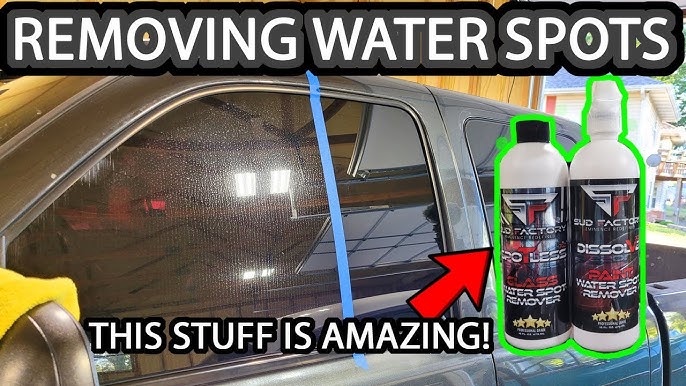
How to tell whether spots are deposits or etching
Before learning how to remove water spots from car windows permanently, inspect the glass in good light. Wash and dry one small area first. Then use your finger or a clean plastic bag to feel the surface.
Deposits often look like white rings, cloudy dots, or faint mineral maps. They may feel gritty and respond to vinegar, a mineral remover, or glass polish.
Etching looks different. The marks may remain after cleaning, feel smooth, and appear to change with the angle of the sun. Deep etching can resemble pale stains inside the glass.
Try this simple test:
Clean the window with automotive glass cleaner.
Wipe a small area with diluted white vinegar.
Rinse and dry the area.
Check whether the mark has faded.
If the spot remains but the glass feels smooth, a glass polish may help. If the glass has deep pits or permanent marks, professional machine polishing may be needed. In severe cases, replacement may be the only complete fix.
Never assume that every white mark needs stronger chemicals. Aggressive products can damage rubber seals, trim, tint film, or nearby paint.

What you need to remove water spots
The best method uses the least aggressive product that solves the problem. Gather these items before you start:
• Two or three clean microfiber towels
• A bucket of clean water
• Automotive glass cleaner
• White vinegar or a dedicated mineral deposit remover
• A glass-safe polish containing a fine abrasive
• A foam or microfiber applicator pad
• Nitrile gloves and eye protection
• A hose or spray bottle for rinsing
• A glass sealant or water-repellent coating
Avoid paper towels, rough sponges, steel wool, kitchen scrub pads, and household scouring powders. These can leave lint, scratches, or new haze.
If your car has window tint, check whether the film is installed on the inside. Most exterior glass cleaners are safe when used correctly, but ammonia-based products may damage some tint films over time. A tint-safe cleaner is the safer choice.
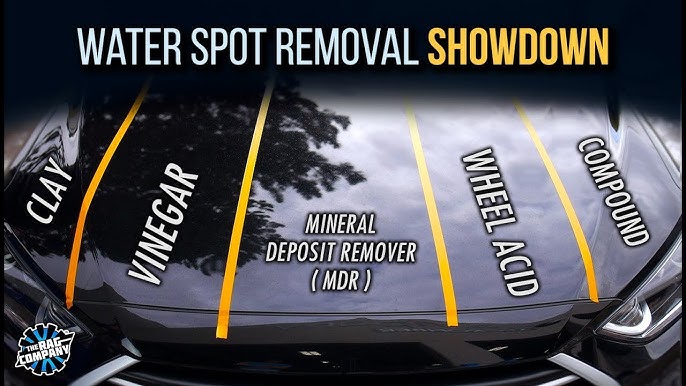
How to remove water spots from car windows permanently
Follow these steps in order. Do not skip the wash stage. Dirt trapped under a polishing pad can scratch glass.
1. Wash the glass first
Park the car in shade and let the glass cool. Rinse the windows to remove loose dust and grit.
Wash the glass with a clean microfiber towel and a mild car shampoo. Rinse well, then dry it with a second towel. Work on one window at a time so water does not dry before you wipe it.
A cool surface gives you more control. It also prevents cleaners from flashing dry and leaving a second layer of residue.
2. Try a mild acid treatment
Mix equal parts distilled white vinegar and water in a spray bottle. Spray the solution onto a towel rather than flooding the window. Place the damp towel on the spot for two to five minutes.
Wipe gently, then rinse the glass with clean water. Vinegar can dissolve many alkaline mineral deposits, but it may not remove old or hardened spots.
Do not use vinegar on hot glass. Keep it away from unpainted metal, leather, and delicate trim. Rinse nearby surfaces if any solution touches them.
3. Use a dedicated mineral remover when needed
If vinegar does not work, use a product made for automotive glass. Read the label and follow its dwell time. Some products contain stronger acids and need gloves, eye protection, and good airflow.
Apply the product to a towel or applicator. Avoid letting it dry on the glass. Rinse the window fully after treatment, especially around rubber seals and painted trim.
This step often answers how to remove water spots from car windows permanently when the spots are mineral deposits rather than etched damage. Still, no chemical can reverse glass that has already been physically etched.
4. Polish stubborn marks
Use a glass-safe polish for spots that remain after chemical cleaning. Apply a small amount to a foam pad or microfiber applicator.
Work in small sections with light to medium pressure. Keep the pad flat and move it in overlapping passes. Check your progress often instead of polishing the whole window at once.
A cerium oxide glass polish can help with fine mineral marks and light surface defects. It is more aggressive than a normal cleaner, so use care. Excess pressure or heat can create uneven results.
After polishing, wipe the glass clean and inspect it from several angles. Repeat only if the mark is improving. If there is no change after careful polishing, the damage may be too deep for hand work.
5. Rinse and clean the glass
Rinse the window with clean water to remove polish dust and chemical residue. Follow with a glass cleaner designed for cars.
Use straight, overlapping strokes on the inside and outside. This makes it easier to tell which side still has streaks. A final dry wipe with a fresh microfiber towel should leave the surface clear and smooth.
6. Apply a glass sealant
A sealant does not erase old etching. It helps protect clean glass by making water bead and run away more easily.
Apply the product exactly as directed. Some coatings need a dry cure time, while others need a second buffing step. Do not drive in rain until the product has cured.
A good sealant can reduce mineral bonding, but it is not a guarantee against water spots. You still need to dry the windows after washing and keep sprinklers away from the vehicle.

How to remove water spots from car windows permanently with household products
White vinegar is the most practical household option for fresh mineral spots. It works because its mild acidity can break down some alkaline deposits.
A safe basic method is:
Mix one part white vinegar with one part distilled water.
Spray the mixture onto a microfiber towel.
Wipe a cool, shaded window.
Let the solution sit for two to five minutes.
Rinse with clean water.
Dry the glass at once.
Do not mix vinegar with bleach, ammonia, or other cleaners. Dangerous fumes can form. Also, avoid lemon juice, baking soda scrubs, toothpaste, and rough household cleaners. These methods are popular online but may leave residue or create fine scratches.
Household vinegar is useful for light deposits. It is not a permanent repair for etched glass. If the spots remain after careful treatment, switch to a glass polish or seek help from a professional detailer.

How to prevent water spots from coming back
Learning how to remove water spots from car windows permanently also means changing what happens after each wash. Prevention is easier than repeated polishing.
Use these habits:
• Wash the car in shade when the glass is cool.
• Dry the windows before water can evaporate.
• Use a clean drying towel with strong absorbency.
• Start with the windows and finish by drying them again after the body.
• Keep the car away from lawn sprinklers.
• Use filtered or deionized water if your local water is very hard.
• Clean the wiper blades so they do not spread mineral film.
• Apply a glass sealant after the surface is fully clean.
• Remove fresh rain or wash water before parking the car in strong sun.
A simple drying routine prevents most new spots. After washing, open each door briefly and wipe the upper glass edges. Water often hides inside the window channels and runs down later.
Many detailers use a two-towel system. One towel removes most water. The second towel finishes the surface and catches small streaks. This small habit can make a major difference.

Mistakes that can damage car windows
Some attempts to remove water spots create more trouble than the original marks. The most common mistake is using a household scrub pad or razor without knowing the glass condition.
Avoid these errors:
• Polishing dry dirt into the glass
• Using steel wool or abrasive kitchen pads
• Applying strong acid in direct sunlight
• Letting a chemical product dry on the surface
• Using a razor on tinted or coated glass
• Ignoring the product label
• Using too much pressure with cerium oxide polish
• Applying a water-repellent coating over dirty glass
• Mixing different chemical cleaners
A razor blade may remove stickers from plain, uncoated glass when used correctly, but it is not a general water-spot treatment. It can scratch glass if grit is trapped beneath it. It can also damage tint film and specialty coatings.
One lesson I learned early in detailing is that speed often causes the damage. A person sees a cloudy mark, grabs the strongest cleaner, and presses hard. A cool surface, clean towels, and gentle testing usually produce a better result.

When professional glass polishing is the better choice
Hand polishing works well for light deposits and mild stains. Professional help makes sense when the glass has deep etching, repeated mineral damage, or wide cloudy areas.
A trained detailer can inspect the glass and use a machine polisher with the correct pad and compound. They can also control heat and pressure more accurately than most beginners.
Ask for an inspection before approving the work. A trustworthy professional should explain whether the mark is removable, reducible, or permanent. Be cautious if someone promises that every stain can be removed without risk.
Professional polishing also has limits. Deep pits, cracks, severe wiper scratches, and damage inside laminated glass may not be repairable through detailing. In those cases, glass replacement may offer the clearest and safest result.
The windshield deserves extra care because visibility is a safety issue. If polishing leaves distortion or glare in the driver’s view, stop and have the glass assessed.
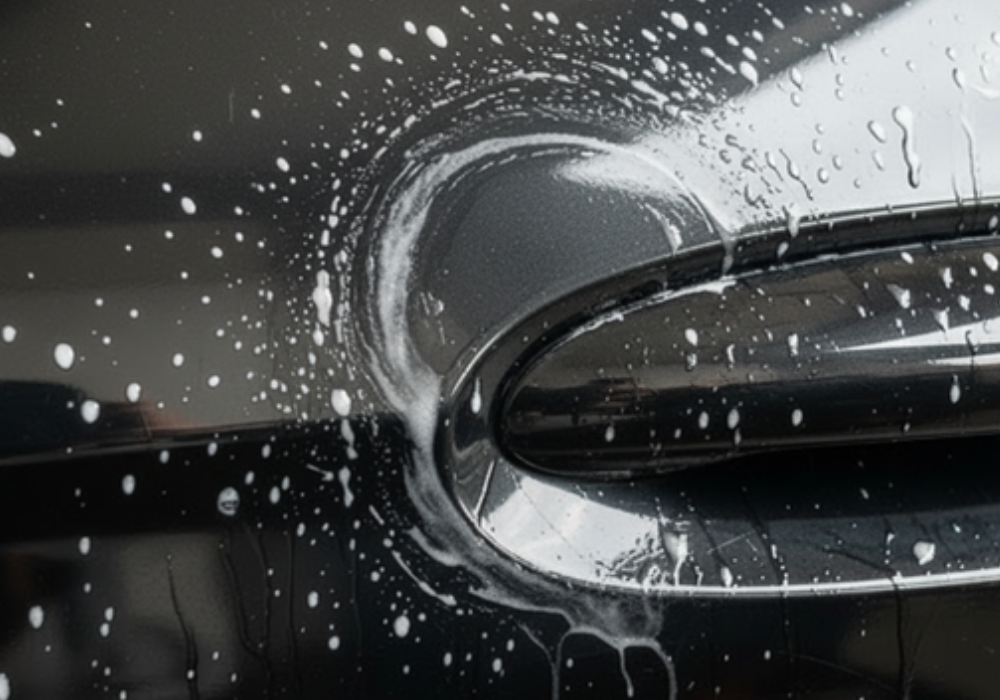
Safety tips for clear driving visibility
Water spots are not only a cosmetic problem. They can scatter light from headlights and street lamps, especially at night or during rain. A clean window improves contrast and reduces glare, but cleaning cannot fix every visibility issue.
Keep these points in mind:
• Inspect the windshield from the driver’s seat.
• Check the glass at dawn, dusk, and night.
• Replace worn or cracked wiper blades.
• Do not apply a coating that causes haze or wiper chatter.
• Keep interior glass free from oily film.
• Stop using a product if it causes distortion.
Test the finished glass with water. It should sheet or bead evenly, depending on the coating. Uneven patches may show leftover oil, polish, or residue.
If a windshield has deep scratches or permanent etching in the viewing area, speak with an automotive glass professional. Clear vision matters more than making the surface look perfect from outside.
How long does the repair last?
The answer depends on the water quality, weather, washing habits, and protection used. A polished window without a sealant can develop new spots quickly if hard water dries on it.
A glass sealant may last from several weeks to many months. Product life varies, so follow the label rather than trusting a fixed promise. Frequent washing, strong cleaners, wiper use, and harsh weather can shorten its life.
The most durable approach combines three steps:
Remove the existing deposits.
Polish away light residue or haze.
Protect the clean glass and dry it after washing.
This is the realistic meaning of how to remove water spots from car windows permanently. You can permanently remove removable deposits, but you cannot guarantee that new spots will never form. Prevention is an ongoing part of the process.
Frequently Asked Questions About How to Remove Water Spots From Car Windows Permanently
Can vinegar remove water spots from car windows?
Vinegar can remove fresh mineral deposits from many glass surfaces. It may not remove old spots, heavy buildup, or etching. Always rinse the glass and protect nearby trim.
What is the best product for hard water spots on auto glass?
A glass-safe mineral remover or fine glass polish is usually more effective than a normal glass cleaner. Choose a product made for automotive glass and test it on a small area first.
Can water spots permanently damage a windshield?
Yes. If mineral deposits remain for a long time, they can etch the glass surface. Light etching may improve with polishing, but deep damage may remain or require professional assessment.
Does ceramic coating prevent water spots?
A glass coating can reduce how strongly minerals bond to the surface. It does not prevent spots if hard water dries on the window, so drying after washing is still essential.
Can I use a Magic Eraser on car windows?
It is better to avoid it. Melamine foam is mildly abrasive and may create haze or damage coatings, tint film, rubber seals, and nearby surfaces.
Should I use a razor blade to remove water spots?
A razor is not a suitable general water-spot remover. It can scratch glass when grit is present and may damage tint or specialty coatings.
Why do water spots return after cleaning?
They return when water dries and leaves minerals behind. Hard water, sprinklers, rain, poor drying, and dirty wiper blades are common causes.
How do I know if water spots are etched?
Etched spots often remain after washing and mild acid treatment. They may look like pale stains and feel smooth rather than gritty. A glass professional can confirm the condition.
Conclusion
Removing water spots starts with identifying the problem. Wash the glass, try a mild vinegar solution, use a dedicated mineral remover for stubborn deposits, and polish carefully when needed. Finish with a glass sealant, then dry the windows after every wash.
The most important rule is to avoid harsh tools and rushed work. With clean towels, a cool surface, and the right product, you can restore clear glass and greatly reduce future spotting. Try the process on one window first, inspect the result, and share your experience or explore more professional car-care tips.