
If you see 70R in a tire size such as P225/70R16, the two characters have different meanings:
- 70 is the tire’s aspect ratio. The sidewall height equals 70% of the tire’s width.
- R means radial construction, the standard internal design used on most passenger tires today.
So, 70R does not mean a 70-inch tire, a speed rating, or a 70-inch wheel. It describes the tire’s sidewall proportion and construction type.

How to Read 70R in a Full Tire Size
The meaning becomes clearer when you read the entire marking. Consider this common U.S. tire size:
P225/70R16 102H
Each part gives different information.
| Marking | Meaning |
|---|---|
| P | Passenger vehicle tire |
| 225 | Tire width in millimeters |
| 70 | Sidewall height as a percentage of tire width |
| R | Radial construction |
| 16 | Wheel diameter in inches |
| 102 | Load index |
| H | Speed rating |
The 70 and R work together in the size description, but they do not represent one combined rating. The 70 describes the tire’s shape, while the R describes how its internal cords are arranged.
What the 70 aspect ratio means
The aspect ratio is calculated like this:
Sidewall height ÷ tire width × 100 = aspect ratio
For a 225/70R16 tire:
- Width: 225 millimeters
- Aspect ratio: 70
- Approximate sidewall height: 225 × 0.70 = 157.5 millimeters
That measurement applies from the wheel rim to the outer tread area. It is the height of one sidewall, not the full tire diameter.
The actual sidewall may vary slightly because of manufacturing tolerances and the tire’s approved measuring rim. The calculation is still useful for understanding the size.
What the R means
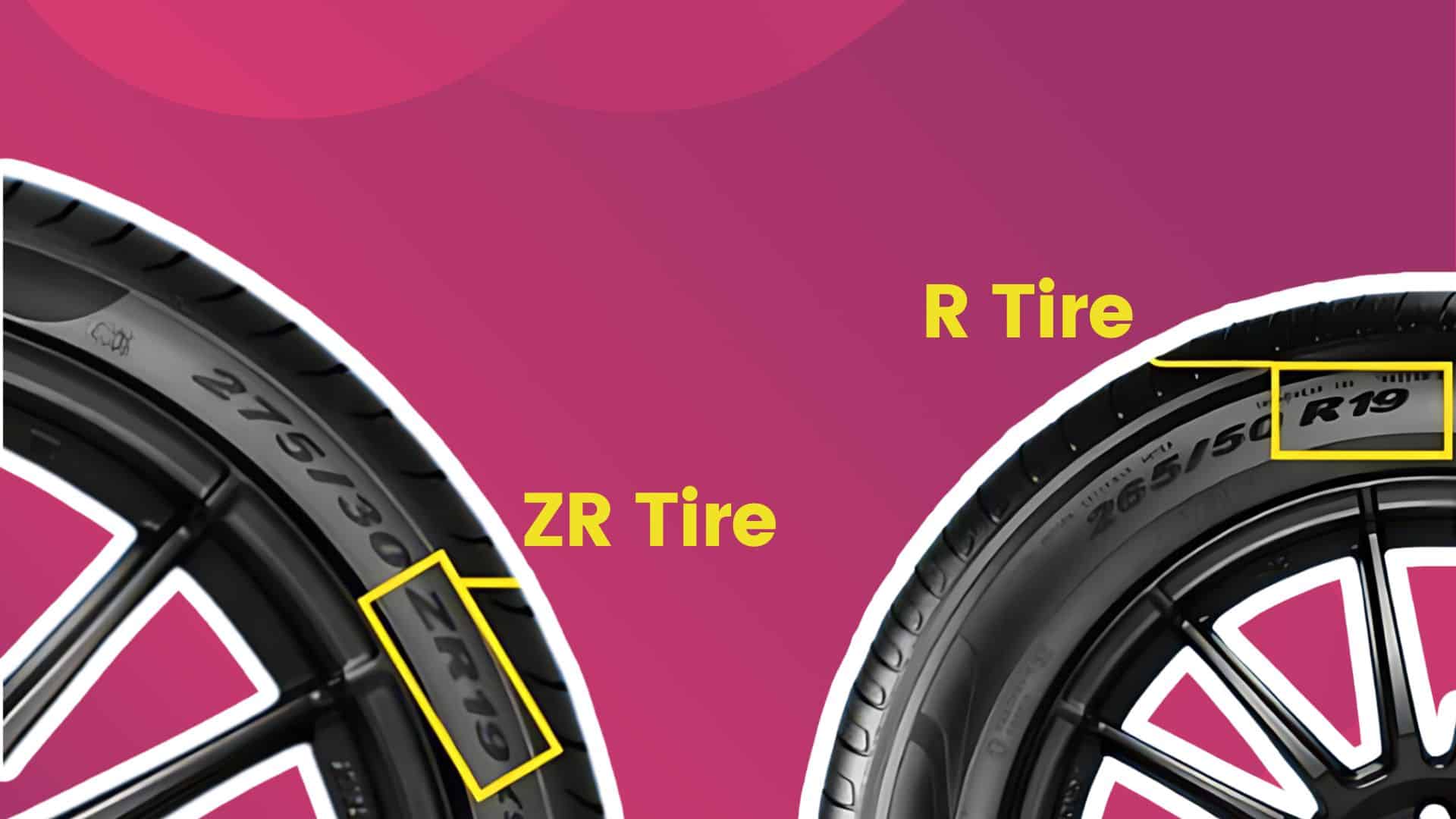
The R means the tire uses radial construction. In a radial tire, the main body cords run across the tire from one bead to the other, with reinforcing belts beneath the tread.
Radial construction is common because it supports practical benefits such as:
- Stable handling
- Efficient tread contact with the road
- Lower rolling resistance than older bias-ply designs
- Good ride comfort
- Long tread life when the tire is correctly maintained
The R does not mean “rim,” “rear,” or “regular.” It also does not tell you whether the tire fits your vehicle. Wheel diameter, width, offset, clearance, load capacity, and the vehicle maker’s specifications still matter.

Does 70 Mean the Tire Is 70 Inches?
No. 70 is a percentage, not a measurement in inches.
A 70-series tire has a sidewall height equal to 70% of its section width. The tire’s total diameter depends on three parts:
- The sidewall above the wheel
- The sidewall below the wheel
- The wheel diameter
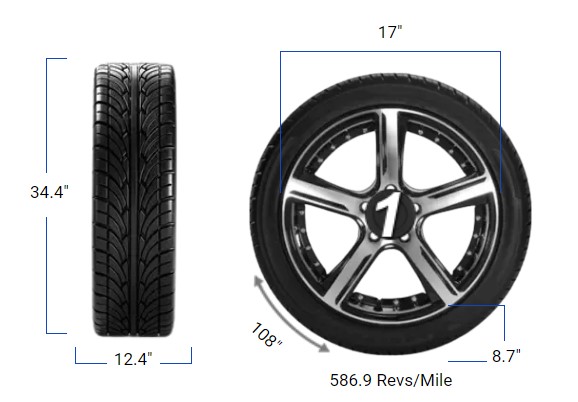
A simplified tire diameter calculation is:
Overall diameter = wheel diameter + 2 × sidewall height
Because tire width is listed in millimeters and wheel diameter is listed in inches, convert the sidewall measurement before calculating.
Example: 225/70R16
Calculate sidewall height:
225 × 0.70 = 157.5 mmConvert sidewall height to inches:
157.5 ÷ 25.4 = about 6.20 inchesCalculate total diameter:
16 + (2 × 6.20) = about 28.4 inches
This is a calculated estimate. The manufacturer’s published specifications are the better source for exact dimensions.
How 70 compares with other aspect ratios
For tires with the same 225 mm width:
| Tire size | Approximate sidewall height |
|---|---|
| 225/60R16 | 135 mm |
| 225/65R16 | 146.25 mm |
| 225/70R16 | 157.5 mm |
| 225/75R16 | 168.75 mm |
A higher aspect ratio generally creates a taller sidewall. A lower aspect ratio generally creates a shorter sidewall.
That difference can affect ride feel, steering response, ground clearance, wheel protection, and the accuracy of the speedometer. It does not automatically make one size better.

How 70R Affects Ride and Handling
A 70-series tire usually has more sidewall than a 60- or 55-series tire of the same width. That extra sidewall can flex more over bumps and provide more protection between the wheel and road hazards.
The practical effects may include:
- A softer ride over rough pavement
- More cushioning against pothole impacts
- Slightly less immediate steering response
- More sidewall movement during hard cornering
- A taller overall tire when other dimensions remain the same
These are general effects, not guarantees. Tire design, air pressure, tread pattern, vehicle suspension, road surface, and tire width also influence handling.
A shorter sidewall may feel more direct in turns, but it can transmit more road shock. A taller sidewall may feel more comfortable, but it can respond more slowly during sudden steering inputs. The right choice is the size approved for the vehicle and the driver’s needs—not simply the largest or smallest number.
Does a 70-series tire improve fuel economy?
Not by itself. Fuel economy depends on many variables, including tire model, inflation pressure, vehicle weight, alignment, tread design, road conditions, and driving style.
Changing to a different aspect ratio can change the tire’s rolling circumference and weight. That may affect engine speed and speedometer readings. However, there is no universal fuel-economy result for every 70-series tire.

Can You Replace a 70R Tire With a Different Size?
Only when the replacement size is approved for the vehicle and fits the wheel and suspension safely.
Do not change from a 70-series tire to a 65- or 75-series tire based on appearance alone. A different size can cause:
- Speedometer and odometer errors
- Contact with the fender, suspension, or steering parts
- Incorrect clearance inside the wheel well
- Changes in braking and handling
- A different load capacity
- Problems with traction-control or anti-lock brake systems
- Wheel damage from an unsuitable tire or rim
The safest starting point is the vehicle’s Tire and Loading Information label. In the United States, it is commonly found on the driver’s doorjamb or door edge. The owner’s manual may list additional approved sizes.
A simple size comparison
Suppose a vehicle uses 225/70R16 and someone considers 225/65R16.
- Both tires are 225 mm wide.
- The 65-series tire has a shorter sidewall.
- Its overall diameter is smaller.
- The vehicle may sit slightly lower.
- The speedometer may read differently.
- Handling and ride comfort may change.
Even if the tire mounts on the same 16-inch wheel, that does not prove it is a safe substitute.
Before changing size, confirm all of the following:
- The size is listed by the vehicle manufacturer or a qualified tire professional.
- The load index meets or exceeds the vehicle requirement.
- The speed rating meets the vehicle requirement.
- The tire fits the wheel’s approved width range.
- The tire clears the suspension, brakes, body, and steering components.
- The replacement pressure and load information are understood.
Where to Find the Correct Tire Size in the United States
The vehicle’s doorjamb label is usually the best place to find the original tire size and recommended cold inflation pressure.
You can also check:
- The owner’s manual
- The vehicle manufacturer’s official specifications
- The tire information label on the driver’s door
- A reputable tire dealer
- The existing tire, if it is the correct original size
Do not use the maximum pressure molded into the tire sidewall as the normal pressure for the vehicle. That number is generally the tire’s maximum permitted inflation pressure under specified conditions. The vehicle placard gives the recommended cold pressure for the vehicle’s rated load.
The U.S. National Highway Traffic Safety Administration provides consumer tire-safety guidance, including information about tire pressure, tire condition, and the vehicle placard: NHTSA Tire Safety.
Check more than the size
A tire with the correct 70R marking may still be unsuitable if its other ratings are wrong.
Check:
- Tire type, such as P or LT
- Width and aspect ratio
- Wheel diameter
- Load index
- Speed rating
- Seasonal or all-weather purpose
- Run-flat requirements, if applicable
- Any vehicle-specific restrictions
For example, a light-truck tire marked LT is not automatically interchangeable with a passenger tire marked P. The construction, load rating, pressure requirements, and intended use can differ.

Common Mistakes About 70R
Mistake 1: Thinking 70 is the tire diameter
The 70 is the sidewall-to-width percentage. It is not the full diameter and not the wheel size.
Mistake 2: Thinking R is the rim size
The rim size is the number after R. In 225/70R16, the wheel diameter is 16 inches.
Mistake 3: Treating 70 as the speed rating
Speed ratings use letters such as H, V, or W. In 225/70R16 102H, the H is the speed rating. The 70 is unrelated to speed.
Mistake 4: Ignoring the load index
The number after the tire size, such as 102, is the load index. It must meet the vehicle’s requirements. Two tires with the same 70R size can have different load capacities.
Mistake 5: Setting pressure from the tire sidewall
Use the vehicle placard or owner’s manual for normal cold inflation pressure. Do not adjust pressure based only on the number molded into the tire.
Mistake 6: Replacing only one tire without checking compatibility
On many vehicles, especially all-wheel-drive vehicles, differences in tire diameter can place stress on the drivetrain or affect electronic systems. Follow the vehicle manufacturer’s replacement guidance.
What to Do If the Tire Marking Does Not Match the Door Label
If the tire says 70R but the vehicle label lists another size, do not assume the tire is unsafe or correct without checking the details.
First, confirm whether:
- The vehicle has an approved alternate tire size
- The tire size was changed by a previous owner
- The tire is mounted on the correct wheel
- The load index and speed rating meet the vehicle requirements
- The tire has enough clearance
- The vehicle has all-wheel drive or other size-sensitive systems
If the size is not listed in the owner’s manual or on an approved fitment guide, ask a qualified tire professional to inspect it. Do not rely on visual clearance while the vehicle is parked; the tire can move closer to the body or suspension during steering, braking, compression, and suspension travel.
Replace a tire promptly if it has a bulge, exposed cords, a deep cut, severe cracking, a major puncture, or damage from an impact. A tire that looks acceptable from the outside can still have internal damage after a hard pothole strike.

Quick Takeaways
- 70 means the sidewall height is 70% of the tire’s width.
- R means radial construction.
- In 225/70R16, the tire is 225 mm wide and fits a 16-inch wheel.
- The 70 is not the tire diameter or speed rating.
- The number and letter after the size provide separate load and speed information.
- Use the vehicle doorjamb label and owner’s manual before selecting a replacement.
- Do not change tire size without checking fit, load capacity, clearance, and vehicle-system requirements.
FAQs
Is 70R the same as 70-series?
In normal tire-size language, yes. A tire such as 225/70R16 is commonly called a 70-series tire because its aspect ratio is 70. The R still identifies radial construction.
Is a 70-series tire better than a 60-series tire?
Not in every situation. A 70-series tire may offer more sidewall cushioning and a smoother ride, while a 60-series tire may provide quicker steering response. The correct size is the one approved for the vehicle and suitable for its use.
Can I put a 70R tire on any 16-inch wheel?
No. The tire must match the wheel’s width range, diameter, load needs, and vehicle clearance. A 16-inch wheel alone does not make every 16-inch tire compatible.
What does 102H mean after 70R?
In 225/70R16 102H, 102 is the load index and H is the speed rating. These ratings describe how much load the tire can carry and the speed category under specified conditions. They are separate from the 70 aspect ratio.
Does a larger aspect ratio raise the vehicle?
If the replacement tire has a larger overall diameter, it can raise the vehicle slightly. The amount depends on the full tire size, not the aspect ratio alone. A larger tire can also affect clearance and speedometer accuracy, so check fitment before making a change.
Conclusion
70R on a tire means a 70% aspect ratio and radial construction. In a marking such as 225/70R16, the 70 describes the sidewall height relative to the tire width, while the R describes the tire’s internal design.
To choose a safe replacement, read the entire marking—not just 70R. Confirm the tire size, load index, speed rating, wheel fit, cold inflation pressure, and vehicle manufacturer’s requirements before buying or installing the tire.