

My car randomly shuts off when fuel, electrical power, engine sensors, or the computer system suddenly fails.
When your car stalls without warning, the cause may be simple, such as a weak battery, or serious, such as a failing fuel pump. Understanding why does my car randomly shut off can help you spot danger, avoid costly guesses, and explain the symptoms clearly to a mechanic. This guide covers the most common causes, warning signs, safe checks, repair costs, and steps to take when the engine dies.
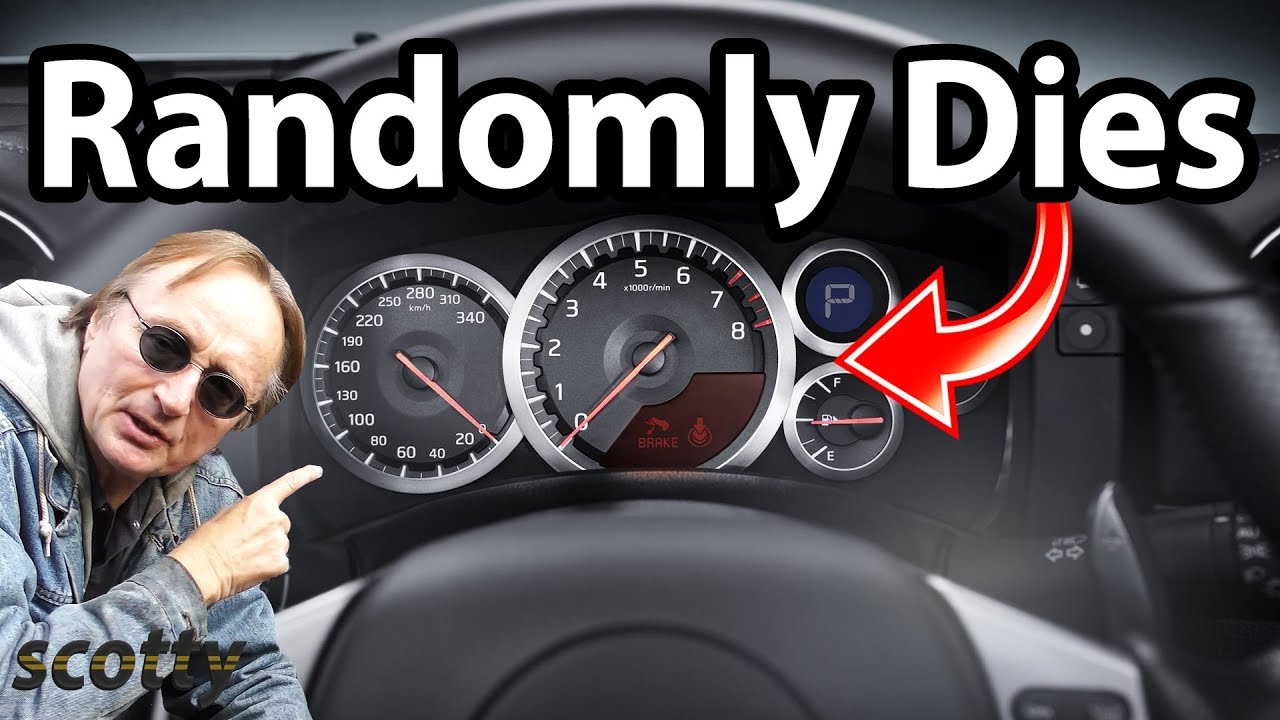
Why does my car randomly shut off?
A car randomly shuts off when the engine loses one or more things it needs to keep running: fuel, air, spark, electrical power, or computer control. Modern engines depend on several sensors and modules, so one small fault can stop the whole system.
The engine may shut off:
- While driving at low speed
- When you stop at a red light
- During hard acceleration
- After the engine warms up
- When turning the steering wheel
- When using the air conditioner
- Immediately after starting
- Only when the fuel tank is nearly empty
The timing matters. A stall during braking may point to an idle or vacuum issue. A stall after 20 minutes of driving may suggest a failing crankshaft sensor or fuel pump that stops working when hot.
A sudden shutdown is not always an emergency, but it can become dangerous in traffic. You may lose power steering assistance, brake assist, or the ability to accelerate away from danger. If the car shuts off while driving, move to a safe place and have the vehicle checked before continuing normal use.

Common reasons a car randomly shuts off
1. Weak or failing battery
A weak battery can cause random stalling, especially during startup or when many electrical systems are active. The battery may still start the car sometimes, which makes this problem confusing.
Look for these signs:
- Slow engine cranking
- Flickering dashboard lights
- A clicking sound when starting
- Radio or clock resets
- Battery warning light
- Stalling after using headlights or climate control
A healthy, fully charged battery usually measures close to 12.6 volts with the engine off. With the engine running, charging voltage often falls near 13.7 to 14.7 volts, though the exact range depends on the vehicle. A battery test and charging-system test are more useful than voltage alone.
2. Bad alternator
The alternator charges the battery and powers the car while the engine runs. If it fails, the vehicle may keep running for a short time on stored battery power and then shut off.
A failing alternator may cause:
- A battery-shaped warning light
- Dim headlights
- Electrical accessories that work slowly
- A burning rubber or electrical smell
- Repeated stalling
- A dead battery after driving
Many drivers replace the battery when the alternator is the real problem. That repair may help for a day or two, but the new battery will also lose its charge.
3. Failing fuel pump
The fuel pump sends gasoline from the tank to the engine. A weak pump may work when cold but lose pressure as it heats up. This is one reason why does my car randomly shut off after driving for a while is a common search question.
Typical symptoms include:
- Long cranking before the engine starts
- Loss of power during acceleration
- A whining sound from the fuel tank
- Stalling on hills or during heavy traffic
- The engine restarting after it cools
- Low or inconsistent fuel pressure
A mechanic can test fuel pressure while the engine runs and during the failure. Do not assume the pump is bad just because the car stalls. A clogged filter, poor electrical connection, or faulty relay can create similar symptoms.
4. Clogged fuel filter or dirty fuel injectors
A clogged fuel filter restricts fuel flow. Dirty injectors can also create a lean mixture, which means the engine receives too much air and not enough fuel.
The car may:
- Hesitate under load
- Shake at idle
- Lose power on hills
- Misfire
- Stall during acceleration
- Start again after several attempts
Fuel filters are service items on some vehicles but are built into the fuel tank on others. Always check the service schedule before replacing one.
5. Failed crankshaft position sensor
The crankshaft position sensor tells the engine computer how fast the crankshaft turns and where it is in its rotation. Without this signal, the computer may stop fuel injection and ignition.
This sensor can cause a sudden stall with little warning. The car may restart after a few minutes, then shut off again later. A diagnostic scan may show a related trouble code, but a stored code is not guaranteed.
A common mistake is replacing the sensor based only on a code. The wiring, connector, tone wheel, and computer signal should also be tested.
6. Faulty camshaft position sensor
The camshaft sensor helps control ignition and fuel timing. When it fails, the engine may run poorly, lose power, take longer to start, or stall.
A bad camshaft sensor may also trigger:
- Check engine light
- Rough idle
- Poor fuel economy
- Reduced engine power
- Hard starting
- Misfire codes
Some cars can run with a weak camshaft sensor, while others may not start at all. Vehicle design makes a major difference.
7. Dirty throttle body or idle air control problem
The throttle body controls the air entering the engine. Carbon buildup can restrict airflow, especially when the throttle plate closes at a stop.
The engine may stall when:
- You release the gas pedal
- You stop at a light
- You turn on the air conditioner
- You shift into gear
- You turn the steering wheel at low speed
Older vehicles may use an idle air control valve. Newer vehicles often use electronic throttle control. Cleaning may help, but some systems require an idle relearn procedure after service.
8. Vacuum leak
A vacuum leak lets unmeasured air enter the engine. This can make the air and fuel mixture too lean for stable running.
Common leak points include:
- Cracked vacuum hoses
- Intake manifold gaskets
- Brake booster hoses
- PCV system parts
- Throttle body seals
- Loose intake tubes
A vacuum leak often causes a high or unstable idle. It may also cause hissing sounds, lean mixture codes, and stalling when the engine returns to idle.
9. Ignition switch or electrical connection failure
The ignition switch supplies power to important systems. If its internal contacts wear out, the car may shut off as if someone turned the key.
Loose or corroded connections can create the same result. Check the battery terminals, engine ground strap, main fuses, and wiring near the engine only if you can do so safely.
An electrical shutdown often turns off the dashboard at the same moment as the engine. That clue helps separate it from a fuel or air problem.
10. Bad engine control module relay or main relay
A relay is an electrically controlled switch. If the main relay loses power, the engine computer, injectors, or fuel pump may stop working.
Heat and vibration can make a weak relay fail at random. Sometimes tapping the relay box seems to restore operation, but that is not a proper repair. The relay, socket, wiring, and power supply need testing.
11. Security or immobilizer system problem
A faulty key, transponder, antenna ring, or immobilizer module can prevent the engine from running. Some vehicles start and then shut off within a few seconds when the security system does not recognize the key.
Watch for:
- A flashing security light
- A key-shaped warning symbol
- A spare key that works normally
- Starting problems after a key replacement
- A recently installed remote starter or alarm
Use the correct key and check the owner’s manual for the security indicator meaning. Do not bypass the immobilizer system without professional help.
12. Transmission or torque converter problem
A failed torque converter clutch can remain locked when the car slows down. This can stall the engine much like stopping a manual transmission without pressing the clutch.
The car may shut off when:
- Coming to a stop
- Shifting from park into drive
- Slowing after highway driving
- The transmission shifts roughly
Transmission trouble often comes with harsh shifts, slipping, delayed engagement, or fluid leaks. A scan tool and transmission pressure tests can help confirm the cause.
13. Overheating
Severe overheating can cause the engine to shut down or suffer major damage. A faulty cooling fan, low coolant, broken water pump, or stuck thermostat may be involved.
Stop driving if you see:
- A temperature gauge in the red zone
- Steam from under the hood
- A coolant warning light
- A strong sweet smell
- Knocking or pinging
- Coolant leaking under the car
Never remove a hot radiator cap. Hot coolant can cause severe burns.

What the symptoms can tell you
The moment of failure provides useful clues. Write down what happened before you try to restart the car.
The car shuts off while driving
If the dashboard goes dark, suspect a power supply issue, ignition switch, battery connection, or charging failure. If the dashboard stays lit but the engine dies, consider fuel delivery, ignition, sensors, or air control.
The car shuts off at idle
Stalling at idle often points to a dirty throttle body, vacuum leak, idle control fault, failing sensor, or low fuel pressure. Air conditioning can expose a weak idle system because it adds engine load.
The car shuts off when hot
Heat-related stalling commonly involves the crankshaft sensor, fuel pump, ignition module, relay, or wiring. If the engine restarts after cooling for 10 to 30 minutes, tell the mechanic. That detail can save diagnostic time.
The car shuts off when turning
A stall during a turn may happen because the engine is already struggling at idle. It can also involve a loose battery cable, damaged wiring, a low fluid level, or a power steering load that the idle system cannot handle.
The car shuts off after refueling
Possible causes include a loose fuel cap, fuel vapor system fault, or an overfilled fuel tank. If the car is hard to start after refueling, the purge valve may be allowing too much fuel vapor into the engine.
The car shuts off but restarts right away
A quick restart may suggest a brief electrical signal loss, unstable idle, sensor fault, or loose connection. It does not mean the problem is harmless. Intermittent faults often become complete failures without warning.
The car cranks but will not start
Cranking means the starter turns the engine. It does not prove that the engine has fuel, spark, or correct timing. A technician must check those three areas instead of guessing.

What to do when your car shuts off while driving
Safety comes first. A stalled vehicle can lose power assistance, and traffic may not give you much time to react.
- Keep both hands on the steering wheel.
- Turn on the hazard lights.
- Shift into neutral if the vehicle is still moving.
- Guide the car toward the shoulder or another safe area.
- Use firm pressure on the brake pedal.
- Avoid repeatedly turning the key while moving.
- Call roadside assistance if the car will not restart.
- Place warning devices behind the vehicle if you can do so safely.
Many cars still allow steering and braking after the engine stops, but both systems may feel heavier. Do not stand in a traffic lane to inspect the engine.
If you smell fuel, see smoke, or notice flames, leave the vehicle and move far away. Call emergency services. Do not open the hood if fire is visible.
How to diagnose why does my car randomly shut off
A proper diagnosis starts with evidence. Randomly replacing parts can become expensive and may create new problems.
Check the warning lights
Look at the dashboard after the stall. Important clues include:
- Battery light
- Oil pressure light
- Engine temperature warning
- Check engine light
- Security light
- Electronic throttle warning
Some warning lights appear because the engine stopped, not because that part caused the failure. For example, the battery light may turn on after the alternator stops charging. A scan is still useful, but the code must be interpreted in context.
Scan for trouble codes
An OBD-II scanner can read stored and pending codes. Pending codes may reveal a fault that has not occurred enough times to turn on the check engine light.
Scan data may show problems with:
- Crankshaft or camshaft signals
- Fuel mixture
- Engine temperature
- Throttle position
- Vehicle speed
- Ignition timing
A code points to a system. It does not always identify the failed part.
Test battery and alternator output
A technician should perform a battery load test and check alternator output under electrical load. They should also inspect the terminals and ground connections.
A voltage reading alone can miss a weak battery or an intermittent connection. Testing under real load gives a more accurate answer.
Measure fuel pressure
Fuel pressure should be checked during normal operation and, when possible, during the stall. Some systems require a special adapter or scan tool to read pressure.
Low pressure may come from the pump, filter, regulator, relay, wiring, or a restricted fuel line.
Check for spark and sensor signals
When the car will not restart, a technician can check for ignition spark and crankshaft signal. If both disappear at the same time, the sensor or its circuit becomes more likely.
This test should be done with the correct equipment. Modern ignition systems can produce high voltage.
Inspect air and vacuum systems
Look for split intake tubes, loose clamps, cracked hoses, and carbon buildup. A smoke test can find leaks that are too small to see.
Do not spray flammable chemicals around a hot engine. That old shortcut can cause a fire.

Can you drive a car that randomly shuts off?
Driving a car that randomly shuts off is risky. Even if the engine restarts, the next stall could happen in a busy intersection, on a bridge, or during a turn.
You may drive only a short distance to a repair shop if:
- The car runs smoothly
- No overheating or oil pressure warning exists
- No fuel leak or smoke is present
- The stall happened once and the car remains stable
- A safe route avoids heavy traffic
Towing is the better choice if the car stalls more than once, shuts off at highway speed, loses electrical power, overheats, or will not restart.
A vehicle with an active oil pressure warning needs immediate attention. Low oil pressure can destroy an engine within minutes.

Repair costs and what affects them
Repair prices vary by vehicle, region, labor rates, and the exact failed part. A diagnostic fee may apply before repairs begin.
Typical cost factors include:
- Battery replacement: usually lower cost
- Alternator replacement: moderate cost
- Throttle body service: often lower cost
- Sensor replacement: low to moderate cost
- Fuel pump replacement: moderate to high cost
- Wiring or computer faults: highly variable
- Transmission repairs: potentially high cost
A good shop should explain the test results before recommending parts. Ask for the diagnostic steps, the failed component, and whether the repair includes programming or relearning.
Do not choose the cheapest quote without checking what it includes. A low-quality sensor or poor electrical repair may bring the same problem back.

How to prevent random stalling
You cannot prevent every failure, but good maintenance lowers the risk.
Follow these habits:
- Replace the battery when testing shows it is weak.
- Keep battery terminals clean and tight.
- Follow the manufacturer’s oil and filter schedule.
- Replace spark plugs at the recommended interval.
- Use the correct fuel filter service interval.
- Repair check engine lights early.
- Watch for slow starting or dim lights.
- Keep coolant at the correct level.
- Avoid driving with an overheating engine.
- Use quality parts for critical sensors and ignition components.
- Record when the stall happens and what conditions were present.
In troubleshooting cases, one of the most useful habits I have seen is keeping a simple symptom log. Note the engine temperature, fuel level, speed, weather, warning lights, and whether the car restarted. That information often reveals a pattern that is invisible during a short shop inspection.
One lesson worth remembering is not to replace parts based on a single symptom. A dead battery, failed alternator, and loose ground can all look alike at first. Testing saves money and prevents frustration.

When to call a professional mechanic
Call a professional if the car stalls while moving, will not restart, overheats, shows low oil pressure, or has a fuel smell. These problems can involve safety systems and high-pressure fuel or ignition parts.
Choose a shop that can perform:
- Computer scanning
- Electrical circuit testing
- Fuel pressure testing
- Oscilloscope testing for sensor signals
- Charging-system testing
- Smoke testing for vacuum leaks
- Transmission diagnosis
Ask whether the technician has worked on your vehicle’s make and model. Factory service information can matter because similar symptoms may have different causes across brands.
A professional diagnosis is especially important for newer vehicles. A modern car may have multiple control modules, network communication lines, and software updates that basic testing cannot fully evaluate.
Frequently Asked Questions About Why Does My Car Randomly Shut Off
Why does my car randomly shut off but start again?
A car that restarts after stalling may have a heat-sensitive crankshaft sensor, weak fuel pump, failing relay, or loose electrical connection. The temporary restart does not rule out a serious fault.
Can a bad battery make my car randomly shut off?
Yes, but a bad alternator or loose battery connection may be the real cause. Test the battery, charging system, terminals, and ground cables together.
Why does my car randomly shut off at red lights?
Stalling at red lights often involves a dirty throttle body, vacuum leak, idle control issue, low fuel pressure, or a torque converter problem. A scan and idle inspection can narrow down the cause.
Is it safe to drive if my car randomly shuts off?
It is not generally safe because the next stall could happen in traffic. Have the car diagnosed soon, and use a tow truck if it stalls repeatedly, overheats, loses power, or will not restart.
Can low gas cause a car to shut off randomly?
Yes. Very low fuel can expose a weak fuel pump, allow fuel starvation during turns, or cause the pump to run hotter. If the fuel gauge is unreliable, confirm the actual fuel level before diagnosing other parts.
Will a check engine light always appear when a car stalls?
No. Some electrical and mechanical faults do not store a code, especially if the failure is brief. A professional may need to test the vehicle while the fault is happening.
Can bad spark plugs cause random stalling?
Worn or damaged spark plugs can cause misfires, rough running, and stalling. However, random shutdowns may also come from ignition coils, fuel delivery, sensors, or electrical power loss.
Conclusion
Knowing why does my car randomly shut off starts with separating fuel, air, spark, electrical power, sensor, and transmission problems. The timing of the stall, dashboard behavior, engine temperature, and restart pattern can provide valuable clues.
Do not ignore repeated stalling or rely on random parts replacement. Record the symptoms, check for warning signs, and arrange a proper diagnosis before the problem puts you in danger. If this guide helped, share your vehicle’s symptoms in the comments or explore more maintenance resources for practical car care.