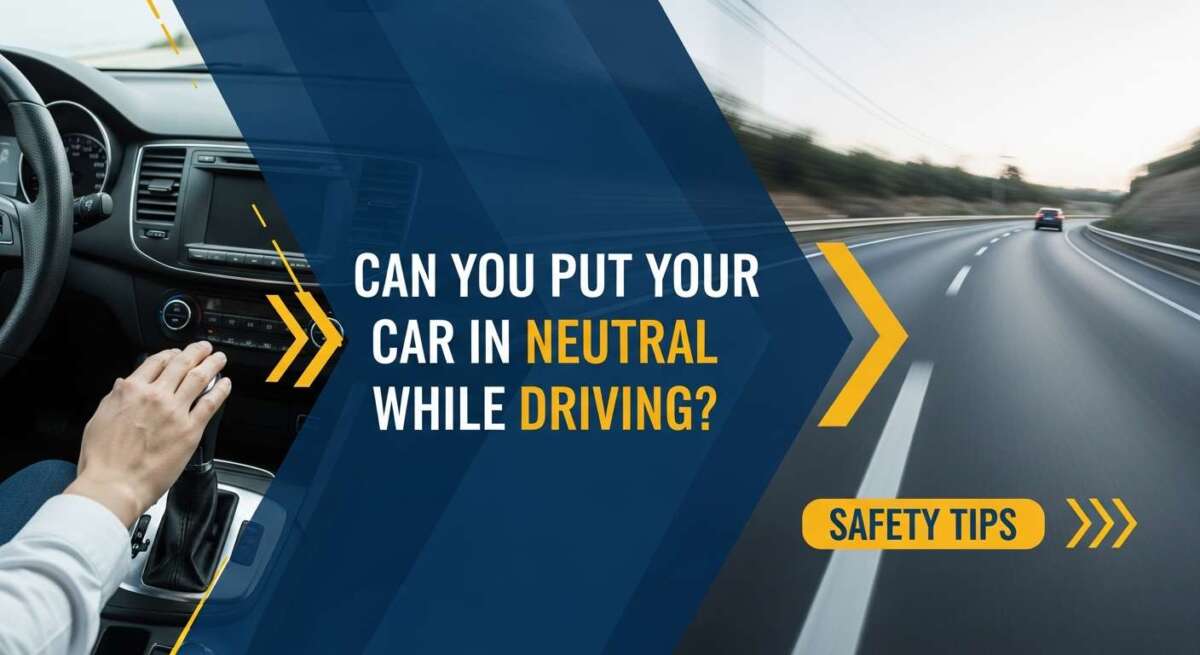
Can You Put Your Car in Neutral While Driving: Safety Tips
Meta title (SEO): Can You Put Your Car in Neutral While Driving? Safety, Fuel & Legal Facts
Meta description (SEO): Thinking of coasting in neutral? Learn why shifting to neutral while driving is unsafe, rarely saves fuel, can damage transmissions, and when (if ever) it’s appropriate.
Suggested URL slug: can-you-put-your-car-in-neutral-while-driving
Article:
Have you ever glanced at the gear selector while going downhill and wondered, “Can I put my car in neutral while driving?” It’s a common question. Many people believe coasting in Neutral saves gas or gives the engine a rest. The truth is more complicated — and for most drivers the answer is simple: don’t do it.
Quick answer
No — for normal driving, you should not shift to Neutral while your car is moving. Coasting in Neutral reduces your control, often increases fuel use in modern cars, can damage automatic transmissions, and may even be illegal where you live. The one major exception: use Neutral only in an emergency such as a stuck accelerator.
Why people think Neutral saves fuel
- Older vehicles with carburetors used to consume fuel whenever the throttle was open; coasting in Neutral could reduce fuel flow.
- That memory persists, so many drivers still assume Neutral saves gas.
Why Neutral usually doesn’t save fuel in modern cars
- Modern fuel-injected engines and engine control units (ECUs) can cut fuel during deceleration while the gear is engaged. When you lift off the throttle in gear, many cars use “fuel cut-off” and consume nearly zero fuel.
- In Neutral the engine idles and continues to use fuel to keep running.
- Conclusion: coasting in gear often uses less fuel than coasting in Neutral.
Transmission and mechanical risks
- Automatic transmissions rely on an oil pump driven by the engine to circulate transmission fluid for lubrication and cooling.
- When you coast in Neutral at high speed, the wheels can spin the transmission input independently while the engine (and pump) drops to idle. That can reduce lubrication and increase heat and wear.
- Repeated or prolonged coasting in Neutral can shorten transmission life and lead to costly repairs.
Safety risks of coasting in Neutral
- Loss of engine braking
- In gear, the engine helps slow the car. In Neutral you remove that assistance and rely solely on the brakes.
- Higher risk of brake fade
- Relying more on brakes over long descents heats them up and can cause brake fade — reduced stopping power when brakes overheat.
- No instant power when you need it
- If an emergency requires acceleration to avoid danger, Neutral adds delay because you must shift back into Drive before power transfers to the wheels.
Legal considerations
- Many jurisdictions prohibit coasting or specifically outlaw coasting in Neutral because it reduces driver control. Examples include laws in several U.S. states and various countries’ driving codes.
- If you cause an accident while coasting in Neutral you could face fines, be found at fault, or encounter insurance issues.
- Always check local traffic laws.
When it’s acceptable to use Neutral
- Automatic car washes: the track typically requires Neutral so the conveyor can pull the car.
- Short-distance pushing or loading onto a trailer: Neutral lets you move the vehicle by hand or onto a flatbed for a few feet.
- Emergency: a stuck accelerator or uncontrolled throttle. In that case, shifting to Neutral immediately can prevent further acceleration and may be lifesaving.
How to handle a stuck gas pedal (step-by-step)
- Stay calm and keep both hands on the wheel.
- Shift to Neutral immediately — this severs power to the wheels even while the engine revs.
- Do NOT turn off the engine while the vehicle is moving; you’ll lose power steering and power brakes.
- Brake gently and steer to a safe location.
- Once stopped, turn off the engine and call for roadside assistance or tow.
- Have a technician inspect and repair the pedal/throttle system before driving again.
Effective fuel-saving alternatives (that actually work)
- Maintain proper tire pressure.
- Remove excess weight from the vehicle.
- Drive smoothly—accelerate and brake gently.
- Use cruise control on steady highway stretches.
- Keep up with scheduled maintenance: fresh air filters, clean fuel injectors, and timely oil changes.
- Plan routes to avoid heavy stop-and-go traffic.
FAQ (SEO-friendly, short answers)
Q: Is it illegal to coast in Neutral?
A: Many places ban coasting in Neutral because it reduces control. Check your local laws.
Q: Will coasting in Neutral damage my car?
A: In automatics, frequent or prolonged coasting can damage the transmission over time by reducing lubrication and increasing heat. It also increases brake wear.
Q: Should I ever put the car in Neutral while stopped in traffic?
A: You can shift to Neutral when fully stopped (e.g., long red light) to reduce clutch or transmission strain slightly, but remain ready to shift back. Do not coast in Neutral while moving.
Q: Why do RPMs behave differently in Neutral?
A: With the vehicle in Neutral the engine runs at idle and is unloaded by the drivetrain. If the pedal is stuck, RPMs can spike because the engine isn’t under load.
Final thoughts
Coasting in Neutral might sound like a clever hack, but for modern vehicles it’s usually a false economy and a safety hazard. Keep your car in gear to take advantage of engine braking, protect your transmission, and stay ready to react. Use Neutral only for car washes, very short towing or pushing, or true emergencies such as a stuck throttle.
Call to action
Have questions about your car’s transmission or local laws? Check your owner’s manual and speak with a certified mechanic. If this article helped, share it or leave a comment with your experience — it could help someone avoid a costly mistake.
SEO optimization checklist (optional)
- Target keyword: “put car in neutral while driving”
- Secondary keywords: “coasting in neutral”, “does neutral save gas”, “is it illegal to coast”, “stuck accelerator neutral”
- Suggested headings to use: H1: Can You Put Your Car in Neutral While Driving?; H2s: Quick answer; Fuel myth; Transmission risks; Safety risks; Legal; Exceptions; How to handle stuck gas pedal; Fuel-saving tips; FAQs; Conclusion
- Meta title and description provided above
- Suggested OG image alt text: “Driver looking at gear shifter with Neutral highlighted”
- Target word count: 900–1,500 words for thorough coverage
- Add internal links to related posts (brake maintenance, transmission care, fuel saving tips) and authoritative external sources (state DMV pages, manufacturer manuals)
If you’d like, I can:
- Convert this into SEO-ready HTML with headings, schema.org FAQ JSON-LD, and suggested images.
- Tailor the tone for a specific audience (beginner drivers, mechanics, or legal-focused). Which would you prefer?