

Wash cool exhaust tips with car-safe soap, a soft brush, and a clean microfiber towel.
Learning how to clean car exhaust tips properly helps remove soot, road grime, and light carbon without scratching the metal or harming the finish. The safest method is simple: cool the exhaust, rinse away loose dirt, use gentle soap, and match your tools to the tip’s material. This guide explains each step, shares practical detailing lessons, and shows when cleaning is not enough to fix rust or deep stains.

Why clean car exhaust tips?
Exhaust tips collect soot, carbon, water spots, salt, and road film. The dark layer is often more visible on chrome, polished stainless steel, and bright metal tips. Diesel vehicles and cars with rich fuel mixtures may build soot faster than gasoline vehicles.
Clean exhaust tips also make the whole car look better. A spotless paint job can still look unfinished when the exhaust outlets are black and dull.
Regular cleaning may help you:
• Remove surface soot before it hardens
• Protect chrome and stainless steel from corrosive road salt
• Spot rust, cracks, or loose parts early
• Keep the exhaust finish bright
• Improve the final look after a car wash
Cleaning will not repair flaking chrome, deep rust, or heat damage. It only removes dirt and surface deposits. If the metal is damaged, replacement or professional refinishing may be the better option.

What you need to clean exhaust tips
The right tools make how to clean car exhaust tips properly much easier. You do not need a large collection of detailing products. A few gentle items are enough for most cars.
Gather these supplies:
• Car wash soap with a neutral pH
• Two buckets of clean water
• A hose or low-pressure rinse nozzle
• A soft microfiber towel
• A soft detailing brush or old soft toothbrush
• A dedicated wheel or metal-cleaning brush
• Nitrile gloves
• A drying towel
• Metal polish made for the tip’s finish
• A foam applicator or clean microfiber applicator
Use a separate towel and brush for exhaust tips. Exhaust soot contains fine particles that can stain paint or leave marks on clear coat.
Avoid steel wool, rough scouring pads, kitchen sponges, and hard wire brushes. These tools can leave fine scratches that show clearly in bright sunlight.

Check the exhaust tip material first
Before you begin how to clean car exhaust tips properly, identify the finish. Different metals need different levels of care.
Chrome exhaust tips
Chrome has a thin decorative surface over a base metal. It can look bright, but it may scratch or peel if you use harsh abrasives. Start with soap and water, then use a chrome-safe polish only when needed.
Stainless steel exhaust tips
Stainless steel is common because it resists rust and heat. It can still develop brown stains, water spots, or blue and gold heat marks. A mild metal polish may help, but rub gently and follow the grain when the surface has a brushed finish.
Polished aluminum tips
Aluminum is softer than stainless steel. Use a soft towel and a polish labeled safe for aluminum. Avoid aggressive rubbing, as it can create uneven dull spots.
Black or coated exhaust tips
Black tips may have paint, powder coating, or a ceramic-style finish. Do not use metal polish unless the product maker approves it. Soap, water, and a soft towel are usually the safest choice.
Carbon-fiber-style tips
Some tips use a decorative carbon-fiber cover over metal. Treat the outer surface like painted trim. Avoid metal polish and strong solvents unless the manufacturer says they are safe.
When you are unsure, test any cleaner on a hidden area. A small test can prevent damage to the visible part of the tip.
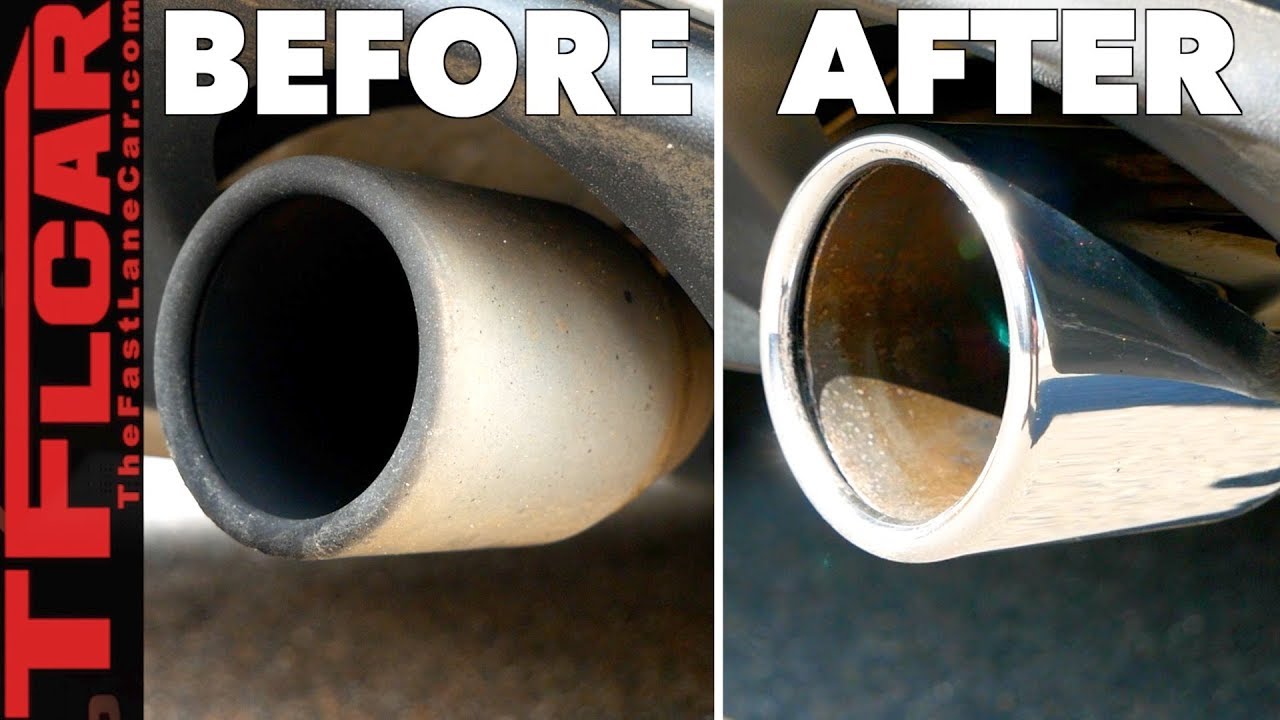
How to clean car exhaust tips properly: Step-by-step
This method works for most chrome and stainless-steel exhaust tips. Always check the vehicle and product instructions first.
1. Let the exhaust cool
Park the car on a level surface and wait until the exhaust tips are cool to the touch. Hot metal can dry soap too quickly and may burn your skin.
Do not clean the tips while the engine is running in a garage. Carbon monoxide can build up without warning. Work outdoors or in a well-ventilated area, and set the parking brake before you start.
2. Rinse away loose dirt
Spray the tips with clean water. Use low or moderate pressure and aim into the opening only when needed.
This first rinse removes loose grit. That matters because rubbing dry grit across the surface can cause scratches, much like dragging sandpaper over glass.
3. Wash with car soap
Mix car wash soap with water according to the label. Dip a soft brush or microfiber towel into the solution, then clean the outside of the tip.
Work from the cleanest area toward the dirtiest area. Turn the towel often, and rinse it when it collects black residue. Use a separate brush for the inside edge.
4. Clean the inner lip
Carbon often hides on the inner rim and inside the first section of the outlet. Wrap a microfiber towel around your finger or use a soft detailing brush.
Do not force a brush deep into the exhaust. You only need to clean the visible area. Deep deposits inside the exhaust system are a mechanical issue, not a detailing task.
5. Rinse completely
Rinse away all soap and loosened grime. Soap left on hot metal can create a dull film or water spots.
Inspect the tip under good light. If the surface is clean but still stained, you may need a suitable metal polish. Do not jump straight to a strong compound.
6. Polish only when needed
Apply a small amount of finish-safe metal polish to a clean applicator. Work on a small area with light pressure.
Wipe the residue away before it dries hard. Repeat only if the product instructions allow it. More polish and more pressure do not always create a better result.
7. Dry the surface
Dry the tip with a clean microfiber towel. Pay attention to the lower edge, seams, and inner lip.
Water left behind can create mineral spots, especially in areas with hard water. A dry surface also makes it easier to see whether stains remain.
8. Apply optional protection
A metal sealant or high-temperature protection product may help reduce future grime. Choose a product made for exhaust surfaces and follow its temperature limits.
Never apply a normal wax or interior dressing to a hot exhaust. Some products can smoke, discolor, or become difficult to remove when exposed to heat.

How to remove stubborn soot and carbon
Light soot usually comes off with soap and a soft brush. Thick, baked-on carbon needs more patience, not more force.
Try this approach:
Wet the tip with warm water.
Apply car soap or a finish-safe cleaner.
Let the product dwell for a few minutes without letting it dry.
Agitate the residue with a soft brush.
Rinse and inspect the surface.
Repeat the process before trying a mild polish.
For severe carbon, use a cleaner labeled safe for chrome or stainless steel. Read the label and test it first. Some wheel cleaners contain strong acids or caustic chemicals that can stain metal, damage coatings, or harm nearby paint.
A clay bar may remove bonded surface particles from the outside of some metal tips. Keep the area wet and use a clean piece of clay. Do not use clay on rough, peeling, or heavily pitted surfaces.

How to remove rust, water spots, and heat stains
Not every dark mark is dirt. Knowing the difference helps you avoid wasting time or damaging the finish.
Surface rust
Light orange staining may respond to a metal polish or rust remover made for the specific metal. Use a soft applicator and gentle pressure.
Deep rust, pits, and flaking chrome cannot be cleaned away. Polishing may make the area look better for a short time, but the damage will return.
Water spots
Water spots come from minerals left behind after water evaporates. Soap and a microfiber towel may remove fresh spots. Older deposits may need a mild mineral-spot remover that is safe for the finish.
Keep acidic cleaners away from painted panels, plastic trim, and rubber parts. Rinse nearby areas well if overspray occurs.
Blue or gold heat stains
Blue, purple, or gold colors on stainless steel often result from repeated heat cycles. A stainless-steel polish may reduce the color, but it may not remove it completely.
Some performance exhaust systems naturally develop heat coloring. It is not always a sign of failure. However, sudden new discoloration, cracks, or glowing metal deserves mechanical inspection.
Common mistakes to avoid
Many exhaust tips are damaged during cleaning because the owner uses too much pressure or the wrong chemical. Avoid these common errors:
• Cleaning hot metal
• Scrubbing dry soot with a rough pad
• Using steel wool on chrome
• Applying household oven cleaner without checking compatibility
• Using acidic wheel cleaner on an unknown finish
• Spraying strong chemicals near paint and plastic
• Letting cleaner dry on the surface
• Using the same towel on the exhaust and body paint
• Polishing coated or black tips with metal compound
• Pushing tools deep inside the exhaust
One mistake I often see in hands-on detailing is starting with an abrasive product because the tip looks badly stained. A gentle wash can remove most of the grime. Abrasion should be the last step, not the first.
How often should you clean exhaust tips?
For most daily drivers, clean the exhaust tips every two to four weeks during regular car washing. You may need to clean them more often if you drive in rain, snow, salted roads, dusty areas, or heavy traffic.
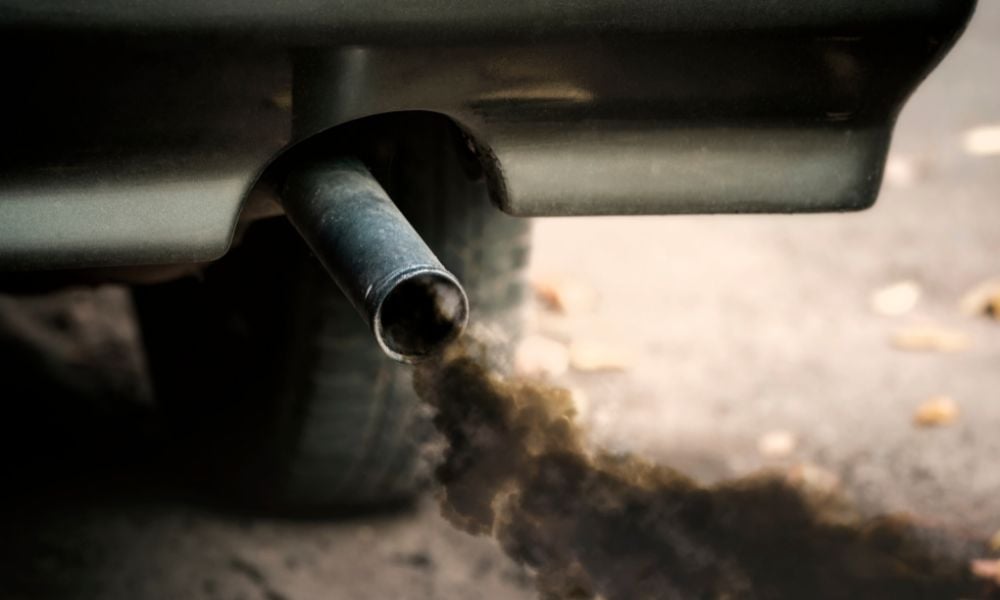
Diesel vehicles and turbocharged cars may produce more visible soot. A rich-running engine can also create heavier deposits. If the tips become dirty soon after cleaning, the issue may be related to fuel mixture, oil consumption, an emissions system, or a faulty engine sensor.
A simple maintenance plan works well:
• Wipe the tips during each full car wash
• Use soap and a soft brush for normal buildup
• Polish only when stains remain
• Inspect for rust, cracks, and loose hangers
• Ask a qualified technician about sudden or unusual soot
Cleaning the tips can improve appearance, but it cannot correct an engine or emissions fault.
Safety tips for exhaust cleaning
Good detailing starts with safe habits. Exhaust parts can stay hot long after the engine stops, and some cleaners can irritate skin or damage nearby surfaces.
Follow these precautions:
• Work outdoors or in strong ventilation
• Wear nitrile gloves and eye protection
• Keep cleaners away from children and pets
• Read every product label before use
• Do not mix cleaning chemicals
• Keep solvents away from flames and hot surfaces
• Rinse accidental overspray from paint quickly
• Dispose of dirty towels according to local rules
If the car must be raised, use approved jack stands on a firm surface. Never rely on a hydraulic jack alone. In most cases, you can clean the visible exhaust tips without lifting the vehicle.
How to keep exhaust tips cleaner for longer
Prevention reduces the amount of scrubbing needed later. A few small habits can make how to clean car exhaust tips properly faster and safer.
Wash the rear of the vehicle often. Dirt on the bumper can transfer to the exhaust tips during rain or driving. Dry the tips after washing, especially if your area has hard water.
Use a finish-safe protectant when appropriate. A product designed for high-temperature metal may make soot easier to remove. Check its temperature rating and never assume a standard paint wax can handle exhaust heat.
Also, pay attention to changes. A small amount of normal soot is expected, but heavy black deposits that appear quickly may point to an engine problem. Look for rough running, poor fuel economy, smoke, warning lights, or an oily residue. Those signs need diagnosis rather than more polish.
When cleaning is not enough
Cleaning cannot fix structural damage. Stop polishing and seek professional help if you see:
• Cracks in the exhaust tip or surrounding pipe
• Holes or deep rust pits
• Loose brackets or rattling parts
• Chrome that is bubbling or peeling
• A strong exhaust smell inside the cabin
• Black soot around a joint or weld
• A sudden change in exhaust color or noise
Exhaust leaks can allow harmful gases to reach the passenger area. A clean tip is not proof that the exhaust system is safe. Have a qualified technician inspect any leak, unusual noise, or warning light.
Frequently asked questions about how to clean car exhaust tips properly
Can I use dish soap to clean exhaust tips?
A small amount of mild dish soap can remove grease, but car wash soap is usually the better choice. It is made for vehicle surfaces and is less likely to leave a strong residue.
Is steel wool safe for chrome exhaust tips?
Steel wool can scratch chrome and may expose the base metal. Use a soft microfiber towel, a soft brush, and a chrome-safe polish instead.
Can I clean exhaust tips while they are hot?
No. Hot metal can burn you, dry cleaners too quickly, and cause uneven marks. Wait until the tips are fully cool before starting.
How do I remove black carbon from exhaust tips?
Start with water, car soap, and a soft brush. If carbon remains, use a compatible cleaner or mild polish, test it in a hidden spot, and avoid heavy pressure.
Why do my exhaust tips turn black so quickly?
Fast soot buildup can be normal on some diesel or performance vehicles, but it can also point to an engine or emissions issue. If the buildup is sudden or heavy, have the vehicle checked by a qualified technician.
Can I use WD-40 on exhaust tips?
It may loosen some grime, but it is not a complete cleaning or protection solution. Avoid using it on hot metal, and wash the surface afterward so an oily film does not attract more dirt.
Should I polish black exhaust tips?
Usually not. Black tips may have paint or a special coating that metal polish can dull or remove. Use soap and a soft towel unless the manufacturer approves a specific product.
Conclusion
The safest way to clean car exhaust tips properly is to work on cool metal, rinse away grit, use mild car soap, and choose tools that match the finish. Soft brushes and microfiber towels handle most soot, while gentle metal polish can help with stains on approved surfaces.
Avoid harsh chemicals, rough abrasives, and excess pressure. Clean your tips during regular car washes, inspect them for damage, and treat sudden heavy soot as a possible mechanical warning. Try this method on your next wash, then share your best detailing tip or explore more vehicle care guides.