

Clean car windows without streaks by using a clean microfiber cloth, light cleaner, and small overlapping wipes.
Dirty glass can make driving tiring, especially when sunlight hits oily smears or night lights spread across the windshield. Learning how to clean car windows without streaks is less about scrubbing hard and more about using the right tools, the right order, and very little product.
This guide explains the process used by professional detailers, including how to clean the inside and outside of car windows, remove stubborn film, avoid common mistakes, and keep glass clear for longer.

Why Car Windows Get Streaks
Streaks form when dirt, oil, and cleaner remain on the glass after wiping. The problem often gets worse when a cloth is too wet, a towel is dirty, or the window is cleaned in direct sunlight.
The inside of a windshield can collect a thin oily film from dashboard plastics, vinyl, smoke, dust, and air fresheners. The outside may have road grime, insect marks, hard-water spots, tree sap, and washer fluid residue.
Common causes of streaky car windows include:
• Using too much glass cleaner
• Wiping with paper towels that leave lint
• Using one cloth for cleaning and drying
• Cleaning hot glass in direct sun
• Reusing a damp or dirty microfiber towel
• Missing the corners and lower edges
• Using household products that contain wax, ammonia, or strong fragrances
Streaks are not only unattractive. They can scatter light and reduce visibility at night or during low sun. A clean windshield gives your eyes a clearer view and helps reduce glare.

What You Need to Clean Car Windows Without Streaks
The tools you use matter as much as the cleaning method. You do not need an expensive detailing kit, but each item should have a clear purpose.
Gather these supplies before you start:
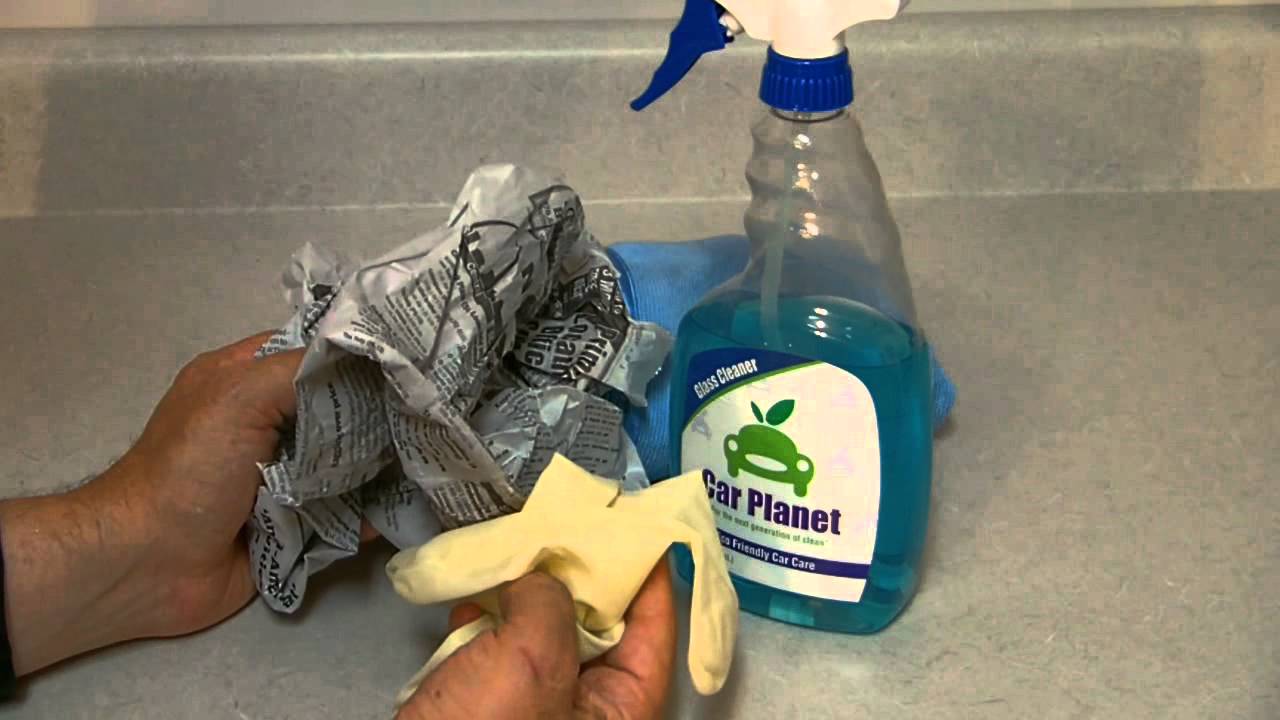
• Two to four clean, low-lint microfiber towels
• A dedicated automotive glass cleaner
• A spray bottle for water or a mild cleaning mix
• A soft detailing brush or clean paintbrush
• A glass towel with a tight weave for final buffing
• Cotton swabs for tight corners
• A bucket of clean water for heavily dirty exterior glass
Choose microfiber towels with short or medium fibers. Very plush towels can hold too much product and may leave a hazy film. Avoid towels washed with fabric softener because it coats the fibers and reduces absorbency.
A dedicated automotive glass cleaner is usually the safest choice. Some household glass products contain ammonia. Ammonia can damage certain window films, tint, rubber seals, and nearby interior materials. Always check the product label and your vehicle manufacturer’s guidance, especially if the windows are tinted.
How to Clean Car Windows Without Streaks: Step by Step
The best method is simple: remove loose dirt first, clean one section at a time, then dry the glass completely.
1. Park in the Shade
Move the car into a garage or shaded area. Cool glass gives you more time to spread and remove the cleaner before it dries.
Hot glass causes the liquid to evaporate too fast. That leaves behind the cleaner’s ingredients, along with any dirt they loosened. If shade is not available, clean early in the morning or later in the afternoon.
2. Remove Dust From the Interior
Use a dry microfiber towel to wipe the dashboard, steering wheel, door panels, and window edges. This prevents dust from moving back onto freshly cleaned glass.
Pay special attention to the top of the dashboard. Dust and oily residue often rise onto the windshield through heat and airflow.
3. Clean the Exterior First
Rinse or wash the outside of the windows before applying glass cleaner. Loose sand and grit can scratch glass when rubbed into the surface.
For light dirt, spray cleaner onto a microfiber towel rather than directly onto the window. For heavy dirt, rinse the glass with clean water first. Work from the top down so dirty liquid does not run over areas you already cleaned.
4. Use Small Overlapping Wipes
Wipe the glass with straight, overlapping strokes. You can work from left to right on the outside and up and down on the inside.
Small sections are easier to control than one large pass. Turn the towel often so you are always using a clean side. If the towel becomes damp or dirty, replace it.
5. Dry and Buff the Glass
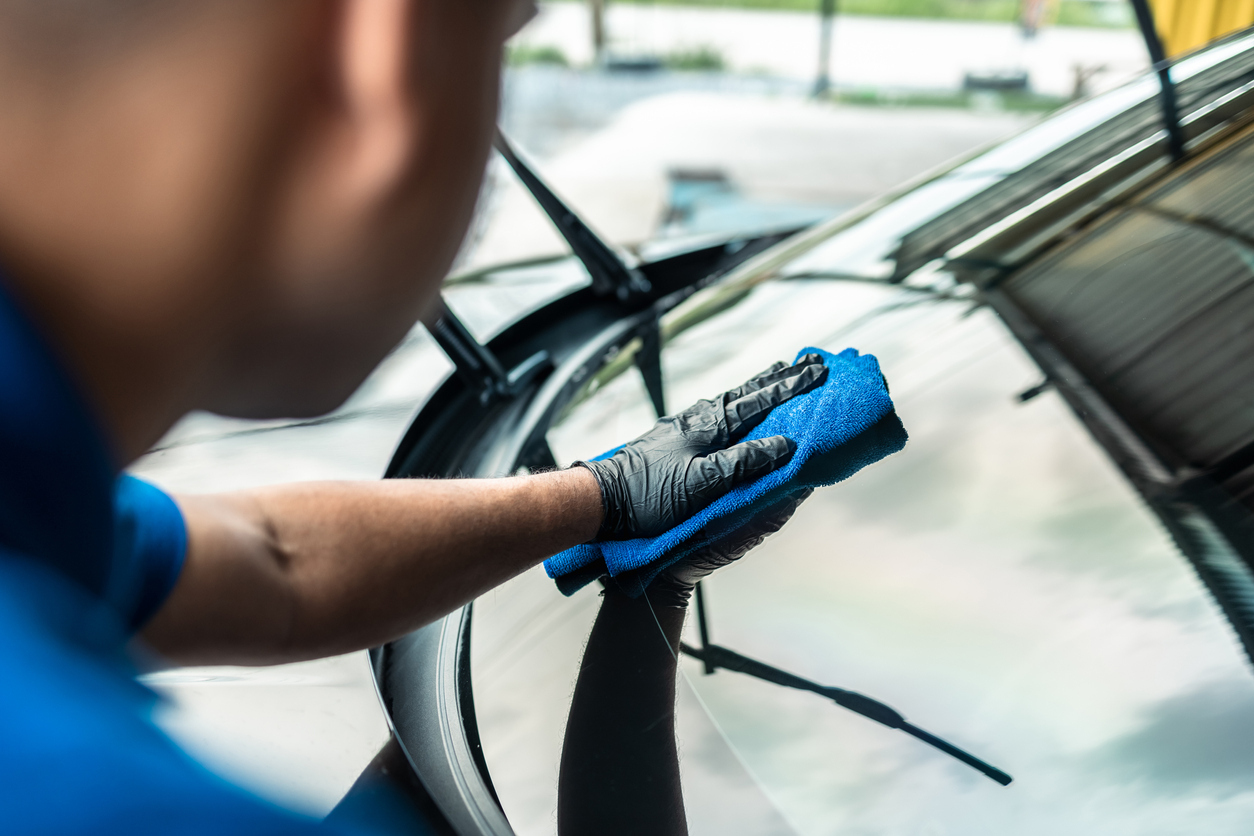
Use a second, dry microfiber towel to remove any remaining moisture. Buff lightly until the glass feels smooth and looks clear.
Do not press hard. Excess pressure can spread oils instead of removing them. A dry towel is your final check when learning how to clean car windows without streaks.
6. Check the Glass From Different Angles
Look through the window from inside and outside. Change your viewing angle and check the glass in both bright and low light.
A useful trick is to wipe the outside with horizontal strokes and the inside with vertical strokes. If you see a streak later, the direction tells you which side needs another pass.
How to Clean the Inside of a Windshield
The inside windshield needs extra care because it often has an invisible oily layer. This layer can create glare that appears only when headlights or sunlight hit the glass.
Start by placing a towel across the dashboard. It will catch drips and protect the dashboard surface.
Then follow these steps:
Dust the windshield with a dry microfiber towel.
Spray a small amount of cleaner onto the towel, not the glass.
Wipe the windshield in small sections.
Use a clean towel to dry each section at once.
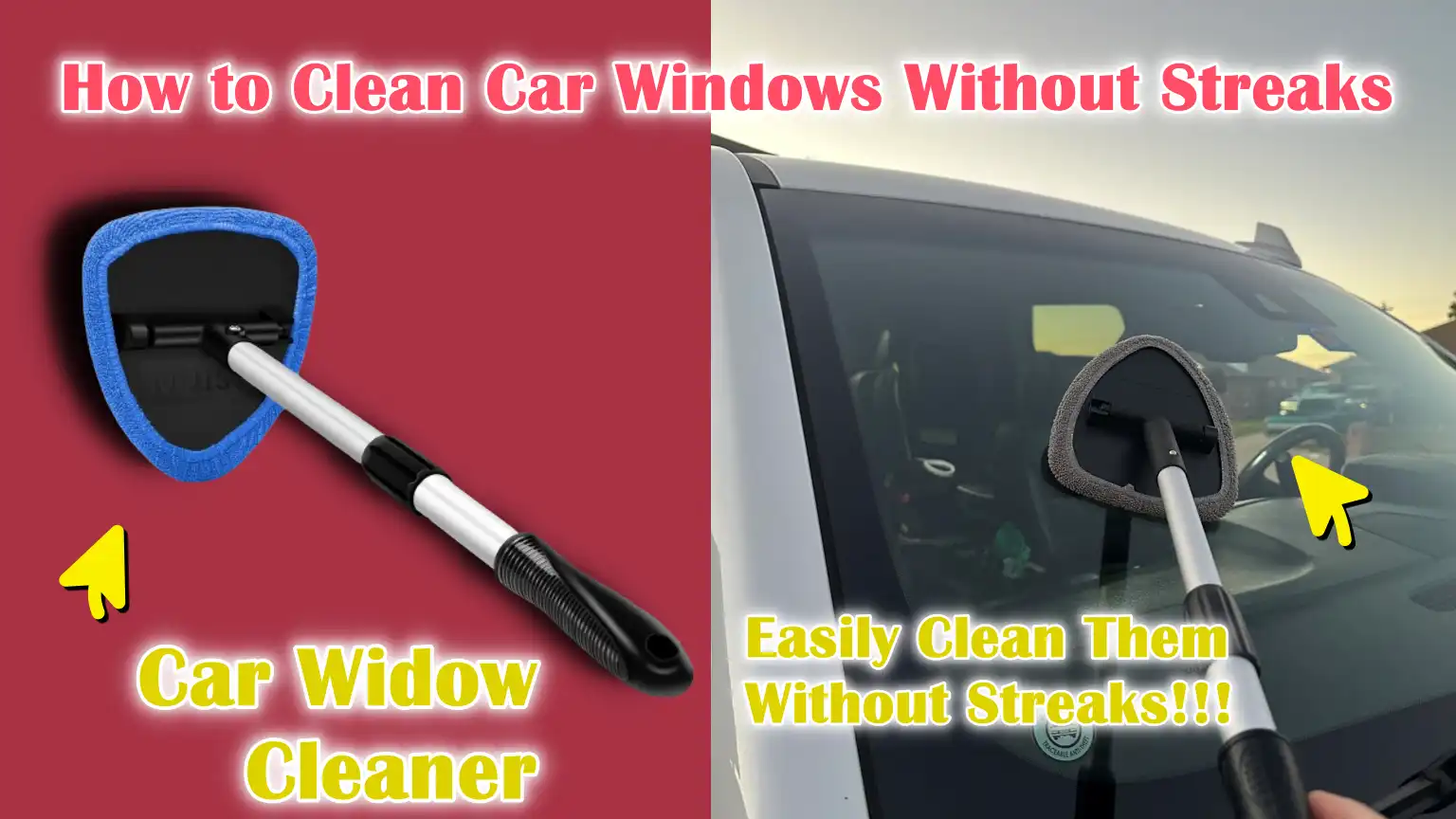
Reach the lower corners with a folded towel or glass-cleaning tool.
Avoid soaking the cloth. Too much liquid can run into the dashboard vents, defroster openings, speakers, or electronic controls.
A long-handled windshield tool can help if you have back pain or trouble reaching the center. Use a soft, clean cover and avoid tools with rough edges.

How to Clean the Outside of Car Windows
Exterior glass often needs more cleaning power because it collects road film, bugs, dust, and mineral deposits. Start with a normal wash before treating difficult spots.
Rinse the window well. Wash it with car shampoo and a clean mitt. Rinse again, then use glass cleaner after most road dirt is gone.
For bug marks, place a damp microfiber towel over the area for a few minutes. The moisture softens the residue so you can wipe it away without heavy pressure.
For water spots, try a product made for automotive glass. Some mineral stains may need a mild glass polish, but test it on a small area first. Do not use abrasive pads, rough sponges, or household scouring products.
Tree sap and tar may need a vehicle-safe remover. Keep these products away from rubber trim and paint when possible. Follow the label and wash the area after treatment.
How to Clean Tinted Car Windows Safely
Tinted windows need gentle treatment. The film is usually applied to the inside surface, so harsh chemicals and rough tools can cause damage.
Use these precautions:
• Choose an ammonia-free cleaner
• Spray the cleaner onto the towel
• Use soft microfiber cloths
• Do not scrape the film with a blade
• Avoid rough paper towels
• Do not use strong solvents unless the tint maker allows them
Newly installed tint may need time to cure. Follow the installer’s instructions before cleaning the inside of the windows. If you notice bubbles, peeling, purple discoloration, or cloudy patches, cleaning will not repair the film. A professional tint shop should inspect it.

How to Remove Haze, Smoke Film, and Grease
A greasy haze may require two cleaning passes. The first pass loosens the oily film, while the second removes the remaining cleaner and residue.
Use a clean towel with a small amount of automotive glass cleaner. Wipe one section, then immediately buff it with a dry towel. If the glass still looks cloudy, repeat the process with fresh towels.
Smoke film can be especially stubborn. It may leave a yellow or oily coating on the windshield, side glass, and rear glass. Ventilate the vehicle and clean the glass several times rather than using a large amount of strong product at once.
Do not mix cleaning chemicals. Combining products can create harmful fumes or damage surfaces. Plain water is often useful for the final wipe because it removes leftover cleaner.

How to Clean Car Windows Without Streaks Using Vinegar
A diluted vinegar solution can help with light mineral residue, but it is not ideal for every vehicle or every type of dirt. Vinegar may also have a strong smell and can affect some nearby materials if it runs onto them.
If you use it, keep the mixture mild and apply it to a towel instead of spraying the glass heavily. Wipe a small test area first, then follow with a clean damp towel and a dry microfiber towel.
Do not use vinegar on unknown window films without testing it. Avoid letting it sit on rubber seals, leather, painted trim, or dashboard surfaces.
For regular cleaning, an automotive glass cleaner is often more convenient and safer because it is designed for vehicle surfaces. Vinegar is better viewed as an occasional option, not a universal solution.
Mistakes That Cause Streaky Car Windows
Many failed cleaning jobs come from small habits. Fixing these habits often makes a bigger difference than buying a stronger cleaner.
Avoid these common mistakes:
• Cleaning in direct sunlight
• Spraying cleaner until the glass is dripping
• Using a towel that touched wax or polish
• Cleaning glass with a dusty cloth
• Reusing the same towel on the dashboard and windows
• Wiping in circles that spread residue
• Skipping the final dry towel
• Forgetting the rearview mirror
• Cleaning only the visible center of the windshield
One lesson I’ve learned from testing different window-cleaning routines is that clean towels matter more than extra product. A fresh towel can remove residue that a soaked, dirty towel only spreads around.
Another useful habit is keeping separate towels for glass, paint, wheels, and the interior. This prevents wax, tire dressing, and oily dashboard products from transferring to the windows.
How Often Should You Clean Car Windows?
Clean the windows whenever visibility drops or the glass feels oily. Many drivers benefit from a full interior and exterior glass cleaning every two to four weeks.
You may need to clean more often if you:
• Drive on dusty or muddy roads
• Park under trees
• Smoke or vape inside the car
• Use oily dashboard products
• Live near the coast
• Drive in heavy winter salt
• Have young children touching the glass
A quick exterior rinse and a light interior wipe can maintain clarity between deeper cleanings. Do not wait until the windshield is heavily coated. A thin film is harder to notice during the day but can become dangerous glare at night.
Tips for Better Visibility in Rain and at Night
Clean windows improve visibility, but they cannot solve every visibility problem. Worn windshield wipers can smear water and create a cloudy layer even when the glass is clean.
Replace wiper blades when they skip, chatter, split, or leave water behind. Also keep the washer fluid reservoir filled with a fluid made for your climate.
Avoid applying unapproved water-repellent products to the windshield. Some products can cause haze or wiper chatter if applied incorrectly. If you use a glass coating, follow the product directions and prepare the surface carefully.
Clean the headlights, mirrors, and backup camera lens as well. Safe driving depends on the full view around the car, not just the windshield.
A Simple 10-Minute Glass-Cleaning Routine
When you are short on time, use this routine:
Park in the shade.
Remove dust from the dashboard and glass.
Clean the outside with a damp microfiber towel.
Apply a small amount of automotive glass cleaner.
Wipe with one clean towel.
Dry with a second towel.
Clean the inside using the same small-section method.
Inspect the glass from several angles.
This routine works because it separates dirt removal from drying. It also prevents the most common problem: leaving cleaner on the surface after the towel becomes saturated.
Frequently Asked Questions About How to Clean Car Windows Without Streaks
What is the best cloth for cleaning car windows without streaks?
A clean, low-lint microfiber towel is the best choice for most car windows. Use one towel to clean and another dry towel to buff the glass.
Should I spray glass cleaner directly on the window?
It is usually better to spray the product onto the microfiber towel, especially when cleaning the inside. This helps protect the dashboard, speakers, vents, tint, and electronic controls from overspray.
Why do my car windows look streaky after cleaning?
Streaks often come from too much cleaner, a dirty towel, hot glass, or incomplete drying. Use less product, work in small sections, and finish with a fresh dry microfiber towel.
Can I use Windex on tinted car windows?
Check the label before using any household glass cleaner. For tinted windows, an ammonia-free automotive glass cleaner is the safer option because ammonia may damage some window films and surrounding materials.
Is newspaper good for cleaning car windows?
Newspaper is an old home-cleaning method, but it can leave ink, lint, or residue on some automotive glass. A clean microfiber towel is more consistent and less likely to damage tint or rubber trim.
How can I clean the lower inside edge of the windshield?
Fold a microfiber towel over your fingers or use a soft, long-handled glass tool. Keep the towel only slightly damp so liquid does not run into the dashboard or defroster vents.
Conclusion
Learning how to clean car windows without streaks comes down to a few reliable habits: work in the shade, remove loose dirt first, use little cleaner, choose clean microfiber towels, and dry the glass fully. Clean the inside and outside separately, and use ammonia-free products on tinted windows.
The biggest improvement usually comes from slowing down and using a fresh towel for the final buff. Try this method on your next wash, then check the glass at night or in bright sunlight. If you have a favorite glass-cleaning tip, share it in the comments or explore more car-care guides for practical ways to keep your vehicle clear, safe, and comfortable.