

Wet-sand, polish, and re-clear the hood when the cloudy finish is damaged but still firmly attached.
A cloudy clear coat on a car hood can make a well-kept vehicle look old and neglected. The haze may come from oxidation, trapped moisture, chemical damage, or clear coat failure. Each cause needs a different fix.
I have seen many owners waste time polishing a hood that needed new clear coat instead. This guide explains how to fix cloudy clear coat on car hood surfaces, how to test the damage, which tools to use, and when a professional repair is the better choice.

What Causes a Cloudy Clear Coat on a Car Hood?
Clear coat is the transparent top layer that protects automotive paint from sunlight, water, dirt, and mild chemical exposure. It also gives the hood its gloss. When this layer becomes hazy, the problem may be on the surface or deep within the coating.
Common causes include:
• Oxidation from long-term sun exposure
• Moisture trapped under or inside the clear coat
• Clear coat delamination, where the coating separates from the base paint
• Strong cleaners, road salt, bird droppings, or tree sap
• Incorrect paint mixing or poor spray conditions
• Solvent pop caused by trapped solvent during painting
• Fine scratches and swirl marks that scatter light
• Extreme heat from the engine bay or direct sunlight
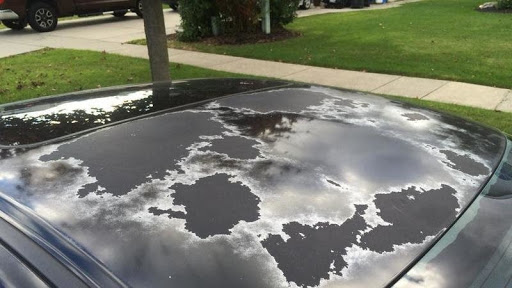
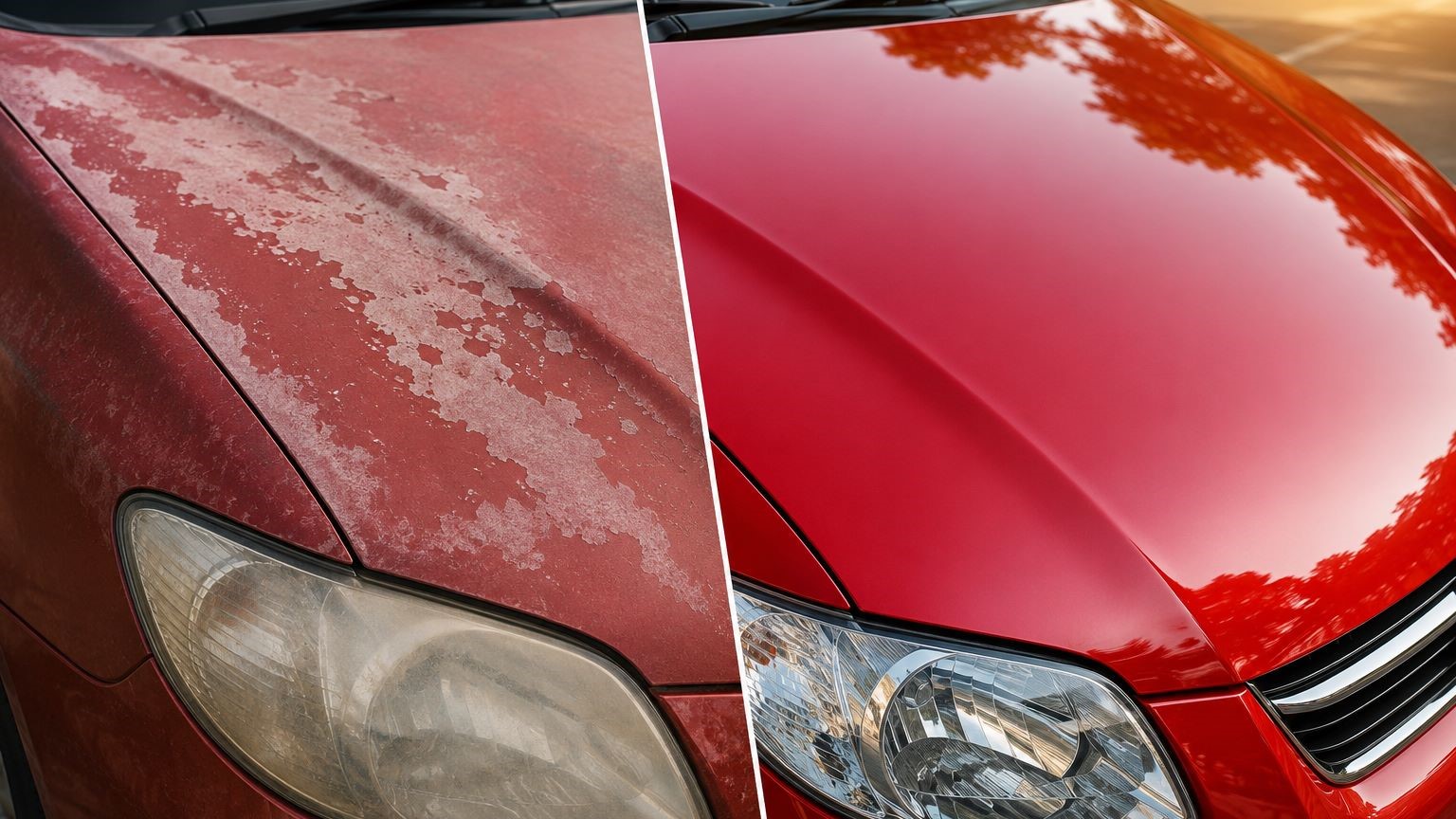
A white or gray haze that disappears when the panel is wet may indicate surface oxidation. A cloudy patch that remains visible when wet often means the clear coat has failed below the surface.
The hood is especially vulnerable because it faces direct sunlight, road dust, insects, and engine heat. Think of the clear coat as a thin glass shield. Once that shield becomes cracked or detached, polishing can improve its appearance only for a short time.

How to Diagnose the Cloudy Finish
Before learning how to fix cloudy clear coat on car hood panels, identify the type of damage. Start by washing the hood with car shampoo, clean water, and a soft microfiber mitt. Dry it with a clean towel and inspect it in bright shade or under an LED work light.
Do not inspect only under direct sunlight. Strong sunlight can hide fine defects while making other marks look worse than they are.
Perform a simple water test
Spray a small amount of clean water on the cloudy area. Watch how the panel looks while it is wet.
• If the haze nearly disappears, the issue may be oxidation or fine surface damage.
• If the haze stays visible, the clear coat may be chemically damaged or separating.
• If the area shows white spots or milky patches, moisture or solvent damage may be present.
• If the surface feels rough, bonded dirt or overspray may be adding to the cloudy look.
Check for peeling or lifting
Run your clean fingertip gently over the edge of the damaged area. Do not scrape it with a fingernail.
Signs of clear coat failure include:
• Flaking edges
• Small bubbles
• Cracks that look like a spider web
• A dull patch with a sharp border
• Transparent film lifting from the color coat
• Large areas that look milky after rain
If the clear coat is peeling, polishing cannot restore the bond. The damaged coating must be sanded away, and the hood usually needs new base color and clear coat.
Use a paint thickness gauge when possible
A paint thickness gauge can show whether the hood has been heavily sanded or repainted. This matters because aggressive sanding can expose the color coat or metal.
A gauge is not essential for a small repair, but it is helpful on older cars, repainted hoods, and vehicles with a history of bodywork. Factory paint is often thin, and removing too much material can create a bigger problem.

Can Polishing Fix a Cloudy Clear Coat?
Polishing can fix a cloudy clear coat when the damage is shallow. It may remove oxidation, light scratches, and mild chemical etching. It cannot repair peeling, deep cracks, missing clear coat, or separation between layers.
This is the most important rule: polishing removes a small amount of clear coat. It does not rebuild it.
Try a small test spot before working on the whole hood. Use a mild finishing polish on a foam polishing pad. Work a section about 18 inches wide, then wipe it clean and inspect it.
If the test spot becomes clearer and glossier, polishing may be enough. If the haze remains unchanged, stop polishing and prepare for a refinishing repair.
Materials for a mild cloudy finish
• Car shampoo
• Two wash buckets or a safe rinseless wash
• Microfiber towels
• Clay bar or synthetic clay mitt
• Finishing polish
• Dual-action polisher
• Soft or medium foam pad
• Painter’s tape
• Panel wipe or diluted isopropyl alcohol
• Paint sealant or ceramic coating
Avoid starting with a heavy cutting compound. Many beginners remove too much clear coat because they assume more cutting always gives a better result.
In hands-on detailing work, I have seen a hood look worse after a rushed compound step. The operator removed the oxidized layer but left uneven clear coat thickness. A slow test spot would have prevented that mistake.
How to Fix Cloudy Clear Coat on Car Hood With Polishing
Use this method when the clear coat is smooth, firmly attached, and only lightly hazy.
1. Wash and dry the hood
Park the car in a shaded, cool area. Wash the hood with a pH-balanced car shampoo. Rinse away all soap and dry the surface with a clean microfiber towel.
Do not polish a hot hood. Heat can dry the polish too fast and make the pad stick or create uneven results.
2. Remove bonded contamination
Run your hand over the clean hood inside a thin plastic bag. If the surface feels rough, use a clay bar or synthetic clay mitt with plenty of lubricant.
Work gently. Pressing hard can create marks that require extra polishing. Wipe each area clean before moving on.
3. Mask nearby trim
Use painter’s tape around rubber seals, plastic trim, badges, and sharp body lines. Polish residue can stain textured plastic, and sharp edges have less paint to protect.
4. Start with a mild polish
Apply a small amount of finishing polish to a clean foam pad. Use a dual-action polisher at a low or medium speed. Work slowly in overlapping passes.
Keep the pad flat. Do not hold the machine in one place. Use light pressure and check the result after two or three passes.
5. Increase cutting power only if needed
If mild polish does not improve the haze, move to a medium polish and a slightly firmer pad. Test again.
Use a heavy compound only when the damage clearly involves deeper oxidation or scratches. Follow it with a finishing polish because compound alone may leave a dull, hazy film.
6. Clean and inspect the paint
Wipe the hood with a clean microfiber towel. Use a suitable panel wipe to remove polishing oils, then inspect it under different lights.
Some products temporarily hide defects with oils or fillers. A panel wipe reveals whether the repair is real.
7. Protect the restored finish
Apply a paint sealant, wax, or ceramic coating after the surface looks clear. Protection helps reduce UV exposure and slows future oxidation.
A sealant may last several months. A wax often lasts less, while a professionally applied ceramic coating can last much longer when properly maintained. Durability depends on the product, preparation, climate, and washing habits.
How to Fix Cloudy Clear Coat on Car Hood With Wet Sanding
Wet sanding can improve a damaged but stable clear coat when polishing alone is not enough. It levels oxidation, sanding marks, and some surface texture. It also removes clear coat, so it must be used carefully.
Do not wet-sand peeling or badly cracked clear coat and expect it to become permanent. The unstable coating will continue to fail.
Tools and supplies
• Automotive wet-and-dry sandpaper
• Sanding block or soft interface pad
• Clean water
• A few drops of car shampoo
• Spray bottle
• Microfiber towels
• Masking tape
• Paint thickness gauge if available
• Rubbing compound and finishing polish
Begin with a fine grit, such as 2000 or 2500. Use 1500 only when the damage is severe and you understand the risks. Finer paper removes less material but requires more polishing.
Wet-sanding steps
Wash and dry the hood completely.
Mask the edges, body lines, badges, and nearby trim.
Soak the sandpaper in clean water before use.
Spray the hood with water mixed with a small amount of car shampoo.
Wrap the paper around a soft sanding block.
Sand in straight, light strokes over a small area.
Keep the surface wet and wipe it often.
Stop when the haze becomes even and the surface has a uniform satin look.
Do not sand until the color coat appears.
Polish the area with compound, then refine it with finishing polish.
Use a block rather than your bare fingers. Fingers create uneven pressure and can cut through the clear coat around small high spots.
A good sanding finish looks evenly dull. Deep shiny pits or isolated glossy spots may show that the surface is not level yet, but do not chase every mark blindly. Removing too much clear coat is not a safe way to gain perfection.

How to Fix Cloudy Clear Coat on Car Hood When It Is Peeling
Peeling clear coat requires refinishing. The proper repair involves removing unstable coating, feathering the edges, preparing the surface, applying matching base coat when needed, and spraying new clear coat.
A simple aerosol clear coat over peeling edges usually fails. The new product cannot form a strong bond to loose or contaminated material.
Small repair process
A small repair may be possible when the damage is limited to one area and the surrounding paint remains sound.
Clean the hood with automotive soap.
Remove all loose clear coat.
Sand the damaged area with appropriate automotive sandpaper.
Feather the transition between damaged and intact coating.
Clean the surface with a compatible panel cleaner.
Mask the hood and nearby panels.
Apply primer only if the repair reaches primer or bare metal.
Apply the correct base color if the color coat is damaged.
Spray several light coats of automotive clear coat.
Allow proper flash and curing time.
Sand and polish only after the product has cured as directed.
Follow the product label for temperature, humidity, recoat time, respirator needs, and mixing ratios. Clear coat chemicals can harm the lungs, eyes, and skin. Use proper ventilation and protective equipment.
Why a full hood repaint may be better
A large cloudy area often needs a full hood refinish. Spot repairs can create visible differences in gloss, color, and texture. They can also leave a hard edge that becomes visible from certain angles.
A professional body shop can blend the color and clear coat across the panel. This usually gives a more even result than trying to hide a large repair with a small spray area.
When You Should Not Repair the Hood Yourself
DIY repair makes sense for mild oxidation and small surface defects. It becomes risky when the coating has failed across a large area.
Consider professional help when:
• The clear coat is peeling across most of the hood.
• You can see primer, metal, or exposed base color.
• The hood has dents or rust.
• The panel was repainted before.
• You do not have a controlled place to spray.
• The paint color is a difficult three-stage or pearl finish.
• You need a factory-like result.
• You lack a dual-action polisher or safe sanding tools.
A professional repair costs more than a bottle of polish, but it can prevent repeated work. Poor preparation often causes fisheyes, uneven gloss, visible blend lines, dust in the finish, and early peeling.
Also consider the car’s value. A low-cost vehicle may not justify a full hood repaint, while a newer or collectible vehicle deserves a careful repair that matches the rest of the body.
Common Mistakes That Make Cloudy Clear Coat Worse
Many failed repairs come from using too much force or skipping surface preparation.
• Polishing a dirty hood: Dirt trapped under a pad can create new scratches.
• Working in direct sun: Heat dries products too quickly and changes how they work.
• Using one aggressive compound first: This can remove more clear coat than needed.
• Sanding with bare fingers: Uneven pressure creates low spots.
• Using household cleaner: Some cleaners leave residue or damage automotive finishes.
• Applying wax over peeling clear coat: Wax may add shine for a short time but cannot restore adhesion.
• Spraying clear coat over loose edges: The failure usually returns.
• Skipping a test spot: A product that works on one paint system may behave differently on another.
• Ignoring safety instructions: Automotive refinishing products may contain hazardous solvents and isocyanates.
One lesson I learned early is that patience saves paint. A five-minute test spot is safer than an hour of aggressive polishing across the entire hood.

How to Prevent Cloudy Clear Coat on a Car Hood
Prevention is easier than learning how to fix cloudy clear coat on car hood damage after it spreads. Good washing and paint protection reduce UV exposure and contamination.
Use these habits:
• Wash the car every one to two weeks when practical.
• Remove bird droppings, insects, and tree sap quickly.
• Use a clean microfiber wash mitt.
• Avoid automatic brushes that drag grit over the paint.
• Dry the car instead of allowing hard water to evaporate.
• Apply a quality sealant or wax on a regular schedule.
• Park in a garage or shaded area when possible.
• Do not use strong household degreasers on painted panels.
• Avoid placing hot objects on the hood.
• Inspect the clear coat twice a year.
Modern clear coats are durable, but they are not indestructible. Ultraviolet radiation slowly breaks down the resin. Regular protection works like sunscreen: it does not stop every problem, but it reduces the daily load on the finish.
What Does a Cloudy Clear Coat Repair Cost?
The cost depends on the cause, the size of the damage, and the repair method.
A basic DIY polish may cost less than a professional detail. Wet sanding adds the cost of sanding supplies, compound, polish, pads, and protective products. A professional paint correction costs more but may safely restore a stable finish.
A hood with peeling clear coat usually needs body-shop work. The price can rise if the hood requires dent repair, rust removal, color blending, or full-panel refinishing.
Get more than one written estimate. Ask whether the quote includes surface preparation, color matching, clear coat, curing time, sanding, polishing, and warranty coverage.
Be cautious of very low quotes. A cheap spray-over repair may look good for a few weeks and then peel again because the failing coating was never removed.
Frequently Asked Questions About How to Fix Cloudy Clear Coat on Car Hood
Can wax fix a cloudy clear coat on a car hood?
Wax can hide mild haze for a short time, but it cannot repair damaged or peeling clear coat. Use wax only after cleaning and correcting a stable surface.
Why does my clear coat look cloudy after painting?
Cloudiness after painting can result from moisture, poor ventilation, incorrect flash time, high humidity, incompatible products, or solvent trapped in the coating. Allow the product to cure as directed, then ask a paint professional to assess it before sanding.
Should I use rubbing compound on a cloudy hood?
Use rubbing compound only when the clear coat is attached and the haze comes from oxidation or surface defects. Test a mild polish first because aggressive compound removes more material.
Can I spray clear coat over old cloudy clear coat?
Do not spray over loose, peeling, or contaminated clear coat. The unstable layer must be removed and the surface properly prepared before new clear coat is applied.
How do I know if the clear coat is completely gone?
Look for exposed color coat, primer, or metal. The surface may also feel rough, appear patchy, or show a sharp edge where the clear coat has lifted.
Is wet sanding safe for a beginner?
Wet sanding can be safe for a beginner when the damage is mild, the paper is fine, and pressure is light. It becomes risky near edges, body lines, and thin or previously repaired paint.
How long does a clear coat repair last?
A polished and protected stable clear coat can stay attractive for months or years with good care. A refinished hood can last much longer when the surface is prepared correctly and the vehicle is protected from strong sun.
Conclusion
A cloudy hood does not always need a repaint. If the clear coat is smooth and attached, careful cleaning, polishing, and mild wet sanding may restore the shine. If it is peeling, cracked, or milky below the surface, the lasting solution is removal and refinishing.
Start with a small test spot. Use the least aggressive method that works, protect the repaired paint, and stop when the damage reaches the base coat. With the right diagnosis, you can avoid wasted effort and learn how to fix cloudy clear coat on car hood surfaces safely and effectively. Explore more paint-care guides, and share your repair results or questions in the comments.